

If You Can Hear Thunder, Get Out of the Water: Lightning Safety on a Philippine Beach or Boat
Every three seconds between the flash and the thunder is about a kilometer, and any count at all means you are in range. The beach hut, the umbrella and the banca are not shelter.
If you can hear thunder, you are close enough to be struck. That is the whole rule, and on a Philippine beach at 3 PM it is the one everyone breaks, because the sun is still out over the water and the storm is “still far.”
Lightning killed 1,584 people in the Philippines between 2006 and 2021, about one every four days, according to a University of San Carlos study of Philippine Statistics Authority data. Nobody plans to be one of them. A barkada waiting out the rain under a beach hut is not planning anything at all.
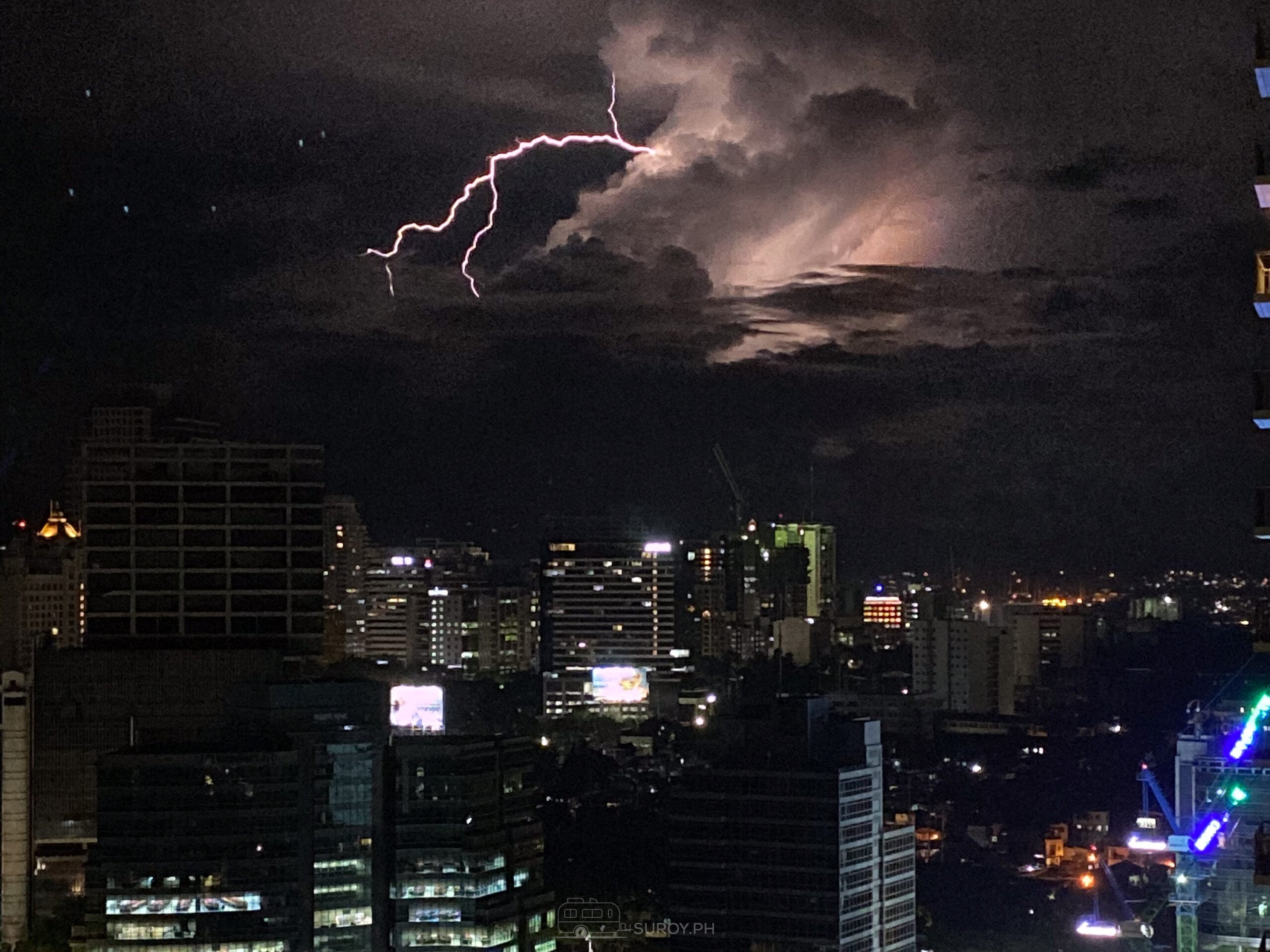
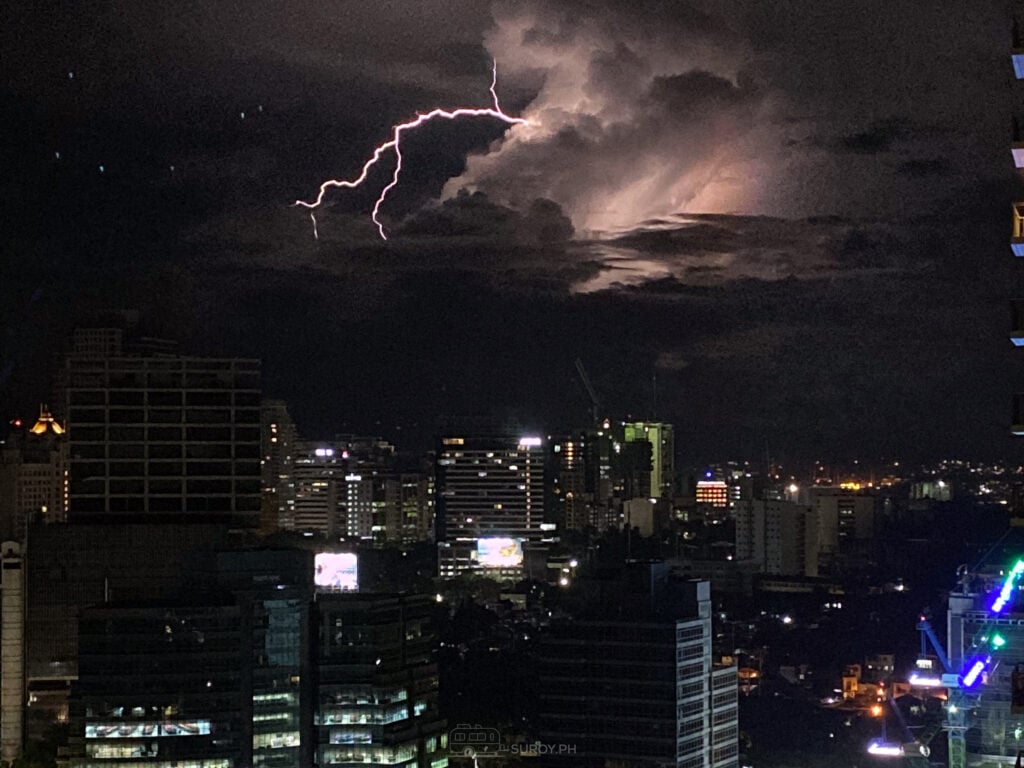
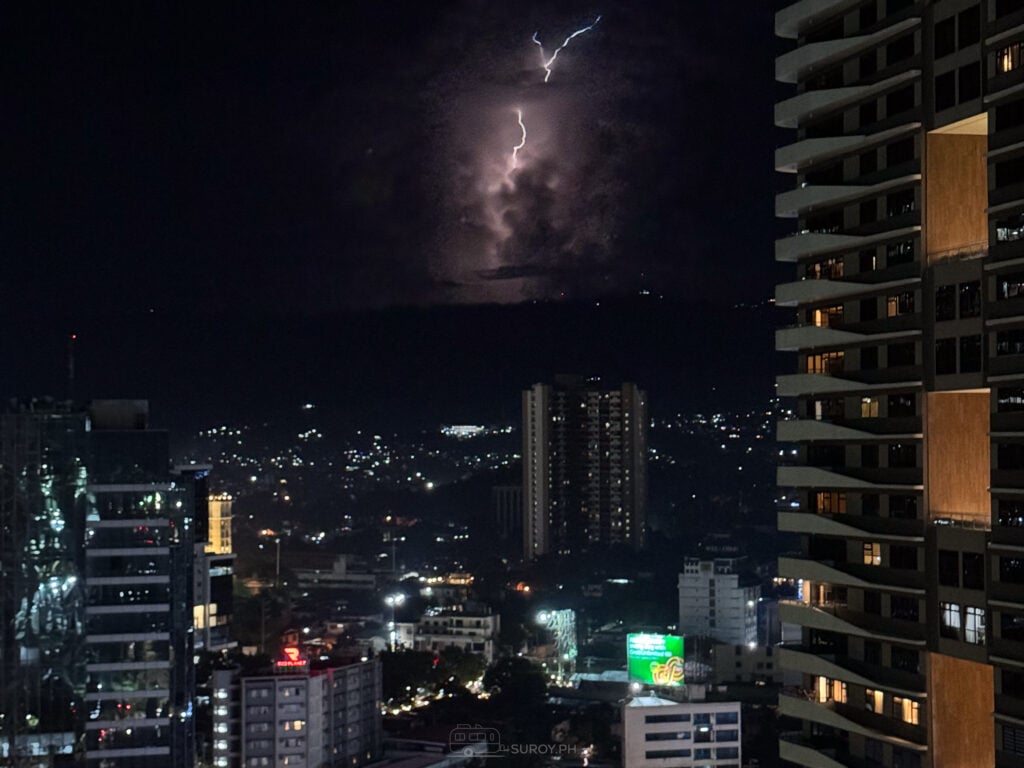
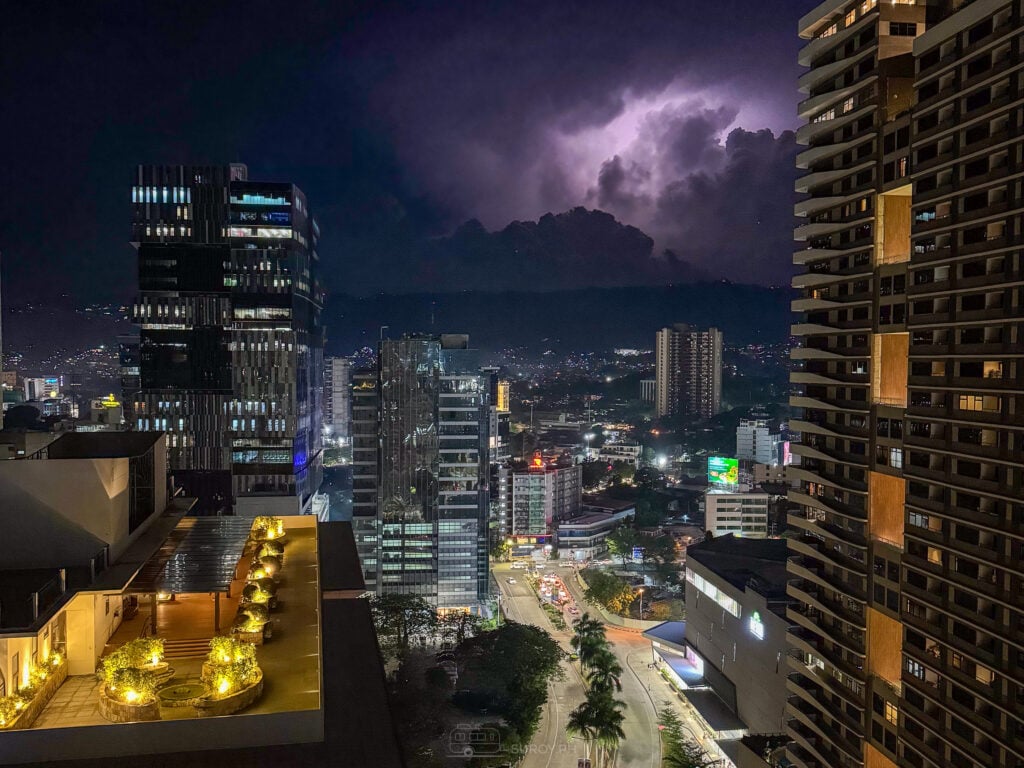
Cebu City skyline · 10.3157° N, 123.8854° E · Frames May 2019 to June 2024
The flash-to-bang count
Light arrives instantly. Sound covers about a kilometer every three seconds. Count from the flash to the thunder, divide by three, and you have the distance in kilometers. Nine seconds is three kilometers. Thirty seconds is ten.
Lightning can strike about 16 kilometers from a storm, roughly as far as thunder carries. So the count does not tell you whether to go inside. Any count does that. It tells you how much time you have to do it calmly.
Flash to bang
Count the seconds, then read this
See the flash, count until the thunder. Every three seconds is about one kilometer. Tap your count. The answer is almost always the same, and that is the point.
Count · 3 seconds
About 1 km away
It is on top of you. Get inside a building or a closed car now. On a beach with neither, leave the water and the shoreline and get low.
Count · 6 seconds
About 2 km away
Close. The next strike can land where you are standing. Out of the water, off the sand, inside.
Count · 9 seconds
About 3 km away
Still close enough to hit you. This is the count most people decide to wait out. Do not.
Count · 15 seconds
About 5 km away
The storm is coming or going, and either way you can hear it, so you are in range. Head in.
Count · 24 seconds
About 8 km away
Far enough to feel safe, near enough to strike. Boats should already be heading for shore.
Count · 30 seconds
About 10 km away
At the edge of where thunder carries. Pack up while it is easy, not when it is raining sideways.
No thunder · 30 minutes
Storm has passed
No thunder for 30 minutes since the last one? Then go back out. Not before.
Sound covers about one kilometer in three seconds. Thunder carries roughly 16 km.
On the beach
Get out of the water first, then off the open sand. A swimmer is the tallest thing on a flat sea, and a person standing on a wide beach is not far behind.
Safe means a real building with walls and plumbing, or a car with a hard roof and the windows up. The cottage, the nipa hut, the beach umbrella and the tree all keep you dry and none of them protect you from lightning. A big lone tree is worse than open ground, because it draws the strike and you are standing at its feet.
If there is truly nowhere to go, move away from the shoreline and away from tall things, crouch low with your feet together and your hands over your ears, and keep the group spread out so one strike cannot reach everyone.
On a boat
Most lightning deaths and injuries on the water happen on small open boats with no cabin. That describes nearly every banca used for island hopping. The defense is mostly before you leave: if afternoon thunderstorms are forecast, do the boat in the morning.
Once you are out, ask the crew to head for shore at the first thunder, not at the first rain. If the boat cannot reach land, stay low in the middle of the hull, away from the mast and the metal frame of the canopy. On a ferry or any boat with an enclosed cabin, go inside and stay away from metal rails.
In the same study, 56 percent of lightning deaths fell between May and July, mostly in the afternoon, which is why the two block day puts the boat in the morning block.
Reading PAGASA’s thunderstorm alerts
PAGASA uses three levels, and the words matter.
| Alert | What it means | What to do |
|---|---|---|
| Thunderstorm Advisory | A storm is expected to affect the area within the next two hours | Move the swim, the hike or the boat now |
| Thunderstorm Watch | Storms are likely within 12 hours | Plan the outdoor part early in the day |
| Thunderstorm Information | Storms are less likely within 12 hours | Carry on, and keep listening |
An advisory with a clear sky over your head is normal. On many days storms build over the interior and reach the coast in the afternoon. Treat the two-hour window as real.
When to go back out
Wait 30 minutes after the last thunder you heard. Not the last flash you saw, and not the moment the rain stops. Lightning can still strike as a storm moves away, which is why the US National Weather Service warns against going back out too soon. The Coast Guard suspends small boats for rough seas and gale warnings, by vessel size, not for thunderstorm advisories, so an open sea lane does not mean a safe sky. The northern Cebu ferry guide shows how those suspensions play out.
The annoying parts
- It costs you the afternoon. Thirty minutes after the last thunder can become two hours on a busy storm day. Have a plan B that happens indoors.
- The crew wants to finish the route. A boatman paid for the full island hop may push on. Agree before leaving that thunder means shore.
- Everyone else is still swimming. Being the one who gets out is awkward for about a minute.
- Phones are fine. A mobile phone indoors is not a lightning risk, though a corded landline is, because a strike can travel through the wiring. Using any phone standing in the sea is a risk because of where you are, not the phone.
Pag-amping is what a Cebuano says at the door. Take care. It is printed on the Pag-amping shirt.
Lightning safety FAQ
How do you tell how far away lightning is?
Count the seconds from the flash to the thunder and divide by three. The answer is the distance in kilometers. Nine seconds is about three kilometers.
Is it safe to swim when you hear thunder?
No. If you can hear thunder, you are within range of a strike. Get out of the water and off the open beach, and go inside a building or a hard-roofed car.
Is a beach cottage or nipa hut safe in a lightning storm?
No. Open shelters, huts, umbrellas and trees keep the rain off but do not protect you from lightning. Shelter in a proper building or a closed car.
What should I do if I am on a banca during a thunderstorm?
Head for shore at the first thunder. If you cannot reach land, stay low in the middle of the boat, away from the mast and metal frames. Small open boats are where most lightning injuries on the water happen.
How long should I wait after a thunderstorm?
Wait 30 minutes after the last thunder you heard before going back outside or into the water.
What is a PAGASA thunderstorm advisory?
It means a thunderstorm is expected to affect the area within the next two hours. A thunderstorm watch means storms are likely within 12 hours.
Suroy Wear · Statement Series

Out the door, a pag-amping
Take care, in the language of everyone who ever waved you off at the gate. ₱999.
Wear the story