


How to Haggle in Bisaya Without Being Rude
Seven Bisaya phrases, two forms of address and one rule that make haggling in a Cebu market feel like a conversation instead of a fight.
Haggling in a Cebu public market is expected, but it is a conversation, not a contest. Ask “Tagpila ni?”, buy in quantity, ask for a little off rather than half, and call the vendor Day or Dong. A few pesos is the whole game.
In a Cebu public market, the price on a pile of mangoes or a box of danggit is an opening line. The vendor expects a reply. What the vendor does not expect, and does not enjoy, is a tourist who treats a ₱10 difference like a matter of principle. The trick is to haggle the way Cebuanos do: politely, briefly, and in Bisaya.
Start with the right name
Before any number, the address. Day, short for Inday, is for a woman. Dong, short for Dodong, is for a man. Older vendors get Nang and Nong, from Manang and Manong. It costs nothing and it changes the tone of everything that follows.
The phrases
Haggling in Bisaya
Pick the moment
Tap through a whole sale.
Tagpila ni, Day?
How much is this, ma’am?
Pila ni works too. For fish, fruit and vegetables sold by weight, ask “Pila ang kilo?”, how much per kilo.Kung duha, pila?
If I take two, how much?
The most effective move in any market. Or “Pila tanan?”, how much for all of it. Vendors discount for quantity far more readily than for a single item.Mahal ra kaayo.
That is too expensive.
Said with a smile, never with a frown. Follow it with “Kubsi gamay?”, can you take a little off. Hangyo is the word for this whole exchange.Last price na?
Is that your last price?
When the answer sounds final, take it: “Sige, kuhaon nako”, okay, I will take it.Suki man ko.
I am a regular.
Only say it if it is true. A suki gets the better price and the better fish without asking, which is the real reward for coming back.Naa kay sukli?
Do you have change?
Ask before handing over a ₱1,000 bill. Small bills make every market faster.Bisaya as spoken in Cebu City markets. Checked November 26, 2026.
Where haggling is expected, and where it is not
| Haggle | Do not haggle |
|---|---|
| Fruit, vegetables and dried fish by the kilo | Cooked food at a carinderia or a stall |
| Several of the same item, souvenirs, ukay-ukay | Supermarkets, malls and fixed-price shops |
| Market stalls at Taboan, Carbon and Pasil | Jeepney fares and posted prices |
The one rule
Ask for a little, not a lot. A few pesos off a kilo, or a round number for a bundle, is normal. Offering half of the asking price is not haggling in a Cebu market, it is an insult, and the vendor will usually just turn to the next customer. If the price really is too high, say “Sige, salamat,” okay, thanks, and walk on. Sometimes that is when the better price arrives.
The annoying parts
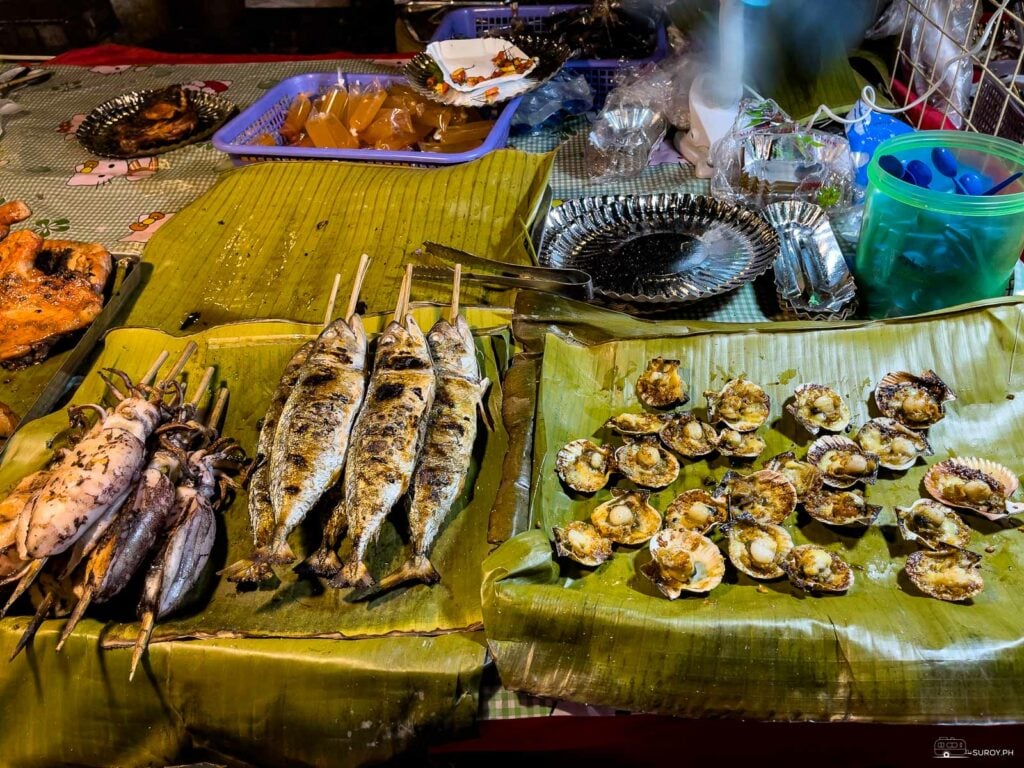
Carbon Market is in the middle of a long rebuild, so stalls move and the night market in these photos is no longer running; the latest is in Carbon Market now. Taboan is the better bet for dried fish and pasalubong, which are sorted by who they are for in the Cebu pasalubong guide. Prices can rise for anyone who looks like a visitor. Bisaya helps more than haggling hard does.
Suroy Wear · Statement Series

Frequently asked questions
How do you ask how much in Bisaya?
“Tagpila ni?” or “Pila ni?” For things sold by weight, “Pila ang kilo?”
Is haggling rude in the Philippines?
Not in public markets, where it is expected. It is rude to offer far below the asking price, or to haggle in supermarkets and over cooked food.
What is suki?
A regular customer. Vendors give their suki better prices and first pick.
What does Day mean in Cebu?
Short for Inday, a friendly way to address a woman. Dong, short for Dodong, is used for a man.