
Amihan or Habagat: Which Side of the Island Is Calm This Month
The coast facing the wind gets the waves and the other side stays calm. Habagat ended on 5 October 2026 and amihan began on 27 October, so the calm side has swapped to the west.
The Philippines has two winds that decide most beach trips, and the rule for both is the same: the coast facing the wind gets the waves, and the coast behind it stays calm. Habagat blows from the southwest. Amihan blows from the northeast. Swap one for the other and the calm side of an island swaps too.
That swap has happened. PAGASA declared the end of the 2026 habagat on 5 October and the start of amihan on 27 October. For the next four months or so, the west-facing beaches are the safe bet.
The short answer
- Habagat, the southwest monsoon: roughly June to early October. Rain and waves on the western side of the country. East-facing beaches are usually the calmer pick.
- Amihan, the northeast monsoon: usually late October or early November to about early March. Cooler and drier. East and north-facing coasts take the waves; west-facing beaches go calm.
- In between: lighter, shifting winds while one monsoon hands over to the other.
- Typhoons are separate. They can arrive in any of these seasons and override everything here.
Which side is calm
Flip the monsoon, watch the waves move
The coast facing the wind gets the waves. The other side sits in the lee. Tap a season to see which shore is which, and the months it usually covers.
Southwest monsoon · June to early October
Habagat
The wind comes from the southwest and brings the rain with it. West-facing coasts take the swell and most of the weather. East-facing beaches sit in the lee and usually stay calmer. In 2026 PAGASA declared it on 30 May and ended it on 5 October.
Between the two · October, and March to May
Transition
The wind is light and shifting while one monsoon hands over to the other. October 2026 is one of these gaps: habagat ended on 5 October and amihan was declared on 27 October. Watch the forecast more than the calendar.
Northeast monsoon · Late October to about early March
Amihan
The wind comes from the northeast, cooler and drier. Now the east and north-facing coasts take the waves, and surges can bring rough seas to the northern Luzon seaboards. West-facing beaches turn calm, which is why this is high season on so many of them.
Season dates from PAGASA, checked 1 November 2026. Typhoons follow their own rules.
How to read any beach in ten seconds
Open a map and find which way the sand faces. A beach looking west or southwest takes the habagat head on and is at its best in amihan. A beach looking east or northeast is the reverse. Most islands have a bit of both, which is why the same place can be rough on one side and glassy on the other on the same afternoon.
Then check the month against the strip in the graphic above. That is the whole method. It will not tell you about a particular day, which is what the forecast is for, but it tells you which side of the island to book.
Boracay is the clearest example
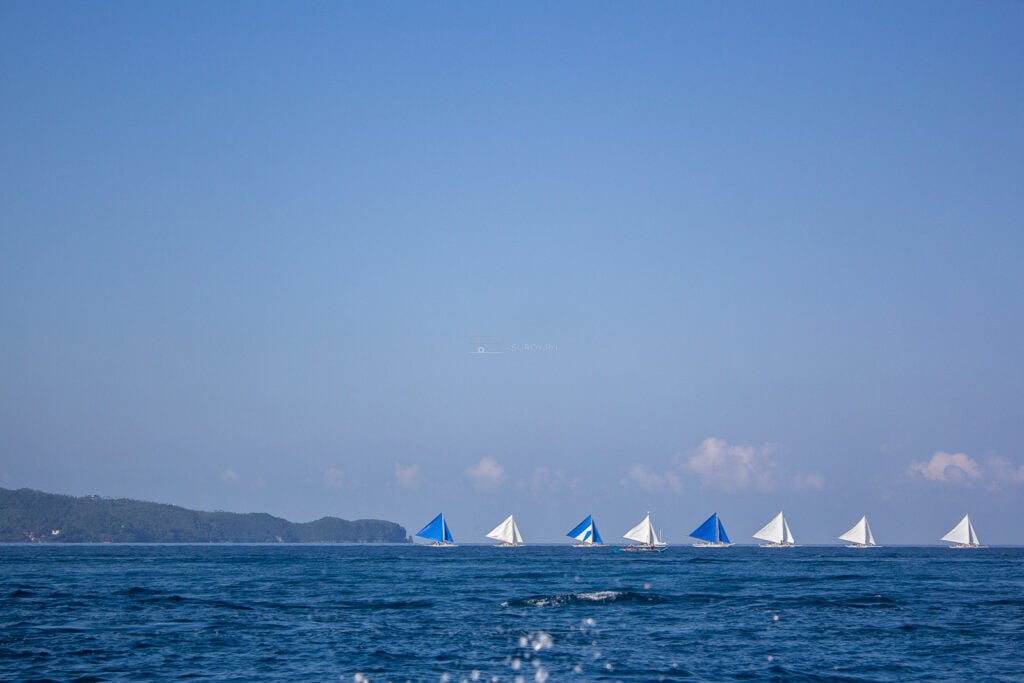
White Beach faces west. In habagat it takes the swell, the water turns choppy by afternoon, and some paraw operators move their launch to Bulabog Beach on the east side. In amihan the same beach is the calm one, the sea flattens out, and the sunset sail leaves from the front of the stations again.
Bulabog flips the other way. With the northeast wind blowing straight onto it, it becomes the island’s kitesurfing beach, with the main season running about November to April and the strongest wind from December to March. The Boracay travel guide has the rest of the island.
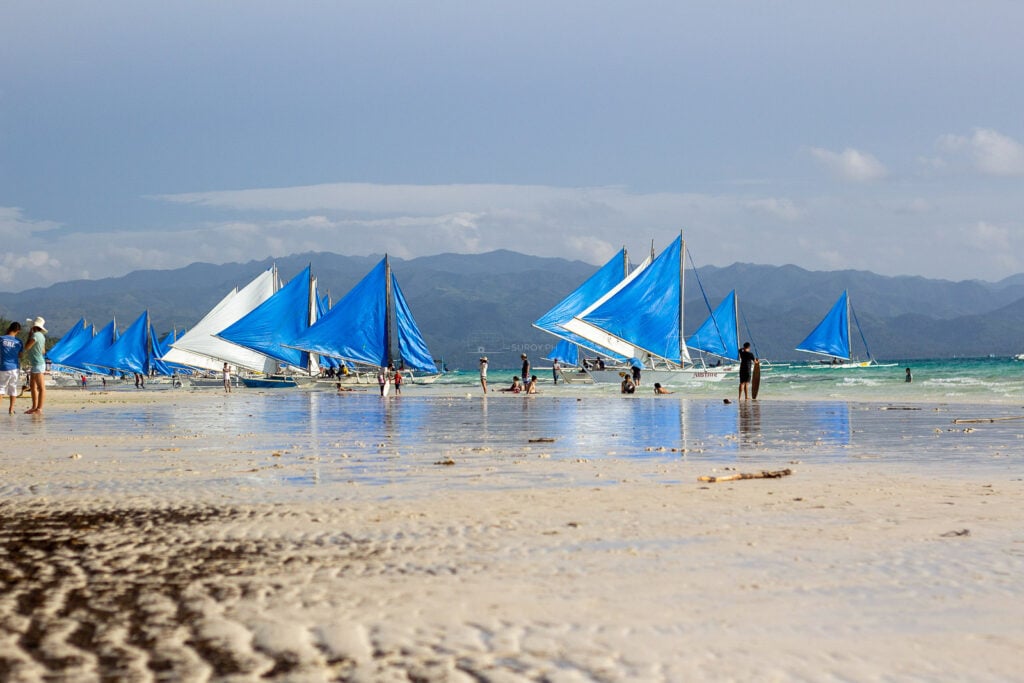
What amihan means for boats
Amihan is the drier season, which is why it lines up with peak travel, but it is not a calm season everywhere. When the northeast monsoon surges, PAGASA warns of rough seas along the exposed northern and eastern seaboards, and small boats on those routes are the first to stop. A trip that crosses open water on the Pacific side, or across the far north, deserves a spare day in December and January.
For ferries, the rule that matters is the gale warning, not the season. Small boats stay in port when one is up for their area, and larger ships follow the Coast Guard. If a crossing is canceled, here is what you are owed when a ferry is canceled.
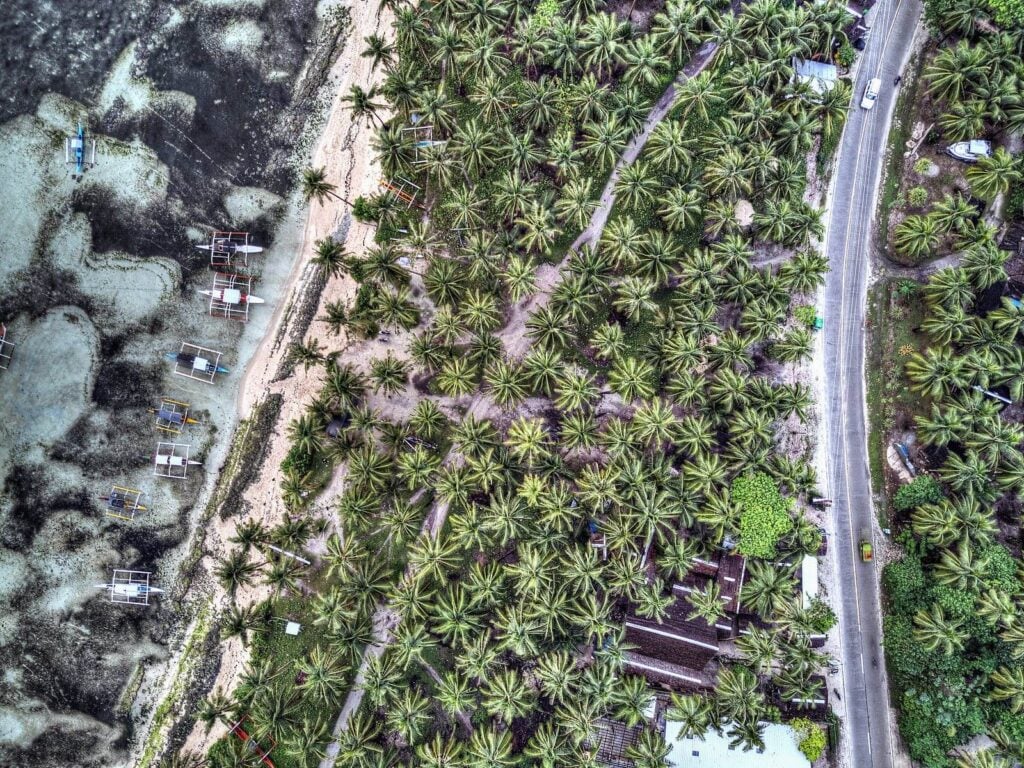
What habagat means for beaches
Habagat is the rainy one. PAGASA describes it as southwesterly winds over the western section of the country, with the western parts getting most of the rain. Monsoon breaks of a few days or weeks happen in the middle of it, and those are the days to move. A storm sitting east of the country can also pull the southwest wind harder for a while, so a habagat week can turn wetter without any warning signal over your own island.
None of this means the season is a write-off. East-facing beaches and sheltered coves can be fine for most of it. It means you choose the coast with the wind in mind.
| Season | Wind from | Usually rough | Usually calmer |
|---|---|---|---|
| Habagat, about June to early October | Southwest | West and southwest-facing coasts | East-facing coasts |
| Amihan, about late October to early March | Northeast | East and north-facing coasts, northern seaboards | West-facing coasts |
| Transition months | Light, variable | Depends on the week | Depends on the week |
The annoying parts
- The calendar is a guess. PAGASA declares each season when the winds actually shift. In 2025 amihan started on 27 October. In 2026 it started on 27 October again.
- Surges arrive fast. A strong amihan push can make a calm week rough in a day, especially up north.
- Typhoons ignore all of this. Check the tropical cyclone bulletin, not the season, before any crossing.
- Calm water is not the same as good weather. The lee side of an island in habagat can still be gray and wet.
If the waves are the reason you are going, pick the windward side and bring a board. If they are not, the Catch Waves, Not Feelings tee covers you either way.
For the month-by-month picture of the whole country, see the best time to visit the Philippines.
Amihan and habagat FAQ
What is the difference between amihan and habagat?
Habagat is the southwest monsoon, roughly June to early October, wet and strongest on the western side of the country. Amihan is the northeast monsoon, usually late October to about early March, cooler and drier, with rougher seas on east and north-facing coasts.
When does amihan start in 2026?
PAGASA declared the start of amihan on 27 October 2026. The 2026 habagat was declared over on 5 October.
Which beaches are calm during amihan?
West-facing beaches, such as Boracay’s White Beach, usually turn calm in amihan because they sit in the lee of the northeast wind.
Which beaches are calm during habagat?
East-facing beaches are usually the calmer choice in habagat, because the southwest wind and most of the rain hit the western side.
Is amihan season good for island hopping?
Often, on west-facing coasts. Surges can make northern and Pacific-side waters rough, so give boat-dependent trips on those routes a spare day.
Do typhoons happen during amihan?
They can. Tropical cyclones follow their own track and can affect any season, so check the bulletin before any sea crossing.
Suroy Wear · Statement Series

Pick your side of the island
The Catch Waves, Not Feelings Tee, from the Statement Series. ₱999.
Wear the story