
The Philippines in August Is Beautiful. Here Is What Habagat Changes
August does not make the Philippines less beautiful. Habagat changes which coast works, how ferries behave and when the best travel moments appear.
August does not make the Philippines less beautiful. It changes the way you experience it, sometimes by the hour.
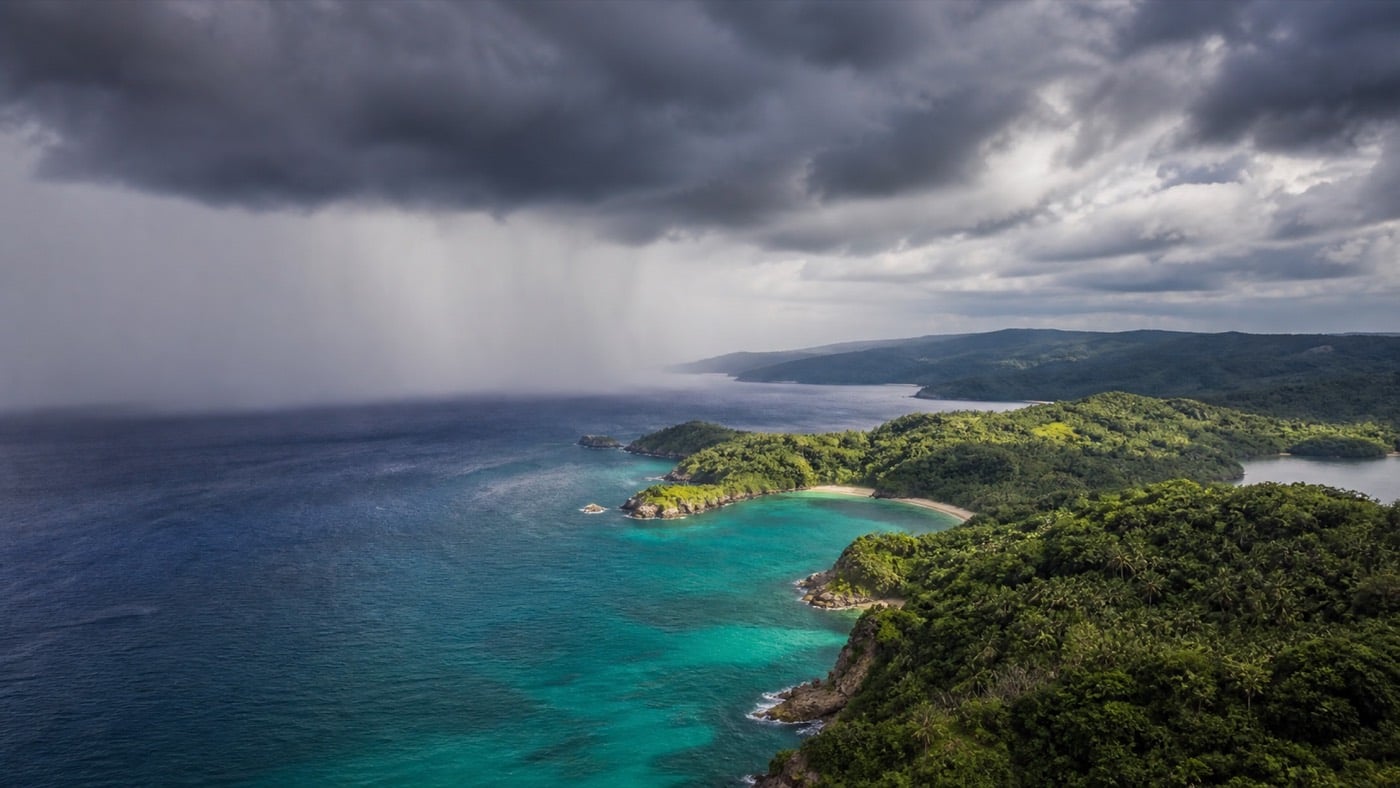
A morning can begin with bright sun on a glassy bay. By lunch, the horizon has turned charcoal. A rain curtain crosses the water, the breeze strengthens, and the beach you chose from a dry-season photo suddenly feels like another place.
That is travel during habagat. It is not automatically a ruined holiday. It is a trip that rewards people who can read the island, adjust the day, and enjoy the beauty that appears between the showers.
PAGASA’s sub-seasonal outlook for August 9 to 22, 2026 shows why one word like “rainy” is never enough. Forecast models differ on some regional details, but much of the Philippines remains under an active wet-season pattern. That does not mean rain everywhere from morning to night. It means conditions can vary sharply from one region, coast, and hour to the next.
Habagat is about direction
Habagat is the southwest monsoon. When southwesterly winds are established, an island does not experience them evenly.
West-facing shores meet the wind and open sea first. They are more likely to see onshore wind, choppier water, and passing rain bands. East-facing coves can be calmer because hills or mountains provide some shelter. Local thunderstorms can still form anywhere, so geography improves your chances but never gives a guarantee.
In Cebu, Moalboal and Badian can face a restless west-coast sea while parts of the east or southeast coast feel noticeably calmer. On another day, one nearby thunderstorm can erase that difference within minutes.

This is the question that makes an August trip easier: do not only ask, “Will it rain in Cebu?” Ask, “Which coast is exposed today, and where is the safest good-weather window?”
The beach is still beautiful, but the plan needs options
A dry-season beach itinerary is often fixed. Choose a resort, reserve a boat, and arrive at a set time. During habagat, it is smarter to plan from a short menu.
Keep one west-coast option, one more sheltered option, and one inland backup. If whitecaps are already pushing toward shore at breakfast, do not spend half the day waiting for a paid itinerary to become safe. Move the plan while the day is still yours.
The sea can be rough even when it is not raining where you stand. Wind offshore can make snorkeling tiring, reduce visibility, and complicate small-boat landings. At the same time, a cove protected by a headland may remain comfortable only a few kilometers away.
Ask local boat crews about the actual water, not only the sky. They know where the swell is wrapping around the island and whether the return trip will be rougher than the departure.
Ferry plans need breathing room
In August, a ferry connection should not sit between two expensive, inflexible commitments.
Large ferries may continue operating when smaller boats stop, but every vessel is still subject to port conditions, operator decisions, and Philippine Coast Guard restrictions. A PAGASA gale warning is especially important. When sea travel is declared risky for small craft, that is a safety warning, not an invitation to find a more daring boatman.
Build enough space into the itinerary for a connection to change:
- Do not take the last possible ferry on the same day as an international flight.
- Keep medicine, chargers, documents, and one change of clothes in your carry-on.
- Confirm the sailing the night before and again before leaving the hotel.
- Know the next departure and the cost of one extra night.
- Treat a cancellation as a safety decision, not poor customer service.
The people who enjoy the wet season are not always the ones with perfect luck. They are usually the ones whose plans can bend without breaking.
Waterfalls become louder and more unpredictable
Rain can turn a modest cascade into one of the most powerful sights of the trip. It can also turn clear pools brown, make limestone steps slippery, and raise a river faster than visitors expect.
The best waterfall day is not automatically the morning after the heaviest rain. Check whether the attraction is open, ask guides about upstream conditions, and never cross a swollen current for a photograph. If local staff close a pool or trail, the safe viewpoint is the right viewpoint.
Give shoes and camera gear time to dry. A limestone trail can stay slick long after the sky clears, and tropical humidity can trap moisture inside a bag for hours.
Early starts help, but they are not a promise
Many wet-season days reward an early start. Mornings can be calmer, heat and cloud build through the day, and showers or thunderstorms often become more likely later.
Use that pattern as an advantage, not a rule. Put the boat trip, exposed ridge, waterfall trail, or long drive first. Keep cafés, museums, massages, and flexible town stops for the afternoon. Carry a light rain layer where you can reach it instead of burying it under the luggage.
Then watch the sky in front of you. A dark line over the water, a sudden cool gust, or distant thunder tells you more about the next half hour than a generic weather icon.
Flying a drone becomes a weather decision
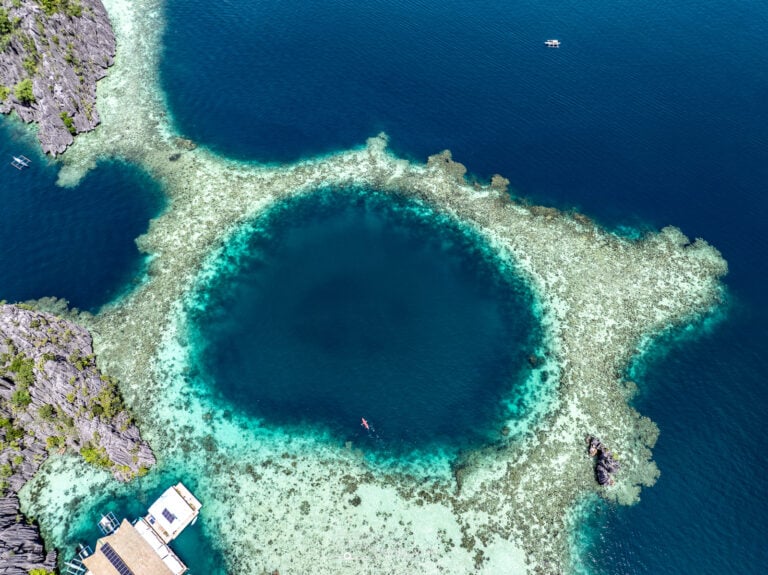
Habagat can create extraordinary aerial light. Sunlit reefs sit below a black cloud shelf, mist lifts from the hills, and rain moves visibly across the sea. These are also the conditions that demand restraint.
Do not launch in rain, unstable gusts, or uncertain wind. Air moving over a cliff can behave very differently from the breeze where the pilot is standing. Salt spray and humidity are hard on electronics, and a fast shower can close the route home before the battery becomes low.
If conditions are stable and the flight is legal, keep the drone close, leave a larger battery reserve, and land at the first sign of rain. No photograph is worth sending an aircraft into a squall or over people who are trying to shelter.
Storm light can create the best photographs
August light has texture. After rain, roads reflect color, greens become deeper, haze clears, and clouds give a coastline a sense of scale that an empty blue sky cannot.
Look for the transition instead of chasing the storm:
- The few minutes when sunlight returns beneath a dark cloud deck.
- A rain curtain across the bay, photographed from a safe covered place.
- Mist collecting in coconut-covered hills after a shower.
- Soft, even light for portraits under an overcast sky.
- Reflections in town streets after the rain has passed.
Protect the camera, wipe away salt and moisture, and leave an exposed beach when thunder is nearby. The image becomes interesting because the weather has depth, not because the photographer ignored it.
How to plan an island trip in August
Book the parts that truly need certainty, such as your room, major transport, and the first night after arrival. Keep the order of daily activities loose.
For every outdoor priority, choose a nearby alternative that works under cover. Stay at least two or three nights on an island when possible. A one-night stop gives the weather too much control. Choose accommodation where an unplanned slow morning still feels like part of the holiday.
Use the right information for the decision in front of you. A sub-seasonal outlook describes the broader pattern. PAGASA’s daily bulletins, thunderstorm advisories, and gale warnings tell you what matters now. Your ferry operator confirms whether a specific vessel will sail. Local guides know what the water is doing at the beach or waterfall that morning.
Should you visit the Philippines in August?
Yes, if you want a greener, moodier, and often quieter Philippines, and you can exchange a rigid schedule for good judgment.
It may not be the right month if the entire holiday depends on one exact boat, one exact beach day, and uninterrupted blue sky.
Habagat does not remove the beauty. It moves it. Some days the best water shifts from the west coast to a sheltered bay. Some days the highlight is a waterfall at full voice. Sometimes it arrives in the five bright minutes after rain, when the whole island looks newly made.
Weather note: This is travel guidance, not a real-time forecast. Check PAGASA’s latest sub-seasonal outlook, daily weather bulletins, and gale warnings before travel. Confirm sea trips directly with the operator.