
Cebu’s Haze Came Back Worse, and Ten Towns Closed Their Schools
Metro Cebu fell to 105 at 4 p.m. on 22 September, unhealthy for sensitive groups, its first reading out of the very unhealthy band since 18 September. No class suspension order for Wednesday 23 September had been reported when this page was checked. The Visayas grid opened Wednesday on a 389 megawatt operating margin, on 86 megawatts more available capacity than the last morning it ran a red alert.
Reported by Suroy Newsdesk · Edited by Janette Arceo · Editorial standards
Smoke from Indonesian forest fires pushed Metro Cebu’s air quality index to 252 on 3 September 2026, the worst reading Metro Cebu had recorded in any earlier haze episode, and it held in the very unhealthy band or worse for five straight days before falling out of it on 6 September. Separately, and for entirely different reasons, the Visayas and Mindanao grids have both been running short and on red alerts through the same week. Neither problem is formally closed, and the haze has come back harder than it left. After five straight days in the fair band, the Metro Cebu station climbed from 118 at 8 p.m. on Friday 18 September to 209 at 4 a.m. on Saturday 19 September, acutely unhealthy, and The Freeman reported 264 at 11 a.m. that day, above the 252 of 3 September. SunStar Cebu reported 296 at 1 a.m. on Sunday 20 September, five points short of the emergency band, and the station eased through the day to 271 at 7 a.m. and 248 at 4 p.m., still acutely unhealthy. The station eased to 167 at 4 p.m. on Monday 21 September and to 105 at 4 p.m. on Tuesday 22 September, unhealthy for sensitive groups, its first reading out of the very unhealthy band since Friday 18 September. Ten Cebu local governments kept face to face classes off for Tuesday 22 September, and no suspension order for Wednesday 23 September had been reported when this page was checked. The grid has gone the other way. The National Grid Corporation of the Philippines placed the Visayas grid under normal operating conditions on Friday 18 September, after nearly a month of recurring red and yellow alerts, on 2,672 megawatts of available capacity against a peak demand of 2,308. The last red alert on the Visayas ran from 5 to 7 p.m. on Tuesday 15 September, and the NGCP outlook for Wednesday 23 September puts the Visayas on 2,820 megawatts against a system peak demand of 2,431, an operating margin of 389.
Updated 23 September 2026. The second wave broke on Tuesday. The Metro Cebu station read 105 at 4 p.m. on Tuesday 22 September, unhealthy for sensitive groups, down from 114 at 11 a.m., its first reading below the very unhealthy band since Friday 18 September and 191 points under the 296 of Sunday morning. That figure is carried by SunStar Cebu alone, in a report published at 8:48 p.m. on 22 September. The Cabitoonan station in Toledo City read 41 at the same hour, good, on the same single source, after losing its morning readings to a technical fault. The Freeman separately put Metro Cebu at 189 at 11 a.m. on Monday 21 September and Cabitoonan at 101 that day, both on The Freeman alone. Ten Cebu local governments kept face to face classes off for Tuesday 22 September. No suspension order for Wednesday 23 September had been reported when this page was checked: the most recent list on GMA News Online is still the Tuesday one, and neither The Freeman nor the Manila Times carried a Cebu suspension story in its Wednesday batch. That is an absence of reporting rather than a confirmation that classes are on, and anyone with a child in school should check that city’s own channels. The grid gained ground. The NGCP power situation outlook on ngcp.ph as of 6 a.m. on Wednesday 23 September puts the Visayas on 2,820 megawatts of available capacity against a system peak demand of 2,431, an operating margin of 389, and Mindanao on 3,292 against 2,441, a margin of 851. That is 89 megawatts more available capacity than Tuesday morning and 86 megawatts more than the Visayas carried at 6 a.m. on Tuesday 15 September, the last day the region ran a red alert, on a projected peak six megawatts higher, so this time the gain sits in the fleet rather than in the demand projection. No alert bulletin for 19 to 23 September had been reported as of Wednesday morning. No flight disruption at Mactan-Cebu International Airport and no travel advisory or movement restriction had been reported as of Wednesday morning. The sections below carry the current figures.
Two things are wrong with Cebu right now, and almost everyone is only talking about the one you can see.
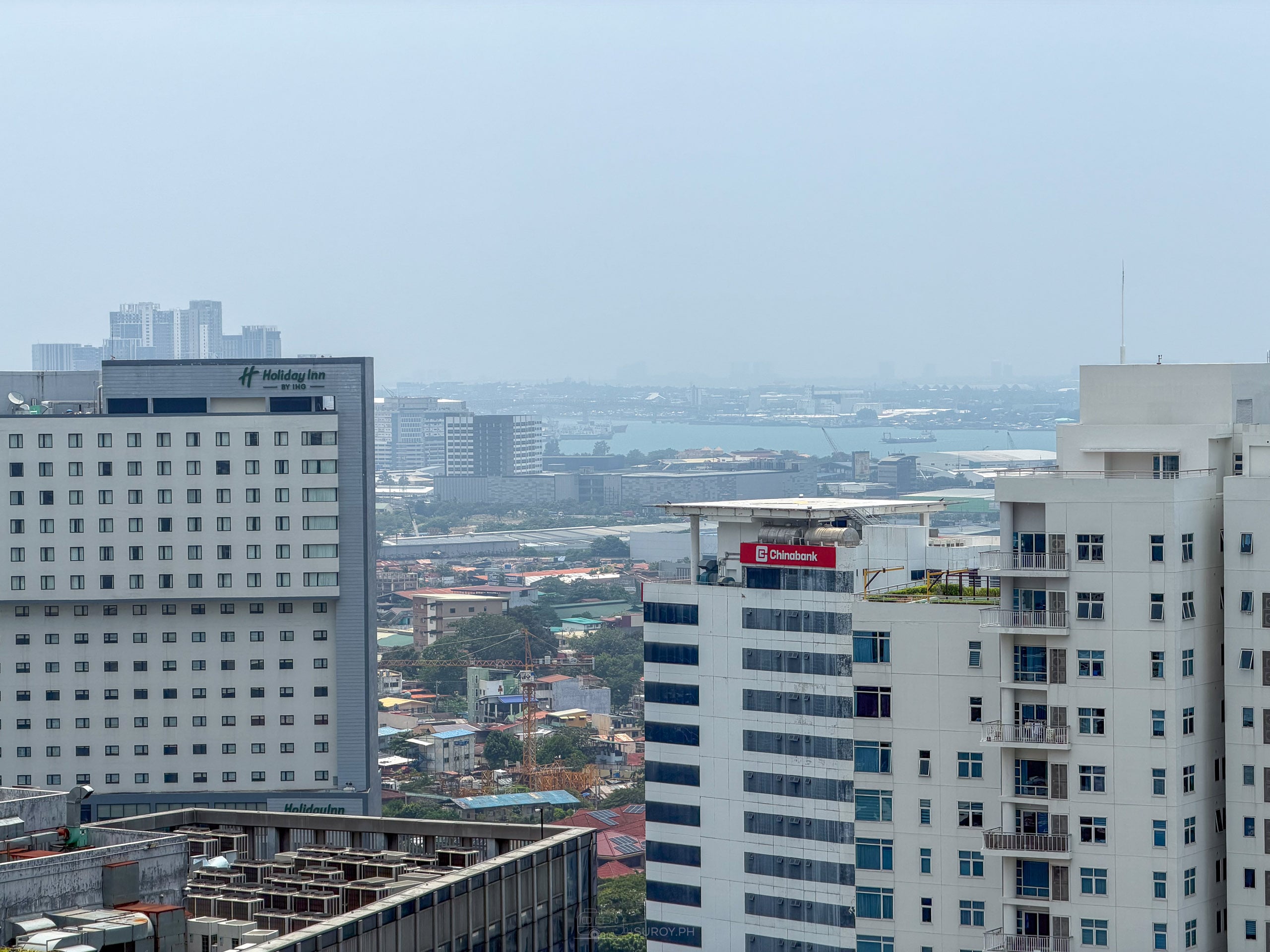
The visible one is the haze. On 31 August 2026 the Environmental Management Bureau station in Talisay City, the only real time air quality monitor in the metro, read 117 on the air quality index. By 6 a.m. on 1 September it was 152. By noon it was 172, which EMB-7 classifies as very unhealthy. It held at 173 through three in the afternoon. It did not hold there. EMB-7 read 208 on the morning of 2 September and 215 that afternoon. By 3 September the metro opened at 241 at 4 a.m., hit 252 at 11 a.m. and was still at 251 by 4 p.m. That is the acutely unhealthy band, the purple tier, and it is higher than Metro Cebu recorded in the October 2015 haze.
Then it began to come down. On 4 September the same station read 202 at 7 a.m., 197 at 11 a.m. and 184 by 4 p.m. It kept falling through 5 September, to 166 at 7 a.m. and 159 by 4 p.m. Falling, and still very unhealthy. Then it broke the band. On 6 September the same station read 126 at 7 a.m., 127 at 11 a.m. and 136 by 4 p.m., which is unhealthy for sensitive groups rather than very unhealthy, and the first reading outside that tier since 31 August. Five consecutive days in the very unhealthy band or worse, then a sixth day below it, and Arthur Niño Calupig of EMB 7 has said plainly that nobody can say when it lifts, because it depends on the Kalimantan fires and the wind rather than on anything decided here. The reading climbed back into the very unhealthy band on the morning of 7 September, at 158 at 7 a.m. and 157 at 11 a.m., fell to 143 by 4 p.m., and stayed out of that band through 8 September, at 135 at 7 a.m., 130 at 11 a.m. and 121 by 4 p.m., and through 9 September, at 117 at 7 a.m. and 116 at both 11 a.m. and 4 p.m. On 10 September it fell further, to 102 at 7 a.m., 98 at 11 a.m. and 86 at 4 p.m., the first fair band readings of the episode and the lowest so far. On 11 September it held the fair band at every hour while moving the other way, at 87 at 7 a.m., 91 at 11 a.m. and 97 at 4 p.m., the first day since 6 September on which the index rose from morning to afternoon.
One number from the same stretch is worth more than the rest of them put together. The station at Cabitoonan in Toledo City, about fifty kilometers around the coast from the metro, read 73 on 4 September, 46 at 7 a.m. on 5 September, and 47 at 7 a.m., 46 at 11 a.m. and 47 by 4 p.m. on 6 September. It read 47 again at 11 a.m. on 9 September, and SunStar Cebu reported that no 4 p.m. reading could be taken at that station that day because the monitor had lost power. Fair, then good, and good again on a day the metro station was still reading close to three times higher. Same province, same days, same smoke overhead, and a reading a traveler would not think twice about. Where the monitor stands is doing as much work here as the weather is. That held until this weekend. SunStar Cebu reported Cabitoonan at 225 at 4 a.m. on 20 September, acutely unhealthy, so the second wave has reached the west coast too.
There is a second gap worth naming, because it catches people out every day of an episode like this. The air can look worse on a morning when the index is falling. What the index measures is the mass of fine particles at one monitor. What a person sees from a window is light scattered across the whole depth of air between them and the horizon, and humidity makes those particles swell and scatter more without adding a microgram. A humid morning after rain can look thicker than a dry afternoon that is measurably dirtier. Trust the number for whether to wear a mask and keep a child indoors. Do not trust your eyes for it, in either direction.
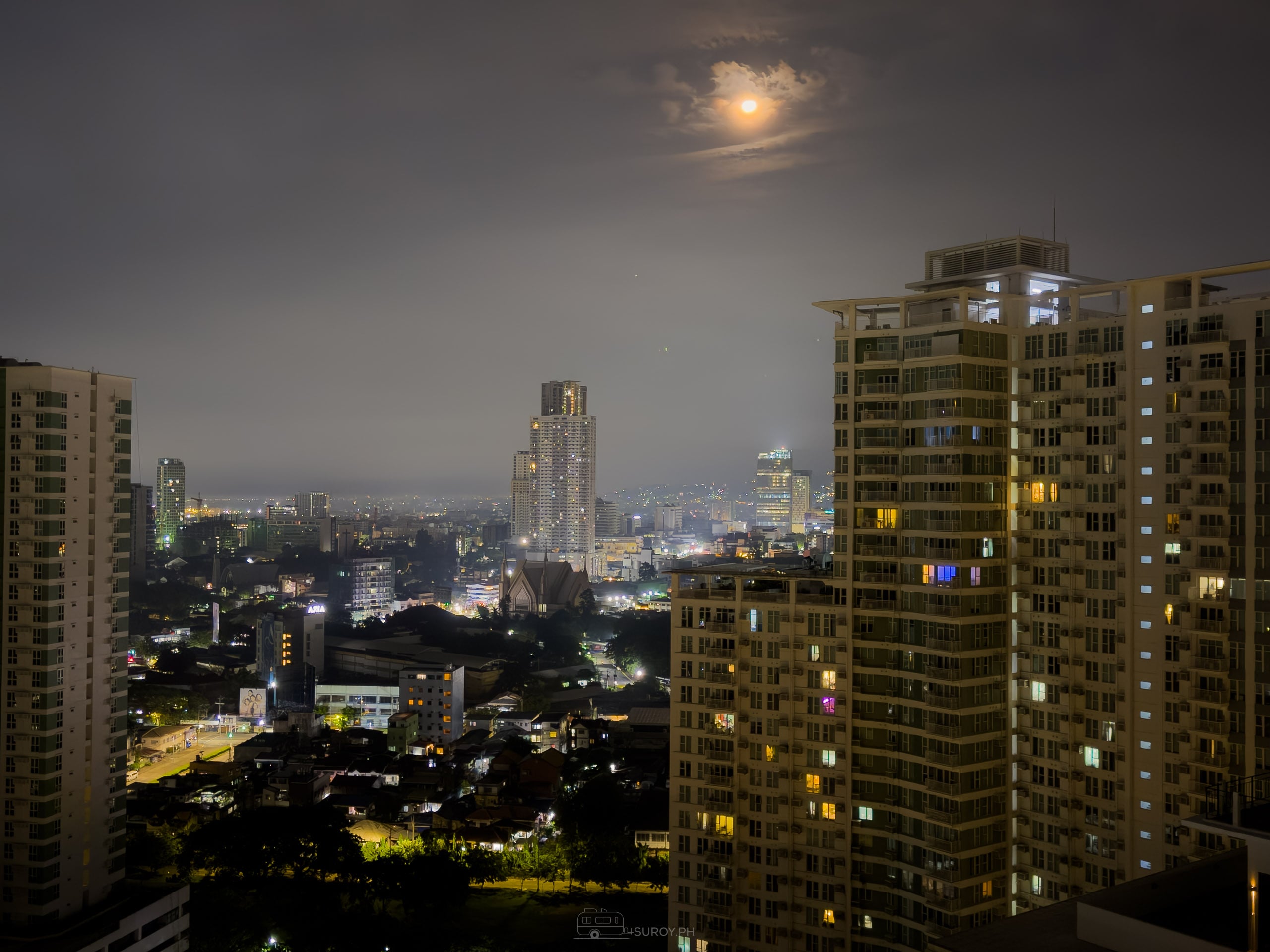
The University of the Philippines station in Cebu recorded 152 on 4 September, which is worth holding on to: readings vary by station, and the Talisay monitor is the one the local governments are acting on.
The invisible one is the grid. On 2 September the Visayas ran on 2,205 megawatts of available capacity against a peak demand of 2,501, a shortfall of 296 megawatts, under a combination of red and yellow alerts. That is not a new development. It is the state the region has been in, on and off, since January.
The 3 September position is worse. The National Grid Corporation of the Philippines put the Visayas grid on red alert from 1 p.m. to 10 p.m., with yellow alerts from 10 a.m. to 1 p.m. and again from 10 p.m. to 11 p.m., on 2,187 megawatts of available capacity against a projected peak demand of 2,575. That is a 388 megawatt gap. Therma Visayas Unit 1 and Panay Energy Development Corporation Unit 3 are among the plants offline or running derated, with roughly 792 megawatts unavailable across the grid. A red alert means capacity cannot cover demand plus the required contingency reserve, which is the condition under which rotational outages actually get scheduled.
On 4 September the advisory and the day did not match, which is worth spelling out because NGCP revises its bulletins as the day runs. As advised, reported by DZRH on 4 September, the Visayas would run a red alert from 3 p.m. to 10 p.m. with yellow either side, on 2,233 megawatts against a projected peak of 2,504, a gap of 271 megawatts, with 815.8 megawatts unavailable. As it ran, reported by The Freeman and by Philstar on 5 September, the red alert covered 1 p.m. to 10 p.m. on 2,076 megawatts against a peak of 2,506, a gap of 430 megawatts, with 972.6 megawatts unavailable across twelve units on forced outage and sixteen more running derated. That 430 megawatt gap, not the 388 of 3 September, is the largest of this episode. Kepco-SPC at Naga put 103 megawatts back on 1 September and the grid still could not cover the afternoon.
Mindanao was on alerts the same day and for the same reason, red from 1 p.m. to 9 p.m., 2,549 megawatts against a 2,592 peak. That is a 43 megawatt gap, which is thin rather than dramatic, but it lands on the region already taking the worst of the smoke. Imports from Mindanao into the Visayas have been constrained through this stretch, which is part of why the Visayas cannot borrow its way out.
Then the weekend. The power situation outlook published by NGCP on its own website, as of 6 a.m. on Sunday 6 September, puts the Visayas on 2,527 megawatts of available capacity against a projected system peak demand of 1,930, an operating margin of 597 megawatts, and Mindanao on 2,906 against 2,130, a margin of 776. Saturday was not a weekend off. NGCP put the Visayas on a red alert from 5 p.m. to 8 p.m. on 5 September, then a yellow alert to 10 p.m., on 2,255 megawatts of available capacity against a 2,432 megawatt peak, with Mindanao on a yellow alert from 5 p.m. to 9 p.m., as reported by GMA News and DZRH that day. No alert for Sunday 6 September was reported. Two things are true at once in those figures. Available capacity in the Visayas is up by roughly 450 megawatts on Friday, which is a real recovery. And Sunday demand sits about 570 megawatts below the weekday peak, which is the calendar rather than the fleet. Monday was the test. The NGCP outlook as of 6 a.m. on Monday 7 September puts the Visayas on 3,306 megawatts of available capacity against a system peak demand of 2,543, an operating margin of 763, and Mindanao on 3,074 against 2,487, a margin of 587. That outlook did not survive the day, and the gap between the two is the clearest example of the pattern on this page. As advised, reported by RMN at 11:06 a.m. on 7 September and by the Inquirer that evening, the Visayas would run a red alert from 6 to 7 p.m. with yellow alerts from 3 to 6 p.m. and from 7 to 9 p.m., on 2,530 megawatts of available capacity against a projected peak of 2,508, with 818.9 megawatts unavailable across eight plants on forced outage this September, five out since August and fifteen more running derated. As it ran, reported by the Inquirer at 5:27 p.m. on 7 September, the red alert covered 1 p.m. to 8 p.m. with yellow either side, on 2,284 megawatts against a peak of 2,470, a shortfall of 186 megawatts as of 1:30 p.m., with 919 megawatts unavailable across eleven plants on forced outage and fifteen derated. The NGCP power situation outlook as of 6 a.m. on Tuesday 8 September put the Visayas on 2,889 megawatts of available capacity against a system peak demand of 2,515, an operating margin of 374, and Mindanao on 2,911 against 2,601, a margin of 310. That outlook did not survive the day either. As it ran, reported by the Manila Times on 8 September, NGCP placed the Visayas on a red alert from 5 to 8 p.m. with yellow alerts from 2 to 5 p.m. and from 8 to 9 p.m., on 2,400 megawatts of available capacity against a peak demand of 2,507, a shortfall of 107 megawatts, with 786.4 megawatts unavailable across 29 plants on forced outage and 14 running derated. Mindanao took yellow alerts from 2 to 4 p.m. and from 5 to 7 p.m., on 2,805 megawatts against 2,627. The NGCP power situation outlook as of 6 a.m. on Wednesday 9 September put the Visayas on 2,919 megawatts of available capacity against a system peak demand of 2,534, an operating margin of 385, and Mindanao on 2,906 against 2,600, a margin of 306. That was within eleven megawatts of what Tuesday morning showed before Tuesday turned, and part of that day projected demand sat under a Cebu holiday. No NGCP alert bulletin for 9 September could be found. The outlook as of 6 a.m. on Thursday 10 September puts the Visayas on 2,884 megawatts of available capacity against a system peak demand of 2,357, an operating margin of 527, and Mindanao on 2,832 against 2,495, a margin of 337. The Thursday projected peak is the lowest the Visayas has been given all week, roughly 180 megawatts under Wednesday, so the wider margin is as much the projection as the fleet. That outlook did not hold either. NGCP put the Visayas on a red alert from 2 p.m. to 9 p.m. on 10 September, with yellow alerts from 1 p.m. to 2 p.m. and from 9 p.m. to 10 p.m., on 2,205 megawatts of available capacity against a 2,460 megawatt peak as of 8 a.m., as reported by DZRH and the Philippine Daily Inquirer on 10 September. The two reports differ on Mindanao that day, so its hours are left out here. The outlook as of 6 a.m. on Friday 11 September puts the Visayas on 2,865 megawatts of available capacity against a system peak demand of 2,351, an operating margin of 514, and Mindanao on 2,794 against 2,482, a margin of 312. The Friday projection sits six megawatts under Thursday, a second working day given the lowest demand of the week, so the margin still reflects the projection as much as the fleet. The morning margin did not hold. The Manila Times reported on 11 September that NGCP had placed the Visayas under a red alert from 3 to 9 p.m., with yellow alerts from 1 to 3 p.m. and from 9 to 10 p.m., and Mindanao under a yellow alert from 1 to 8 p.m., with 1,030.1 megawatts unavailable in the Visayas across 31 plants on forced outage and 14 running derated, and 859.8 megawatts unavailable in Mindanao across 29 plants on forced outage and 7 derated. That report is carried by the Manila Times alone and does not date the alert beyond the day it was published. Its two Visayas megawatt figures, a peak demand of 2,002 against an available supply of 2,320, do not square with a red alert, which is called when supply cannot cover demand plus the regulating requirement, so the hours and the outage counts are used here and the megawatt pair is not. The outlook as of 6 a.m. on Saturday 12 September puts the Visayas on 2,587 megawatts of available capacity against a system peak demand of 2,136, an operating margin of 451, and Mindanao on 2,817 against 2,232, a margin of 585. Saturday carries the lowest projected demand of the week, 215 megawatts under Friday, and a working day that ran a red alert is the better guide to the fleet than a weekend margin. That morning margin did not survive the evening. As it ran, reported by Philstar and by The Freeman on 13 September, NGCP placed the Visayas under a red alert from 5 to 9 p.m. on 12 September, with yellow alerts from 4 to 5 p.m. and from 9 to 10 p.m., on 2,109 megawatts of available capacity against a peak demand of 2,346, a gap of 237 megawatts, with 1,052 megawatts unavailable across 33 plants on forced outage, 11 of them this month, and 14 running derated. Mindanao took a yellow alert from 5 to 7 p.m. the same day, on 2,623 megawatts against 2,456, with 206 megawatts lost to GNPower Kauswagan Units 2 and 3, 29 plants on forced outage and 7 running derated. The outlook as of 6 a.m. on Sunday 13 September puts the Visayas on 2,613 megawatts of available capacity against a system peak demand of 1,965, an operating margin of 648, and Mindanao on 2,742 against 2,000, a margin of 742. Sunday carries the lowest projected demand of the run, 171 megawatts under Saturday, and Saturday is the reason that margin should not be read as the fleet.
They are unrelated, and the timeline proves it. The haze arrived at the end of August. The power plants at the center of the shortage have been broken since May, and some of the units counted in the current outage list have been offline since 2021.
Both, however, land on the same week and on the same people, and one of them makes the other worse.
Part one: the air
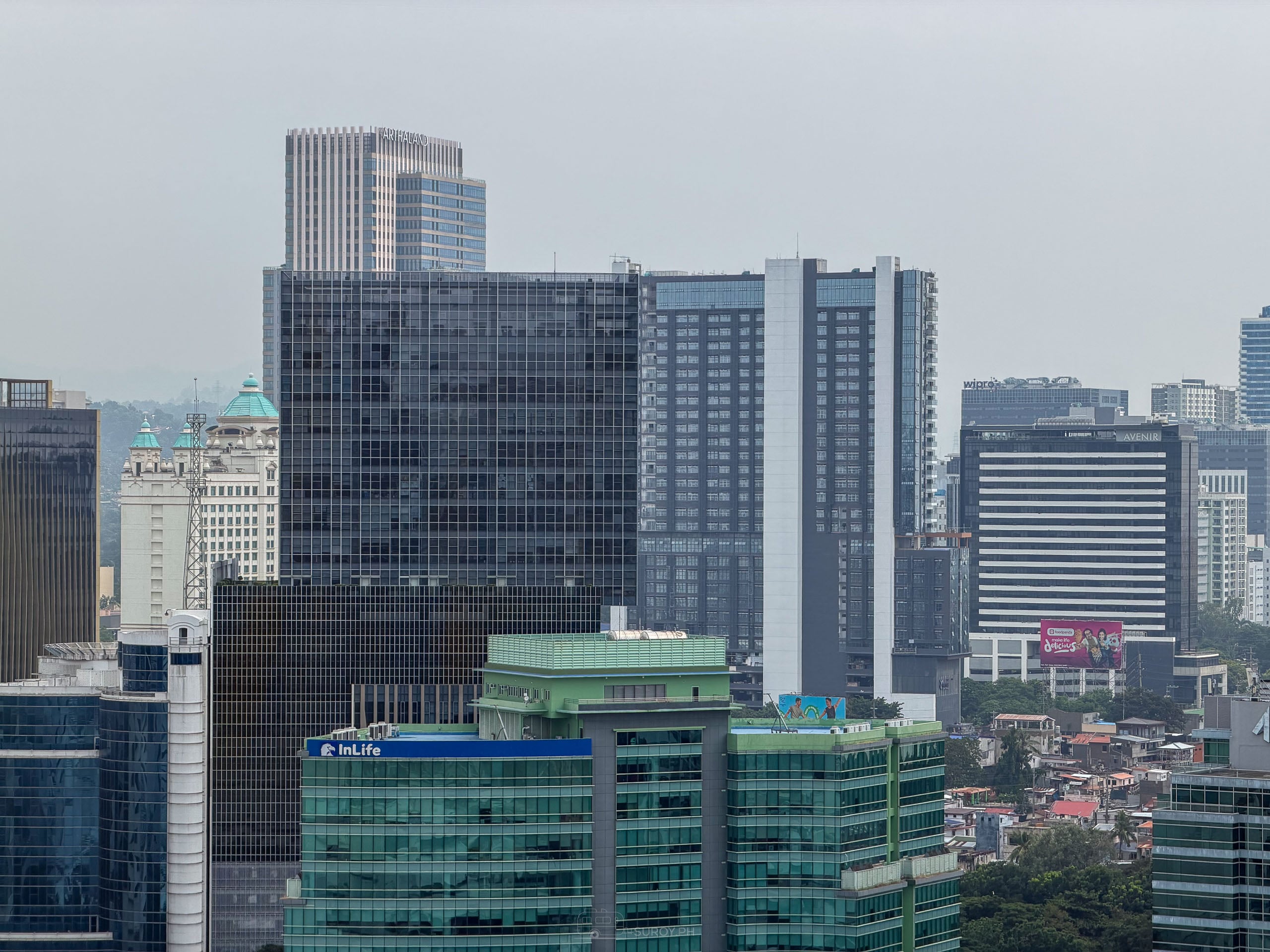
The smoke is Kalimantan’s. Forest fires burning in Indonesia, somewhere between roughly 1,200 and 1,800 kilometers to the southwest depending on which part of the island is alight, are producing fine particulate matter, and the southwest monsoon that Filipinos call the habagat is carrying it north.
Arthur Niño Calupig, air quality monitoring specialist at DENR-EMB 7, put the mechanism plainly on 1 September: “As long as the forest fires continue and the prevailing habagat winds persist, the poor air quality could possibly extend over the coming days.”
Gerry Bagtasa of the UP Diliman Institute of Environmental Science and Meteorology added the timing. Tropical cyclones sitting to the north have been strengthening the monsoon flow, effectively pulling Indonesian smoke across the archipelago faster and further than it normally travels. His read, given 2 September: this is not a local emissions problem, because local emissions do not behave this way when the wind is strong.
What the numbers mean
The index compresses several pollutants into one figure, but the one doing the damage is PM2.5: particles small enough to pass the nose and throat and reach deep lung tissue. Above 100 is where the health advisories begin.
One caveat worth stating rather than hiding. Outlets covering the same readings this week have attached different band names to them, because the Philippine index does not use identical thresholds to the American one most air quality apps default to. A second caveat has appeared alongside it. Several national outlets have run this week readings for Metro Cebu a day later than the Cebu papers did, putting 252 on 4 September and 197 on 5 September when EMB 7 recorded them on 3 and 4 September. The numbers are consistent across coverage. The dates and the adjectives are not. Read the figure, and check the date against a Cebu desk.
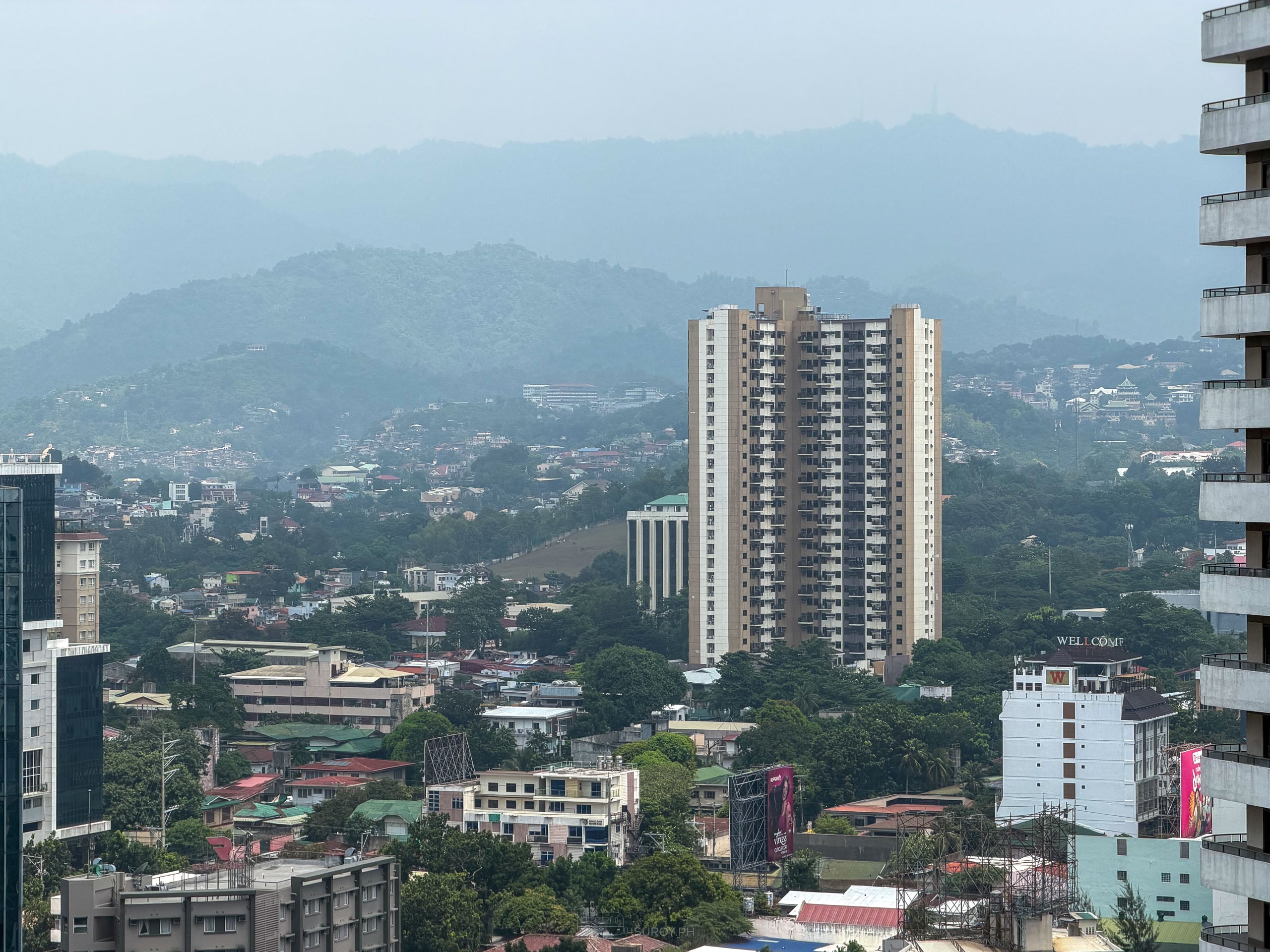
Three forecasts, and they do not agree
| Source | Date given | When it clears |
|---|---|---|
| Environmental Management Bureau | 1 September 2026 | Parts of the Philippines affected until 3 September |
| Jundy del Socorro, DENR-EMB chief | 2 September 2026 | Improvement between 4 and 6 September, if rain continues and winds shift |
| Gerry Bagtasa, UP IESM | 2 September 2026 | Friday or Saturday, 4 or 5 September |
The spread is three days and the reason for it is honest rather than sloppy. Del Socorro said the situation is “largely beyond our control because it depends on several factors outside the Philippines.” Two of the three variables sit in Indonesia: whether the fires keep burning, and what the wind does. The third, rain over the Visayas, is the one that would settle it fastest, because rainfall scrubs particulates out of the air far faster than time does.
Two of the three have been overtaken, and the middle one has not. The window given by Del Socorro, improvement between 4 and 6 September, is the one the readings followed: the index fell on each of those days and left the very unhealthy band on the sixth. The EMB line about 3 September and the 4 or 5 September given by Bagtasa were both early. Anyone planning around the most optimistic of the three was planning around the wrong one.
What the Department of Health is asking for
The DOH advisory issued 2 September covers Central Luzon, Calabarzon, Mimaropa and the Visayas, naming Cebu and Bohol.
Stay indoors where possible. Outdoors, wear an N95. Where an N95 is not available, the department suggests a wet cloth over the nose and mouth, or two surgical masks layered, while being clear that neither is equivalent. EMB has been blunter about why: cloth and surgical masks do not filter PM2.5, so a mask that feels like protection may not be providing any.
Extra caution for children, the elderly, and anyone with respiratory or heart conditions. Watch for difficulty breathing, coughing, chest pain, watering eyes and nasal itchiness. Asthma gets worse in this air.
Indoors, keep windows and doors closed and run air conditioning on recirculate rather than drawing in outside air.
Which brings us to the other problem.
Two people are worth quoting on where this goes next. Arthur Niño Calupig, air quality monitoring specialist at EMB 7, said the bureau is “already preparing for the worst-case scenario if the Air Quality Index rises to the Emergency category”, and that how long this lasts depends on the Kalimantan fires and the wind rather than on anything decided here. Jeanette Pauline Cortes, medical officer at DOH 7, has told hospitals to prepare for a surge in respiratory cases, and asked people to use N95 masks rather than the wet cloth that circulates as advice every time this happens.
Where else the haze has reached
Cebu is the loudest case and it is not the worst one. The same smoke has been measured across Mindanao and up into Luzon, and in one city it has already crossed into the band above Cebu’s.
| Place | Reading | Band | When |
|---|---|---|---|
| Koronadal City, South Cotabato | 312.8 | Emergency | 6 p.m., 1 September |
| Metro Cebu | 252 | Acutely unhealthy | 11 a.m., 3 September |
| Iligan City | 209 | Acutely unhealthy | 1 September |
| Iligan City | 203 | Acutely unhealthy | 31 August |
| Zamboanga City, Barangay Talisayan | 159 | Very unhealthy | early September |
| Cagayan de Oro | 105 | Unhealthy for sensitive groups | 1 September |
| Zamboanga City, Barangay Tumaga | 48 | Good | early September |
| Cabitoonan, Toledo City, Cebu | 73 | Fair | 4 September |
| Metro Cebu | 166 | Very unhealthy | 7 a.m., 5 September |
| Metro Cebu | 159 | Very unhealthy | 4 p.m., 5 September |
| Bacolod City, Negros Occidental | Not published | Very unhealthy | 8 a.m., 4 September |
| La Castellana, Negros Occidental | Not published | Very unhealthy | 8 a.m., 4 September |
| Cabadbaran City, Agusan del Norte | Not published | Very unhealthy | 4 September |
| Cabitoonan, Toledo City, Cebu | 46 | Good | 7 a.m., 5 September |
| Metro Cebu | 136 | Unhealthy for sensitive groups | 4 p.m., 6 September |
| Cabitoonan, Toledo City, Cebu | 47 | Good | 4 p.m., 6 September |
| Metro Cebu | 158 | Very unhealthy | 7 a.m., 7 September |
| Metro Cebu | 157 | Very unhealthy | 11 a.m., 7 September |
| Metro Cebu | 143 | Unhealthy for sensitive groups | 4 p.m., 7 September |
| Metro Cebu | 135 | Unhealthy for sensitive groups | 7 a.m., 8 September |
| Metro Cebu | 130 | Unhealthy for sensitive groups | 11 a.m., 8 September |
| Cabitoonan, Toledo City, Cebu | 63 | Fair | 7 a.m., 8 September |
| Cabitoonan, Toledo City, Cebu | 56 | Fair | 11 a.m., 8 September |
| Metro Cebu | 121 | Unhealthy for sensitive groups | 4 p.m., 8 September |
| Metro Cebu | 117 | Unhealthy for sensitive groups | 7 a.m., 9 September |
| Metro Cebu | 116 | Unhealthy for sensitive groups | 11 a.m., 9 September |
| Metro Cebu | 116 | Unhealthy for sensitive groups | 4 p.m., 9 September |
| Cabitoonan, Toledo City, Cebu | 47 | Good | 11 a.m., 9 September |
| Metro Cebu | 102 | Unhealthy for sensitive groups | 7 a.m., 10 September |
| Metro Cebu | 98 | Fair | 11 a.m., 10 September |
| Metro Cebu | 86 | Fair | 4 p.m., 10 September |
| Cabitoonan, Toledo City, Cebu | 37 | Good | 7 a.m., 10 September |
| Cabitoonan, Toledo City, Cebu | 34 | Good | 11 a.m., 10 September |
| Cabitoonan, Toledo City, Cebu | 33 | Good | 4 p.m., 10 September |
| Metro Cebu | 87 | Fair | 7 a.m., 11 September |
| Metro Cebu | 91 | Fair | 11 a.m., 11 September |
| Metro Cebu | 97 | Fair | 4 p.m., 11 September |
| Cabitoonan, Toledo City, Cebu | 26 | Good | 11 a.m., 11 September |
| Metro Cebu | 72 | Fair | 5 a.m., 14 September |
| Metro Cebu | 65 | Fair | 8 a.m., 14 September |
| Metro Cebu | 64 | Fair | 11 a.m., 14 September |
| Cabitoonan, Toledo City, Cebu | 29 | Good | 5 a.m., 14 September |
| Cabitoonan, Toledo City, Cebu | 28 | Good | 8 a.m., 14 September |
| Cabitoonan, Toledo City, Cebu | 26 | Good | 11 a.m., 14 September |
| Digos City, Davao del Sur | Not published | Very unhealthy | 8 September |
| Metro Cebu | 154 | Very unhealthy | 12 September |
| Metro Cebu | 84 | Fair | 13 September |
| Cabitoonan, Toledo City, Cebu | 25 | Good | 13 September |
| Metro Cebu | 78 | Fair | 15 September |
| Cabitoonan, Toledo City, Cebu | 10 | Good | 15 September |
| Metro Cebu | 57 | Fair | 7 a.m., 16 September |
| Cabitoonan, Toledo City, Cebu | 17 | Good | 16 September |
| Metro Cebu | 57 | Fair | 4 p.m., 17 September |
| Cabitoonan, Toledo City, Cebu | 18 | Good | 4 p.m., 17 September |
| Metro Cebu | 118 | Unhealthy for sensitive groups | 8 p.m., 18 September |
| Metro Cebu | 146 | Unhealthy for sensitive groups | 11 p.m., 18 September |
| Cabitoonan, Toledo City, Cebu | 33 | Good | 11 p.m., 18 September |
| Metro Cebu | 180 | Very unhealthy | 2 a.m., 19 September |
| Metro Cebu | 209 | Acutely unhealthy | 4 a.m., 19 September |
| Cabitoonan, Toledo City, Cebu | 43 | Good | 4 a.m., 19 September |
| Metro Cebu | 238 | Acutely unhealthy | 7 a.m., 19 September |
| Metro Cebu | 264 | Acutely unhealthy | 11 a.m., 19 September |
| Bacolod City, Negros Occidental | Not published | Acutely unhealthy | noon, 19 September |
| Koronadal City, South Cotabato | Not published | Acutely unhealthy | noon, 19 September |
| Zamboanga Peninsula | Not published | Acutely unhealthy | noon, 19 September |
| La Castellana, Negros Occidental | Not published | Very unhealthy | noon, 19 September |
| Northern Mindanao | Not published | Very unhealthy | noon, 19 September |
| Meycauayan, Bulacan | Not published | Very unhealthy | noon, 19 September |
| Metro Cebu | 287 | Acutely unhealthy | 8 p.m., 19 September |
| Cabitoonan, Toledo City, Cebu | 185 | Very unhealthy | 8 p.m., 19 September |
| Metro Cebu | 296 | Acutely unhealthy | 1 a.m., 20 September |
| Metro Cebu | 286 | Acutely unhealthy | 4 a.m., 20 September |
| Cabitoonan, Toledo City, Cebu | 225 | Acutely unhealthy | 4 a.m., 20 September |
| Metro Cebu | 271 | Acutely unhealthy | 7 a.m., 20 September |
| Metro Cebu | 248 | Acutely unhealthy | 4 p.m., 20 September |
| Cabitoonan, Toledo City, Cebu | 216 | Acutely unhealthy | 4 p.m., 20 September |
| Nabitasan, La Paz, Iloilo City | 115 | Unhealthy for sensitive groups | noon, 20 September |
| Metro Cebu | 167 | Very unhealthy | 4 p.m., 21 September |
| Cabitoonan, Toledo City, Cebu | 66 | Fair | 4 p.m., 21 September |
| Metro Cebu | 189 | Very unhealthy | 11 a.m., 21 September |
| Cabitoonan, Toledo City, Cebu | 101 | Unhealthy for sensitive groups | 21 September |
| Cabadbaran City, Agusan del Norte | Not published | Very unhealthy | 21 September |
| Iligan City | Not published | Very unhealthy | 21 September |
| Metro Cebu | 114 | Unhealthy for sensitive groups | 11 a.m., 22 September |
| Metro Cebu | 105 | Unhealthy for sensitive groups | 4 p.m., 22 September |
| Cabitoonan, Toledo City, Cebu | 41 | Good | 4 p.m., 22 September |
The two Zamboanga rows are in the table on purpose. Talisayan and Tumaga are barangays in the same city and they were reading 159 and 48. A city-level number is close to meaningless in this episode, and a reading taken three kilometers from where you are standing is not your air.
By region, the DENR has put Bicol and the Zamboanga Peninsula in the very unhealthy band and Central Luzon and Northern Mindanao in the acutely unhealthy one. The Department of Health has issued its own guidance keyed to the six bands, from good and fair up to emergency, at which point the instruction is to stay indoors with the doors and windows shut. It asks everyone else to wear masks and cut strenuous outdoor activity, tells outdoor workers to take regular breaks indoors, and singles out children, older people, pregnant women and anyone with a heart or lung condition to keep their prescribed medicines to hand.
One thing worth separating out, because the two are being reported in the same breath. Metro Manila closed schools on 4 September, and so did Tarlac, Atok in Benguet and nine towns in Pampanga, but that is the habagat and the flooding that came with it, not the haze. DENR readings for Metro Manila stations including Las Piñas and Malabon were fair to good on 3 September, and the Inquirer recorded the National Capital Region as good by 4 September. The capital has had bad air this week. It is not having Cebu’s week.
Next on Suroy.ph
Part two: the power
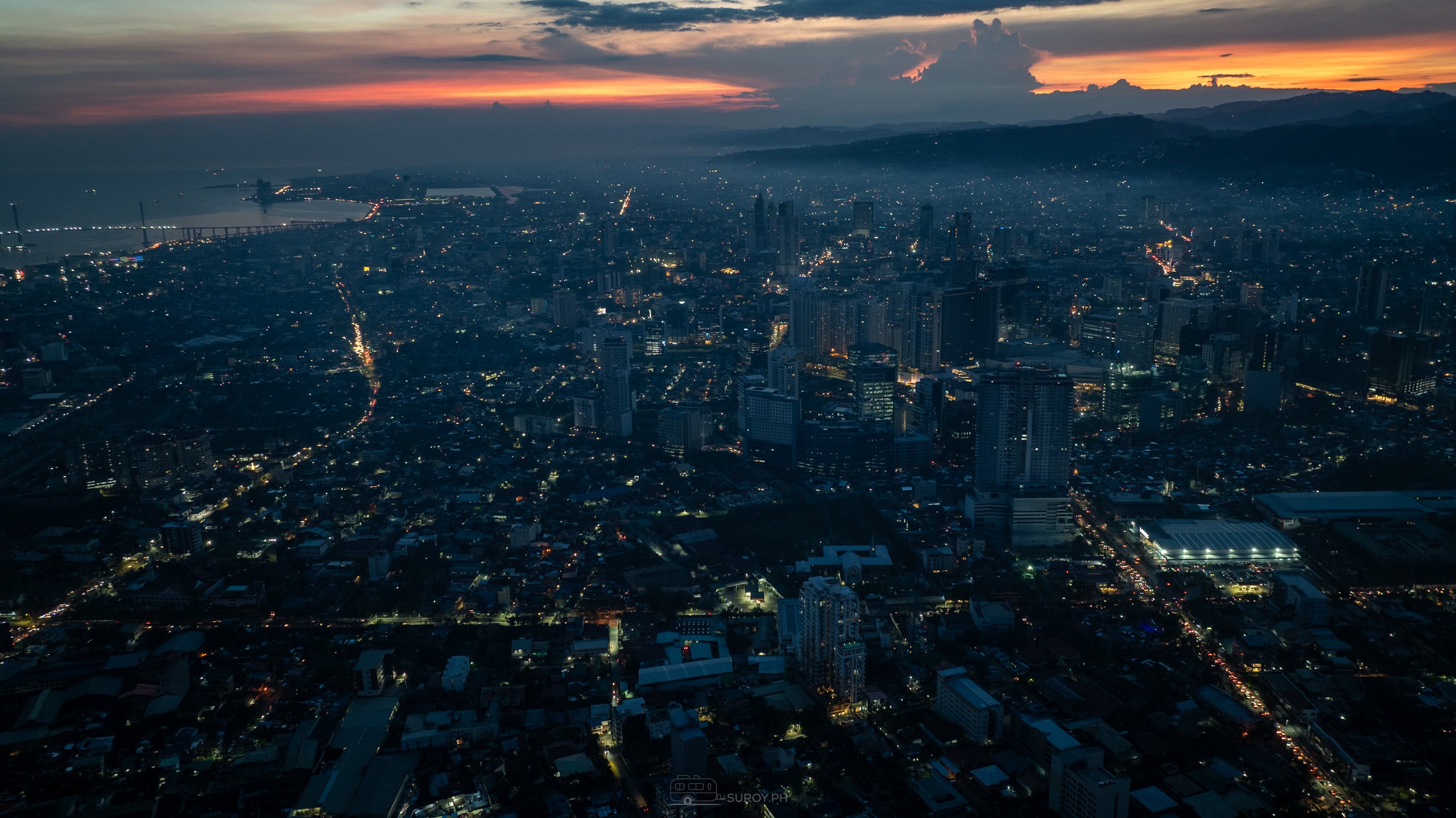
The official advice for a haze day is to stay inside with the windows shut and the air conditioning running. In Metro Cebu this week, that advice collided with a rotating one hour power cut.
Nobody in an agency has said this out loud, and it is the most practical thing about the whole situation.
What the grid is actually short of
On 2 September 2026 the Visayas grid had 2,205 megawatts available against a peak demand of 2,501. Roughly 774 megawatts of capacity was unavailable outright, with individual units carrying outage start dates ranging from 2021 to this month, and a further sixteen plants were running at reduced capacity. NGCP issued both red and yellow alerts for the day. A red alert means supply cannot meet demand plus the grid’s regulating requirement. A yellow alert means the operating margin cannot cover a contingency.
The region has now spent more than seventy consecutive days on one alert or the other.
The single largest hole is Therma Visayas in Toledo City, whose two units total 338 megawatts and which went down in May with main turbine failures. Unit 2, 169 megawatts, came back to full load on 1 September. Unit 1 is still out for boiler tube repairs. Philstar and The Freeman then both named Units 1 and 2 among the large coal plants unavailable on 12 September, while The Freeman said in the same report that Unit 2 had just been restored after months of repairs and that Unit 1 is expected back on 15 September. The two statements do not agree and this page does not pick between them. That has since resolved against the restoration. NGCP named Therma Visayas Units 1 and 2 and Panay Energy Development Corporation Unit 3 as the unavailable large coal plants on 14 September, reported by Net25, and the Inquirer on 15 September and Philstar on 16 September both counted three coal plants offline. The 15 September return date for Unit 1 passed without it. Unit 2 went out again and came back again. NGCP lead specialist Reagan Alcantara told the Manila Times, reported on 19 September, that Unit 2 resumed at around 4 p.m. on 15 September, a day ahead of its schedule, and that Unit 1 was targeted for 18 September. Therma Visayas said in an advisory that Unit 1 was in startup and synchronization and estimated it would join the grid between 1 and 2 a.m. on 18 September. No confirmation that it did had been published as of Tuesday 22 September. KEPCO-SPC in Naga City restored 103 megawatts on the same day. Metro Cebu alone draws over 1,000 megawatts.
What has been holding the region up is imported electricity: 400 to 450 megawatts across the Mindanao-Visayas interconnection and around 250 megawatts from Luzon. Energy Undersecretary Mario Marasigan was direct about the arithmetic, saying that without those continuous transfers the Visayas would face consistent red alert conditions.
When it ends
The Department of Energy has moved the target again. Its release of 7 September schedules Therma Visayas Unit 1, 169 megawatts, for 15 September 2026, puts Panay Energy Development Corporation Unit 3, 150 megawatts, at 3 October, and adds 253 megawatts of battery storage across Cebu, Panay, Leyte and Negros. Luningning Baltazar, director of the department Electric Power Industry Management Bureau, quoted by Power Philippines on 7 September, expects a normal Visayas supply position by 21 September, once the plants on outage return by 20 September. The Manila Times, reporting Energy Secretary Sharon Garin on 8 September, gave October as the month red alerts end and yellow alerts fall to a minimum, and still put Therma Visayas Unit 1 back on 11 September. The 11 September target this page carried has gone. The department own document and its own secretary do not give the same replacement date, and this page does not pick between them. Energy Secretary Sharon Garin gave a fuller plan on 15 September, reported by The Freeman on 16 September. The department is commissioning 253 megawatts of battery storage across Cebu, Panay, Negros and Leyte, is considering power barges of more than 200 megawatts for Cebu, Panay and Bohol, and expects the batteries and the returning units together to improve the Visayas position starting the following week. Energy Undersecretary Mario Marasigan said Mindanao supply has improved, with GNPower Kauswagan Unit 3 energized on 13 September and stable by Monday 14 September and two units of the Pulangi 4 hydropower plant back from maintenance, which matters here because Mindanao is where the imports come from.
Note the gap. Note that neither problem has closed. Every forecast for the haze pointed at 3 to 6 September, and the reading did leave the very unhealthy band on 6 September, which makes the middle forecast right rather than all three wrong, although the band did not stay broken: 7 September went back above 151 for most of the morning. The grid target has moved off 11 September. Tuesday gave back most of Monday and then ran tighter than its own outlook. No alert bulletin surfaced for Wednesday, and Thursday has opened easier: 2,884 megawatts available against a projected peak of 2,357, an operating margin of 527, where the Monday outlook showed 763 and Wednesday morning showed 385. Thursday carries the lowest projected demand of the week, so part of that margin is the projection rather than the fleet. Friday opened at 2,865 against 2,351, a margin of 514, on a projected peak six megawatts under Thursday, so the second easy morning in a row rests on the same low projection. Then Friday afternoon went red. Saturday opened at 2,587 against 2,136, a margin of 451, on the lowest projected demand of the week, which is the weekend and not a repaired fleet. Saturday evening went red anyway, from 5 to 9 p.m., on 2,109 against 2,346. A weekend margin is now on record failing, which is the plainest answer this episode has given to the question of whether the fleet has recovered. Sunday opened wider still, at 2,613 against 1,965, a margin of 648 on the lowest projected demand of the run. Monday answered it. NGCP placed the Visayas under a red alert from 3 to 9 p.m. on 14 September, with yellow alerts from 1 to 3 p.m. and from 9 to 11 p.m., reported by Net25 on 14 September and by Philstar on 15 September, and named Therma Visayas Units 1 and 2 and Panay Energy Development Corporation Unit 3 as the large coal plants unavailable. Tuesday 15 September opened on 2,734 megawatts against a projected peak of 2,425, an operating margin of 309, and Mindanao on 2,962 against 2,451, a margin of 511. As advised, reported by the Inquirer at 8:29 a.m. on 15 September, the Visayas would run a red alert from 5 to 7 p.m. with yellow alerts from 3 to 5 p.m. and from 7 to 8 p.m. As it ran, reported by Philstar on 16 September, the alert held those hours, on 2,352 megawatts against a projected peak demand of 2,492, a gap of 140 megawatts, with nearly 1,000 megawatts unavailable across 33 plants on forced outage and 15 running derated, and the count for the year at 40 red alerts and 104 yellow. Wednesday 16 September opened on 2,882 against 2,411, an operating margin of 471. That is 148 megawatts more capacity than Tuesday morning on a projected peak 14 megawatts lower, so the widening is supply rather than the calendar, and it is the first weekday morning of this run to open better than the weekday before it. Wednesday did not hold the shape of its outlook either, but it broke the other way. NGCP advised a red alert from 5 to 6 p.m. on 16 September, with yellow alerts from 4 to 5 p.m. and from 6 to 8 p.m., then lifted the red at 1 p.m. before it ran, reported by DZRH on 16 September. Available capacity stood at 2,536 megawatts against a peak demand of 2,538 at 8 a.m. and at 2,584 against 2,394 by 1:10 p.m., with 774.2 megawatts unavailable across eight plants on forced outage and 15 running derated, and NGCP naming Therma Visayas Unit 1 and Panay Energy Development Corporation Unit 3 as the large coal plants still out. Thursday 17 September carried a yellow alert from 5 to 7 p.m., on 2,505 megawatts against 2,290 at 8 a.m., with 820.6 megawatts unavailable across 12 plants on forced outage and 14 running derated, reported by DZRH on 17 September, and the Manila Times reported on 19 September that the alert was lifted that evening and that 15 September was the last day the Visayas ran a red alert. Friday 18 September was the first clear day. NGCP placed the Visayas grid under normal operating conditions, on 2,672 megawatts of available capacity against a peak demand of 2,308 on Friday morning, a margin of 364, reported by the Manila Times and by the Daily Guardian on 19 September. The NGCP outlook as of 6 p.m. that evening, read directly from ngcp.ph and the most recent published as of Saturday morning, puts the Visayas on 2,797 against 2,384, a margin of 413, and Mindanao on 2,997 against 2,464, a margin of 533. One clear weekday is not a repaired fleet, and NGCP lead specialist Reagan Alcantara said as much: the improvement is gradual, and a major generating plant outage could still trigger a yellow alert. The outlook as of 6 p.m. on Saturday 19 September puts the Visayas on 2,651 against 2,323, a margin of 328, 85 megawatts narrower than Friday evening on a weekend projection, and Mindanao on 2,836 against 2,411, a margin of 425. The outlook as of 6 a.m. on Monday 21 September put the Visayas on 2,818 megawatts of available capacity against a system peak demand of 2,425, an operating margin of 393, and Mindanao on 3,166 against 2,492, a margin of 674. That was the first weekday projection since the grid normalized, and it carried 84 megawatts more available capacity than the morning of Tuesday 15 September on exactly the same projected peak of 2,425, the last day the Visayas ran a red alert. The outlook as of 6 a.m. on Tuesday 22 September gives the Visayas 2,731 against 2,400, a margin of 331, and Mindanao 3,258 against 2,614, a margin of 644. Available capacity is 87 megawatts down on Monday, and three megawatts below where it stood at the same hour on Tuesday 15 September. The margin is 22 megawatts wider than that morning only because the projected peak is 25 megawatts lower, which puts the week on week gain in the demand projection rather than in the fleet. The outlook as of 6 a.m. on Wednesday 23 September gives the Visayas 2,820 against 2,431, a margin of 389, and Mindanao 3,292 against 2,441, a margin of 851. Available capacity is 89 megawatts up on Tuesday and 86 megawatts above where it stood at the same hour on Tuesday 15 September, on a projected peak six megawatts higher, so this gain sits in the fleet rather than in the projection. The Freeman reported on 23 September that Therma Visayas Unit 1 is offline on a boiler leak that needs a cold reboot, that Kepco Salcon Unit 2 is offline on a boiler leak and expected back around 26 September, that Palm Concepcion Unit 3 is on an extended outage, and that CEDC returned to its full 83.7 megawatts early on Tuesday. Those plant details are carried by The Freeman alone. Visayan Electric told Cebu Daily News on 22 September and The Freeman on 23 September that published interruption schedules are forecasts rather than guarantees, because grid conditions are watched in real time and an alert can escalate from yellow to red faster than a schedule can be redrawn. No alert bulletin for 19 to 23 September had been reported as of Wednesday morning.
What a brownout actually looks like here
Visayan Electric implements one hour rotational brownouts in selected areas when demand is high and NGCP instructs it to, which in practice has meant the evening peak. Its franchise area covers Cebu City, Mandaue, Talisay and Naga, plus Minglanilla, Consolacion, Liloan and San Fernando.
The pattern is not fixed. On 31 August the red alert ran from 5 to 10 p.m. with a yellow alert following until 11 p.m., but parts of Mactan lost power between 10 a.m. and 5 p.m. the same day. Planning around the evening only is a mistake.
The part that catches people out: the water
When the power goes, the pumps go.
Rotational brownouts take Metropolitan Cebu Water District pumping stations offline, and the taps go with them. MCWD general manager John DX Lapid described the result plainly: “It’s either low water pressure or there’s no water at all,” with severity depending on which facilities lose power.
He also named the operational problem behind it. MCWD typically gets only one to two hours of advance notice about where the outages will fall, which is not enough time to prepare a distribution network. The district posts affected barangays on its official Facebook page as it learns them, and that page, rather than any schedule published in advance, is the practical way to know.
On 14 August, a red alert between 6 and 9 p.m. forced rotational cuts that took pumping stations down across the metro. That is the shape of it. It happened again this week. SunStar Cebu reported on 15 September that the rotational brownouts had cut MCWD water production by about 22,000 cubic meters a day, with tankers sent to parts of Binaliw, Pit-os, Bacayan, San Jose and Talamban and supply diverted to neighborhoods running on low pressure. The district draws on 149 wells and 15 bulk suppliers, and board chairman Ruben Almendras said not all of them have standby generators. He also said the district has been told the rotational brownouts should end by 21 September, and that he does not expect a citywide interruption before then. Those figures are carried by SunStar Cebu alone.
What is not happening, which matters more than it sounds
A short list, because the absence of these is what separates a difficult week from a canceled trip.
- Cebu City’s Executive Order No. 106 covered Saturday 5 September, and fresh suspensions have since been announced for Monday 7 September and Tuesday 8 September. Executive Order No. 106, Series of 2026, signed by Acting Mayor Tomas Osmeña, suspended face to face classes in all public and private schools and covered examinations and school activities as well as ordinary teaching. The Manila Times reported on 5 September that it ran through Saturday 5 September. The Freeman, the same day, reported the order as running through 5 September or until further notice. The two readings of the order differ and this page does not pick between them. That order has now been overtaken twice. Mayor Nestor Archival announced on the evening of Sunday 6 September that face to face classes in Cebu City were suspended on Monday 7 September, from kindergarten through senior high school and in public and private schools alike, with modular distance learning in their place. Cebu Daily News reported that announcement at 8:58 p.m. on 6 September, and reported separately on 7 September that college students were left out of it. The suspension was carried into Tuesday 8 September on the same terms, kindergarten to senior high school, public and private, with colleges and universities left to their own administrations, on an index of 135 at 7 a.m. in the unhealthy for sensitive groups band. That was the fifth straight day without face to face classes in the city. GMA News Online listed it at 4:27 a.m. on 8 September, and the Manila Times and Cebu Daily News both carried it later the same day. No executive order number has been published for either day. Wednesday 9 September needs no order at all: it is the birth anniversary of Sergio Osmeña Sr. and a special non-working holiday in Cebu City and the province of Cebu, and no Cebu local government appears on the national class suspension lists for that day. Face to face classes in Cebu City resume on Thursday 10 September. Mayor Nestor Archival announced the resumption on 9 September, covering all public and private schools from kindergarten through senior high school, and said the index is forecast fair to moderate that day. Cebu Daily News reported the announcement at 9:30 p.m. on 9 September, and the class suspension list GMA News Online published at 8:10 p.m. the same evening names no Cebu local government for 10 September. Classes ran that day on those terms. The city excused students with asthma, allergic rhinitis, an active respiratory illness or a cardiovascular condition from physical attendance and ordered schools to keep physical education, sports practice, flag ceremonies and recess indoors, as the Manila Times reported on 10 September. As of The Freeman on 11 September, no new suspension order had been reported for Cebu City. The class suspension lists GMA News Online published for Friday 11 September and Saturday 12 September name no Cebu local government, and the suspensions on them are habagat flooding elsewhere in the country rather than haze. The list for Monday 14 September names no Cebu local government either, and GMA News Online published no list at all between that one and the list for Monday 21 September. That list, published at 2:29 p.m. on 20 September and updated at 5:50 p.m., names Cebu City: face to face classes suspended at all levels, public and private, on an acutely unhealthy index at 4 p.m. on Sunday 20 September and an expectation that the air would stay unhealthy on Monday. Mayor Nestor Archival directed schools to modular, online or asynchronous learning, reported by SunStar Cebu at 2:06 p.m. on 20 September, by the Philippine Daily Inquirer at 8:08 p.m. and by The Freeman on 21 September. Nine more Metro Cebu local governments followed. Talisay City suspended public schools and left private schools and Talisay City College to their own administrations, ordered by Mayor Gerald Anthony Gullas Jr. Mandaue, Lapu-Lapu, Naga and Carcar and the towns of Minglanilla and San Fernando are also off, Minglanilla ordered by Mayor Lheslen Enad, and The Freeman adds Cordova, Consolacion and Liloan. Toledo City is named by SunStar Cebu alone. The two Cebu desks do not agree on how far the suspensions reach: SunStar Cebu reports all levels in public and private schools, the Inquirer reports elementary and high school only outside Cebu City, and this page does not pick between them. No executive order number has been published for any of them. Anyone with a child in school elsewhere in Metro Cebu should check that city’s own channels rather than this page. Lapu-Lapu suspended all levels including teaching and non teaching personnel, Talisay suspended public schools and left private schools and Talisay City College to decide for themselves, and Carcar, Minglanilla and San Fernando were also off. Cebu City had hoped to resume on 4 September when it first called classes on 2 September. It did not. The suspensions carried into Tuesday 22 September. GMA News Online, publishing at 8:13 p.m. on 21 September and updating at 6:06 a.m. on 22 September, names Cebu City at all levels in public and private schools, on unfavorable atmospheric conditions expected to persist; Carcar, Carmen, Catmon, Consolacion, Mandaue and Minglanilla at all levels in public and private schools; Lapu-Lapu from day care to high school in public and private schools; Naga City in public schools on alternative delivery; and Talisay at all levels in public schools. Carmen and Catmon are new to the list and neither is in Metro Cebu. Toledo City and San Fernando, named for Monday, are not named for Tuesday. No executive order number has been published for any of the Tuesday orders, and no second same day source for the Tuesday roll had surfaced when this page was checked, so it stands on GMA News Online alone. No suspension order for Wednesday 23 September had been reported when this page was checked. The most recent list on GMA News Online is still the one for Tuesday 22 September, and neither The Freeman nor the Manila Times carried a Cebu class suspension story in its 23 September batch. That is an absence of reporting rather than a confirmation that classes are on.
- No flight disruption has been reported at Mactan-Cebu International Airport from either the haze or the grid.
- No travel advisory, entry restriction or activity ban is in force for Cebu or Bohol.
- The brownouts are rotational and roughly an hour, not sustained outages.
- The Cebu provincial government has issued health guidance, not movement restrictions. Governor Pamela Baricuatro has asked residents, and vulnerable groups in particular, to wear masks, with the provincial disaster office monitoring. The Department of Health in Central Visayas advises limiting time outdoors and wearing N95 or KN95 rather than cloth or surgical.
- Executive Order No. 47 asks the province to switch things off on Monday nights. Reported by The Freeman on 5 September, the TAPS program of Governor Pamela Baricuatro sets one hour of reduced consumption every Monday from 8 to 9 p.m., mandatory for provincial government facilities and voluntary for private business, municipalities, schools and households. Non essential lighting off, unused equipment off, air conditioning no lower than 24 degrees Celsius. Health care, emergency response and security systems are exempt.
Checked 23 September 2026.
What it changes about a trip this week
The constraints are air and electricity, not access. That distinction does most of the work.
Largely unaffected. Anything underwater or under cover. Diving and snorkeling off Moalboal, the Kawasan canyoneering run, the sardine run, churches, markets, restaurants, Carbon, the Basilica. The particulate load is in the air column and a mask is irrelevant twelve feet under. Resorts on the south and west coasts sit outside the Visayan Electric franchise area and many run their own generators anyway.
Degraded by the haze. Anything whose payoff is a long sightline. Osmeña Peak, Tops, the sea of clouds at Mt. Campetra, the ridge views along the Transcentral Highway. Haze scatters light and collapses contrast with distance, so far ridges go milky and gray while the foreground stays sharp. A viewpoint is worth what you can see from it, and this week that is less. Less than it was, though, and much less than two weeks ago: And less again this weekend: the index went from 57 on 17 September to 296 early on 20 September, past the first peak, and the far ridges have gone again.
Complicated by the grid. Hotel lifts, air conditioning, hot water, hotel wifi, ATMs, card terminals in smaller shops, and the phone you are navigating with. None of it stops for long. All of it stops without much warning.
Worth rescheduling rather than canceling. Sunrise hikes, drone work and island hopping, which combine hours of outdoor exertion with a view as the reason for going. The exertion is the health question and the view is the value question. When both point the same way, move the day to the back half of the week.
One upside, stated without enthusiasm. Particulates redden sunrises and sunsets, and the light at either end of the day this week is unusually warm and heavy. Poor compensation for a lost mountain view, but photographers should know it is there.
If the trip is already booked
Nothing here justifies canceling a Cebu trip, and nothing here should be treated as trivial by anyone traveling with asthma or a small child.
- Bring N95 masks from home. Local supply tightens fast during an advisory week.
- Ask the hotel two specific questions before arrival. Whether it has a generator, and whether that generator covers the guest floors or only the lobby and the lifts. The second answer is the one that matters at 8 p.m.
- Fill a bottle and a bucket in the afternoon. If the pumps go down, the tap goes with them, and the hotel’s roof tank is finite.
- Charge everything during the day. Phone, camera batteries, power bank.
- Carry cash. Card terminals and ATMs go down with everything else.
- Follow MCWD’s Facebook page if you are staying in Metro Cebu. It is the only place the affected barangays get named, and usually only an hour or two ahead.
- Check the EMB reading the morning of any planned hike, not the night before. The index has moved 50 points inside a single day.
And watch for rain. It is the fastest thing that can end the haze, and it is the one variable in that forecast actually sitting over the Philippines. It will do nothing at all for the grid.
For what to do when the air turns bad for a different reason, see our volcanic ashfall survival guide.
Air quality figures from Environmental Management Bureau monitoring stations at Talisay City, UP Cebu and Cabitoonan in Toledo City, 31 August to 17 September 2026, as reported by SunStar Cebu, Cebu Daily News, The Freeman, the Manila Times, GMA News Online, SunStar Davao and the Inquirer. Grid alert figures from National Grid Corporation of the Philippines bulletins as reported by SunStar Cebu, DZRH, Philstar, The Freeman, RMN, the Manila Times, Net25, the Daily Guardian and the Inquirer, 2 to 18 September 2026, and from the NGCP power situation outlook for 6, 7, 8, 9, 10, 11, 12, 13, 15, 16 and 18 September 2026, read directly from ngcp.ph. Plant status and supply projections as published by the Department of Energy, 1 to 15 September 2026, including its release of 7 September and Energy Secretary Sharon Garin on 15 September. Water service accounts from the Metropolitan Cebu Water District, to 15 September 2026. Advisories as issued by DENR-EMB, the Department of Health and the Province of Cebu, 1 to 5 September 2026. Conditions in this report change daily and this page is dated accordingly.
Last checked: 19 September 2026.