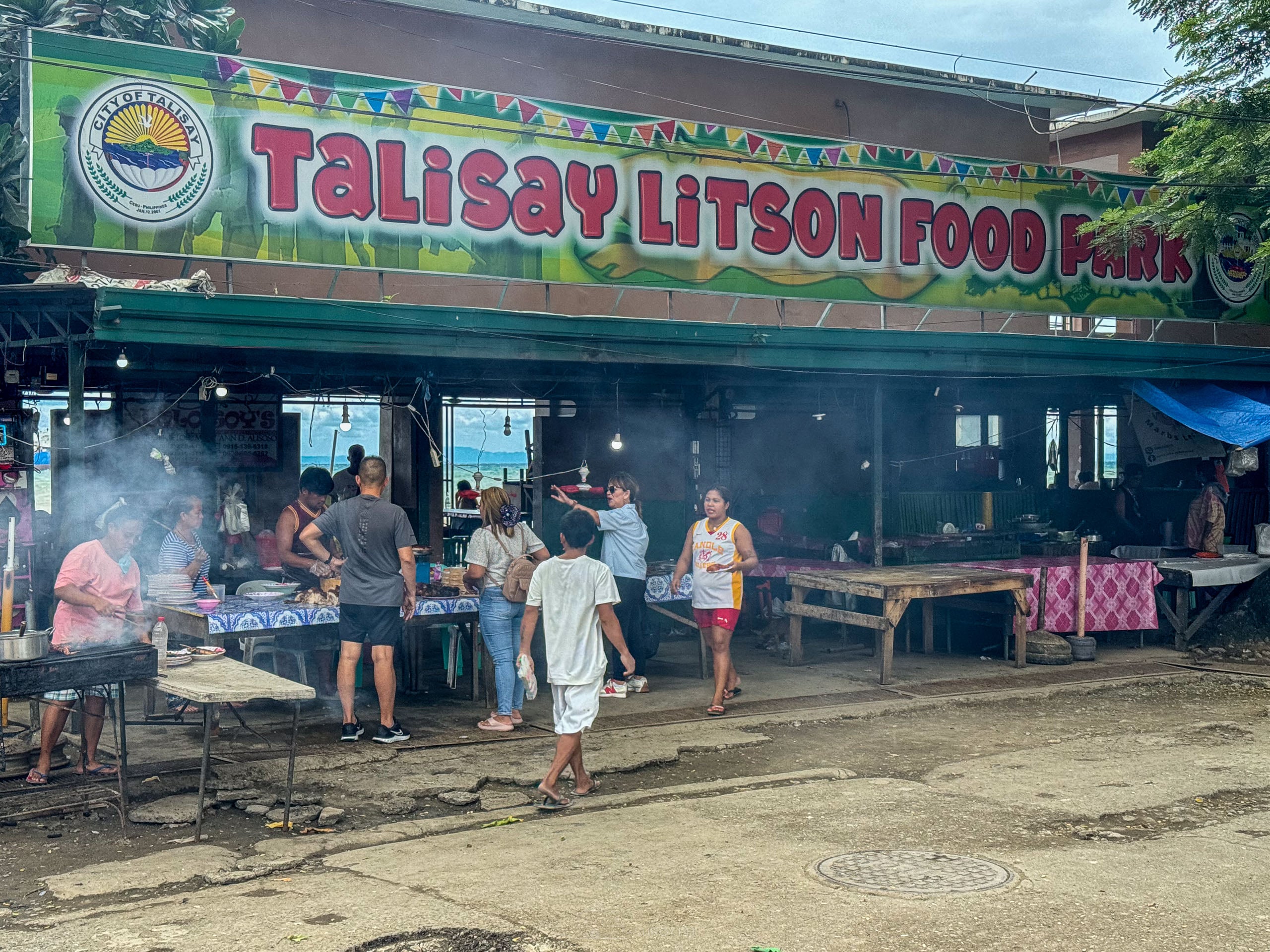

Talisay invented Cebu lechon. Carcar got famous for it.
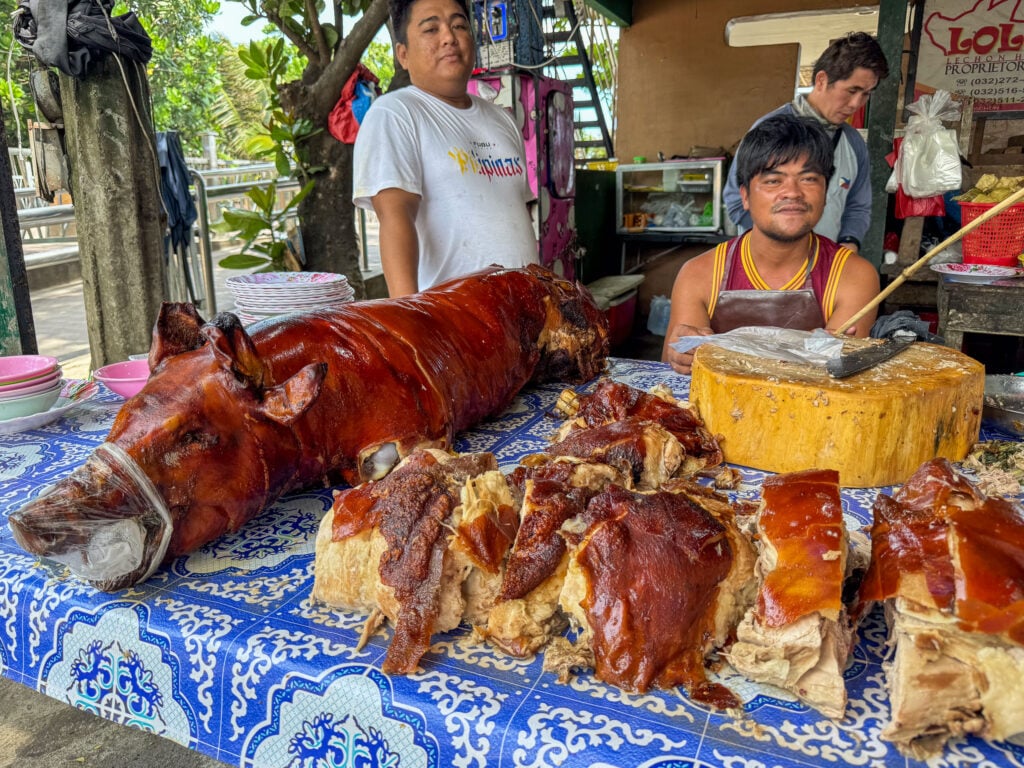
₱500 a kilo in September 2026, no drippings gravy on principle, and a food park sitting on the beach where the Americans landed in 1945.
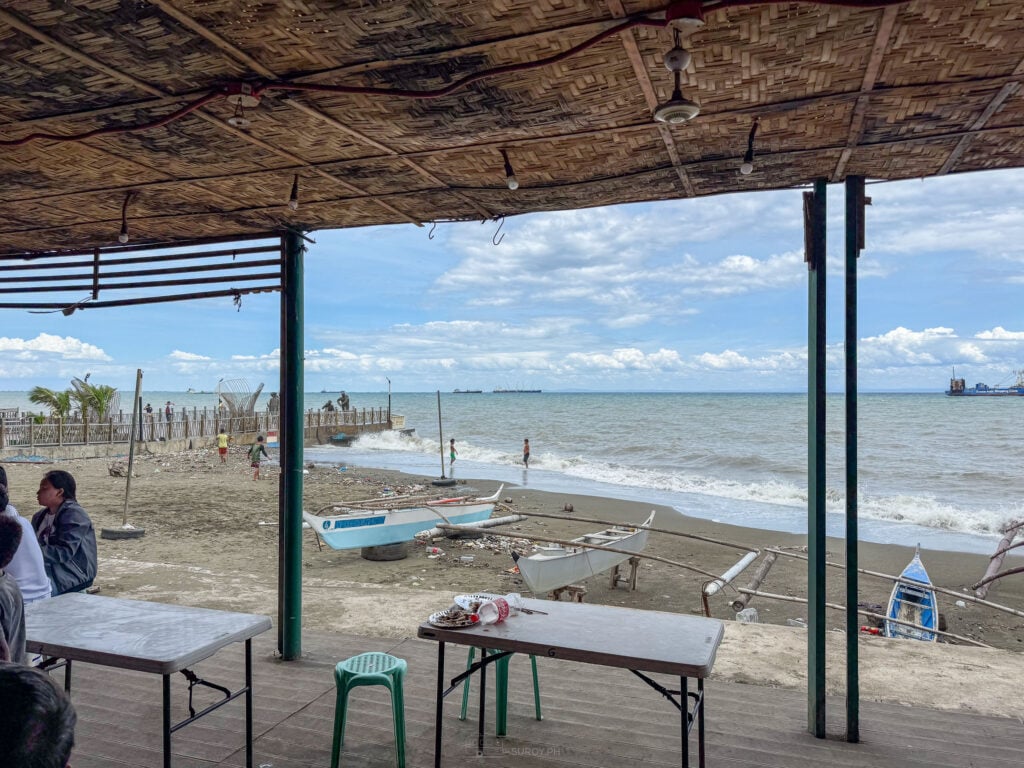
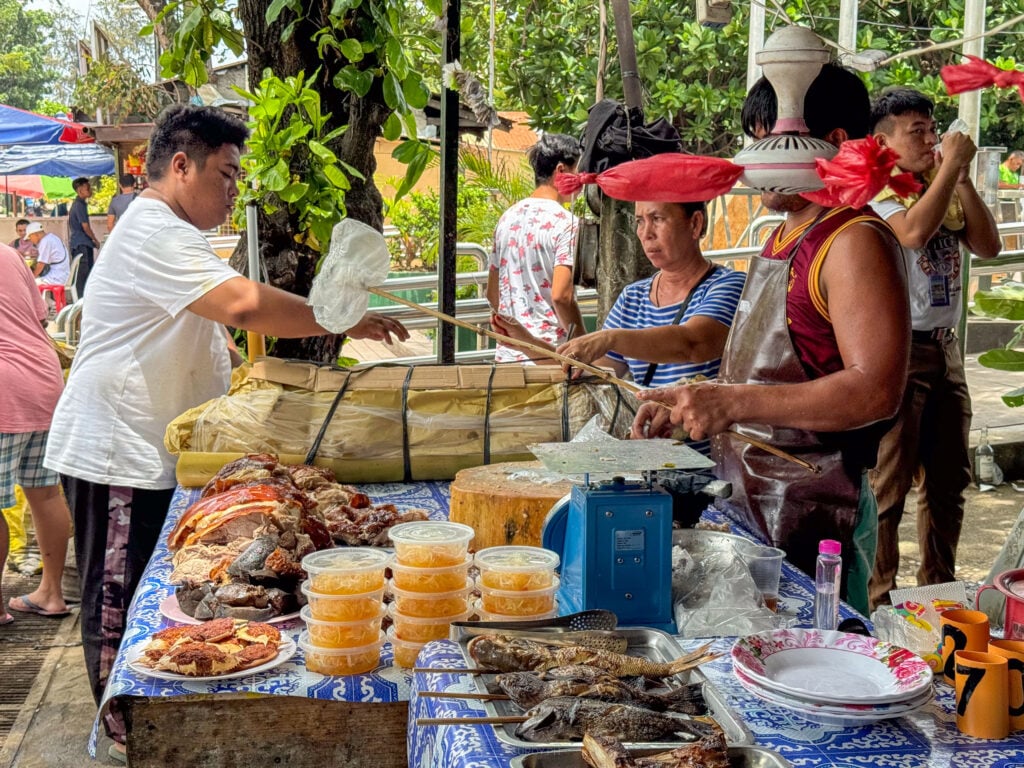
You smell it before you see the sign. Smoke coming off a row of stalls, a lot of it, drifting sideways across a beach with the sea about twenty meters away and the mountains of Negros sitting on the horizon on a clear day.
This is Talisay Litson Food Park, and almost nobody outside Cebu knows it exists. What they know is Carcar. Which is a little unfair, because Talisay was first.
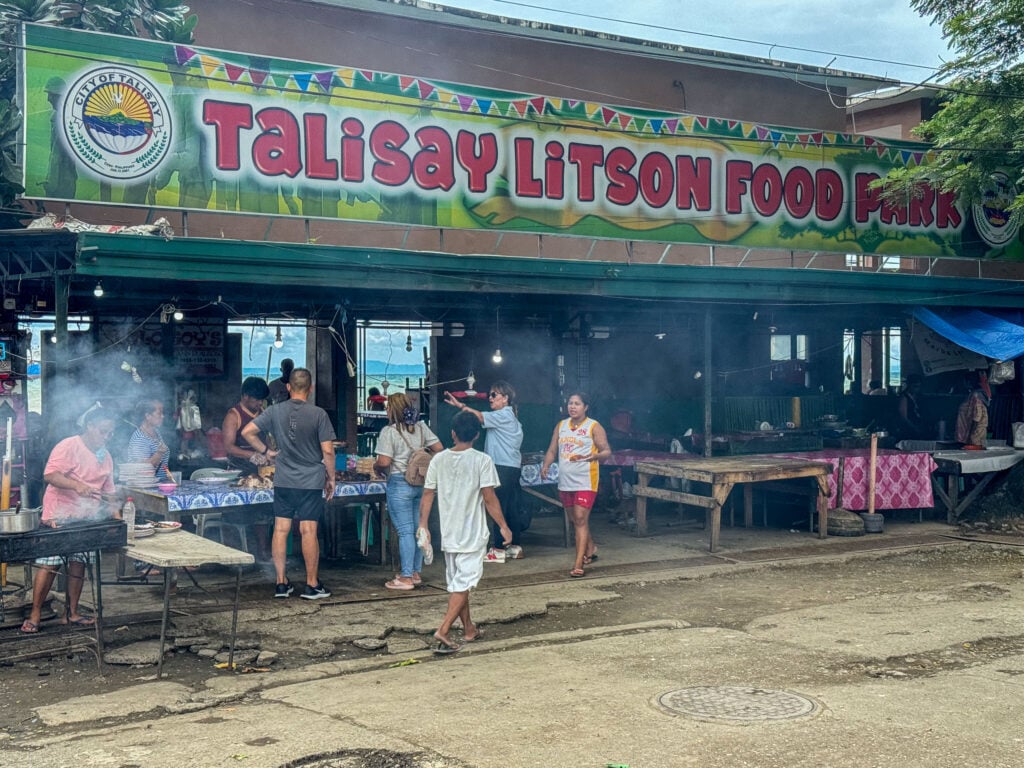
Talisay came first, Carcar got famous
Cebu lechon starts here. The first lechoneros working the trade commercially were Talisay men in the 1920s, and they were not calling it lechon. They called it inasal, from asal, to cook over live coal, which is the same word and the same idea as sugba.
The families are still here and still trading. Leslie’s and Ruthy’s both go back to the 1940s, run now by the grandchildren and great grandchildren of the women who started them from a stall on the street. When Netflix came to Cebu to film lechon for Street Food Asia, they did not go to Carcar. They came to Talisay.
None of which stops Carcar from being the name on every list. Carcar is on the highway to the south, it has a market people already stop at, and it does a sauce that photographs well. Talisay is fifteen minutes out of the city and has never marketed itself once.
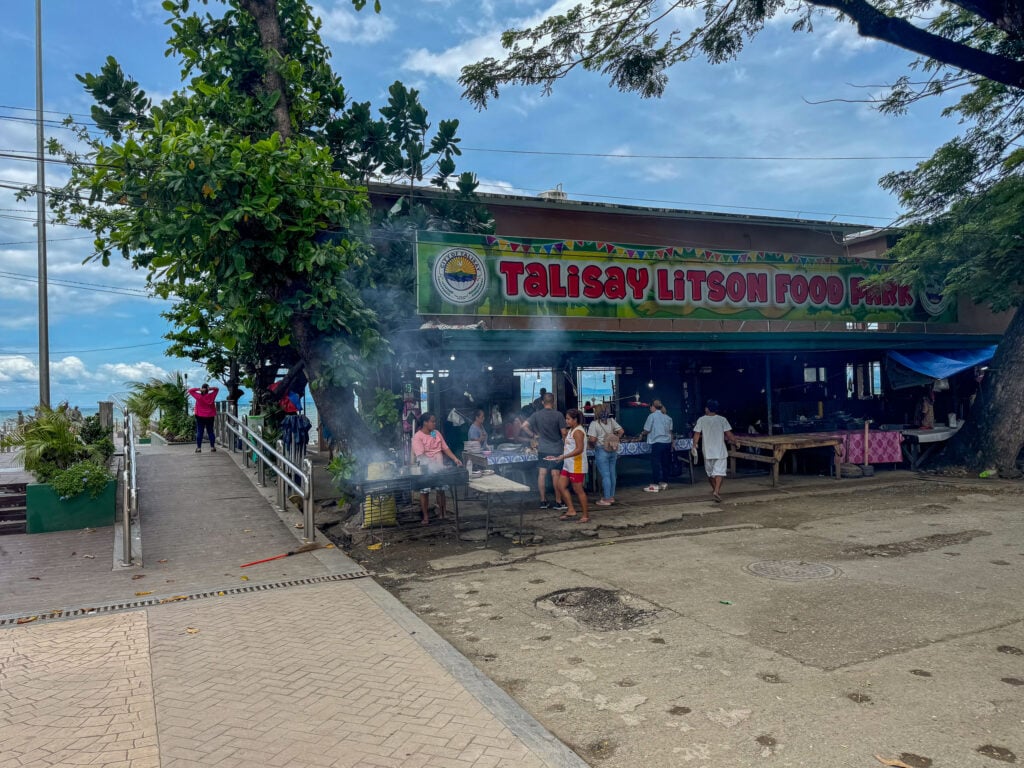
Where Talisay Litson Food Park actually is
Three addresses circulate for this place and they contradict each other. One says V.H. Garces Street. One says Larawan Beach. One says Burgos Street, which people call lechon alley. All three are sort of right, and the reason is that the row moved.
Until 2022 the lechon vendors worked the street beside Sta. Teresa de Avila church in Poblacion. That year the city cleared them off to build Poblacion Park, and put up a purpose built food park for them instead. It opened in December 2022. So the old street address and the new beach address are both real, they are just five years apart, and everybody writing about it is quoting whichever one they found first.
Here is the answer nobody else publishes. 10.2420 N, 123.8487 E. That is off our own frames. Point a map at it and stop reading addresses.
You are eating on a landing beach
Twenty meters from the lechon there is a bronze marker on a stone plinth, and nobody eating appears to have read it.
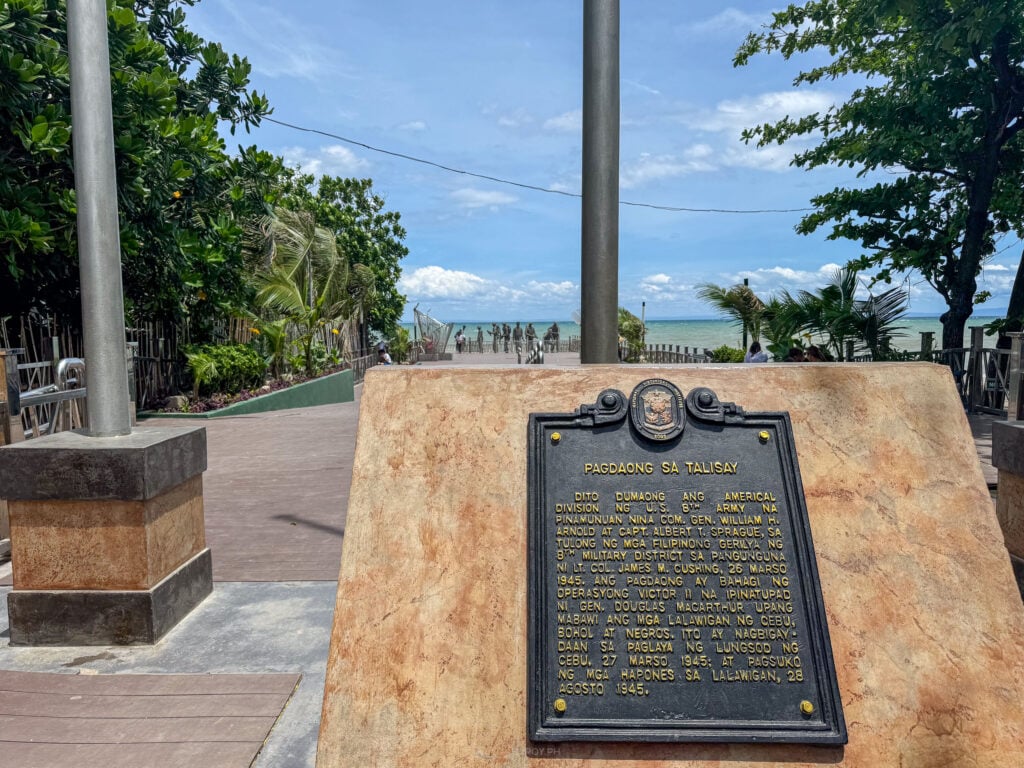
Pagdaong sa Talisay. The Americal Division of the US Eighth Army landed on this beach on 26 March 1945, under Major General William H. Arnold and Captain Albert T. Sprague, working with Filipino guerrillas of the Eighth Military District under Lieutenant Colonel James M. Cushing. It was part of Operation Victor II, the operation to retake Cebu, Bohol and Negros.
So the sand you are looking at while somebody chops your lechon is where the fight for Cebu came ashore. That is not in a single article about Talisay lechon anywhere, and it is a two minute walk.
What Talisay lechon is, and what it is not
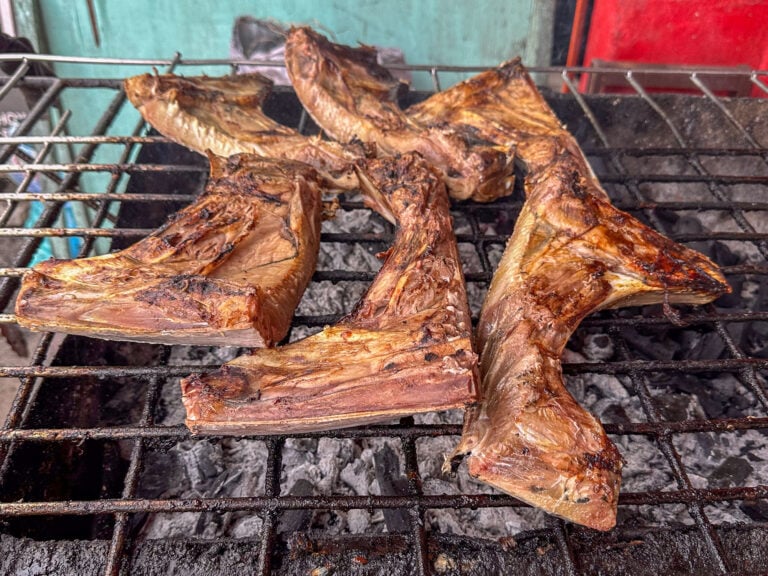
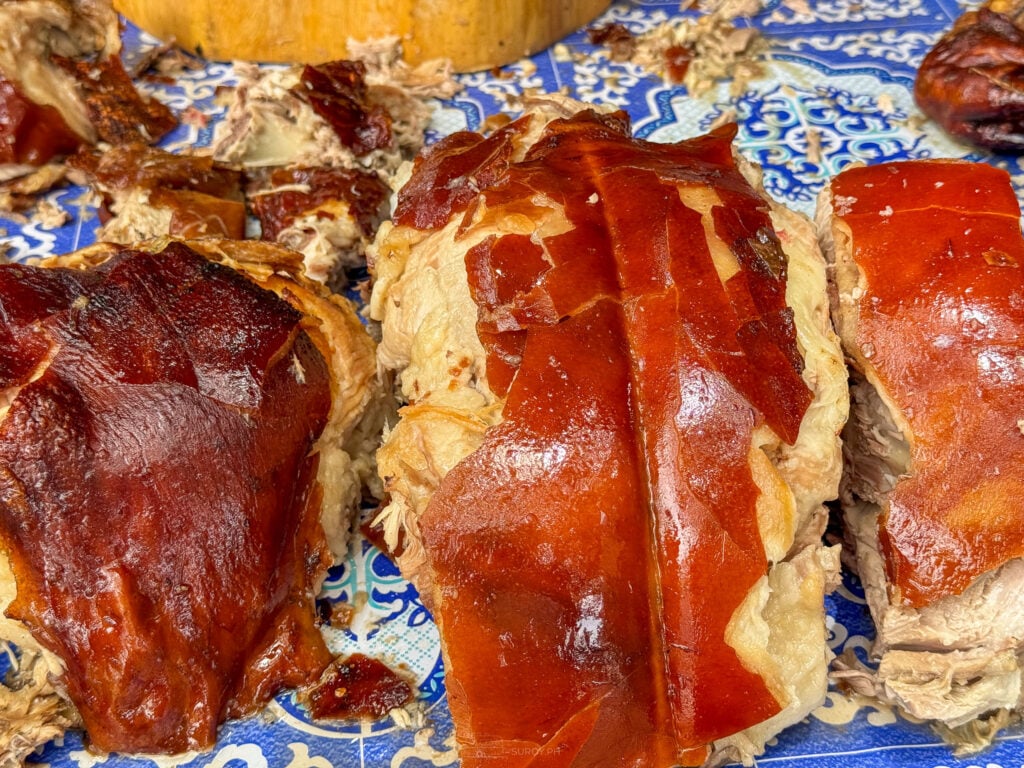
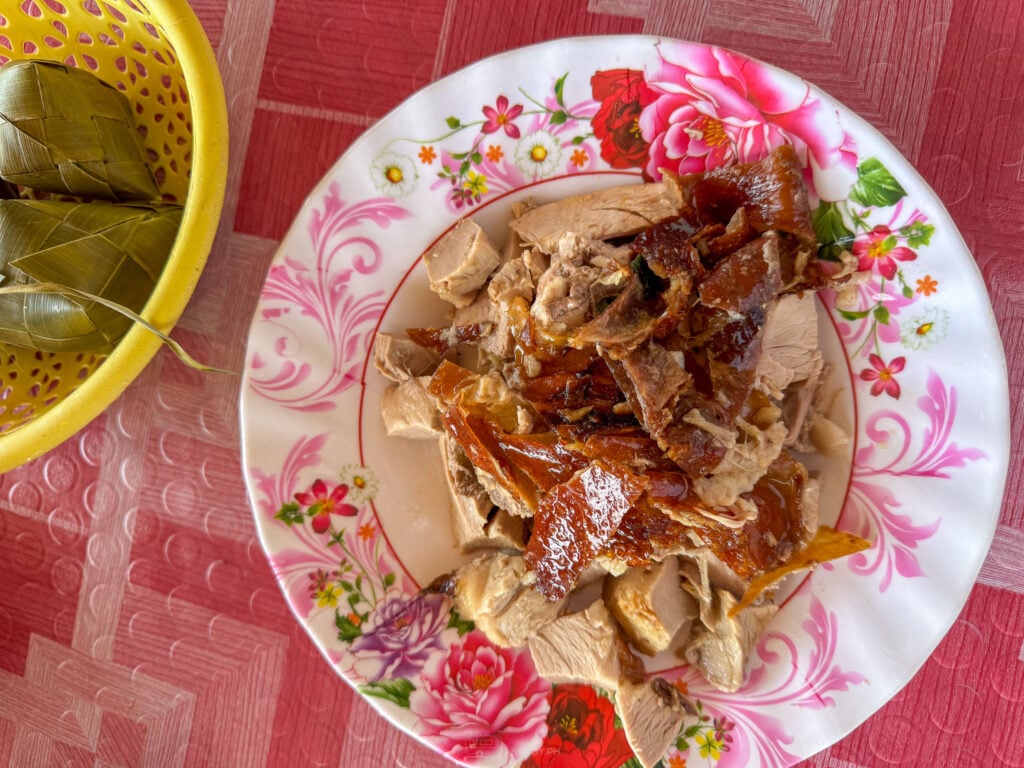
It is not Carcar. That is the whole identity. Carcar catches the drippings out of the cavity and pours them back over the meat. Talisay does not, on principle, because a Talisay pig is built to be eaten dry. The seasoning goes inside and stays inside, and the argument is that if you need to pour something on it afterward, somebody upstream did their job badly.
What does appear on the table is a cup of spiced vinegar with chilies in it, which is a dip and not a sauce, and the distinction matters more to Cebuanos than it will to you until about your third bite.
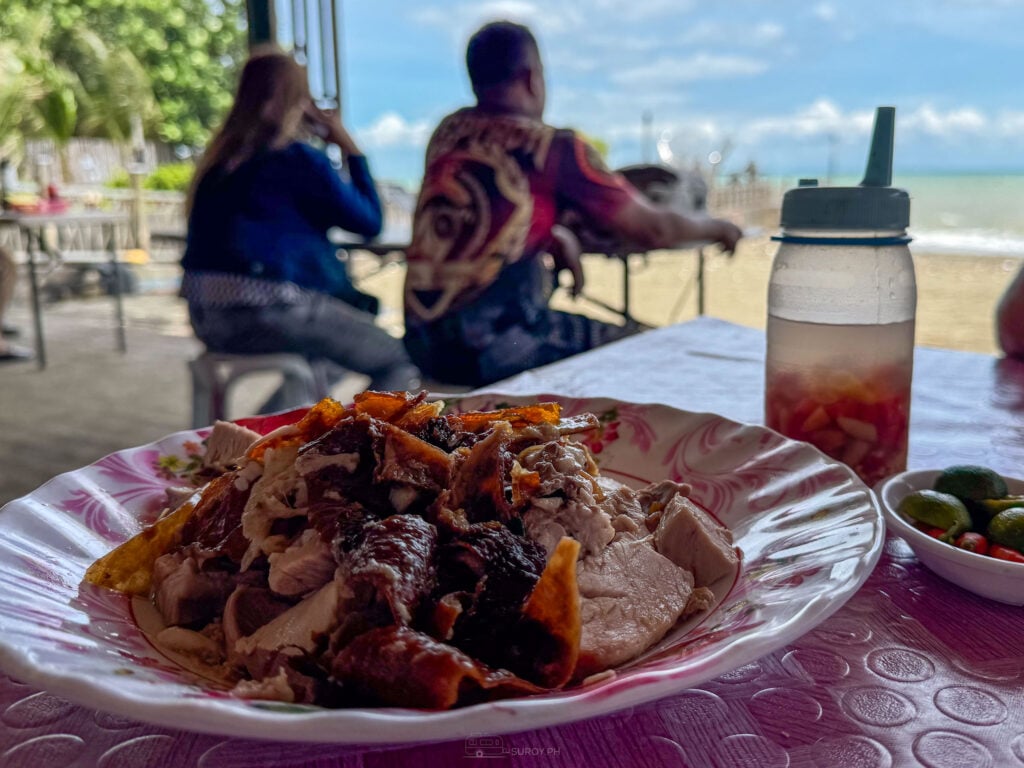
The stuffing is onion, garlic, native scallion, star anise and salt, sometimes lemongrass, and chilies if the family runs it hot. What you taste is the pig and the smoke, in that order.
It comes with pusô, the rice woven into a coconut leaf pouch and boiled inside it. Squeeze the pouch, tear the seam, eat with your hands. Cutlery is available and nobody will look at you strangely, but you are missing the point.
What Talisay lechon costs in 2026
₱500 a kilo. Confirmed September 2026.
That is ₱100 more than Carcar, which surprises people who assume the famous town is the expensive one. It is the other way around.
You will find higher figures online, mostly ₱800, and they are not wrong so much as out of date and out of season. Those come from December reporting, when Christmas demand pushes every lechonero in the province up. Live hog prices in Cebu also fell sharply through 2026, from around ₱218 a kilo to the ₱120s, with the province holding its swine fever free status. Cheaper pigs, cheaper lechon.
Head and feet are priced well below body meat, which is where a lot of the confusion online comes from. Somebody quoted the cheap number, somebody else copied it as the price of lechon, and now half the internet thinks Talisay sells at ₱250.
| What | September 2026 |
|---|---|
| Talisay, per kilo | ₱500 |
| Carcar, per kilo | ₱400 |
| Head and feet | Below body meat, ask for the split |
| Whole pig | Quoted by weight at the stall |
When to go, and how to get there
- Sunday is the day. The full row trades, some stalls open only then, and the atmosphere is a town eating together rather than a food court.
- Go in the morning. Vendors are working from around dawn and popular stalls sell out by early afternoon. Do not turn up at three and expect a choice.
- From Cebu City by car, roughly thirty to forty minutes for about 14 km, and it is entirely a question of Tabunok traffic.
- By jeep, take a Talisay bound jeep to Poblacion and get off near Sta. Teresa de Avila church. It is a short walk down to the water.
- Fiesta is 15 October, the feast of St. Teresa of Avila, and the town runs Halad Inasal around it. Expect crowds and expect more pigs than you have ever seen in one place.
Talisay lechon FAQ
Where is Talisay Litson Food Park?
On the beach at Poblacion, Talisay City, Cebu, at 10.2420 N, 123.8487 E. Published addresses conflict because the vendors moved in 2022 from Burgos Street beside Sta. Teresa de Avila church to a purpose built food park on the shore.
How much is Talisay lechon per kilo?
₱500 a kilo as of September 2026. Higher figures circulating online are usually December peak season numbers, and the ₱250 figure that appears on some pages is the price of head and feet rather than body meat.
Is Talisay lechon better than Carcar?
They are built differently. Talisay is seasoned to be eaten dry with at most a vinegar dip. Carcar serves the cavity drippings as a gravy. If you want the meat to carry itself, Talisay. If you want the sauce, Carcar.
What day should you go to Talisay for lechon?
Sunday morning. Some stalls trade only on Sundays and the full row is open, with vendors working from around dawn. Popular stalls sell out by early afternoon.
Did Cebu lechon start in Talisay?
Talisay is where the trade started commercially, with lechoneros working there in the 1920s under the name inasal. The best known Talisay families have been selling since the 1940s.
Suroy Wear · Island Series

The pusô on this shirt is the one in your hand
The Cebu Icons Tee carries the woven pusô, the guitar, the Basilica. The things a Cebuano points at, not the things a guidebook lists. ₱999.
Wear the story
Photographed at Talisay Litson Food Park, Poblacion, Talisay City. Coordinates read from the frames. Price confirmed on the ground in September 2026 and updated here in place when it moves.