
Inambakan Falls, Ginatilan: The Main Drop Is the Bottom of It
Ambak is Bisaya for jump. Five levels above the postcard, ₱50 at the gate, and four hours from Cebu City. What it costs and when to go.
The name is an instruction. Ambak is Bisaya for jump, and Inambakan is the place where you do it. The water leaps off the lip, the visitors go in after it, and both readings of the name are locally offered as the correct one.
What separates Inambakan from the rest of the southern waterfalls is not the main drop, impressive as it is. It is that the main drop is the bottom of the thing. The falls stack upstream through a series of pools and cascades, and the trail between them turns what most people treat as a twenty-minute photo stop into most of a day.
Ginatilan, Cebu · 9.5847° N, 123.3167° E · Fees checked August 2026

What it costs
Entrance is ₱50 per person, with about ₱10 for parking if you have driven. A cottage at the first level starts around ₱300. There is a free shower and changing area at the entrance, which is more than most Cebu falls provide.
A guide is not compulsory and is genuinely worth it if you intend to go past the first pool. Rates are informal and start around ₱200. The paths upstream are unmarked, wet, and in places require knowing which rock to stand on.
Opening hours are given locally as early as 6:00 AM and by some operators as 8:00 AM, closing at 5:00 PM. Arrive after eight and you will not be turned away. Cash only.
Fees checked August 2026. Everything here is collected on site.
Chasing all of themEvery major waterfall in Cebu sits on the same southern highway. The Cebu waterfalls guide has them in road order, with what each one costs and how many fit in a day.
The main drop, and everything above it
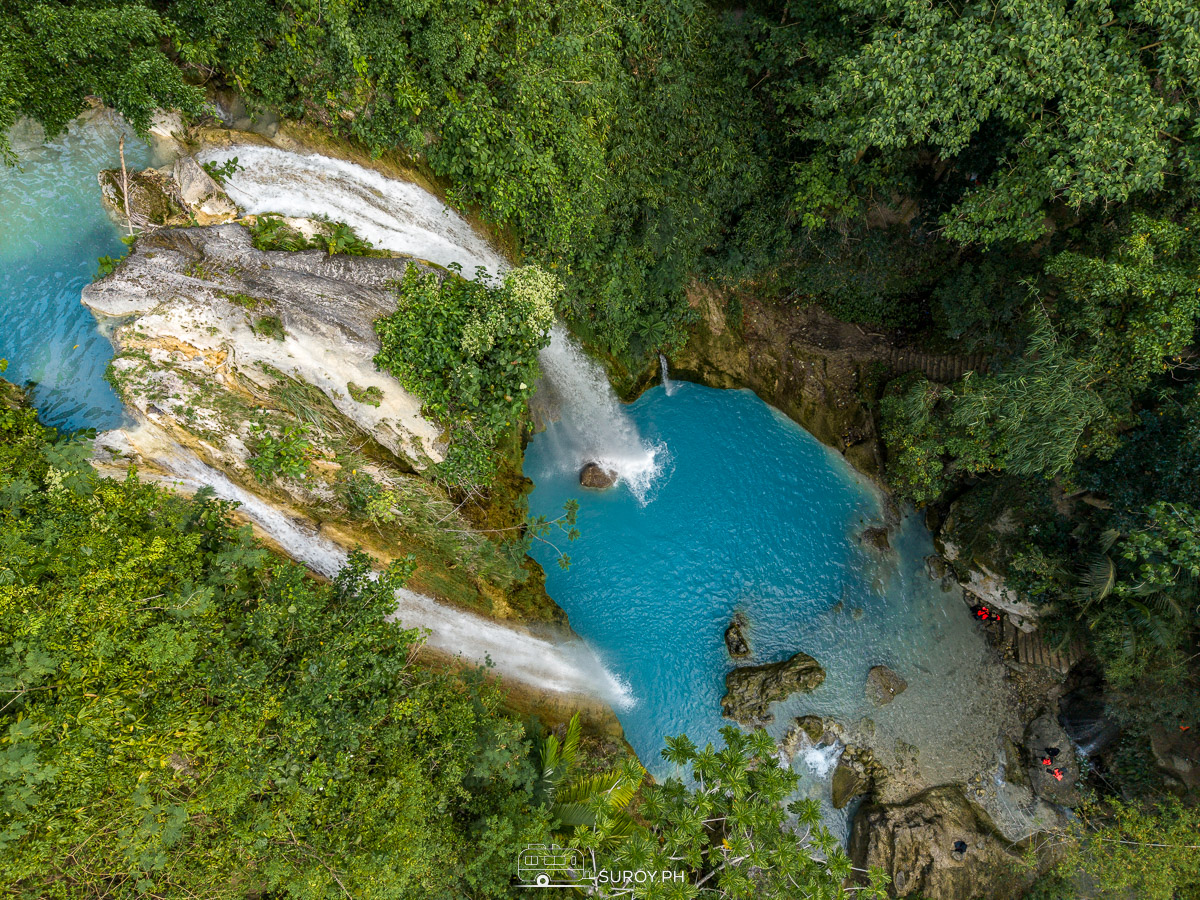
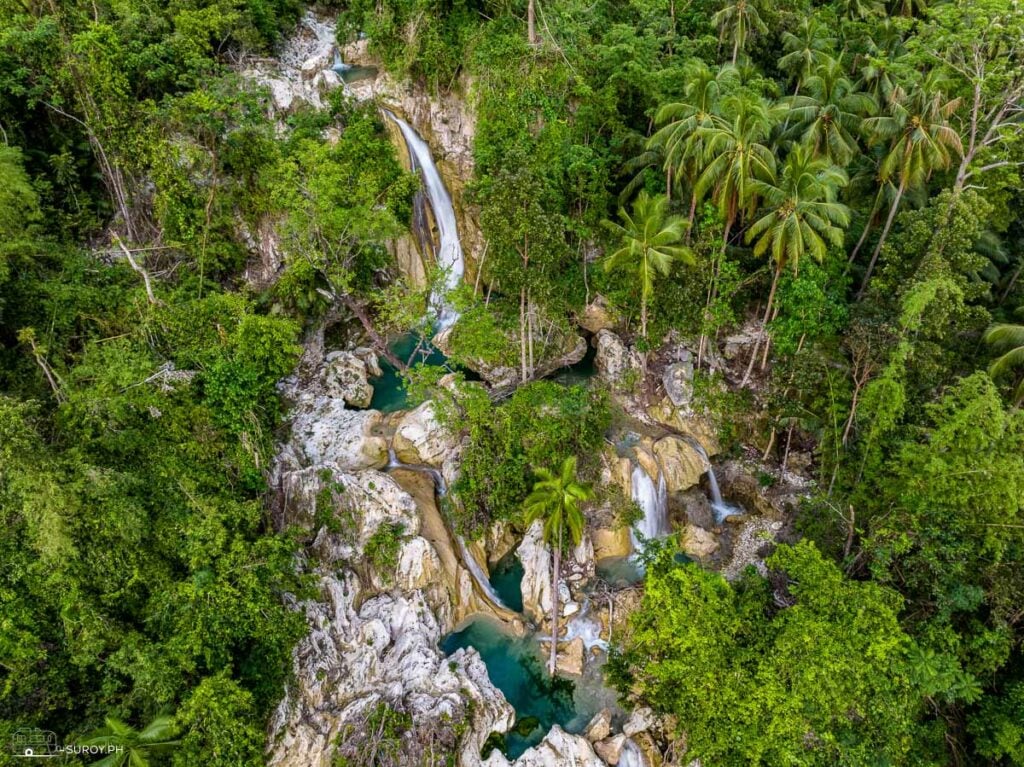
The first level is the one in the photographs: a single white column falling roughly thirty meters down a pale limestone face into a basin deep enough to swim across. A boulder sits under the impact point and takes most of the force, which is why the pool around it stays calm enough to be usable.
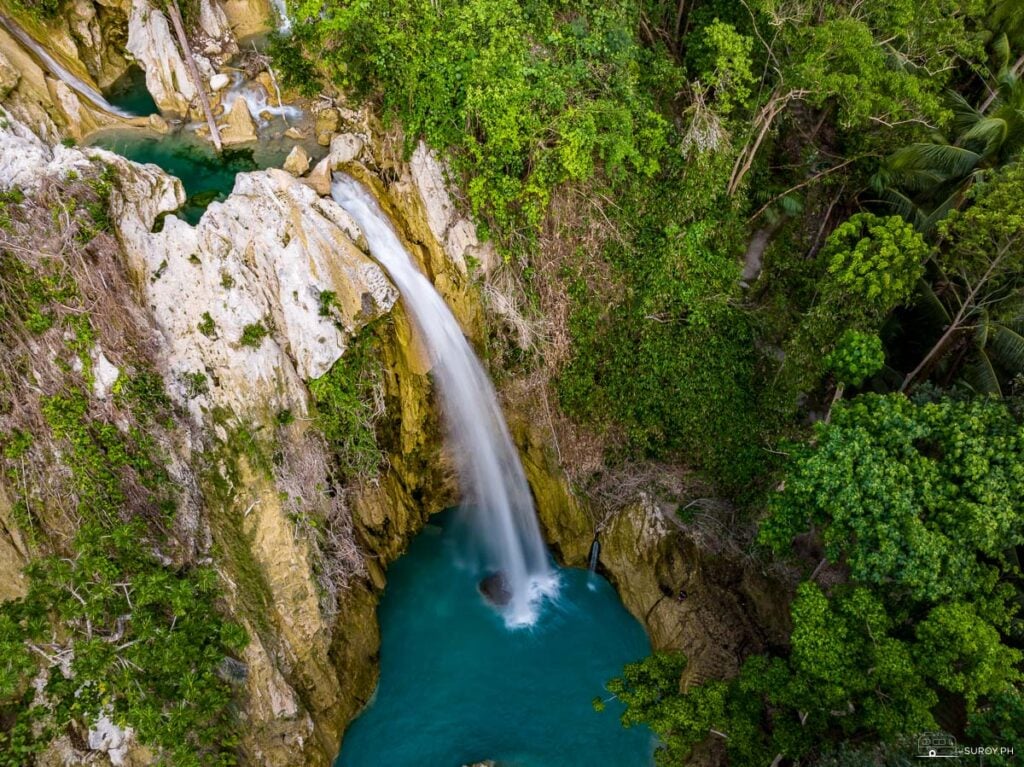
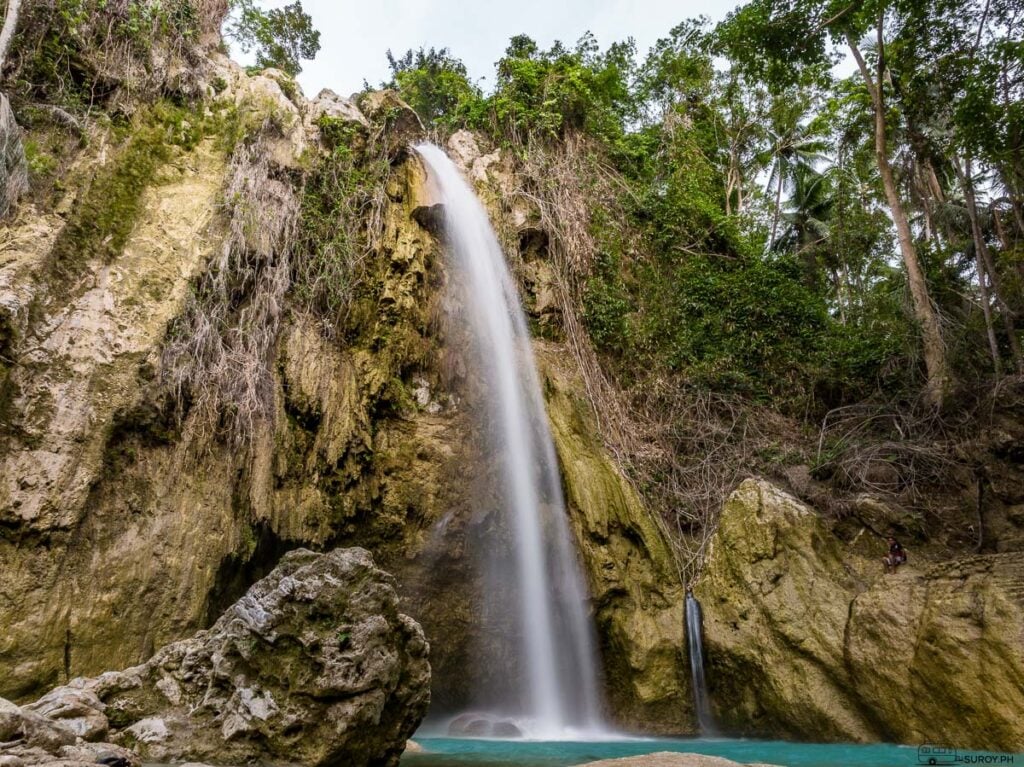
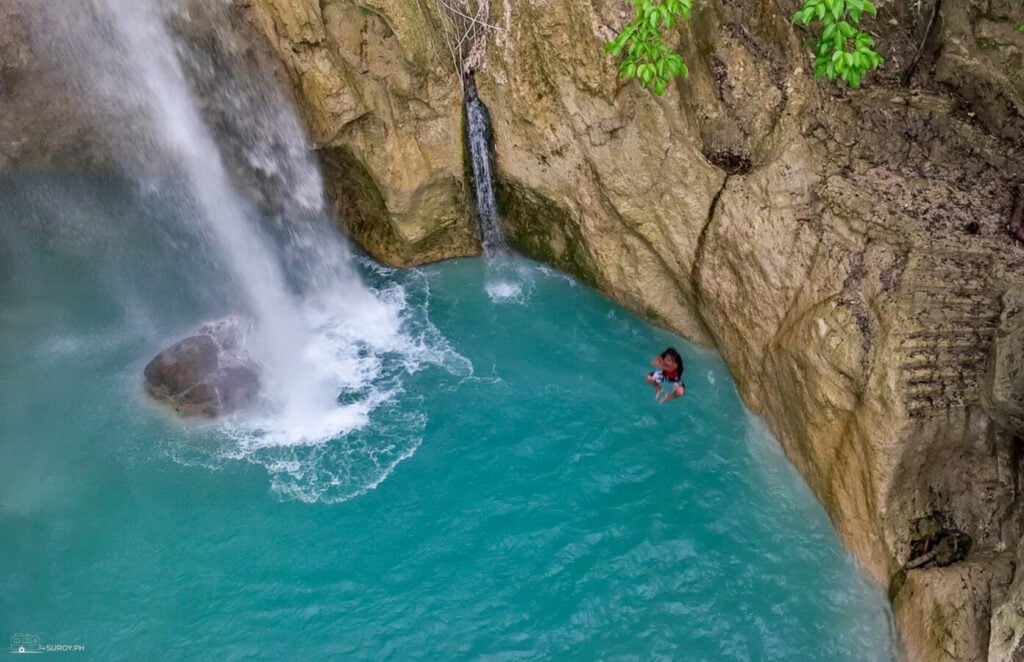
Above it the river steps up through a run of further levels, commonly counted as five. Each one is a different proposition. Some are flat and deep enough to float in for an hour. Others are set up for jumping, with the drops that give the place its name. The water gets colder and clearer the higher you go.

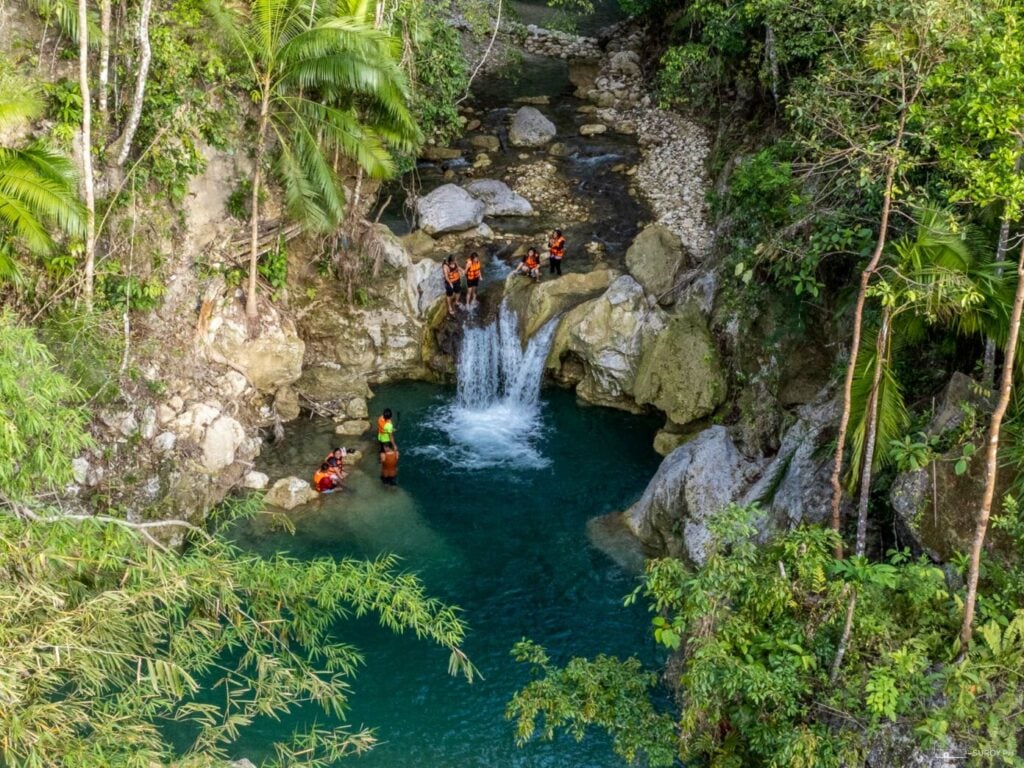
The climb between levels is short but genuinely slippery, and there is no railing anywhere. Footwear with grip matters more than anything else you bring.
Getting to Ginatilan
Ginatilan sits about 140 kilometers southwest of Cebu City, which is three and a half to four hours on the road. From the Cebu South Bus Terminal take anything bound for Bato via Barili and ask for Ginatilan town proper. The fare runs around ₱150. From the town it is a habal-habal up to the entrance.
If you are already in the south the drive is much shorter. Moalboal is about fifty kilometers and an hour and a quarter. Oslob is thirty-three kilometers and about forty-five minutes across the bottom of the island. The last stretch off the highway is rough in places and worth taking slowly.

When to go
December to May is the dry window, and it is the better one here. The pools are clearest, the climb between levels is less treacherous, and the color holds. In the wet months there is more volume but the upper trail gets genuinely unpleasant and the basin can turn cloudy for days after a hard rain.
Weekdays and early mornings are quiet. Inambakan has never had Kawasan’s crowds and it still does not, but Sunday afternoons draw families from the surrounding towns.
What else is on that road
Ginatilan is deep in the southern loop, which means the other falls are close. Aguinid and Binalayan are next door in Samboan. Tumalog is around the tip above Oslob. Kawasan is back north in Badian, and Mantayupan north of that in Barili.
Two or three of these fit in a day if you start early and accept that you are spending most of it in a vehicle. Price the run with the Cebu trip budget calculator.
Inambakan Falls FAQ
How much is the entrance fee at Inambakan Falls?
₱50 per person, plus around ₱10 for parking. A cottage at the first level starts near ₱300 and a guide for the upper tiers starts around ₱200. Cash only.
How many levels does Inambakan Falls have?
Commonly counted as five. The main drop at the bottom is the one in most photographs, and the river steps up through a further run of pools and cascades above it.
How do you get to Inambakan Falls from Cebu City?
Ginatilan is about 140 kilometers southwest, three and a half to four hours. Take a bus from the Cebu South Bus Terminal bound for Bato via Barili, ask for Ginatilan town proper, then a habal-habal to the entrance. Bus fare is around ₱150.
Do you need a guide at Inambakan Falls?
Not for the first level. For the tiers above it, yes. The paths are unmarked and slippery, and guides at the entrance start around ₱200.
What is the best time of year to visit Inambakan Falls?
December to May. The pools are clearest, the climb between levels is safer, and the color holds. After heavy rain the basin turns cloudy for days.
What does Inambakan mean?
It comes from ambak, the Bisaya word for jump. Locals offer two readings: the way the water leaps off the cliff, and what visitors do when they see the pools.
Suroy Wear

Five levels. One island. 7,641 more.
Ginatilan is one town on one island in a country with 7,641 of them. The count goes on the shirt. ₱999.
Wear the story