

Tumalog Falls, Oslob: Go at Seven, Not After the Whale Sharks
A limestone curtain three kilometers from the whale sharks. What it costs, why the habal-habal is not an upsell, and the two hours of light that make it.
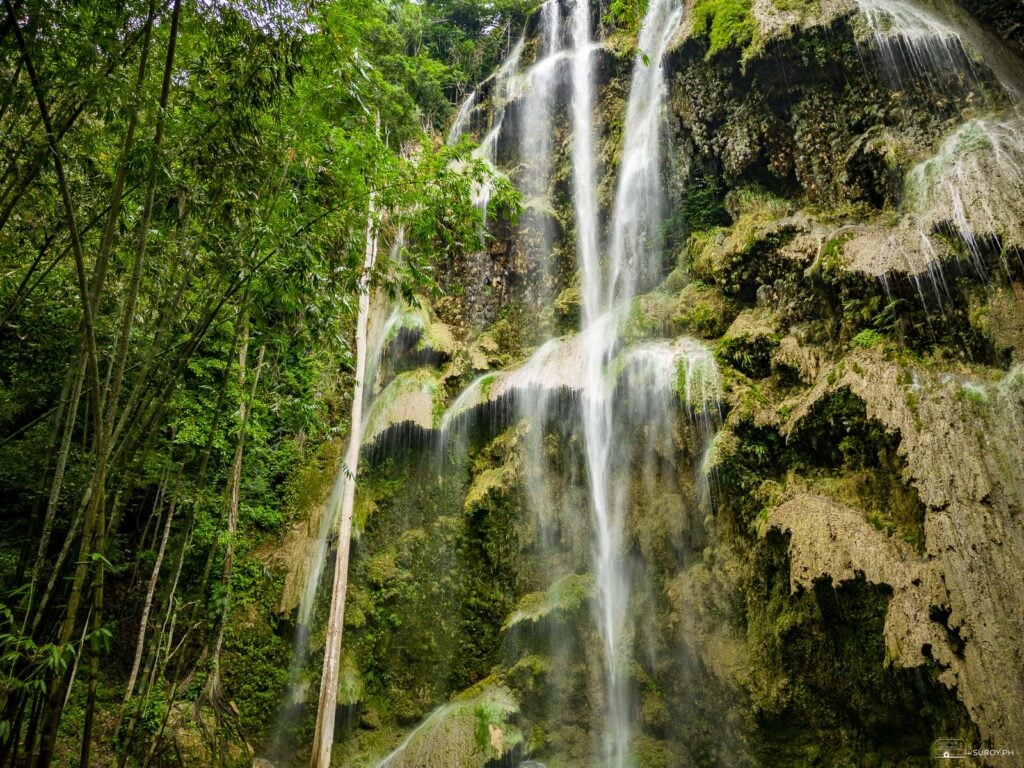
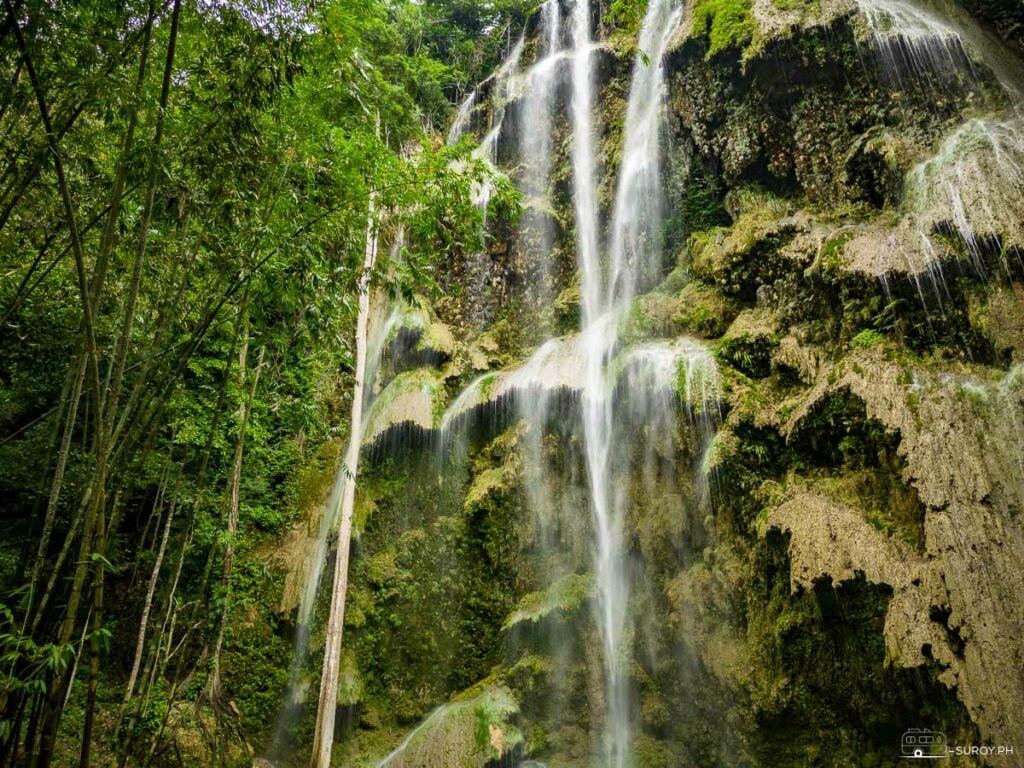
Tumalog does not fall so much as it leaks. The water comes over a wide limestone lip and spreads across the whole face of the cliff before it reaches the pool, so what arrives at the bottom is less a waterfall than a hanging curtain with moss and ferns growing through it. On a still morning most of it turns to mist before it lands.
Tan-awan, Oslob, Cebu · 9.4860° N, 123.3674° E · Fees checked August 2026
That is the whole reason to be there at seven in the morning rather than at eleven. The falls face roughly east. For the first two hours of daylight the sun comes down the gorge behind the water and lights the spray from within. By mid-morning the light has gone flat, the tour vans have come down from the whale sharks, and the pool belongs to everyone.

Go at seven
The single decision that changes this trip is the hour. Between roughly 7:00 and 9:00 AM the light angles through the canopy behind the falls and the pool is close to empty. From about ten the whale shark groups finish their briefings at Tan-awan and roll down the hill in sequence, and Tumalog turns into a queue for the same three photographs.
Almost everybody does whale sharks first and Tumalog second, because that is how the tours are packaged. Doing it the other way around costs nothing and gets you both in better condition.
Chasing all of themEvery major waterfall in Cebu sits on the same southern highway. The Cebu waterfalls guide has them in road order, with what each one costs and how many fit in a day.
What it costs
Entrance is ₱50 per person, and it has drifted between free and ₱50 depending on who is managing the barangay collection that year. A life jacket, if you want one, is ₱30 to ₱50. The pool is waist to chest deep across most of it, so the jacket is for confidence rather than necessity.
The habal-habal down is the other cost. From Tan-awan, where the whale shark briefings happen, it is ₱50 to ₱100 each way and about ten minutes. From Oslob town center it is ₱80 to ₱150 and fifteen to twenty minutes. Some drivers quote a return rate and wait for you, which is usually the better deal because there is nothing at the bottom to flag down.
Hours run roughly 7:00 AM to 4:00 PM, loosely enforced. Cash only, as everywhere in the south.
Fees checked August 2026. These are collected on the ground and change without notice.
The road down
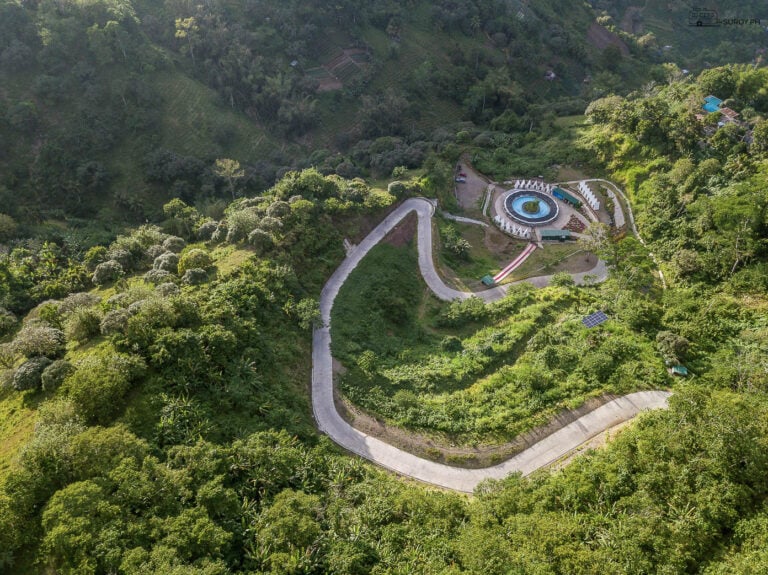
Tumalog is three kilometers inland from the highway and about two hundred meters below it, down a road that switches back hard on the way. It is steep enough that most vans and cars stop at the top and everyone transfers to a habal-habal for the last stretch. That is not an upsell. It is the road.

Coming back up is the same in reverse and worth budgeting a few minutes for, because the drivers wait at the bottom in numbers that thin out sharply after three in the afternoon.
What you are actually looking at
The cliff is limestone, and the falls have been depositing mineral on its face for a very long time. That is what gives Tumalog the shelf-and-drape shape rather than a clean vertical drop: the water builds the rock it then runs over, in thin sheets, and the moss and ferns colonise the wet surface between them.
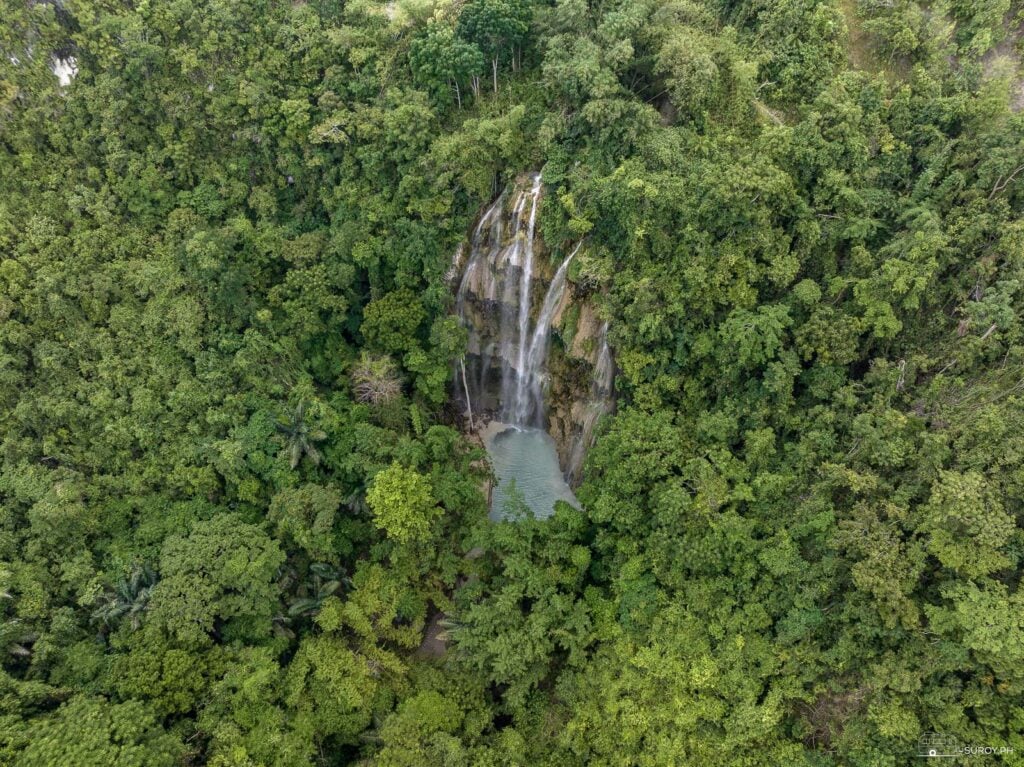
Height figures vary a lot between sources and none of them are official, so we are not going to give you one. What matters in the frame is not the drop, it is the width. The curtain is considerably wider than it is tall, which is why photographs taken close up never quite work and the ones taken from the far side of the pool or from above do.


Wet season or dry
The trade is straightforward. From June to November there is more water and the curtain covers more of the face, but heavy rain upstream turns the pool cloudy for a day or two afterwards. From December to May the flow thins and parts of the cliff show through, but the water is clear and the color holds.
For photographs the dry months usually win. For the sound and the volume, the wet ones do. Either way, the morning after a hard night of rain is the one day not to bother.
Doing it with the whale sharks
Tumalog exists on the tourist map mostly because it is three kilometers from the whale shark interaction at Tan-awan, and the two are sold together everywhere. They fit in a morning if you reverse the usual order: falls first at seven, whale sharks after.
If you want the honest version of the whale shark question, including why the feeding is contested, that is in our Oslob guide rather than here.
What else is on that stretch
Oslob sits near the bottom of the island, which puts it within reach of a run of other stops. Binalayan and Aguinid are around the tip in Samboan, Inambakan is in Ginatilan just past them, and Sumilon is a boat ride off the Oslob coast. Paragliding launches from Daanglungsod, above the town.
Getting here from the city is a Ceres bus from the South Bus Terminal, three to four hours to Tan-awan. Price the run with the Cebu trip budget calculator.

Tumalog Falls FAQ
How much is the entrance fee at Tumalog Falls?
₱50 per person as of August 2026, though it has drifted between free and ₱50 depending on the barangay collection. A life jacket is ₱30 to ₱50. Cash only.
How do you get to Tumalog Falls?
It is three kilometers inland from the highway at Tan-awan, down a steep switchback road. Most vehicles stop at the top and you transfer to a habal-habal: ₱50 to ₱100 each way from Tan-awan, ₱80 to ₱150 from Oslob town center.
What time should you visit Tumalog Falls?
Between 7:00 and 9:00 AM. The falls face roughly east, so early light comes through the spray from behind, and the whale shark groups do not start arriving until about ten.
Can you swim at Tumalog Falls?
Yes. The pool is waist to chest deep across most of it and life jackets are available to rent for ₱30 to ₱50.
Is Tumalog Falls better in wet or dry season?
Wet season, June to November, gives more water across the face but the pool clouds for a day or two after heavy rain. Dry season, December to May, gives thinner flow and clearer water. The dry months usually photograph better.
How far is Tumalog Falls from the Oslob whale sharks?
About three kilometers, roughly ten minutes by habal-habal from the Tan-awan briefing area. Doing the falls first and the whale sharks second gets you better light and a quieter pool.
Suroy Wear

The other half of the morning.
Three kilometers down the road the largest fish in the sea turn up before breakfast. The Giants of Oslob Tee is for that half of the day. ₱999.
Wear the story