


Oslob Church and Cuartel Ruins: History, Fires and How to Get There
Coral stone arches started in 1898 and abandoned mid-build. Free entry, beside Oslob Church, best at golden hour.
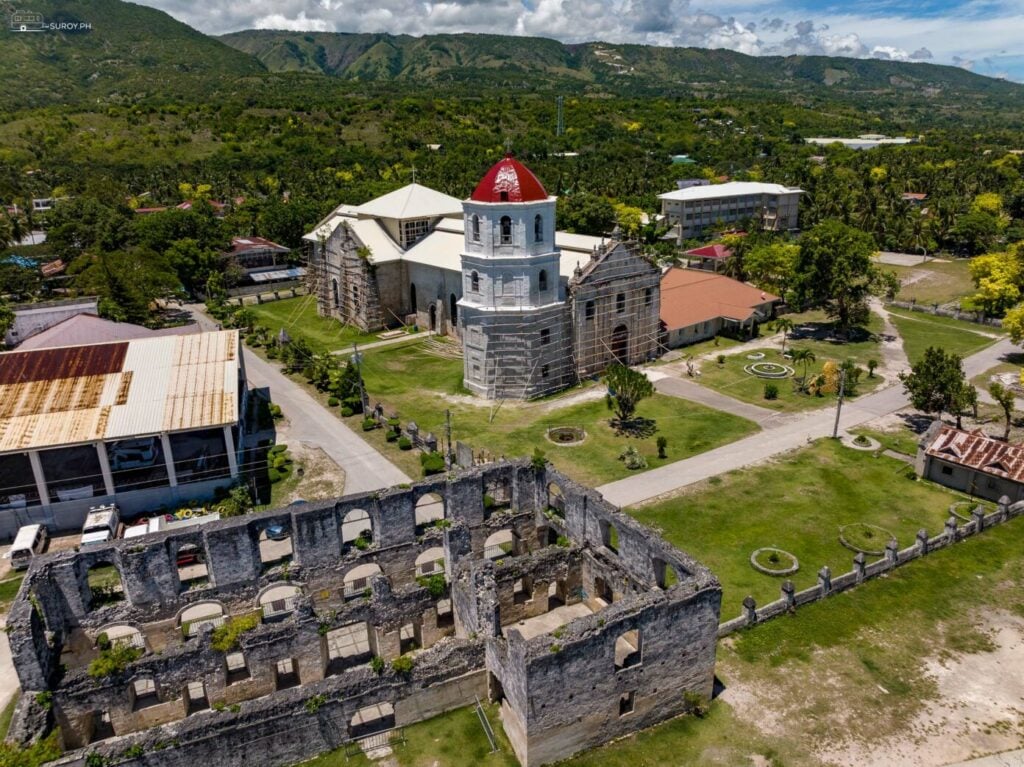
The Oslob church and the Cuartel ruins sit together on the seafront in Oslob town, about four hours south of Cebu City, and they are the reason to stay in the town after the whale shark boats. Both are free. The church is a restored 19th century coral stone parish and a National Cultural Treasure; the Cuartel is an unfinished Spanish barracks, roofless and quiet, a few steps away.
Immaculate Conception Parish and Cuartel · Oslob, Cebu · Checked 29 October 2026
Oslob · South Cebu
Two centuries on one waterfront
Tap a tab.
1830
Fr. Julian Bermejo laid the cornerstone of the coral stone church on 4 May 1830. It was blessed in 1847, became a parish in 1848, and got its bell tower in 1858.
Late 1890s, never roofed
Spanish barracks of coral stone, dated to 1898 by the Capitol’s heritage consultant and left unfinished when the Americans arrived. One account says the stone came from the church’s collapsed bell tower floor.
1942, 1955, 2008
The church burned in 1942, was gutted on 7 November 1955 and rebuilt by 1980, and was gutted again on 26 March 2008. The coral walls stood each time.
2009 and 2010
The Capitol rehabilitated the Cuartel from June 2009 and lit it that August. The church was fully restored and reopened on 10 December 2010.
Cultural Treasure, 2023
The church carries a National Cultural Treasure marker (May 2023) and since 4 March 2025 is an affiliate of the Basilica of St. Mary Major in Rome, the first in Cebu. Both sites are free; donations welcome.
Philstar (2008, 2009); SunStar (Apr 2025); The Freeman (Dec 2023); The Old Churches. Checked October 29, 2026.
The church
The cornerstone was laid on 4 May 1830 under Fr. Julian Bermejo, the Augustinian who also built the coastal watchtowers of southern Cebu. The church was blessed in 1847, the parish founded in 1848 and the bell tower finished in 1858. It has burned three times: in 1942, on 7 November 1955 and on 26 March 2008. The restoration after the last fire was finished on 10 December 2010.
The National Museum marked it a National Cultural Treasure in May 2023, as part of the Oslob heritage complex. On 4 March 2025 it became an affiliate of the Basilica of St. Mary Major in Rome. The feast of the Immaculate Conception is 8 December.
The Cuartel

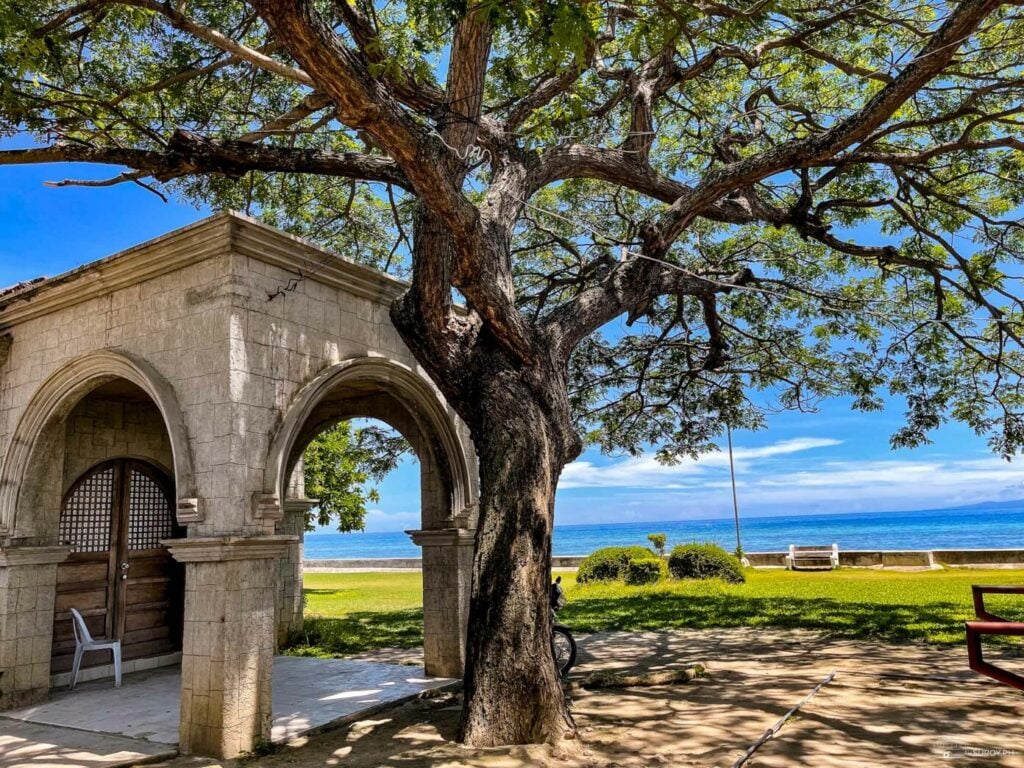
A barracks for Spanish troops that was never finished; the historian Jobers Bersales dates it to 1898, the year Spanish rule ended. Its walls are coral stone blocks, and some may have come from the bell tower. It was rehabilitated from June to August 2009. Walk through its arches in the late afternoon, when the light comes in low off the sea.

Getting there
Take a Ceres bus bound for Oslob or Bato via Oslob from the South Bus Terminal; about four hours, ₱330 aircon or ₱269 ordinary as of the last check. Get off at the town center. The church and Cuartel are free and open in daylight. Combine them with the whale sharks, Tumalog Falls or Sumilon, and see the southern Cebu church drive for Boljoon on the way.
Stone walls that outlasted three fires. The Giants of Oslob tee is for the whale sharks, the other giants in town.
Suroy Wear · Island Series

Giants of Oslob.
The gentle ones, off the same seafront. Made in the Philippines. ₱999.
Wear the story
Frequently asked questions
Is there an entrance fee at the Oslob Cuartel?
No. The Cuartel and the church are free.
How old is the Oslob church?
The cornerstone was laid in 1830 and the church blessed in 1847. It was restored after a 2008 fire.
What is the Cuartel in Oslob?
An unfinished Spanish barracks of coral stone, dated to 1898, beside the church.
How do you get to Oslob from Cebu City?
Take a Ceres bus from the South Bus Terminal; about four hours.
History from the National Museum, the Archdiocese of Cebu and Jobers Bersales; bus fares from Ceres listings. Checked 29 October 2026.