

Kawasan Falls, Badian: Three Tiers, and Why the Water Is That Color
The water is that color before it reaches the falls. What ₱200 gets you, the day Kawasan is shut, and why canyoneering is a separate decision.
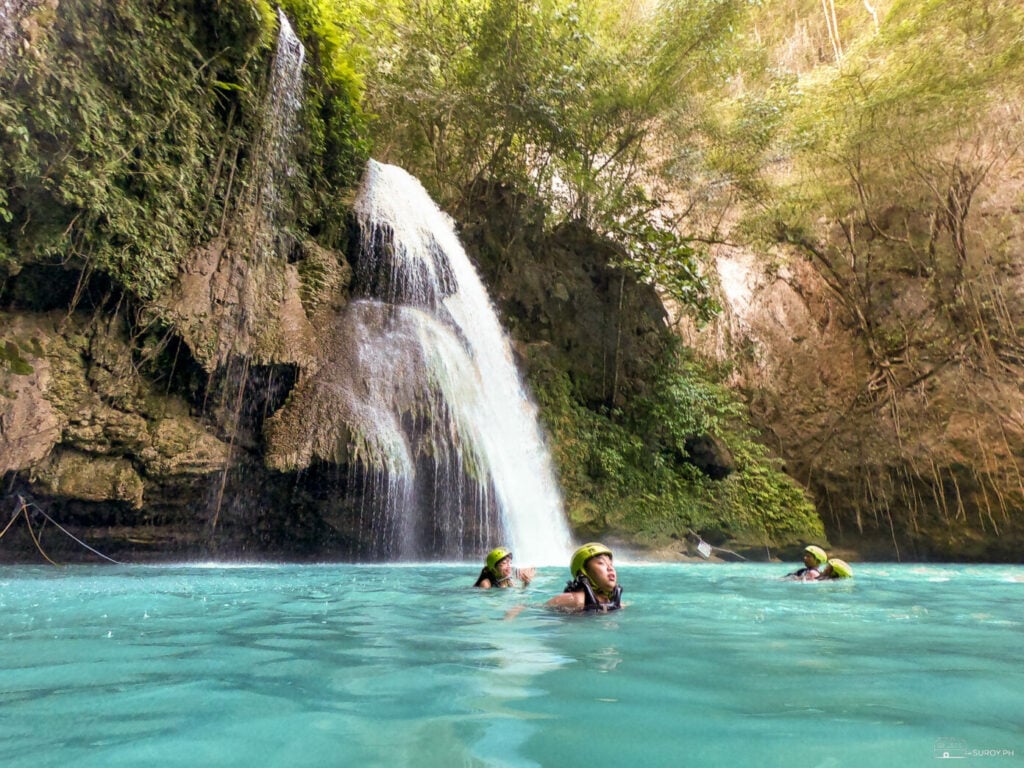
The water is already that color before it reaches the falls. It comes out of the ground at Kabukalan Spring, roughly a kilometer upstream, runs down the Kawasan gorge, and only then drops the forty meters that everyone photographs. What happens at the waterfall is gravity. What makes the pool look like that happened underground.
That is worth knowing before you go, because it decides when you should turn up and what will disappoint you. Kawasan is the most visited waterfall in Cebu and the most complained about, and almost every complaint traces back to arriving at the wrong hour, on the wrong day, expecting the wrong thing.
Kawasan Falls, Badian, Cebu · 9.9437° N, 123.3917° E
What it costs, and the day it is shut
Entrance is ₱200 per person. A bamboo raft under the main falls is ₱300, a table and chairs is ₱500, a locker is ₱100, and motorbike parking is ₱50. Everything is cash. There is no card terminal and no e-wallet anywhere on site, and the nearest reliable ATM is back up the highway, so bring more small bills than you think you need.
Opening hours run roughly 7:00 AM to 5:00 PM, stretching to 6:00 AM and 6:00 PM when the season is busy. The gate is not rigid about it, but the habal-habal drivers at the highway thin out well before the falls close, which is the constraint that actually matters.
The detail that ruins trips: Kawasan closes on the third Wednesday of every month for a clean-up and rest day. It is not posted anywhere you will see it from the highway. Check the date before you commit a four-hour bus ride to it.
Fees and hours checked August 2026. Everything here is collected on site and moves without notice.
Chasing all of themEvery major waterfall in Cebu sits on the same southern highway. The Cebu waterfalls guide has them in road order, with what each one costs and how many fit in a day.
The walk in
The falls are not on the road. From the highway drop-off at Matutinao it is about 1.5 kilometers of flat, paved path along the river, fifteen to twenty minutes at a normal pace. A habal-habal will run you part of it for ₱20 to ₱30, which is worth it in the middle of the day and pointless in the early morning.


Why the water is that color
Cebu is a limestone island. Rain sinks through it, dissolves calcium carbonate on the way down, and surfaces at springs like Kabukalan carrying that mineral in solution and as very fine suspended particles. Those particles are small enough to scatter the short end of the visible spectrum, which is why the pools read turquoise and green rather than clear. It is the same mechanism behind every limestone-fed river that photographs like this, from Semuc Champey to Plitvice.
Two practical consequences. The color is strongest when the water is low and settled, which means the dry months roughly December through May. And after heavy rain the river carries actual sediment rather than fine mineral, so it turns the color of milky tea and stays that way for a day or two. A wet-season afternoon after a hard morning is the single most common way to be disappointed by Kawasan.

The three tiers, and which one you are looking at
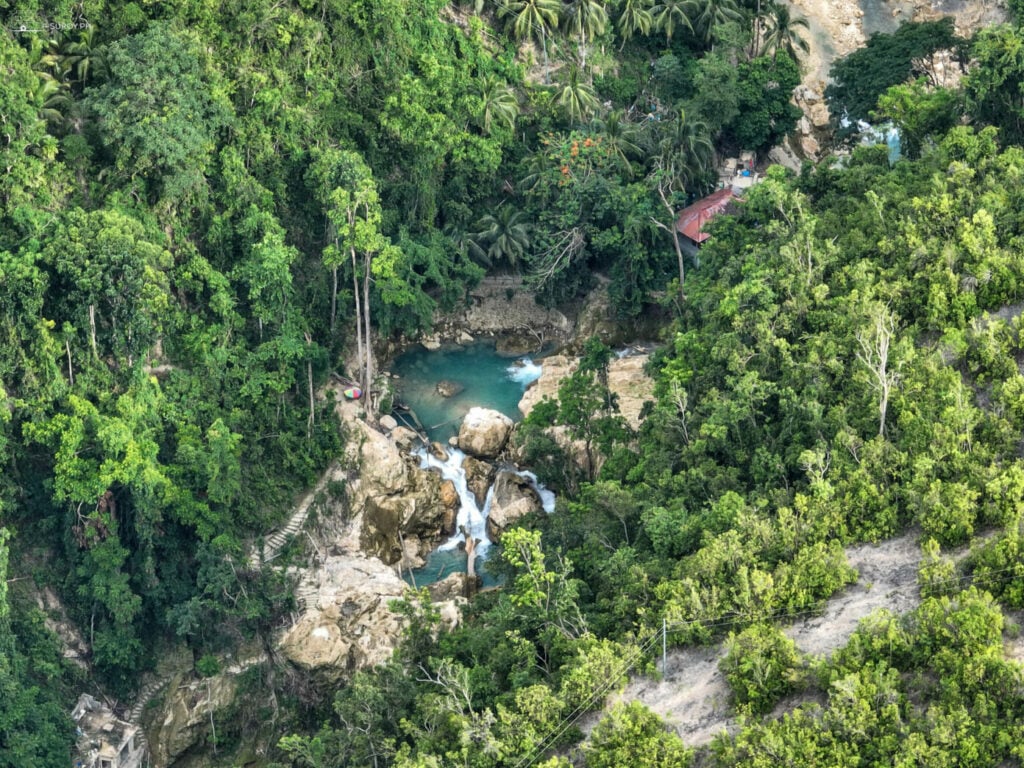
Kawasan is a three-stage cascade. The first level is the big one, about forty meters, and it is the one in every photograph: the wide curtain, the deep pool, the bamboo rafts that get pulled under the spray for what everyone calls a shower massage. It is also the one that fills up, because it is the closest to the entrance.
The second and third levels sit further upstream and take another climb. They are smaller, quieter and much better if what you wanted was a swim rather than a queue. Most day tours never go past level one.
One thing to know before you go looking for it: the neat stepped cascade that shows up in a lot of Kawasan photographs is a concrete weir downstream of the falls, not a natural tier. It is a good photograph. It is not the waterfall.

Canyoneering is a separate decision
Most people arrive at Kawasan from above, not from the road. The canyoneering route starts upstream in Alegria, on the Kanlaob River, and works down through the gorge by jumping, sliding and swimming until it comes out at Kawasan. It takes three to five hours and it is the reason the falls are busy from mid-morning onward.
The price is regulated by the local government at ₱1,500 per person, and that figure covers an accredited guide, the environmental and activity fees, the habal-habal transfers, a life vest, helmet and water shoes, and lunch. Packages sold with transport from Moalboal run ₱1,500 to ₱1,800. Sold with transport from Cebu City they run ₱2,000 to ₱2,500. Carry another ₱200 to ₱500 in cash for the snack stops on the route.
You do not need any of it to see the falls. Entrance from the road is ₱200 and you can swim at level one all day. Canyoneering is a different activity that happens to finish here. The honest question is appetite: five hours in a river gorge is a different day out from a swim and a bus home, and neither one is the proper way to visit.

On the jumping: guides set the heights and they set them for a reason, because the pools are deep in specific places and not in others. The drownings and spinal injuries that make the news at Cebu waterfalls are almost always freelance jumps at unguided spots.
Getting there from Cebu City
Take a Ceres bus south from the Cebu South Bus Terminal toward Bato via Barili. Aircon fare runs ₱200 to ₱250 and the ride is three to four hours depending on how many people flag it down. Ask for Matutinao, or for the church, rather than for Kawasan Falls. The conductor knows the church.
From Moalboal it is eighteen kilometers south, thirty to forty-five minutes, and a habal-habal will do it one way for ₱150 to ₱200. Most people staying in Moalboal treat Kawasan as a half-day and are back for the sardine run in the afternoon.

The hour you arrive decides the trip
Kawasan has two completely different characters and the switch happens around ten in the morning. Before it, the pool is quiet, the light comes down the gorge at an angle and the rafts are still tied up. After it, the canyoneering groups start arriving from upstream in waves and keep arriving until early afternoon.
If you are coming from Cebu City that means a bus before six. If you are staying in Moalboal or Badian it is easy. Either way, first thing beats last thing, because the light goes off the water early once the gorge walls get in the way.
What else is on that road
Kawasan is not a destination on its own, it is one stop on the southern loop, and almost every famous waterfall in Cebu sits on the same coastal highway. Going further south you reach Inambakan in Ginatilan, then Aguinid and Binalayan in Samboan, and around the tip to Tumalog above Oslob. Coming back north you pass Mantayupan in Barili.
Within half an hour of Kawasan there is also Lambug Beach for the sand, Osmeña Peak for the sunrise, and Moalboal for the sardines. Price the whole run with the Cebu trip budget calculator.
Kawasan Falls FAQ
How much is the entrance fee to Kawasan Falls?
₱200 per person as of August 2026. A bamboo raft is ₱300, a table and chairs ₱500, a locker ₱100 and motorbike parking ₱50. Everything on site is cash only.
Is Kawasan Falls open every day?
No. It closes on the third Wednesday of every month for a clean-up and rest day. Otherwise it runs roughly 7:00 AM to 5:00 PM, opening earlier and closing later in peak season.
Do you have to do canyoneering to see Kawasan Falls?
No. You can walk in from the highway for the ₱200 entrance and swim at level one. Canyoneering is a separate three to five hour activity that starts upstream in Alegria and happens to finish at the falls.
How much does Kawasan canyoneering cost?
₱1,500 per person at the regulated local government rate, covering an accredited guide, environmental and activity fees, habal-habal transfers, safety gear and lunch. Packages including transport cost ₱1,500 to ₱1,800 from Moalboal and ₱2,000 to ₱2,500 from Cebu City.
How high is Kawasan Falls?
The main drop is about 40 meters. Kawasan is a three-stage cascade, and the second and third levels sit further upstream and are considerably smaller and quieter.
How long is the walk to Kawasan Falls?
About 1.5 kilometers on a flat paved path from the highway at Matutinao, or fifteen to twenty minutes on foot. A habal-habal will cover part of it for ₱20 to ₱30.
Why is the water at Kawasan Falls turquoise?
The water surfaces at Kabukalan Spring after filtering through limestone, carrying dissolved calcium carbonate and very fine mineral particles that scatter light toward blue and green. The color is strongest in the dry months and washes out to a muddy brown for a day or two after heavy rain.
Suroy Wear

7,641 islands. One archipelago.
The cleanest inland water in the country is a twenty minute walk off a national road in Badian. The 7641 Islands Tee carries the count. ₱999.
Wear the story