

Cebu Taoist Temple: Visitor Guide, Etiquette and City Views
A practical guide to Cebu Taoist Temple, including respectful visitor etiquette, transport, stairs, city views, and why you should confirm current opening hours.
The short answer: Cebu Taoist Temple is one of the easiest places in Cebu City to slow down without leaving the city. Come for the red-and-green temple architecture, dragon details, hillside gardens, and wide views over Cebu. Stay mindful that this is an active place of worship, not simply a backdrop for photographs.
Allow about 45 minutes to an hour for an unhurried visit. A weekday morning is usually the calmest choice, while late afternoon can bring softer light over the city. Opening hours shown by current public listings do not agree, so confirm the schedule before making a special trip.
Why Cebu Taoist Temple is worth visiting
The temple rises above Beverly Hills Subdivision in Lahug, with pagoda-style roofs, curved eaves, lanterns, carved dragons, prayer halls, and terraces looking toward the city. It was established in 1972 by Cebu’s Chinese community and remains a place where Taoist devotees worship.
Visitors do not need to be Taoist to enter the areas open to the public. What matters is how you behave once inside. Keep voices low, give worshippers space, and follow every instruction from temple attendants. Some prayer rooms and sacred interiors may have stricter access or photography rules than the outdoor terraces.

What you will see
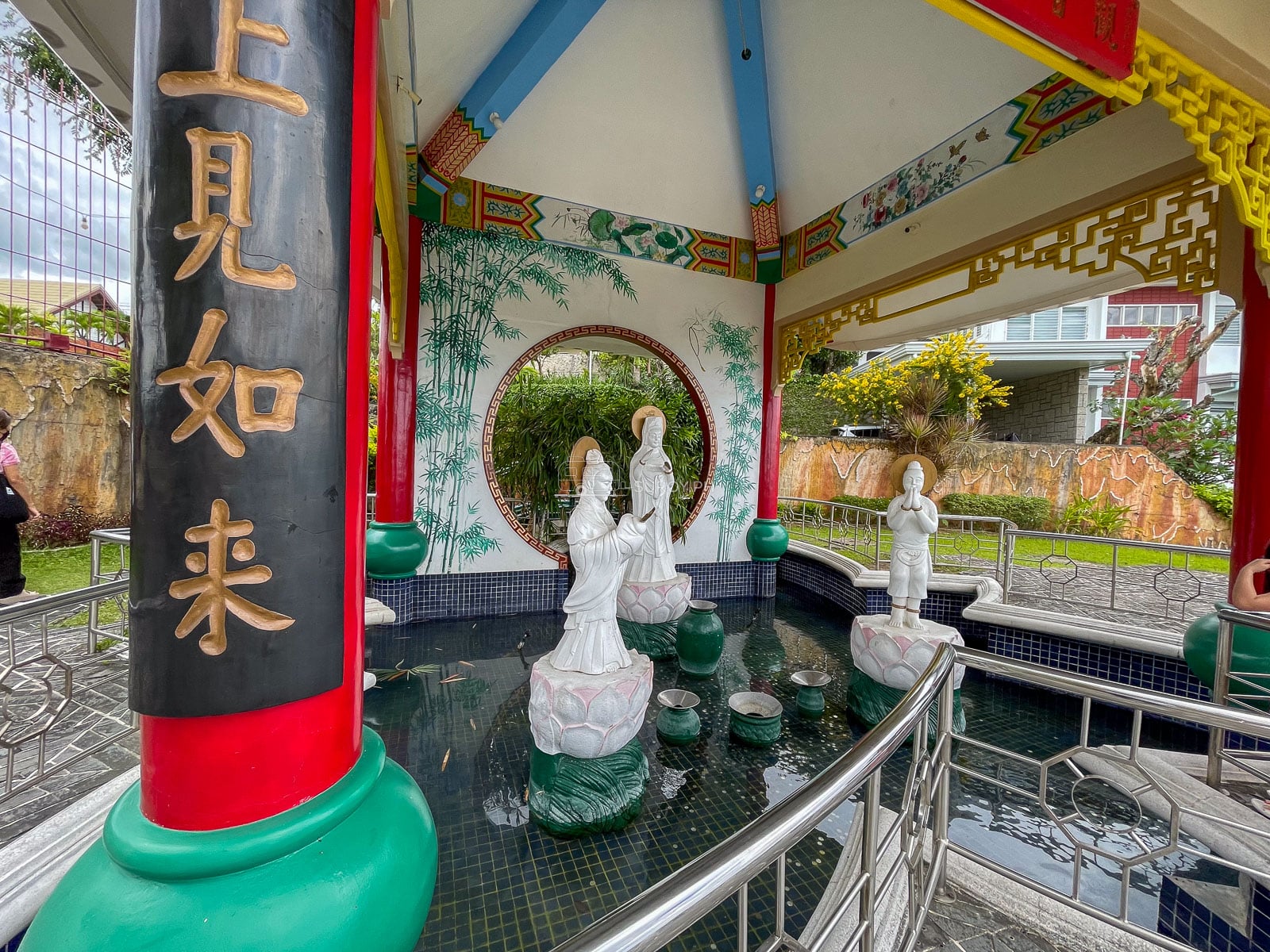
The visual language is unmistakable: green-tiled roofs, red columns, guardian figures, sculpted dragons, Chinese characters, and bright cloud motifs. The outdoor spaces unfold across different levels, so the visit feels more like a gentle hillside walk than a single-building stop.
- Temple architecture: layered roofs, curved eaves, ornate beams, and dragon figures reward a closer look.
- City views: open terraces reveal Cebu’s dense urban skyline below the hills.
- Gardens and water features: quiet corners soften the climb and give visitors places to pause.
- Prayer areas: these are sacred spaces. Enter only where visitors are permitted and do not interrupt a ritual.


Visitor etiquette comes first
Approach the temple as a guest. Dress neatly, avoid loud conversations, and put your phone away when people are praying. Photography is generally easiest outdoors, but do not assume it is allowed inside every hall. If a sign or attendant says no photographs, stop immediately.
Older travel guides describe incense lighting, fortune rituals, and other forms of participation. Access can change, and a ritual is not a tourist performance. Ask an attendant before joining anything, and never handle religious objects without permission.
Opening hours and entrance
There is no single reliable public timetable at the moment. Google Maps and Waze currently show 6:00 AM to 6:00 PM, while other travel listings show shorter visitor hours. The temple has also been widely listed as free to enter, but visitor access and rules can change without much notice.
Before leaving your hotel, check the temple’s current information page or call (032) 254 6503. If you arrive close to closing time, attendants may limit access to parts of the complex even when the outer gate is still open.
How to get to Cebu Taoist Temple
The temple is inside Beverly Hills Subdivision in Lahug, Cebu City. A taxi, GrabCar, private car, or booked tour is the simplest option because the final approach is uphill and public transport does not take you directly to the entrance.
Budget extra time for Cebu traffic, especially on weekday afternoons. If you are dropped off, arrange your return ride before walking away from the gate. Mobile signal and driver availability can vary inside the subdivision. Visitors using a motorcycle taxi should wear the provided helmet and agree on the exact drop-off point in the app.

Steps, heat, and accessibility
Expect stairs, sloping paths, and outdoor walking. Wear shoes with secure grip and carry water, especially around midday. Shade is available in parts of the complex, but the open terraces can feel hot and bright.
Travelers with limited mobility should ask the temple about the most accessible entrance and which areas can be reached without the full stair route. Do not rely on a general online accessibility label for the entire hillside complex.

Best time to visit
- Weekday morning: best for a quieter walk and gentler temperatures.
- Late afternoon: best for softer light, provided you have confirmed the day’s closing time.
- After rain: colors can look especially vivid, but steps may be slippery.
- Weekends and holidays: allow more time and expect more visitors in popular photo areas.


Make it part of a Cebu City hills day
Cebu Taoist Temple fits naturally into a day that continues uphill. You can pair it with Temple of Leah, Sirao Garden, and Tops in Busay. Start at the temple while you still have energy for the steps, then continue to the higher attractions and finish around sunset.
That route is easiest with a hired car or a driver who agrees to wait. If you book each ride separately, build in a buffer and avoid making a nonrefundable dinner reservation immediately after the temple.
Cebu Taoist Temple FAQ
Is Cebu Taoist Temple open to non-Taoists?
Yes, visitors are generally welcome in public areas. Sacred rooms, rituals, and photography may have separate restrictions, so follow the attendants’ guidance.
Is there an entrance fee?
Current listings describe general admission as free. Confirm before visiting because access rules and special arrangements can change.
What are the opening hours?
Public listings disagree. Several show 6:00 AM to 6:00 PM, while others show a shorter visitor window. Check the current temple page or call (032) 254 6503 on the day of your visit.
How long should I spend there?
Plan 45 minutes to one hour. Add more time if you want to sit quietly, study the architectural details, or wait for the terraces to clear.
Update note: Visitor information was checked on August 26, 2026. Because current public listings show conflicting hours, confirm the temple schedule before travel. This rewrite uses the latest photographs uploaded to the Suroy.ph Media Library.