

Siquijor Travel Guide 2026: New Flights, a New Ferry, and Six Things Other Guides Get Wrong
Cambugahay Falls, Lazi, Siquijor · 9.1398° N, 123.6269° E
Three things about Siquijor changed in the last eight months and almost nothing written about the island has caught up.
There are commercial flights now. There is a ferry from southern Cebu that did not exist before April. And since the first of February there has been a ₱50 fee that gets collected on the way out, not the way in, which means a lot of people are looking for a booth on arrival that is not there.
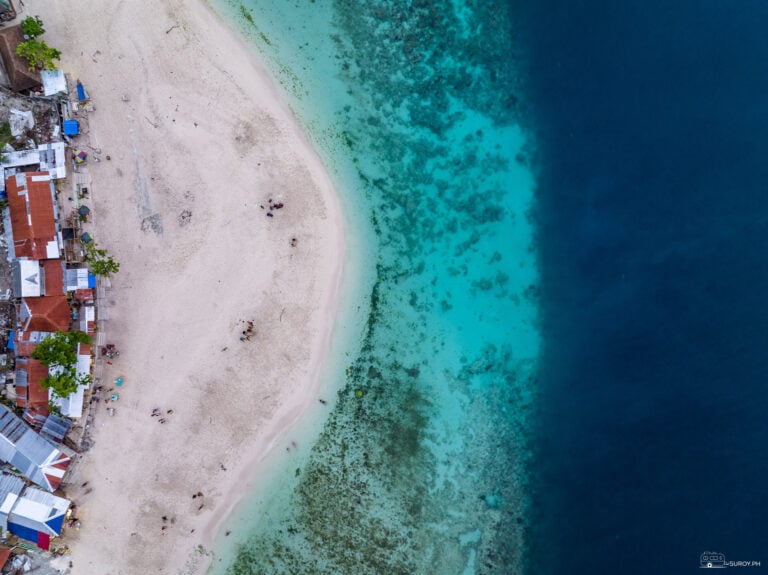
The rest of the island is roughly as advertised. It is small, 72 kilometers of ring road, six municipalities, no city, about 340 square kilometers of it. Roughly 270,000 people came last year against 168,000 in 2019, so the quiet is thinner than it used to be but it is still quiet by Philippine standards. What follows is the current version, with the fares checked in August 2026 and the errors marked where they sit.
What changed in 2026
Siquijor has flights. Sunlight Air began flying Cebu to Siquijor on 15 December 2025, on an ATR 72, about 55 minutes gate to gate. From May to September 2026 it runs three times a week, with no Monday service, cut back from four as part of a network-wide reduction. Guides still saying the airport has no commercial service are describing 2024. The airport’s IATA code is now IQR, not QUJ, and booking sites are split on which one they use, so search both. (Checked August 2026.)
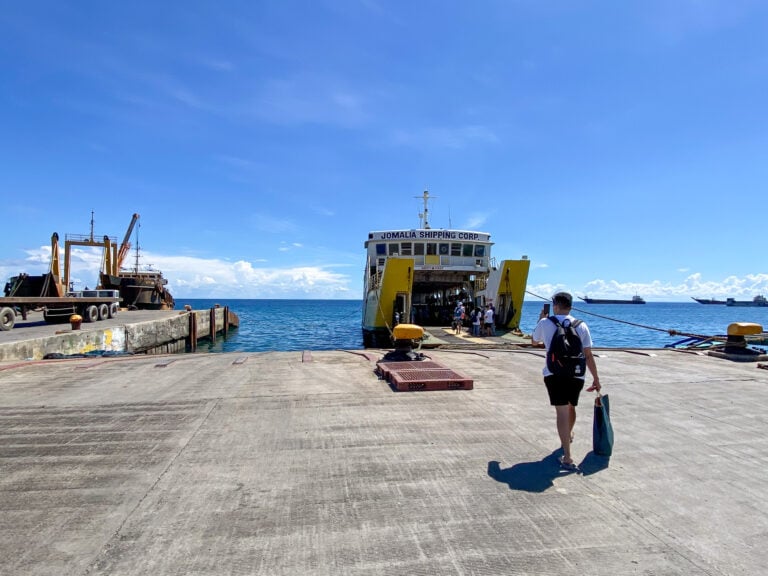
There is a new ferry from Oslob. Super Shuttle Ferry, run by Asian Marine Transport, opened Mainit Port in Oslob to Larena on 18 April 2026, reviving a port that had sat unused for about fifteen years. It leaves Oslob at 1:00 PM and Larena at 8:00 AM, takes about two hours, and costs ₱500 economy or ₱650 aircon. It takes vehicles: motorcycle ₱1,500, sedan ₱5,000. Worth knowing that the port is still being finished. (Checked 12 August 2026. Full route detail: the Oslob to Siquijor ferry guide.)
Aleson Shipping is grounded. The Department of Transportation suspended Aleson’s entire passenger fleet on 27 January 2026 after the sinking of MV Trisha Kerstin 3 off Basilan, citing a long incident history. Aleson used to be the cheap Dumaguete crossing at around ₱200. Whether it has resumed is not settled, and nothing published on it is solid. Anyone planning around Aleson should confirm directly before turning up at a pier. (Checked August 2026.)
And the fee. Provincial Ordinance No. 2022-006 brought in a ₱50 Tourism Ecological Fee on 1 February 2026. It is ₱40 for seniors and students, free for children six and under, and residents are exempt with ID. It is collected on departure, at booths outside the Siquijor Port ticketing building and in the airport departure area. Keep ₱50 in cash for the way home.
How to get to Siquijor
The short answer: fly to Dumaguete and take the 40-minute fastcraft, unless coming from southern Cebu, in which case take the new Oslob ferry.
First, the thing that catches people out. Siquijor has two passenger ports and they are not interchangeable. Siquijor Port, in the capital town, is where the fastcraft dock, and it is the closer of the two to the San Juan beach strip where most people sleep. Larena Port, on the north coast, is the roll-on roll-off port and it is a longer, more expensive tricycle ride from San Juan. Book a boat without checking which port it lands at and the transfer can cost more than the crossing.
Before paying for any crossing, read our Philippines ferry booking guide for the difference between SEAS, ORAS, and direct operator channels.
By air
| Route | Airline | Time | Frequency |
|---|---|---|---|
| Cebu to Siquijor (IQR) | Sunlight Air | about 55 min | 3x weekly, no Monday, May to Sept 2026 |
Fares start around ₱488 one way before taxes on the airline’s own published rate, which is undated, so treat it as a floor rather than a price. Departure times have not been republished since the April frequency change, so confirm at booking. (Checked August 2026.)
By ferry from Dumaguete, the standard approach
| Operator | Type | Crossing | Fare | Departures from Dumaguete |
|---|---|---|---|---|
| OceanJet | fastcraft, passengers only | 40 to 60 min | ₱420 tourist, ₱700 business | 07:20, 11:00, 13:00, 19:10 |
| Anika Star | fastcraft | about 45 min | ₱304 standard, ₱388 lower, ₱430 upper | 06:20, 09:20, 12:35, 17:15 Mon to Sat, 16:00 Sun |
| Montenegro Lines | RORO, takes vehicles | 1.5 to 2 hrs | ₱234 regular, ₱728 motorcycle | 05:00, 07:00, 08:00, 10:00, 12:01, 14:00, 18:00 |
Anika Star is the fastest crossing on the route and appears in almost no travel guide. Montenegro is the one to take with a motorbike. Published crossing times for Montenegro run from 90 minutes to two hours, and the number of daily departures is not consistent from one sailing week to the next, so build in slack. (Fares checked August 2026 and moving: a fuel surcharge environment is active and several operators warn that real fares can exceed published ones.)
From Cebu, three ways, and the expensive one is the famous one
| Route | Operator | Time | Fare |
|---|---|---|---|
| Oslob (Mainit) to Larena | Super Shuttle Ferry | about 2 hrs | ₱500 economy, ₱650 aircon |
| Liloan (Santander) to Larena | Maayo Shipping | about 2 hrs | ₱275 |
| Bato (Samboan) to Larena | Maayo Shipping | about 3 hrs | ₱275 |
| Cebu City to Siquijor, via Tagbilaran | OceanJet | 4 hrs 20 min | ₱1,600 tourist, ₱2,400 business |
The OceanJet run from Cebu City is not direct. It stops at Tagbilaran for about twenty minutes and it costs nearly six times what the Maayo boat out of Liloan costs. Anyone already heading down the south road, for the whale sharks at Oslob or otherwise, should take a southern port. Maayo’s sailings are limited days only and its listings carry an explicit fuel surcharge warning. (Checked August 2026.)
From Bohol and Mindanao
OceanJet runs Tagbilaran to Siquijor in about two hours, departing 07:30 and 15:20. The fare sits between ₱800 and ₱950, which is a genuine range rather than a typo. Lite Ferries runs Plaridel in Misamis Occidental to Larena in about six hours for ₱680 standard and ₱850 tourist, daily except Monday. (Checked August 2026.)
Next on Suroy.ph
How many days does Siquijor need
Three days is right. Two is enough to see the headline stops and nothing else, and four starts to feel slow unless the point is to do very little, which is a legitimate reason to come here.
The island is 72 kilometers around. The ring road is paved, flat and well marked, and the full loop takes about two hours without stopping. Add stops and it becomes a six to eight hour day, which is why one day is not a Siquijor trip, it is a Siquijor lap.
A day trip from Dumaguete is possible on the 07:20 out and the 18:00 back. It is also the version of this island that leaves people saying it was overrated.
Getting around
Rent a scooter. Everything else is a compromise.
Rates run ₱350 to ₱500 a day for a 110cc to 150cc automatic, dropping on multi-day hires. One operator’s published rate card in July 2026 had a Honda Click 125 at ₱450 for one to three days, ₱350 for four to ten, and ₱300 beyond that, which is the shape most rentals follow. The full loop burns four to five liters, so budget ₱250 to ₱300 of fuel for a day of it. A license covering motorcycles is required, and foreign visitors should carry a home license plus an international permit. (Checked August 2026.)
Not riding: tricycles run ₱20 to ₱30 within a town, ₱100 to ₱150 between towns, and ₱1,500 to ₱2,000 for a full day with a driver. Habal-habal is ₱50 to ₱100 for short hops and ₱150 to ₱200 up the steep interior roads to Cantabon.
Self-drive car rental exists on paper. No operator publishes a daily rate and every enquiry routes to a phone call, so the realistic version is hiring a vehicle with a driver at roughly ₱2,000 to ₱4,000 a day. Do not plan a trip around a self-drive car without a confirmed quote in hand.
The stops, ranked honestly
Cambugahay Falls, Lazi
Three tiers of turquoise, roughly 130 to 150 steps below the road, about 2 kilometers out of Lazi town on the ring road. The lowest tier is the big one and it is where the rope swings hang.

Entrance is most commonly ₱50 in 2025 and 2026, though it runs from free to ₱100 depending on who is collecting, so carry ₱100 and expect change. Parking a scooter is ₱10. The rope swing is ₱50 and that buys unlimited goes on that rope, not one, though separate ropes on different tiers can be charged separately. A bamboo raft is around ₱100.
Go at seven. By eight the day tours arrive and the lowest pool stops being a pool and starts being a queue. Hours are informal, roughly 07:00 to 17:30, with the swings shutting around 17:00.

On drones: there is no posted restriction and no ordinance covering the falls, and footage of them is everywhere, but that is tolerance rather than permission. Ask the collector at the gate. National rules apply regardless, 400 feet ceiling, and foreign visitors need authorisation. (Checked August 2026.)
Salagdoong Beach, Maria
Here is the correction. Salagdoong is not closed, and the platforms are not dismantled.
What happened is that the whole resort shut in 2020 and stayed shut until 11 September 2023, over the pandemic and a forest land use agreement with the DENR. Guides written in that window still say closed, and other guides copied them. It has been open for nearly three years.
What is actually true: two concrete diving platforms, roughly 5 meters and 10 meters, in Barangay Olang. They are tide-dependent. At low tide the upper platform closes to jumpers and stays open for photographs, and a lifeguard directs where to land. That is the real constraint and no guide states it clearly.
The metal slide is a different story. Nothing dated since before the pandemic describes it working, and the most recent guides do not mention it at all. It has not been officially decommissioned. Do not drive across the island for the slide.
Entrance ₱50, ₱40 for seniors and students, ₱30 for residents, free under six, parking ₱20. That is a published government schedule, not a guess. Roughly 06:00 to 17:30. (Checked August 2026.)
Cantabon Cave
Second correction, and this one is on every page in the top ten: Cantabon is in the Municipality of Siquijor, not San Juan. Barangay Cantabon sits at about 9.1859° N, 123.5615° E, at 453 meters, on the north-eastern flank of Mt. Bandilaan. It gets filed under San Juan because San Juan is where the hotels are and thirty minutes is the drive time from a hotel, not an address.
The cave runs about 800 meters, with named formations along it: Crystal Terraces, King’s Bed, Shower Bell, Angel’s Bath. Registration is at the barangay hall by the church.
Cost is about ₱500 to ₱600 for a party of up to three, guide and helmet and headlamp included, with small per-person add-ons beyond three. Roughly an hour inside, an hour and a half all in.
Be clear about what it is. Water from ankle-deep to swimming depth, scrambling up wet rock, crawling under stalactites, low headroom. It is not a show cave with a handrail and it closes after heavy rain when the water comes up. Anyone with mobility limits should skip it without guilt. (Checked August 2026.)
Lazi Church and Convent
Third correction. Lazi is not a UNESCO World Heritage Site. The San Isidro Labrador complex was submitted to the World Heritage tentative list on 16 May 2006, as part of a proposed extension to the Baroque Churches of the Philippines. A tentative list is a nomination shortlist. It has sat there for twenty years without inscription. The four inscribed Philippine baroque churches are Paoay, Miagao, Santa Maria and San Agustin in Manila, all from 1993.

What Lazi genuinely holds is a National Cultural Treasure declaration, made in 2001 by the National Museum of the Philippines, applied to the church and convent as one complex. It is also a National Historical Landmark, declared by what was then the National Historical Institute, and the published year for that is not consistent, so no year appears here.
Fourth correction, smaller and everywhere: the convent is not the oldest and largest in Asia. Nothing supports that. It is one of the largest built in the Philippines in the Spanish colonial period, which is still a real thing to stand in front of.
The church was completed in 1884, the belltower in 1885, the convent in 1891, coral stone below and hardwood above, a U-shaped bahay na bato 42 meters by 38. The NHCP handed back a government-funded restoration on 27 August 2019 and further work has continued since. Church entry is free. The convent houses a heritage museum whose hours and fee are not published anywhere, so call ahead. Shoulders and knees covered. (Checked August 2026.)

The Old Enchanted Balete Tree, Lazi
Fifth correction, gently. Every guide and the on-site signage say 400 years. No dating study has ever been published, and balete are strangler figs, a lattice of fused aerial roots grown around a host tree that later rots away. There is often no single trunk to count rings in. The age is not merely unverified, it may not be establishable at all.

It is old, it is genuinely strange, and the spring at its base has been turned into a fish spa. ₱20 to enter, in Barangay Campalanas. Whether the fish spa is included or costs another ₱20 to ₱100 depends on whether bait is bought, and the answer is not consistent from one visit to the next. Ten minutes is the right amount of time to spend here. (Checked August 2026.)

Paliton Beach, San Juan
West-facing, which is the entire point. ₱20 entrance, free for seniors and PWDs. There is a small section by the parking area with drink shacks and a longer, emptier stretch through the trees. Come for sunset and nothing else. (Checked August 2026.)

Lugnason Falls, San Juan
Free, with a ₱10 parking fee sometimes collected. A short marked jungle walk from the turn-off, somewhere between five and fifteen minutes depending on how fast anyone walks. A five-meter drop into a pool about six meters deep, with concrete steps in. Quieter than Cambugahay by a wide margin. (Checked August 2026.)
Lagaan Falls, Lazi
Not Lugnason, and worth keeping straight, because the two get swapped constantly. Lagaan is in Lazi, off the ring road, twenty to twenty five minutes from San Juan.

Entrance is ₱50. Parking is either ₱10 or nothing depending on who is at the gate. From the trailhead it is about fifteen minutes down a marked dirt trail under closed canopy. The main drop is small, around 2 meters, into a wide lagoon-shaped pool, and there is a rope swing plus a slide worn into the rock. Tables at the bottom, so people eat here and stay. (Checked August 2026.)
Lugnason is free and faster to reach. Lagaan is the prettier one and it charges for the privilege.
Tubod Marine Sanctuary, San Juan
Protected since 1989. Beach access is free, swimming is ₱20, snorkelling is ₱50, gear rental ₱50 to ₱100. There is a marked public path from the main road, so nobody needs to go through the resort to reach it. Siquijor has 23 marine protected areas covering roughly 413 hectares, and this is the accessible one. (Checked August 2026.)
Tulapos Marine Sanctuary, Enrique Villanueva
The other one, and the older one. Tulapos sits on the northeast coast in Enrique Villanueva and it has been protected since 1986, three years before Tubod, which makes it the oldest marine protected area on the island. Almost nothing written about Siquijor mentions it.

Snorkelling is ₱100 per person and a guide is required, at roughly ₱250 for two. The hut runs 07:00 to 17:00 daily. Entry is off the sand and the layout comes in three bands: mangroves close in where juvenile snappers shelter, then seagrass holding horned and blue starfish and giant clams, then the reef itself from about 200 meters out, with a drop-off where barracuda school. Green turtles turn up. Maximum depth over the reef is about 6 meters. (Checked August 2026.)

Tubod is the convenient one. Tulapos is the better snorkel, and the drive across the island is the price.
Mount Bandilaan
Sixth correction. The highest point on the island is 557 meters, on the official provincial figure. The 628 and 632 meter figures that circulate are measuring something else. It is a forest reserve, established under Presidential Proclamation No. 523 in 1940, covering 212 hectares, and it is signed as a national park rather than a natural park.
No entrance fee as of August 2026. There is a 15-meter viewing tower with a full circle of island below it, about twenty minutes’ walk up a paved path from the parking area, a short rainforest trail, and Stations of the Cross used at Holy Week. Healers still harvest medicinal plants on this mountain, which is the thread connecting the view to everything below.
Where to base, and the part every guide skips
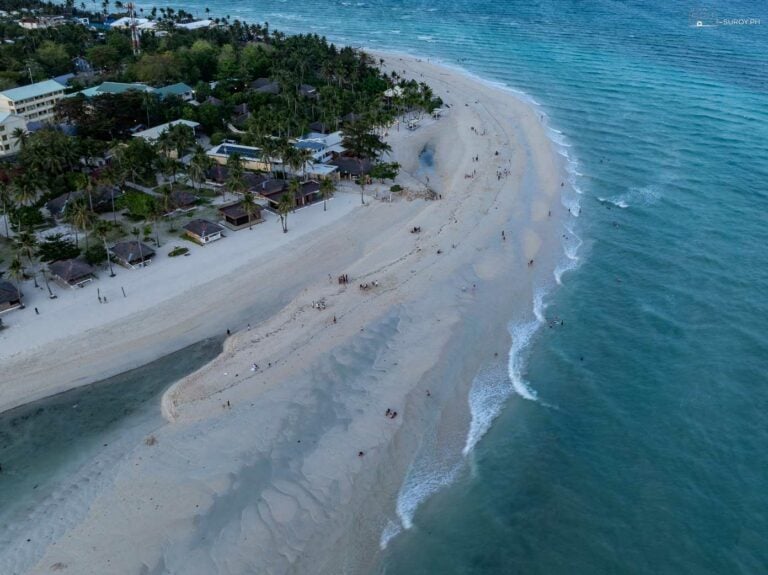
San Juan, on the west coast, is where nearly everyone stays and it is a reasonable default: the sunset side, the dive shops, the bars, the shortest hop to Paliton and Tubod. Budget fan rooms with shared bathrooms run ₱300 to ₱700, aircon guesthouses with private bathrooms ₱700 to ₱1,800, beachfront and mid-range ₱1,800 to ₱4,000 and up.
Here is the gap. Every guide funnels to San Juan, and the standard line is that the rest of the island lacks even basic amenities. Nobody publishes price bands, food options or a case for Siquijor Town, Larena, Lazi or Maria, and those four hold most of the island’s population, the fastcraft port, the heritage complex and the east coast. Anyone basing outside San Juan is doing it without a guide, which is either a warning or an invitation depending on the traveler.
Eating: a carinderia meal is ₱60 to ₱120, a casual restaurant ₱150 to ₱300, a beachside cafe ₱200 to ₱500 and up.
Three days in Siquijor
Day one. Land, collect the scooter, ride to San Juan. Afternoon at Lugnason, which is free and empty, then Paliton for sunset. Early night, because tomorrow starts before seven.
Day two. Leave at 06:30 for Cambugahay and have the lowest tier to yourself before the tours. Lazi church and convent afterwards, ten minutes at the balete tree, then the long east coast run to Salagdoong for the afternoon. Ring road all the way, back before dark.
Day three. Cantabon Cave in the morning, up to Bandilaan for the tower, down for a late lunch. Tubod in the afternoon if there is energy left. Keep ₱50 in cash for the fee at the port.
With a fourth day, Apo Island off Negros is the usual add-on at ₱1,500 to ₱2,500 per person, or do nothing at all, which this island is genuinely good at.
What it costs
| Per day | |
|---|---|
| Backpacker, scooter, guesthouse, carinderia | ₱1,200 to ₱1,800 |
| Comfortable, aircon room, restaurants | ₱2,500 to ₱3,500 per person |
| Scooter | ₱350 to ₱500 |
| Fuel for the island loop | ₱250 to ₱300 |
| Departure fee, once | ₱50 |
Entrance fees across a full three-day loop come to roughly ₱250 to ₱400 per person, before the cave. (Checked August 2026.)
The full version of this table, with a two-person total and every assumption exposed, is in the Siquijor trip budget calculator.
The healing, honestly
Siquijor’s reputation is the thing that sells it and it is mostly the wrong reputation.
The Spanish called it Isla del Fuego, island of fire, for the glow they saw from the water at night, which was firefly swarms in the molave trees. The older local name, Katugasan, means place of molave, and it is the better name. Even “Siquijor” is unsettled: the stories run from a chieftain saying si Kihod, I am Kihod, to a mishearing of a Boholano priest, to quidjod, the tide going out. All three are traditions, none is established etymology.
What actually survives is healing, not sorcery. The Folk Healing Festival gathers mananambal from across the Visayas and Mindanao at Mt. Bandilaan every Holy Week. On Good Friday they collect bark, roots, herbs and insects from the mountains, caves, sea, churches and cemeteries. On Black Saturday it is all chopped and boiled in a cauldron of coconut oil in circles on the mountain, the timing built on the belief that with Christ in the tomb the forces at work lend their power to the mixture. Pulse consultation, herbal smoke, hilot. Admission free, visitors welcome, and photography restricted in places, which is worth respecting rather than testing.
Three things to be clear about. The festival moves with Easter, so any guide printing a fixed annual date is wrong, and 2026 is already past. The next runs 24 to 27 March 2027. The practices are genuinely old and genuinely alive, but the festival as staged, with a schedule and a view park, is a modern provincial showcase of them, and both things are true at once. And the language matters: these are mananambal and hilot, not shamans and energy work. The wellness vocabulary layered on top by tourist-facing pages is not what anyone on that mountain calls it.
And then there is Hapitanan, which is the reputation sold back as merchandise, cheerfully and without pretending otherwise. It sits directly on the ring road. Listings put it in Lazi and listings put it in San Juan, which is the kind of thing this island does to addresses.

It is a cafe and souvenir shop with a magic theme. Entry is free. The broomstick photograph, where people stand on a wooden platform kept just out of frame, hold a broom and jump, runs on a donation box. Coffee is ₱30, a fresh coconut ₱40, halo-halo ₱60, burgers ₱60 to ₱70, shirts ₱300 to ₱500, and a voodoo doll keychain ₱100. Open 06:30 to 17:00 daily. (Checked August 2026.)

It is not the folk healing described above and it does not claim to be. Both things live on the same island, and only one of them has a menu.
The island’s real name for itself, and the reputation it never asked for, both ended up on one shirt: the Siquijor Isla del Fuego Tee.
Best time to visit
February to May is the driest and the busiest. June to October brings the habagat, which means rain in bursts rather than all day, plus cheaper rooms and thinner crowds, and the occasional cancelled crossing when a warning goes up. November to January sits in between and is the most pleasant compromise. Sea conditions, not rainfall, are what actually ruin a Siquijor trip, because the boats stop before the beaches do. More on the season in the August habagat guide and the best time to visit the Philippines.
Frequently asked questions
Can you fly to Siquijor?
Yes. Sunlight Air has flown Cebu to Siquijor since 15 December 2025, about 55 minutes, three times a week with no Monday service between May and September 2026. The airport code is IQR. Most guides still say there are no commercial flights, which stopped being true in December 2025.
How much is the ferry to Siquijor?
From Dumaguete, ₱420 tourist on the OceanJet fastcraft, ₱304 on Anika Star, or ₱234 on the Montenegro RORO. From Oslob in southern Cebu, ₱500 economy. From Cebu City direct via Tagbilaran, ₱1,600. From Tagbilaran, ₱800 to ₱950. (Checked August 2026, and fares are moving with fuel surcharges.)
Which port should you arrive at?
Siquijor Port if the plan is to stay in San Juan, because it is closer and it is where the fastcraft land. Larena is the roll-on roll-off port on the north coast and it is a longer transfer.
Is there an entrance fee for Siquijor?
There is a ₱50 Tourism Ecological Fee, ₱40 for seniors and students, and it is collected when leaving, not when arriving, at the port ticketing building and the airport departure area. It started on 1 February 2026.
How many days do you need in Siquijor?
Three. Two covers the headline stops only, four suits people who want to slow down.
Is Salagdoong Beach closed?
No. The resort was shut from 2020 to 11 September 2023 and a lot of guides still describe that closure. It is open. The diving platforms are open too, but they close to jumpers at low tide.
Is Cambugahay Falls worth it?
Yes, before eight in the morning. After that the lowest tier fills up and it becomes a different place.
Is Siquijor safe?
Yes. The reputation is about folk healing, not danger. The real risks are ordinary ones: wet rock at the falls, a scooter on an unfamiliar road, and sea conditions during the habagat.
Is Lazi Church a UNESCO World Heritage Site?
No. It has been on the World Heritage tentative list since 16 May 2006 as part of a proposed extension, which is a nomination shortlist rather than an inscription. It is a National Cultural Treasure, declared in 2001.
Is Siquijor part of Central Visayas?
Not since 11 June 2024, when it moved to the Negros Island Region. Plenty of official-looking pages still say Central Visayas.
Where to next
- The new Oslob to Siquijor ferry route, the full detail on Mainit Port
- Moalboal, Basdaku and Basdiot, if the trip continues up the Cebu west coast
- Pulang Bato Falls and the sulfur vents at Valencia, both worth a day if routing through Dumaguete
- The northern Cebu ferry guide, Hagnaya, Maya and Malapascua
Wander protected.
Isla del Fuego. Island of fire, of healers, of stories told around lamplight. Believe it or not, the island stays with you either way.
Island Series · Made in the Philippines
Wear the storyFares, fees and schedules on this page were checked in August 2026. Philippine ferry fares are moving with fuel surcharges and several operators state that actual prices may exceed published ones. Confirm before traveling.