

National Museum of the Philippines Cebu: Free History at Plaza Independencia
A gold death mask, Karaang Sugbo, and a 1910 Customs House reborn. The best free two hours in Cebu City.
The National Museum of the Philippines Cebu is the best free thing to do in Cebu City, and it is not close. It fills Malacañang sa Sugbo, the old Customs House facing the port at Plaza Independencia, and its most famous piece is a gold death mask that was dug up a few steps from the front door.
Give it two hours. Go on a weekday morning, walk across the plaza to Fort San Pedro afterward, and finish at Magellan’s Cross. Admission costs nothing, and since January 2025 that includes Mondays.
Plaza Independencia, Cebu City · 10.2917° N, 123.9044° E · Photographed October 2024 · Checked October 2026

The building is the first exhibit
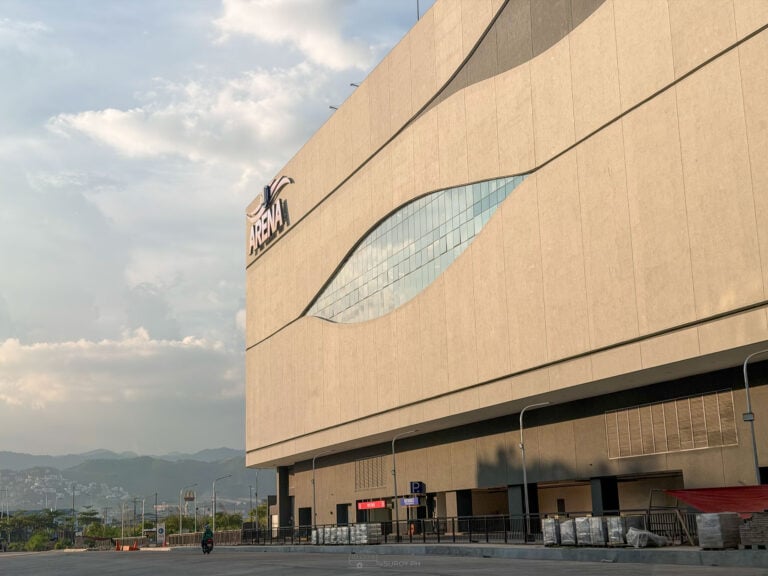
It went up in 1910, during the American period, as the Customs House for the Port of Cebu, designed by the American architect William E. Parsons. Customs stayed until 2004, when the building became Malacañang sa Sugbo, the president’s official residence in the Visayas. The museum was inaugurated on 28 July 2023 and opened to the public on 1 August. The inauguration date is on a brass plaque inside, for whoever in the group keeps score.

Inside, the ceilings are high and the windows wide, built for a tropical port long before air conditioning. The big hall carries the Battle of Mactan mural, with Lapu-Lapu at its center, and that is where most people take their first photo.

Inside the museum
Four rooms, four reasons to stay
Tap a room. Most groups split up here: somebody stays with the gold, somebody goes to find the sharks.
Room · The gold
Karaang Sugbo
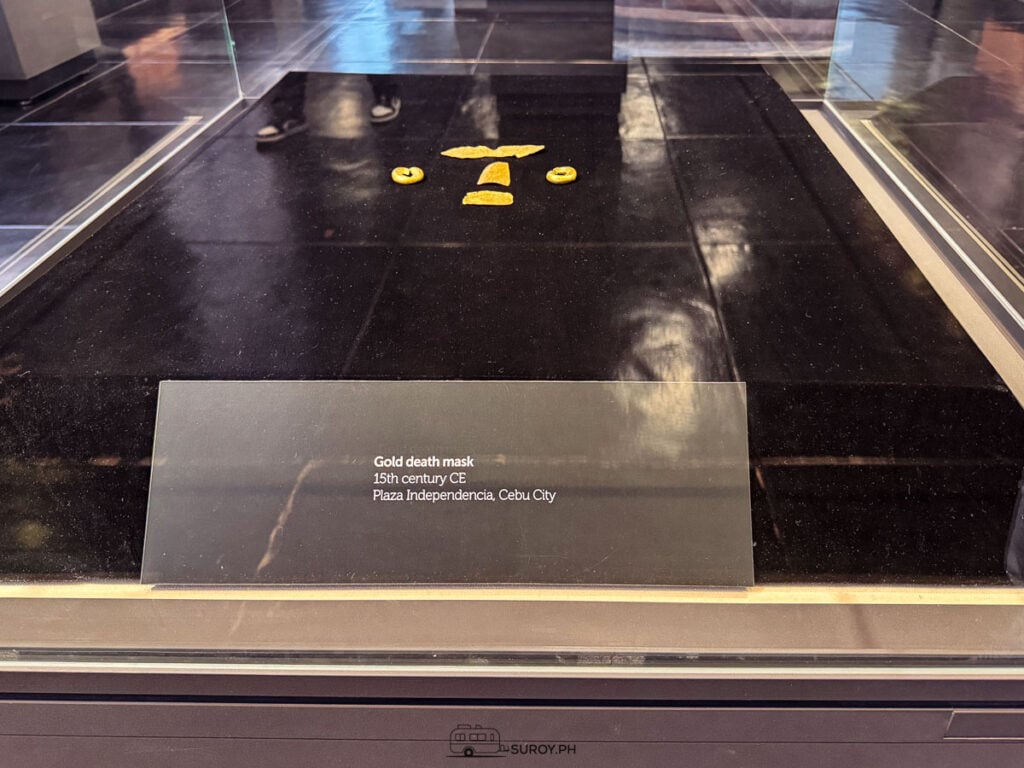
The archaeology wing. Its centerpiece is a 15th century gold death mask excavated in Plaza Independencia, right outside: thin gold covers for the eyes, the nose and the mouth, laid out on black. Around it, trade ceramics and a 1699 map of Cebu City.
Room · The sea
Boats, nets and a galleon
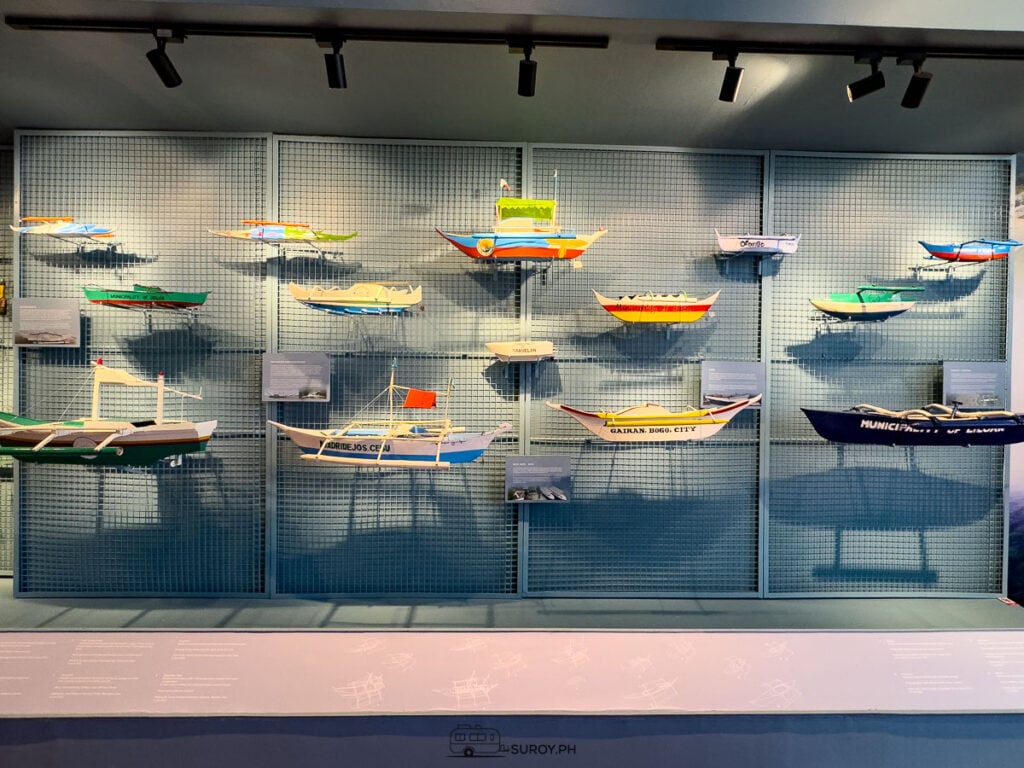
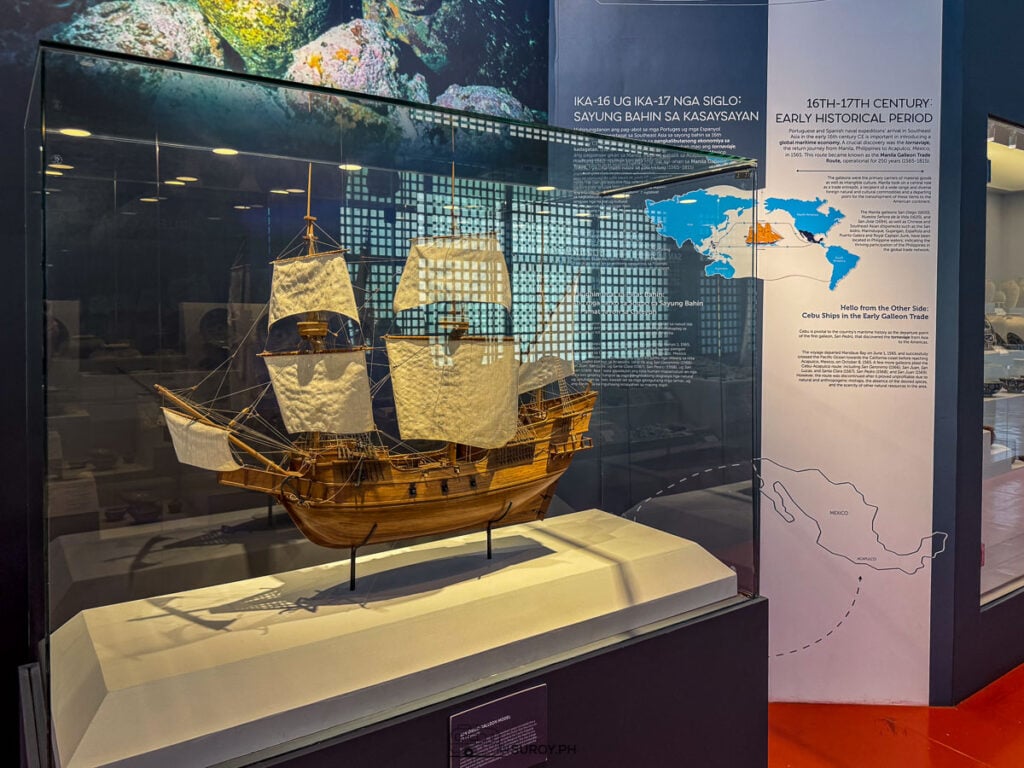
A full-size baroto, fish traps and nets, a wall of model boats from different Cebu towns, a kamalab used for navigation, a slate logbook from the Tagbita shipwreck, and a model galleon for the Manila to Acapulco trade.
Room · The wild
Sharks, forest and a tamaraw
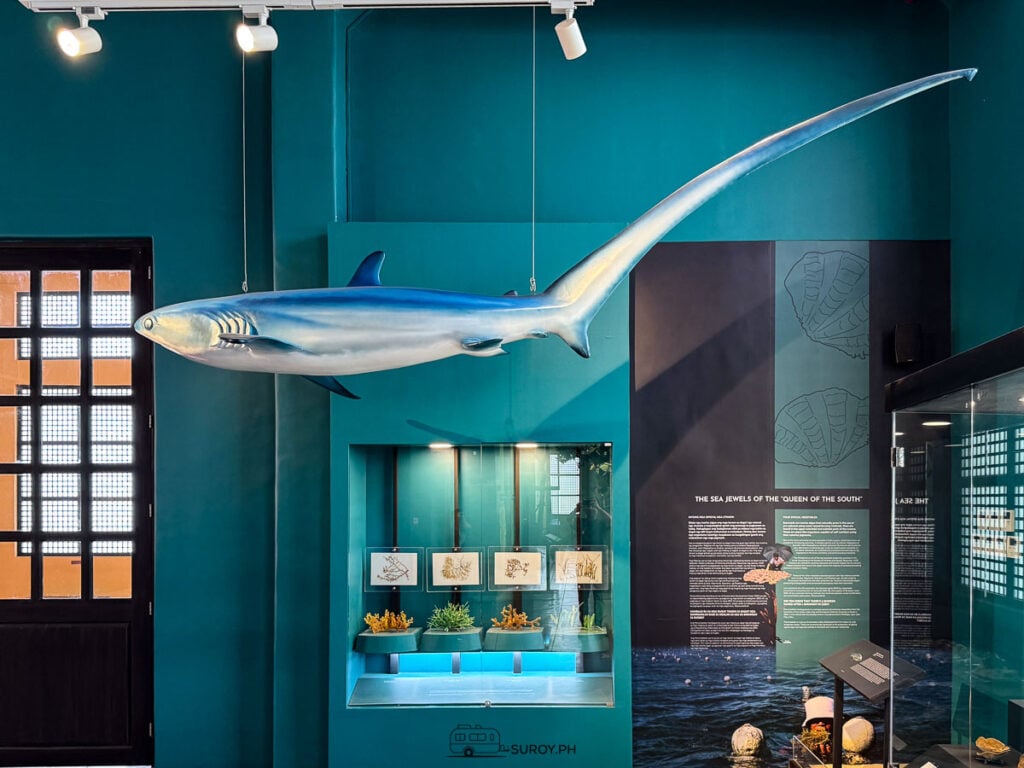
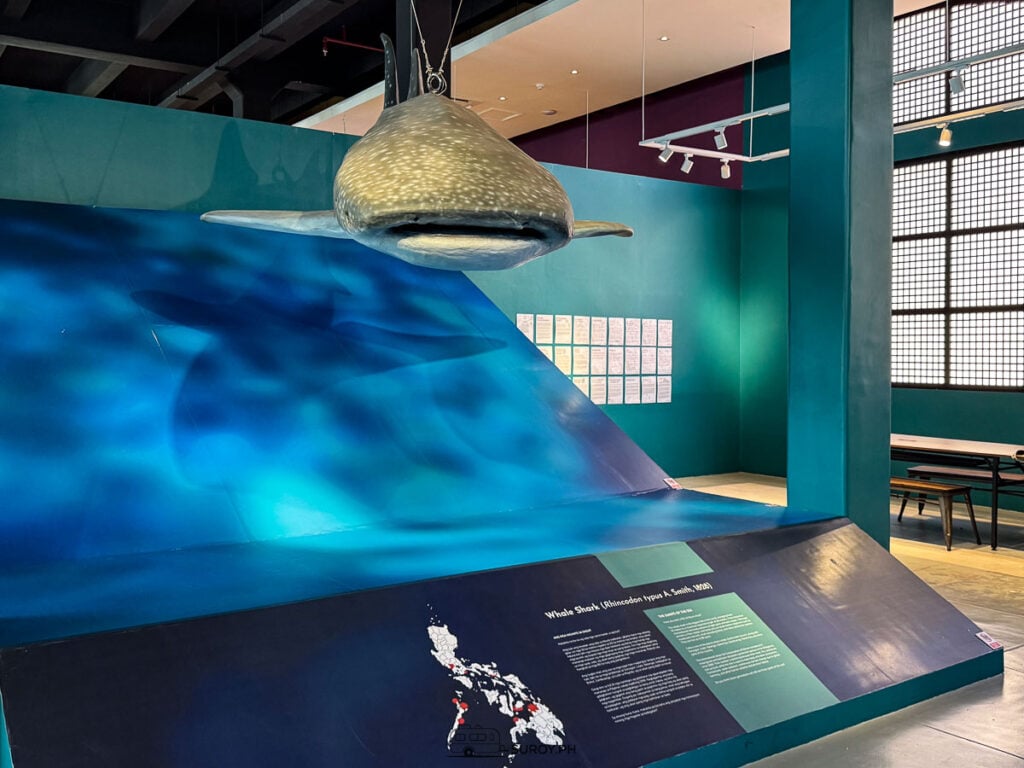
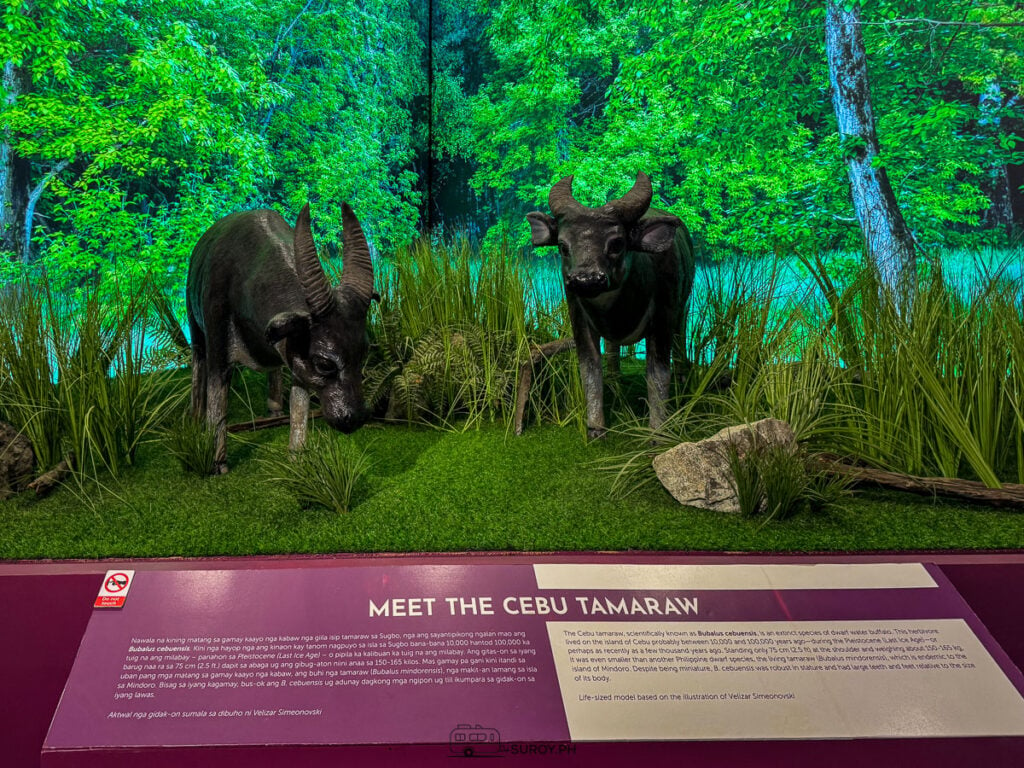
A thresher shark hangs from the ceiling and a whale shark floats over a blue floor. Then a walk through a recreated beach forest, the rocks that made the island, and the Cebu tamaraw, a dwarf buffalo that lived here and is now extinct.
Room · The art
Paintings and the Santo Niño
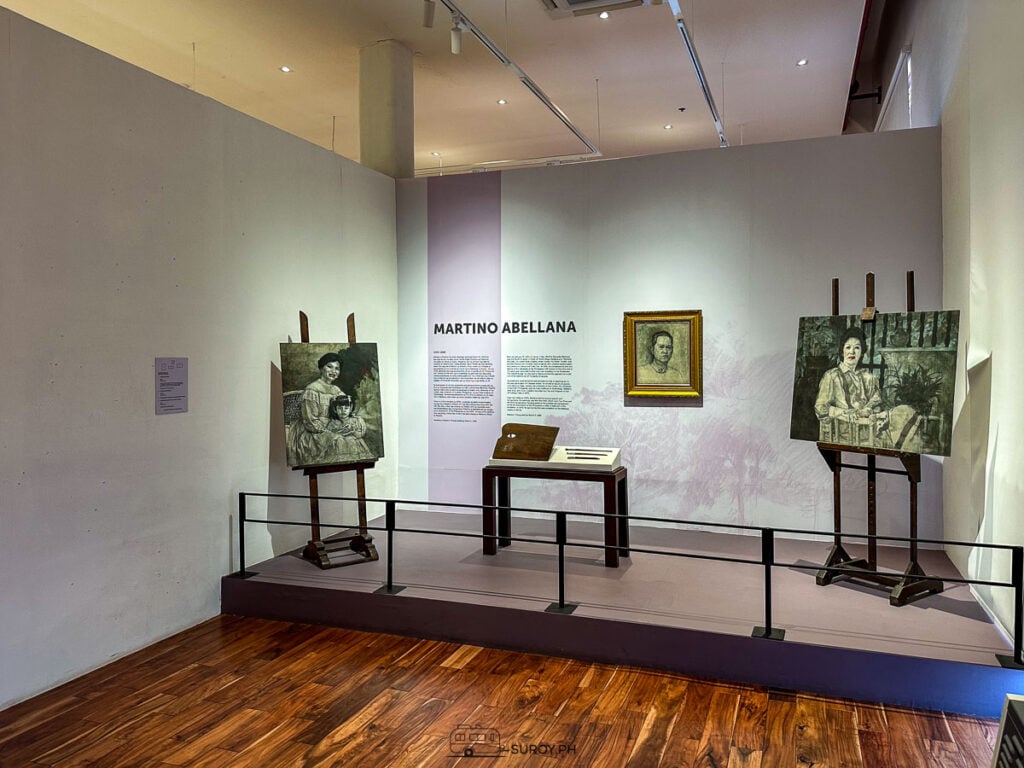
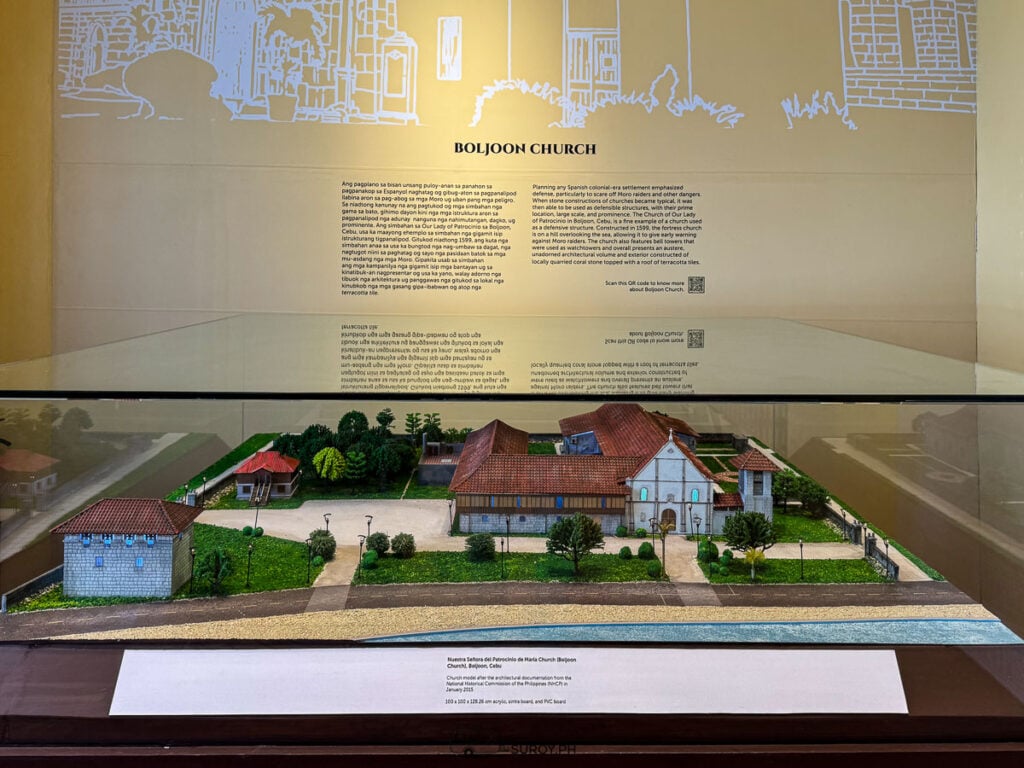
A room for the Cebuano painter Martino Abellana, portraits including Rizal at his writing desk, a row of Santo Niño studies, a carved Santo Niño asleep on a globe, and a scale model of Boljoon Church.
Galleries as photographed by Suroy.ph, October 2024. Displays can rotate.
What’s inside the National Museum Cebu
Four kinds of rooms, and they reward different people in the same group. The tita will stay with the paintings. The kids will want the sharks. Everybody stops at the gold.
Karaang Sugbo and the gold death mask
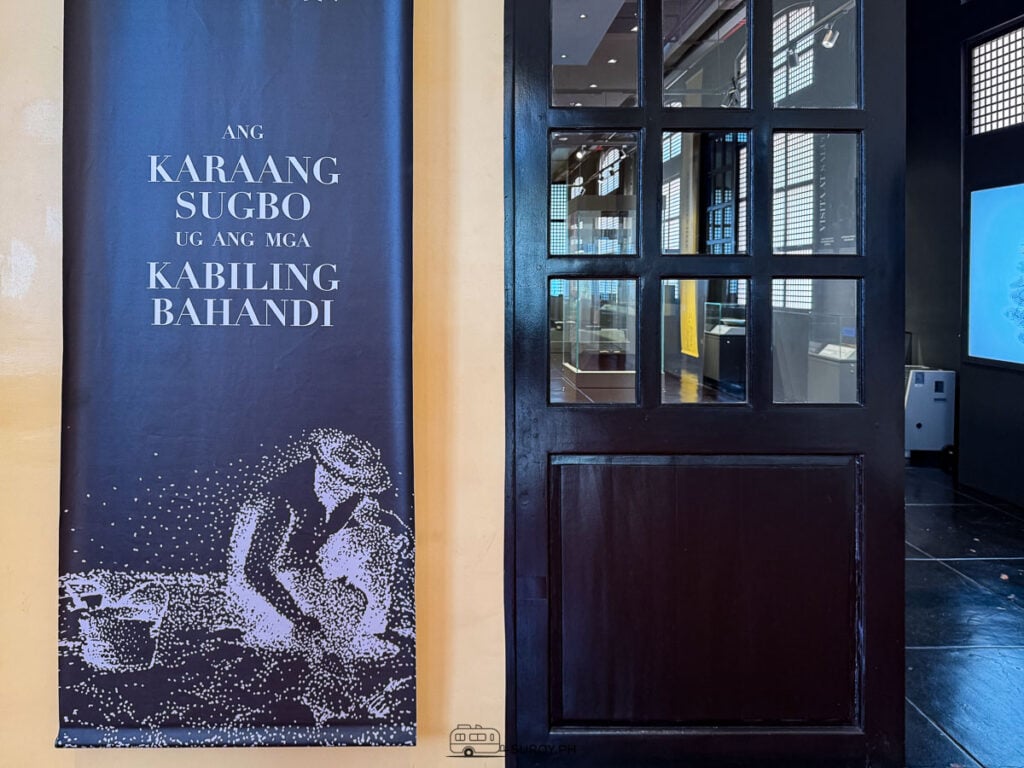
The archaeology wing sits under a long banner, Ang Karaang Sugbo ug ang mga Kabiling Bahandi: old Cebu and the treasures it handed down. The piece to find is the 15th century gold death mask, excavated in Plaza Independencia. It is smaller than people expect. There is no face, only thin gold covers for the eyes, the nose and the mouth, laid out on black in a low case. Around it are trade ceramics and a framed map of Cebu City in 1699.
Plaza Independencia · three frames
Read the room, the map and the harbor
Pick a frame, then tap the numbered dots. All three are Suroy.ph photographs.
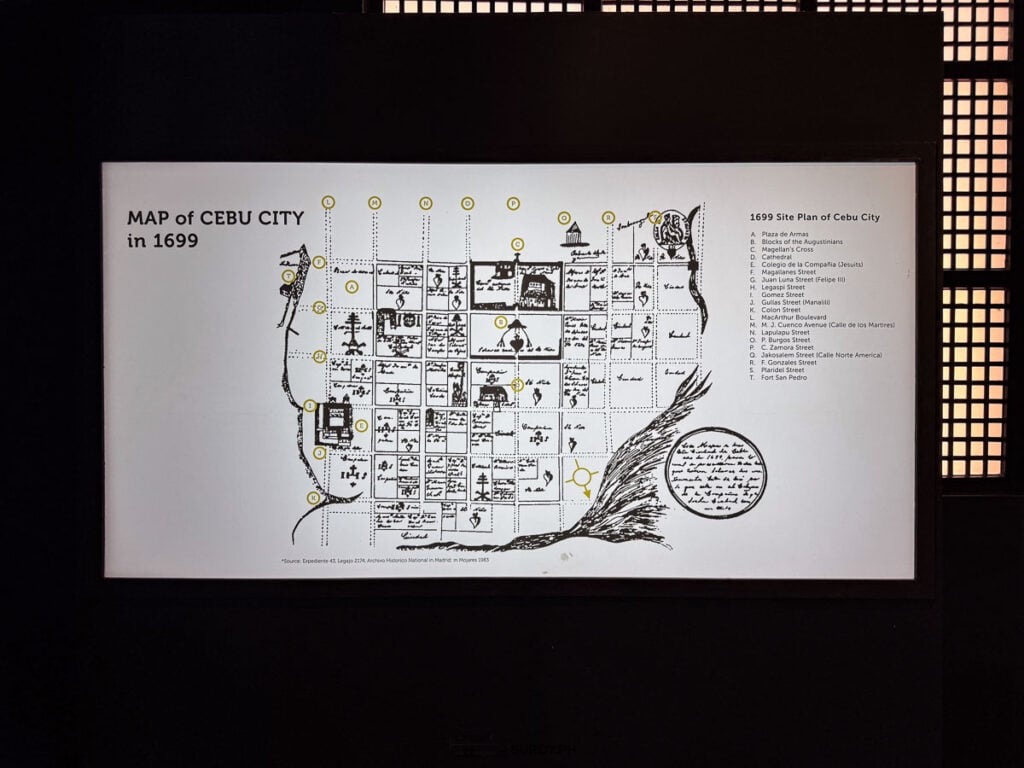
Cebu City in 1699, as the museum draws it. Tap a letter.
1. A. Plaza de ArmasThe open square at the edge of the town. It is Plaza Independencia now, and the museum stands on it.
2. B. The Augustinian blocksThe big walled block held by the Augustinians, the order that still runs the Basilica del Santo Niño on the same ground.
3. C. Magellan’s CrossMarked at the top edge of the Augustinian block, where the cross chapel still stands beside the basilica gate.
4. D. The cathedralThe key marks the cathedral one block down. Cebu had been a diocese since 1595.
5. E. The Jesuit collegeColegio de la Compañía, run by the Jesuits until the order was expelled from the Philippines in 1768.
6. K. Colon StreetOne of the lettered streets of the grid, now Colon, the street Cebu calls the oldest in the country.
The Battle of Mactan, in the main hall. Tap a dot.
1. The fighters on the leftBare-chested men with spears, shields and blades push in from the left of the canvas.
2. The armored menHelmets, breastplates and long guns crowd the right half: the Spanish side of the fight.
3. The shipA ship sits on the horizon behind the fighting, the fleet the armored men came from.
4. The chandelierA wrought iron chandelier hangs from the coffered ceiling of the 1910 hall.
5. The windowsTall grid windows run down the hall. The building was a customs house first, made for sea breeze long before air conditioning.
Malacañang sa Sugbo and the harbor. Tap a dot.
1. The museumMalacañang sa Sugbo, the 1910 Customs House, now the National Museum. The front faces the port road.
2. The scaffoldingIn this frame one wing of the building is still wrapped in scaffolding.
3. The bridgeThe Cebu-Cordova Link Expressway, whose two towers hold up a 390 meter main span across the channel to Cordova.
4. The channelThe water between Cebu and Mactan. Ships and ferries pass a few hundred meters from the museum door.
Photographed by Suroy.ph. Map letters follow the museum’s own key; its source is Expediente 43, Legajo 2174, Archivo Histórico Nacional, Madrid, via Mojares 1983.
The sea that made Cebu
The maritime rooms are the surprise. A full-size baroto, the small outrigger canoe still seen on Cebu’s beaches, sits in front of a photo mural of green water. There are fish traps and nets, a wall of model boats from different Cebu towns, a kamalab once used for navigation, and a slate logbook recovered from the Tagbita shipwreck. At the end a model galleon explains why this harbor mattered to the Manila to Acapulco trade.

Sharks, a beach forest and the Cebu tamaraw
Natural history is where the kids run. A thresher shark hangs from the ceiling, a nod to Malapascua, and a whale shark floats over a blue floor. A walkway passes through a recreated beach forest, a wall lays out the geology of the island in rock samples, and a diorama introduces the Cebu tamaraw, a dwarf buffalo that lived on this island and is now extinct.
The art rooms
The art galleries are the quiet part of the building. One room is given to the Cebuano painter Martino Abellana. Others hang portraits, Rizal at his writing desk among them, and a row of small Santo Niño studies. Look for the carved Santo Niño asleep on a globe. There is also a scale model of Boljoon Church, the old stone church in the south of the island.

How long to spend, and when to go
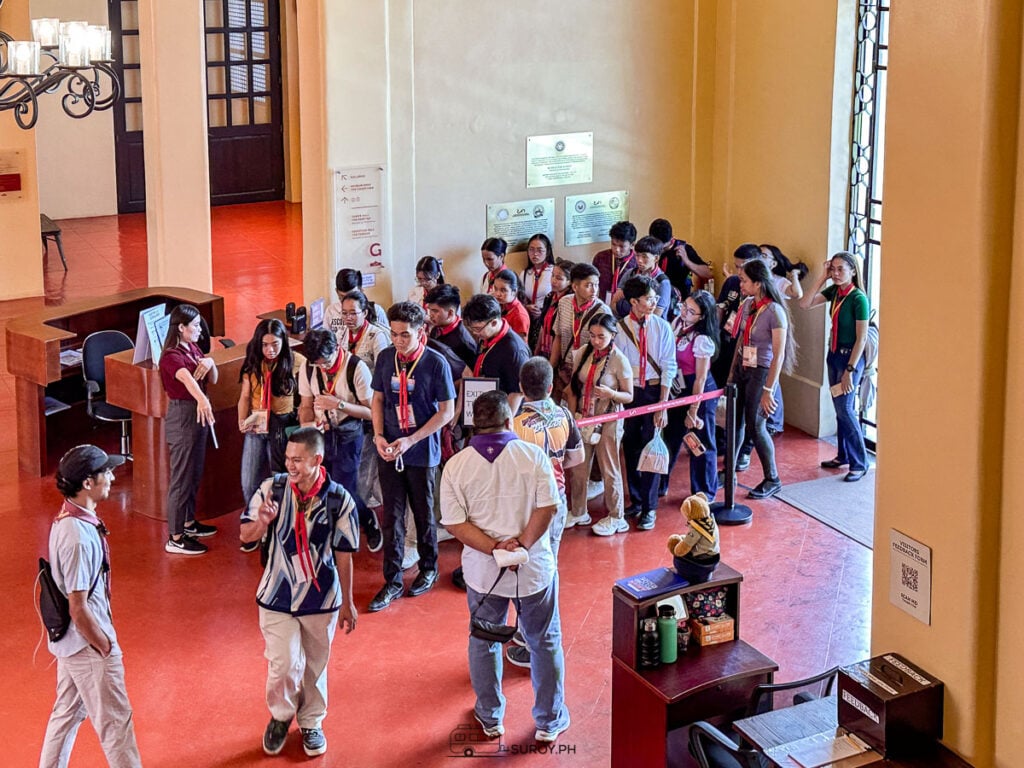
Two hours covers it at an easy pace, three if somebody in the group reads every label. Weekday mornings are calmer. On the October 2024 weekday these photographs were taken, a school group was lined up in the entrance hall and the first rooms were busy for a while. Weekends bring families. Neither is a reason to skip it.
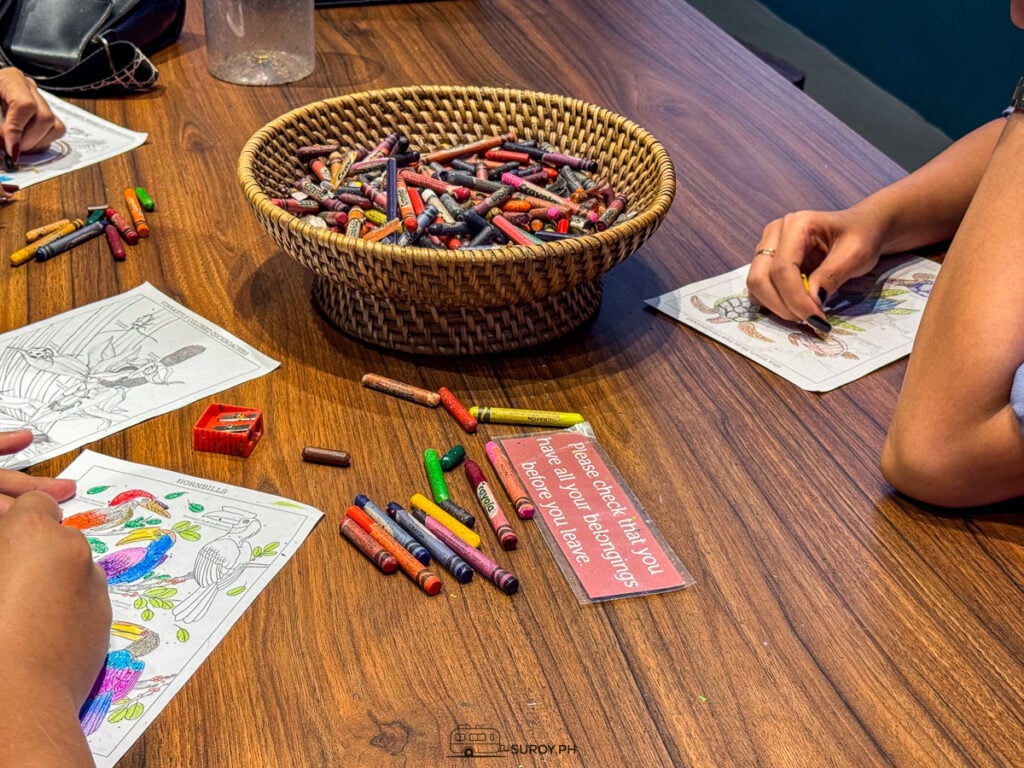
Two small things worth knowing. There is a table with crayons and coloring sheets for young kids, which buys the adults twenty minutes. And there is a small museum shop, so the pasalubong does not have to wait for the mall.
Hours, fees, and how to get there
| National Museum Cebu | |
|---|---|
| Admission | Free for everyone |
| Days | Every day, Mondays included |
| Hours | From 9 AM. Closing has been posted as both 5 PM and 6 PM, so be inside by 4 |
| Where | Malacañang sa Sugbo, Plaza Independencia, beside the port |
| Checked | October 2026 |
The museum is on the edge of the old city by the piers. Jeepneys heading to Pier 1 pass close by, and the Cebu City jeepney guide has the routes. From Colon or the Basilica it is an easy walk. Taxi and Grab drivers know it as the National Museum or as Malacañang sa Sugbo.
Make it a heritage afternoon
Everything old in Cebu City is within walking distance of this door. Fort San Pedro is across Plaza Independencia, ₱30 for adults as of July 2026. Magellan’s Cross and the Basilica del Santo Niño are a short walk up, and Casa Gorordo finishes the loop in the Parian. A free museum, a ₱30 fort, and five hundred years on foot.
If the afternoon leaves the group proud of the old city, the Queen City tee puts the skyline and the nickname on cotton.
Quick answers
Is the National Museum Cebu free?
Yes. Admission is free for everyone.
Is the National Museum Cebu open on Mondays?
Yes. Since January 2025 the National Museum’s regional museums, Cebu included, open every day of the week.
What are the National Museum Cebu hours?
It opens at 9 AM. Closing has been posted as both 5 PM and 6 PM, so be inside by 4 PM. Checked October 2026.
Where is the gold death mask?
In the Karaang Sugbo archaeology gallery. It dates to the 15th century and was excavated in Plaza Independencia, outside the building.
What building is the museum in?
Malacañang sa Sugbo at Plaza Independencia, built in 1910 as the Customs House of Cebu and used as the president’s Visayas residence from 2004.
How long do you need at the National Museum Cebu?
About two hours, three if you read every label.
Suroy Wear · Island Series