
In Carcar they hit the lechon with a torch before they hand it to you
₱400 a kilo in September 2026, a drippings sauce the rest of Cebu refuses on principle, and a hand torch at the counter that nobody has ever written down.
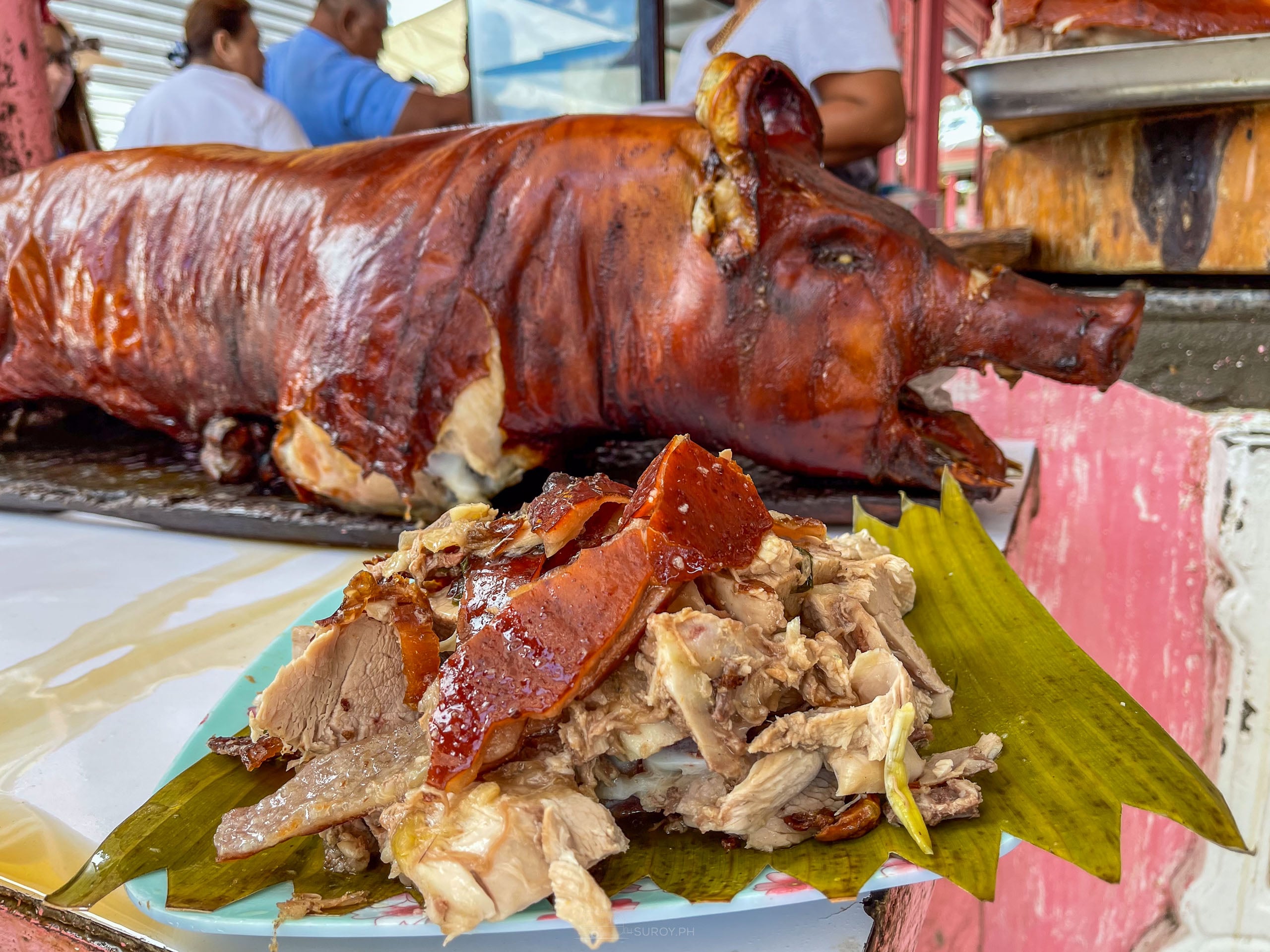
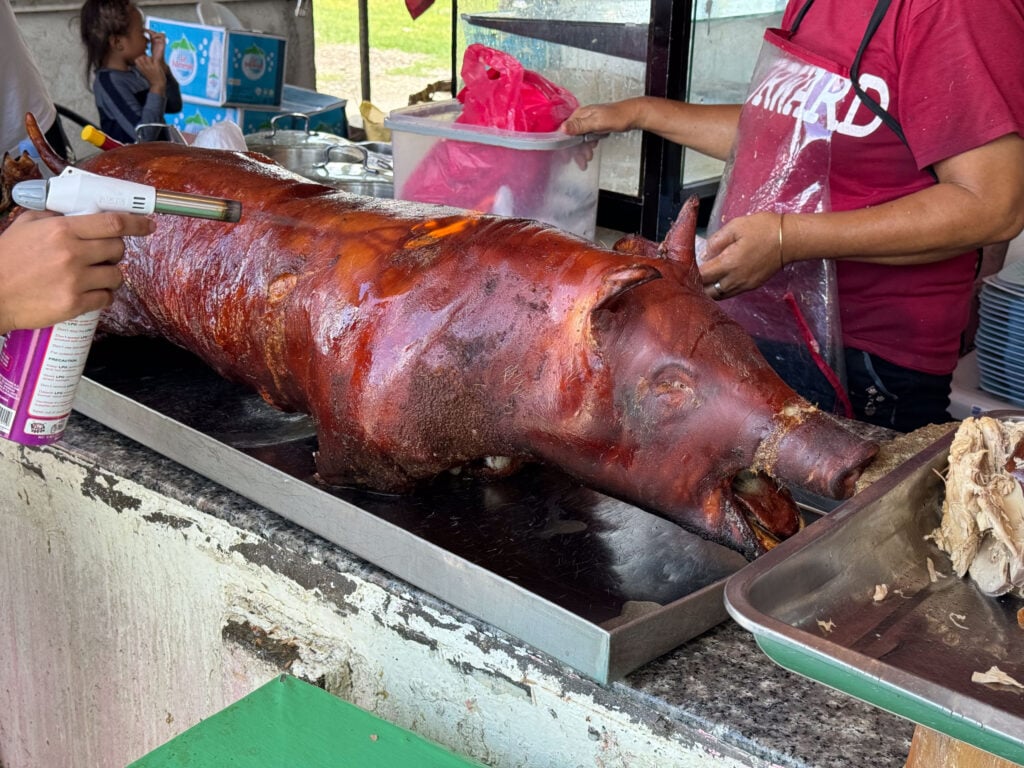
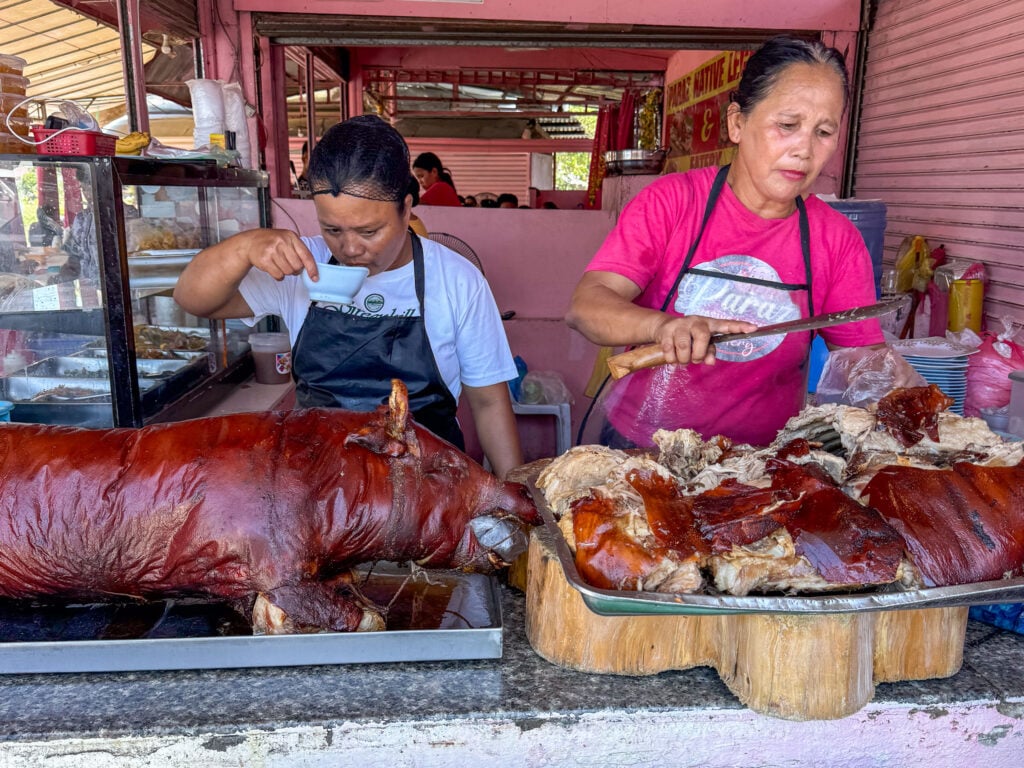
The woman took a hand torch off the counter, thumbed it on, and ran the flame down the back of a whole roast pig until the skin lifted and blistered. Then she chopped it. Nobody around me thought this was worth a second look. I have never once seen it written down.
That is Carcar lechon in one gesture. The famous part is the sauce. The part that actually decides whether your plate is any good happens in the last thirty seconds, at the counter, in front of you.
Why the torch is there
The pigs go over coals before dawn and they are done by mid morning. Then they sit on a counter, under a roof, in Cebu humidity, for hours. Skin that came off the fire like glass goes quietly soft by ten in the morning. The torch takes it back. You can hear the difference from a meter away, and you can see the fat bubble up where the flame passed.
It also means the piece you get at eleven is not the piece somebody got at seven, even off the same pig. Watch which pig is moving. A carcass that has been sitting since dawn with one shoulder taken out of it has been sitting since dawn.
The sauce is the whole argument
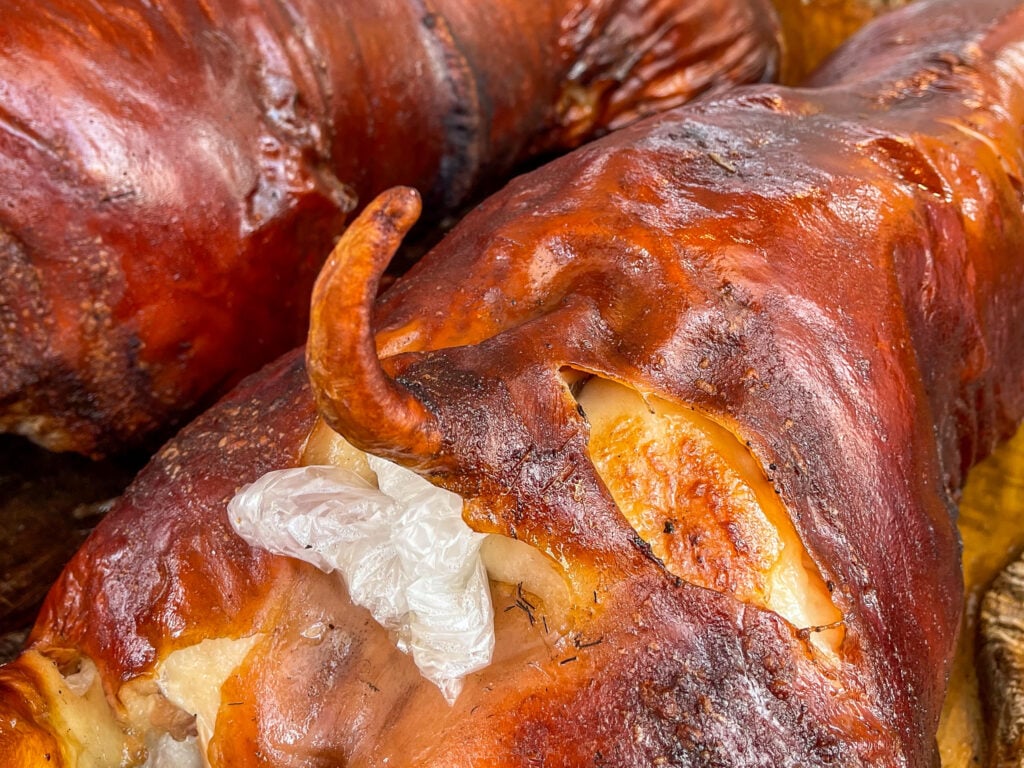
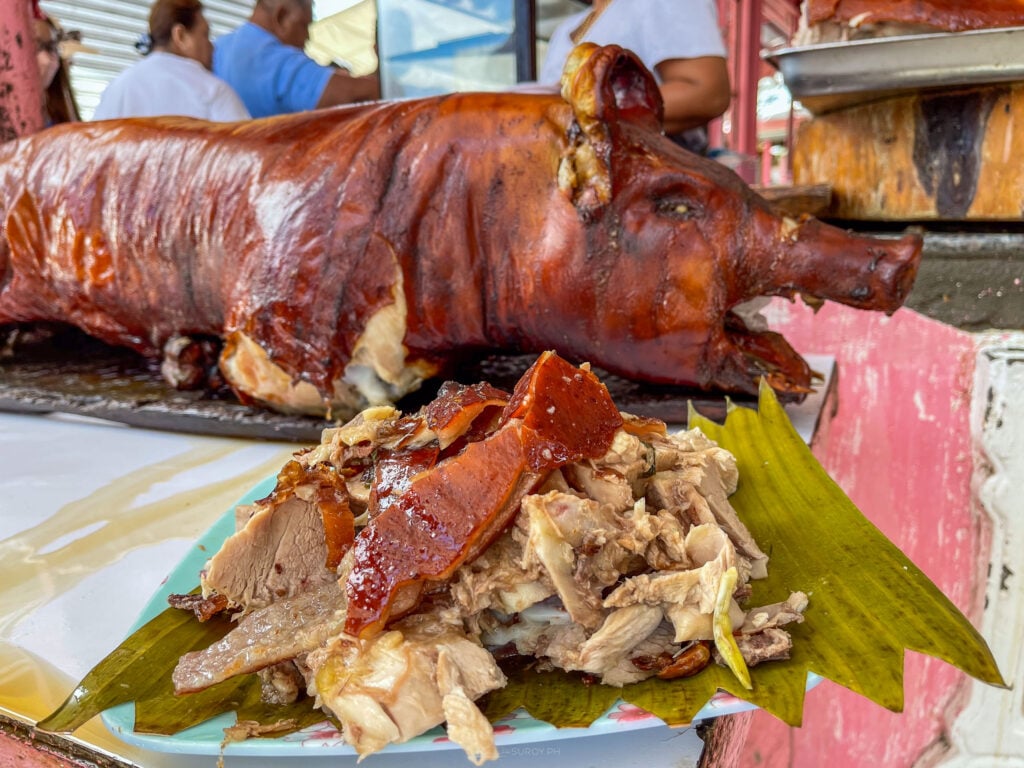
Cebu lechon is supposed to need no sauce. That is the boast, and in most of the province it holds. Carcar breaks it on purpose. They catch the drippings out of the cavity, hold them, and pour them back over your chopped lechon before it reaches you. It never arrives in a separate bowl. If you are handed a bowl of something dark on the side, that is dinuguan and you ordered it.
Purists in Talisay will tell you a pig that needs gravy was not seasoned properly. Carcar will tell you the gravy is the seasoning, concentrated, and that throwing it away is the waste. Both positions are defensible and neither side is going to move.
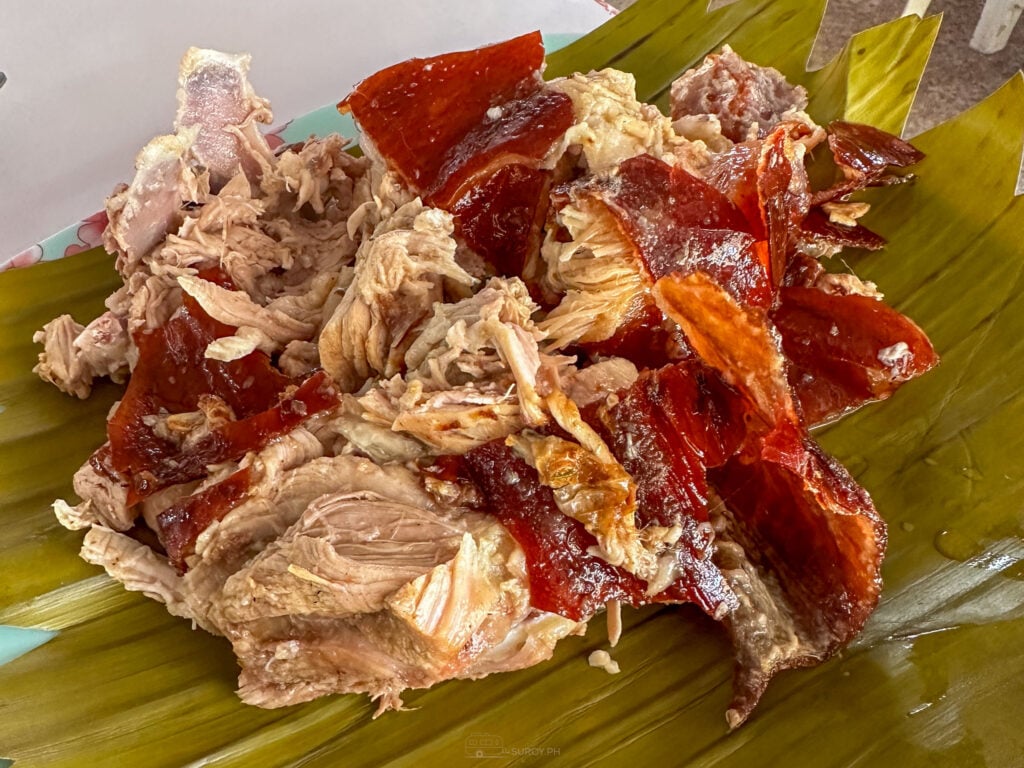
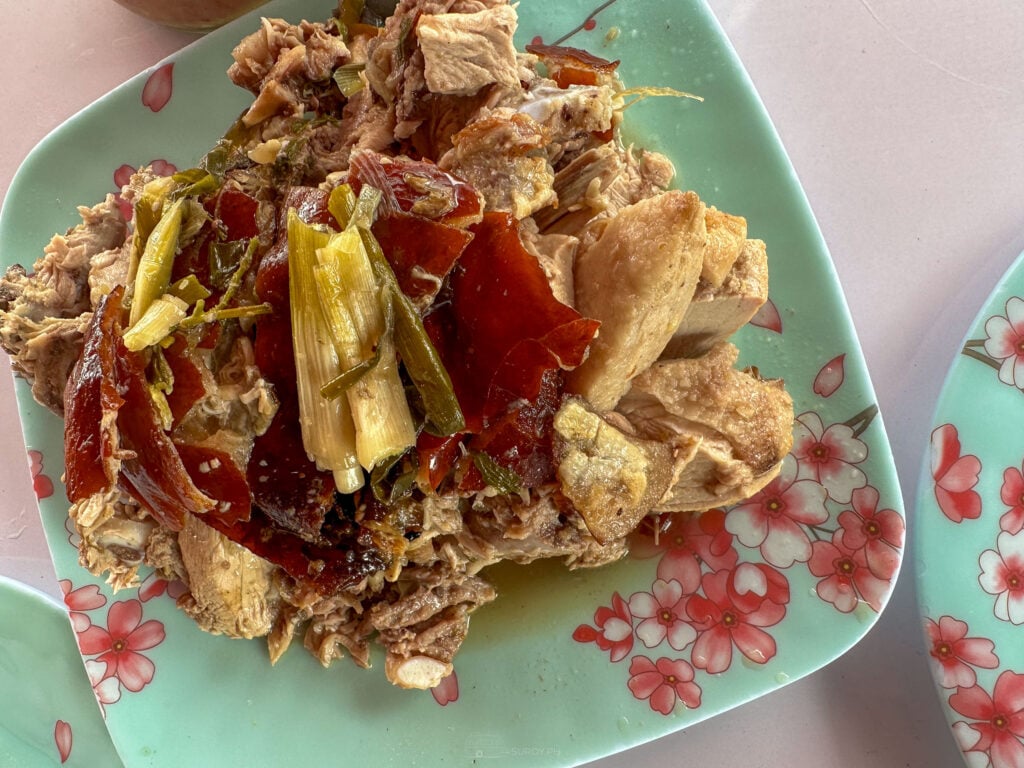
Open the chopped pile and you can see what went in. Lemongrass, cut in lengths, still in there after hours over coals.
What Carcar lechon costs in 2026
₱400 a kilo. Confirmed September 2026.
That number is worth dwelling on, because almost every page you will find says something else. Some still quote ₱280, which is a figure from around 2015 being copied forward. Others quote ₱600 to ₱800, which are December numbers from the Christmas peak, when every lechonero in the province raises and every family in Cebu is buying at once.
There is also a reason prices came down rather than up this year. Live hog prices in Cebu fell hard through 2026, from roughly ₱218 a kilo to somewhere in the ₱120s and ₱130s, with the province holding its African swine fever free status and supply running well ahead of last year. Cheaper pigs, cheaper lechon. Nobody has connected those two things in print.
| What | September 2026 |
|---|---|
| Carcar, per kilo | ₱400 |
| Talisay, per kilo | ₱500 |
| Whole pig | Quoted by weight at the stall |
| Head and feet | Cheaper than body meat, ask for the split |
The comparison is the interesting part. Carcar is the famous one, the name people drive for, and it is the cheaper of the two. If you have been told Carcar is the premium option, that is reputation talking, not the board. The full Talisay side of the argument is here.
Do not trust the top ten lists
Every Carcar lechon list online descends from the same handful of posts, most of them undated, several using photos supplied by the vendors themselves. At least one widely copied list is a problem: in November 2019 the city closed four lechon stalls by executive order over sanitary and business permits, and names from that period are still circulating on pages that have never been updated.
Pick the way locals do. Walk the row first without buying. Look for the pig that is being actively cut into rather than the one posed at the front. Look at whether the vendor is torching to order or handing over what is already on the tray. A queue of Cebuanos at half past nine on a weekday tells you more than any list.
Buying a whole pig and getting it home
This is the thing nobody explains, and it is most of why people come to Carcar rather than buying lechon in the city.
- Order by weight, not by piece. Whole pigs are quoted on the day by size. There is no published price list and there never has been, so ask at two or three stalls before committing.
- Ask how it comes. Chopped and boxed is easier to carry and easier to serve. Whole and lying on banana leaf photographs better and holds heat longer. You cannot have both.
- Lead time is the real question. Pigs are roasted to the morning, not to your schedule. If you want a specific size on a specific day, that is a call ahead, and every stall answers it differently.
- It rides in the back seat, not the trunk. A hot pig in a closed trunk steams itself and the skin is gone by the time you get to Cebu City.
- Eat it the same day. If you must reheat, use an oven or an airfryer, never a microwave. Microwaved lechon skin turns to leather.
Getting to Carcar
- Where. Carcar City, about 40 km south of Cebu City on the Cebu South Road.
- Coordinates. 10.1002 N, 123.6390 E, read off the frames on this page.
- By bus. Ceres buses run south from the South Bus Terminal, roughly an hour to an hour and a half depending on Talisay traffic.
- By car. Same road, same traffic. Leave before seven and it is a different journey entirely.
- When. Morning. The pigs come out mid morning and the good ones are gone by early afternoon.
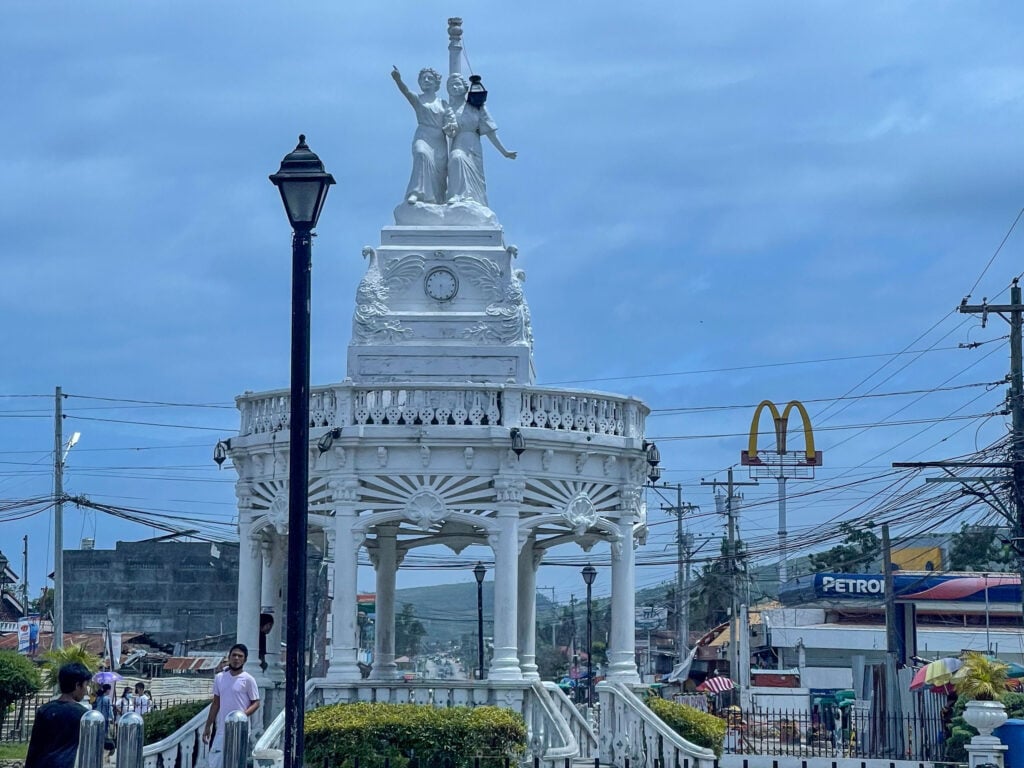
While you are here, Carcar is also the first stop on the southern Cebu heritage church drive, and St. Catherine of Alexandria is a five minute walk from the food. Most people do the churches and forget to eat. Do it the other way around.
Carcar lechon FAQ
What is Carcar lechon known for?
Two things. The drippings sauce, which Carcar serves as a dark gravy beside the meat and which the rest of Cebu considers unnecessary, and the skin, which vendors finish with a hand torch at the counter before chopping your order.
How much is Carcar lechon per kilo?
₱400 a kilo as of September 2026. Pages quoting ₱280 are recycling figures from around 2015, and pages quoting ₱600 to ₱800 are usually reporting December peak season prices.
What is the difference between Carcar and Talisay lechon?
Carcar serves the cavity drippings as a sauce. Talisay does not, and treats that as the point, because a Talisay pig is seasoned to be eaten dry with at most a vinegar dip. Carcar is also the cheaper of the two right now, at ₱400 a kilo against ₱500 in Talisay.
Can you buy a whole lechon in Carcar and take it home?
Yes. Whole pigs are priced by weight on the day rather than off a list, so ask at a few stalls. Carry it in the back seat rather than the trunk, and eat it the same day.
What time should you go to Carcar for lechon?
Mid morning. The pigs come off the coals before dawn and are on the counters by mid morning. By early afternoon the best carcasses are cut down to the awkward parts.
Suroy Wear · Island Series

Pusô, lechon, and everything else that makes it Cebu
The Cebu Icons Tee carries the woven pusô, the guitar, the Basilica, the things you actually point at when someone asks what Cebu is. ₱999, and it travels better than a whole pig.
Wear the story
Photographed in Carcar, Cebu. Coordinates read from the frames. Price confirmed on the ground in September 2026 and updated here in place when it moves.