

Tarsiers in Bohol: The Loboc Roadside Site, the Corella Sanctuary, and the Difference
There are two places to see tarsiers in Bohol, and they are not the same thing. The roadside Tarsier Conservation Area in Loboc, on the way to the Chocolate Hills, was ₱80 in early 2026 and shows the animals by day in a small fenced plot. The Philippine Tarsier Foundation sanctuary in Corella says plainly it is not connected with the Loboc site. If welfare matters to you, go to Corella, and either way keep your voice down and your flash off.
Tarsier Conservation Area · Loboc, Bohol · Fees checked February 2026 · Checked 29 October 2026
Loboc and Corella · Bohol
Two sites, not one
Tap a tab.
Roadside, ₱80
Loboc site
The Tarsier Conservation Area on the Loboc road is a small fenced plot where tarsiers are shown to visitors by day. Entry was ₱80 in 2024 and January 2026, open roughly 8 AM to 5 PM.
Philippine Tarsier Foundation
Corella sanctuary
The Philippine Tarsier Foundation runs a separate sanctuary in Canapnapan, Corella, about 30 to 45 minutes from Tagbilaran. The foundation says it has no connection with the Loboc site. Reported fees run from ₱60 to ₱170 and hours vary, so check before you go.
Why it matters
Welfare
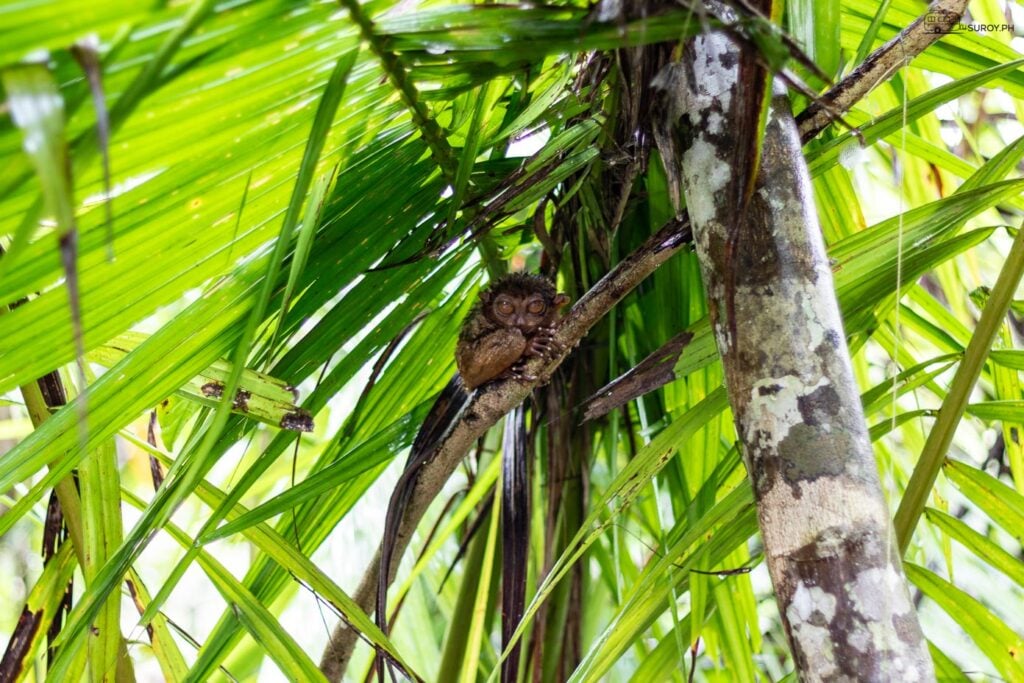
Tarsiers are nocturnal and stress easily. Critics of the Loboc site have described animals placed on branches by day close to visitors. If animal welfare matters to you, Corella is the one built around a forest.
Quiet, no flash
The rules
At both sites: no flash, no touching, keep your voice down and keep your distance. The guides will point the tarsiers out; they are smaller than your fist.
Near Threatened
The species
The Philippine tarsier, Carlito syrichta, is listed as Near Threatened by the IUCN and specially protected under Proclamation 1030 of 1997 and the Wildlife Act of 2001. It stands about 8.5 to 16 cm tall.
Checked October 29, 2026.
Loboc or Corella?
| Loboc roadside | Corella sanctuary | |
|---|---|---|
| Run by | Private | Philippine Tarsier Foundation |
| Fee | ₱80 (2024, February 2026) | ₱60 to ₱170 in 2024 to 2026 reports |
| Hours | About 8 AM to 5 PM | Varies by source |
| Setting | Small fenced plot by the road | Forest enclosure with guides |
No official fee schedule was found for either site, so take cash and confirm on the day. Tour drivers often stop at Loboc because it is on the Chocolate Hills road; if you want Corella, say so when you book.

Why the welfare question matters
Tarsiers are nocturnal and do badly in captivity. Published accounts report that touch, flash and confinement stress them, and that a startled tarsier can strike its head hard enough to kill itself, because the skull is thin. The Philippine tarsier, Carlito syrichta, is listed as Near Threatened and is specially protected under Proclamation 1030 of 1997 and Republic Act 9147 of 2001. It is small: about 8.5 to 16 cm, body only.
- No flash, and no touching.
- Speak quietly; the guides will ask.
- Do not linger at one animal.


Fitting it into a countryside tour
The Loboc site sits between the Loboc river and the Man-made Forest on the road to the Chocolate Hills. Corella is closer to Tagbilaran, so it fits at the start or end of the day. The Bohol travel guide has the full route.
The smallest thing on the island is the one people remember. The Bohol Icon tee is for the island that keeps it.
Suroy Wear · Island Series

Frequently asked questions
How much is the entrance fee at the Loboc tarsier site?
₱80 in 2024 and February 2026 reports.
Is the Loboc tarsier site the same as the Tarsier Sanctuary in Corella?
No. The Philippine Tarsier Foundation runs the Corella sanctuary and says it is not connected with the Loboc site.
Can you take flash photos of tarsiers?
No. Flash and noise stress them; keep the flash off.
How big is a Philippine tarsier?
About 8.5 to 16 cm, body only.
Checked 29 October 2026.