
Very Strong El Niño in Cebu: What It Means for Trips Through March 2027
PAGASA declared a very strong El Niño on 5 November 2026. What it means for water, power, beaches, falls, trails and Sinulog on a Cebu trip.
PAGASA declared a very strong El Niño on 5 November 2026. In Cebu that means less rain through at least March, a water utility already limiting supply hours in parts of the metro, and a power grid that keeps running short at the evening peak.
Reported by Suroy Newsdesk. Edited by Janette Arceo. Editorial standards. Updated 6 November 2026.
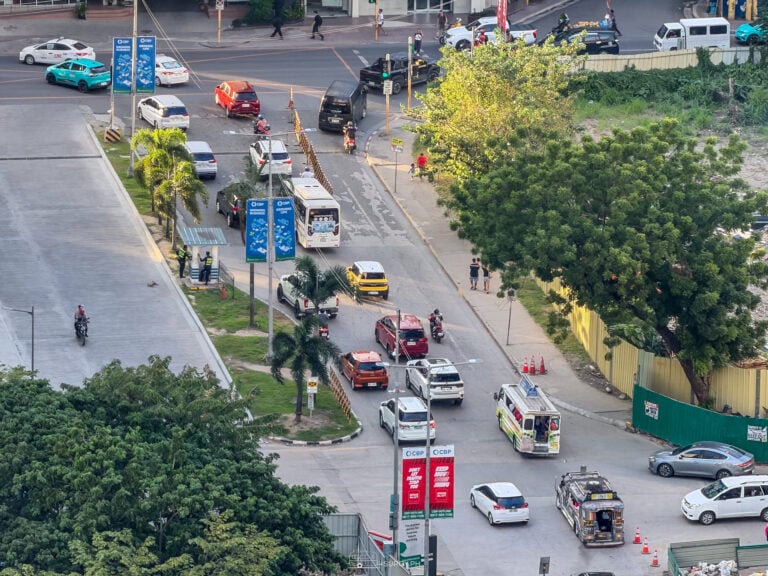
Photo · Suroy.ph · Cebu Business Park, Cebu City, April 2026, from the Suroy.ph archive
The state weather bureau said on Thursday, 5 November, that a very strong El Niño is now present in the tropical Pacific. PAGASA expects it to peak before the end of 2026 and its effects to last into the first half of 2027. For November it forecasts below normal to way below normal rainfall over most of the country, and warmer than average temperatures.
For anyone with a Cebu trip booked between now and Holy Week, the weather itself is the easy part: more sun, fewer washed out days. The things worth checking are the ones El Niño puts under strain. Water at the place you sleep. Power in the evening. Whether the falls and trails you want are running and open.
El Niño · Trip check
Where does it touch your trip?
Pick the kind of trip you are planning. Each card says what has been reported and what to ask before you go.
Nothing selected yet. Tap a trip above.
Cebu City, Mandaue, Mactan
Parts of southern Cebu City have not had 24 hour water since June, when MCWD began limiting output from its Jaclupan source. The utility says wider rationing may be needed if El Niño worsens.
The Visayas grid has hit red alert in the 5 to 6 p.m. window several times since late October. Ask whether your hotel or rental has its own water tank and a generator.
Checked 5 November 2026
Bantayan, Malapascua, Camotes, Moalboal
Less rain usually means more boat days, and El Niño does not stop storms: PAGASA still expects one or two tropical cyclones in November.
Water and power on the islands vary property by property. Before booking, ask how the resort gets its water and whether it runs a generator in the evening. Bantayan on a budget.
Checked 5 November 2026
Kawasan and the southern falls
The Capitol’s El Niño plan asks the Provincial Tourism Office to identify waterfalls, caves, beaches and mountain sites vulnerable to drought and low water. Suroy.ph could not find a published version of that list as of 5 November.
River-fed falls lose volume first in a long dry spell. Call your canyoneering operator the day before a long drive south. Osmeña Peak to Kawasan.
Checked 5 November 2026
Mountains and trails
Warmer than average temperatures are forecast for November across most of the country. Start hikes at first light and carry more water than usual.
The Spartan Trail in Buhisan has been closed by DENR 7 since 21 September over vandalism, not drought, and no reopening date has been set. Entering anyway has already led to an official inquiry.
Checked 5 November 2026
Sinulog, 17 January 2027
The grand parade lands close to the expected El Niño peak, and PAGASA says this season’s northeast monsoon may not bring the usual cool. Plan for a hot day on the route.
Bring water and a hat, and book a room with its own storage tank if you can. Sinulog 2027 schedule and route.
Checked 5 November 2026
Siquijor and Negros Oriental
Both are on PAGASA’s list of provinces expected to reach drought conditions by the end of November, ahead of Cebu.
Ask your host about water before you cross, and keep the trip flexible. The Visayas sea loop.
Checked 5 November 2026
What PAGASA said about El Niño on 5 November
Sea surface temperatures in the tropical Pacific ran about 2.5°C above average from August to October, past the 2°C line PAGASA uses for a very strong event. Ana Liza Solis, chief of its Climate Monitoring and Prediction Section, gave the figure to the House agriculture committee on 4 November.
As of 31 October, five provinces were in meteorological drought, 11 provinces and highly urbanized cities were in a dry spell, and 10 more had dry conditions. PAGASA expects the drought count to climb every month into the first quarter.
Provinces in drought · actual, then PAGASA projection
Oct 315
Dec26
Jan 202748
Feb 202768
Mar 202787
Below normal rainfall, in PAGASA’s terms, means 21 to 60 percent less rain than average. Way below normal means more than 60 percent less.
El Niño does not cancel storm season. PAGASA expects one or two tropical cyclones to enter the Philippine Area of Responsibility in November, and two to six between November and April. There is less rain overall, not none.
Is Cebu in drought?
Not on PAGASA’s November list. Its neighbors are. Negros Oriental and Siquijor, both a short ferry ride from Cebu, are among the provinces it expects to reach drought conditions by the end of the month, along with Southern Leyte, Western Samar, Capiz, Misamis Oriental and four provinces in Bicol.
Cebu’s turn is expected later. In September, PAGASA Visayas weather specialist Jhomer Eclarino said Cebu could face drought by the end of February. The provincial government is preparing as if it will: Governor Pamela Baricuatro has formed a Super El Niño Task Force to coordinate water deliveries, alternative water sources and conservation campaigns, with drinking water, sanitation and health facilities first in line.
Cebu City is preparing as well. The City Council has approved a resolution by Councilor Francis Esparis calling the city’s disaster, planning, agriculture, health and social welfare offices to an executive session on 1 December to assess El Niño readiness. A second resolution, by Councilor Jose Lorenzo Abellanosa, urges barangays to stop open garbage burning. It notes that Cebu City’s air quality reached hazardous levels in recent months and stayed unhealthy for much of October, which it links to forest fires in Indonesia made worse by El Niño. If you are sensitive to smoke or haze, check the air quality reading before a long day outdoors.
Water in Metro Cebu
The Metropolitan Cebu Water District has been managing supply since mid-year. In June it ended round-the-clock water in parts of southern Cebu City to stretch its Jaclupan source until the next rainy season. General manager John Dx Lapid called it pressure management, not rationing.
Ahead of the peak, MCWD says it is adding about 40.4 million liters a day, mostly from groundwater and desalinated water, against an expected drop of about 43 million liters a day in surface water production. It has said rationing may become necessary if El Niño worsens, and that its Cotcot River supply could fall to zero in a severe event.
For a visitor, this matters most in places that run straight off the line: budget inns, homestays, condo rentals. Before you book, ask whether the property has its own storage tank or well and what happens when the pressure drops at night.
Power and the evening peak
The Visayas grid keeps running short between 5 and 6 p.m. NGCP placed it on red alert in that window on 23, 28 and 29 October, with yellow alerts on either side, and on yellow alert again on 4 November. Energy officials have warned of more alerts as El Niño sets in.
A yellow alert means reserves are thin, not that the lights go out. A red alert means supply cannot fully cover demand, and parts of the Visayas have had rotational brownouts this season. On 5 November the Energy Regulatory Commission issued show cause orders to 13 generation companies over the plant outages behind them.
Charge phones and power banks in the afternoon. If the aircon is the reason you picked a room, ask whether the property runs a generator.
Beaches, falls and trails during El Niño
Sunny months are good months for Cebu’s coast. The open question is everything that runs on water. The Capitol’s El Niño Preparedness and Mitigation Plan for 2026 to 2027 tasks the Provincial Tourism Office with identifying resorts, beaches, waterfalls, caves and mountain sites vulnerable to drought, heat, wildfire and low water, and asks tourism businesses to prepare water contingency plans. Suroy.ph could not find a published version of that list as of 5 November.
River-fed falls drop first in a long dry spell. If a waterfall or canyoneering trip is the reason for a long drive south, call the operator the day before. The Osmeña Peak to Kawasan route starts early for good reason, and in a warmer than average dry season an early start matters more.
One trail is closed for reasons that have nothing to do with the weather. DENR 7 shut the Spartan Trail in Buhisan on 21 September after vandalism inside the watershed reserve, and the Central Cebu Protected Landscape office has not said when it will reopen.
Sinulog, the holidays and prices
The Sinulog grand parade on Sunday, 17 January 2027 falls close to the expected peak. PAGASA says this season’s northeast monsoon may not be as cool as usual, so plan for a hot day on the route. The same goes for the December long weekends and anyone flying home for Christmas.
El Niño also reaches the bill. When October inflation came in at 7.8 percent, Bangko Sentral ng Pilipinas Governor Eli Remolona Jr. warned it could rise further because of oil prices, transport fares and El Niño’s effect on food production. What a Cebu trip costs now.
Frequently asked questions
Is there an El Niño in the Philippines right now?
Yes. PAGASA said on 5 November 2026 that a very strong El Niño is present in the tropical Pacific and that its effects on rainfall are already being felt in several provinces.
When will El Niño end?
PAGASA expects the event to peak before the end of 2026 and to persist into the first quarter of 2027, with effects lasting through the first half of the year.
Is Cebu in drought?
Not as of 5 November 2026. Cebu is not on PAGASA’s list for November. A PAGASA Visayas forecaster said in September that Cebu could face drought by the end of February.
Is there water rationing in Cebu?
Not across the metro as of 5 November 2026. Parts of southern Cebu City have had limited hours of supply since June, and MCWD says rationing may become necessary if El Niño worsens.
Can typhoons still hit during El Niño?
Yes. PAGASA expects one or two tropical cyclones in November and two to six between November 2026 and April 2027.
Is it still a good time to visit Cebu?
For weather, yes: expect more dry days. Check water and backup power where you stay, and confirm waterfalls and trails with operators before a long drive.
Sources
PAGASA El Niño statement, 5 November 2026 (via Rappler and Manila Bulletin, 5 November). PAGASA briefing to the House Committee on Agriculture and Food, 4 November 2026 (via BusinessWorld, 4 November). PAGASA tropical cyclone outlook (via GMA News, 2 November). PAGASA Visayas, Jhomer Eclarino (via SunStar Cebu, 8 September). MCWD, John Dx Lapid (via Cebu Daily News, June; Philippine Information Agency, October 2026). Cebu Provincial Government El Niño Preparedness and Mitigation Plan (via The Freeman, 8 October) and Super El Niño Task Force (via Cebu Daily News, 3 November; Daily Tribune, 3 November). NGCP grid advisories, 23, 28 and 29 October and 4 November 2026 (via The Manila Times, SunStar Cebu). Cebu City Council resolutions on El Niño readiness and open burning (via The Freeman, 6 November). Energy Regulatory Commission show cause orders (via Inquirer, 5 November). DENR 7 and CCPL on the Spartan Trail (via Cebu Daily News, 23 October; SunStar Cebu, 4 November). BSP on inflation (via Rappler, 5 November). Checked 6 November 2026.