
Ferry Baggage in the Philippines: There Is No 15 Kilo Rule
There is no 15 kilo rule. OceanJet publishes 10, 2GO publishes 50, and the gap between those numbers is the difference between walking on with a dive bag and paying for it.
There is no 15 kilo rule on Philippine ferries. The figure gets repeated everywhere and no operator publishes it. What the operators actually publish is 10 kilos, 20 kilos and 50 kilos, and the gap between those numbers is the difference between walking on with a dive bag and paying for it.
Here is what each line commits to in writing, where enforcement is real, and what happens when you turn up with a folding bike, a set of regulators or a dog.
The allowances, by operator
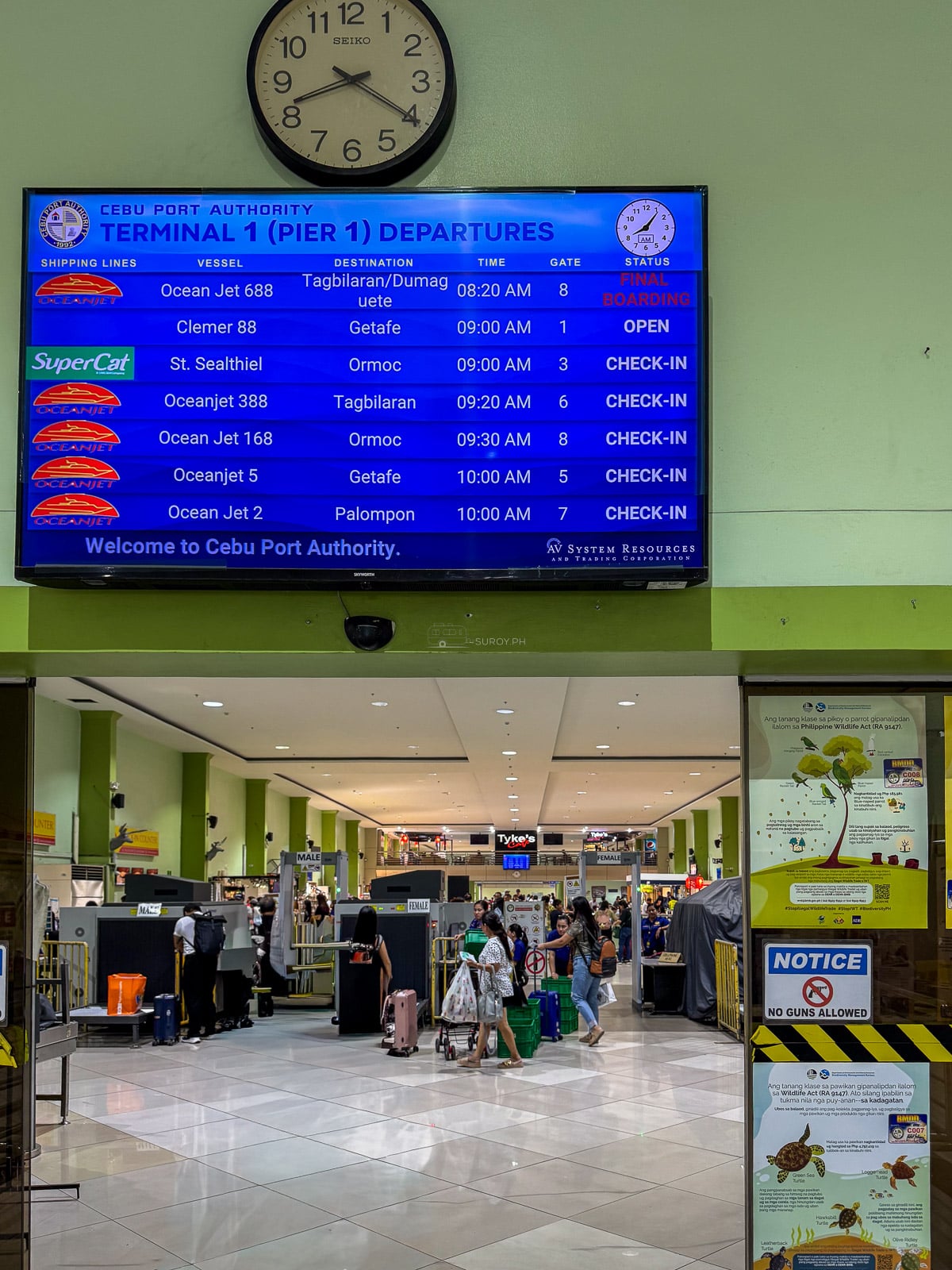
OceanJet. Tourist Class and Open-Air get 10 kg. Business Class gets 20 kg. Hand-carry is capped at 10 kg and 25 by 35 by 40 centimetres, with Business Class allowed one trolley bag up to 130 cm total dimensions. Anything larger, and every wheeled suitcase, must be checked. Checked September 2026.
2GO Travel. 50 kg free per ticket, and the company says so in the context of bikes, surfboards and paddles. This is far and away the most generous allowance in Philippine sea travel and it is the reason 2GO is the answer for anyone moving gear.
Lite Ferries. No free allowance published. Charges depend on weight and dimension, assessed at the counter.
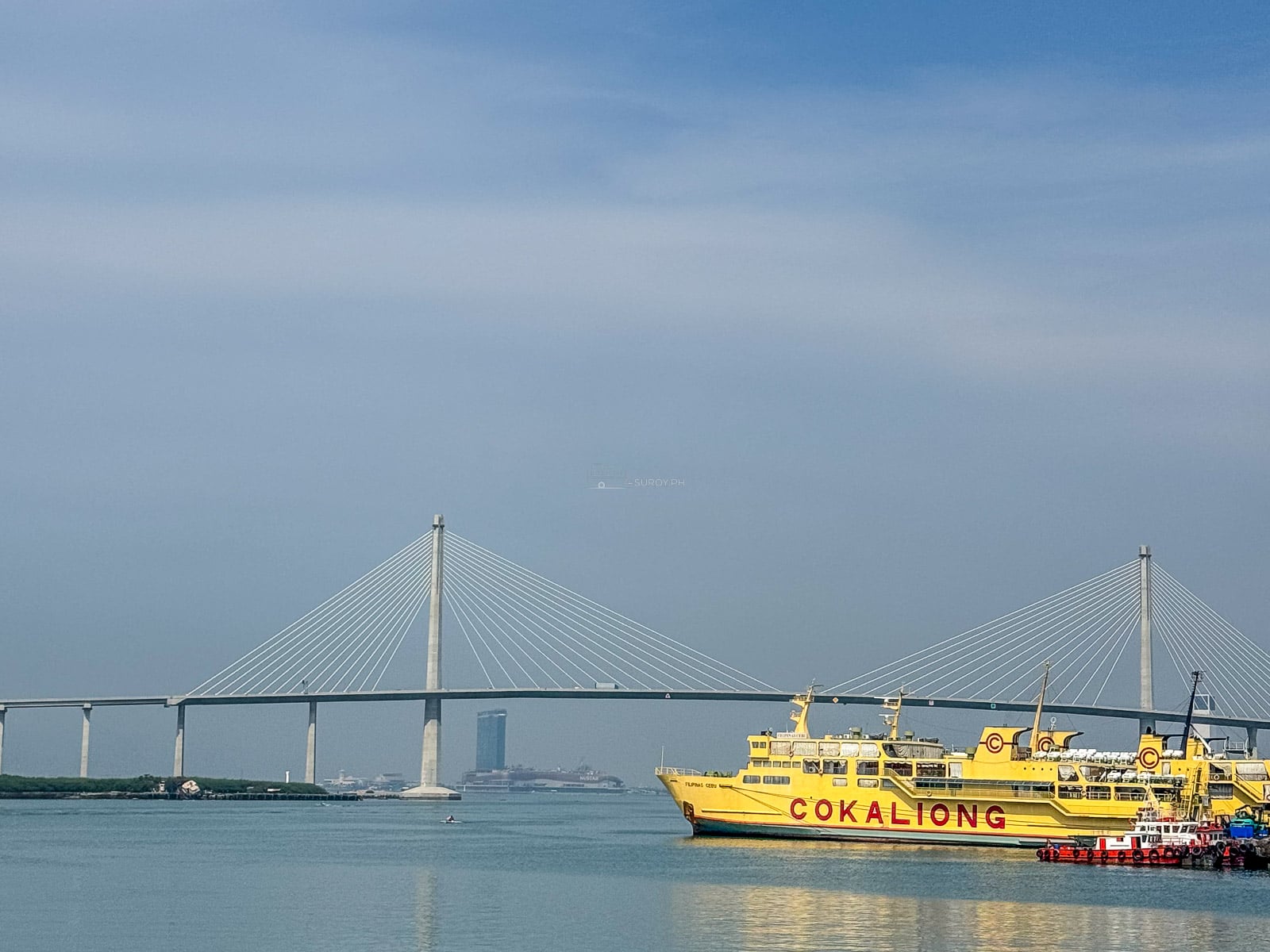
Cokaliong and SuperCat. Neither publishes a baggage allowance at all.
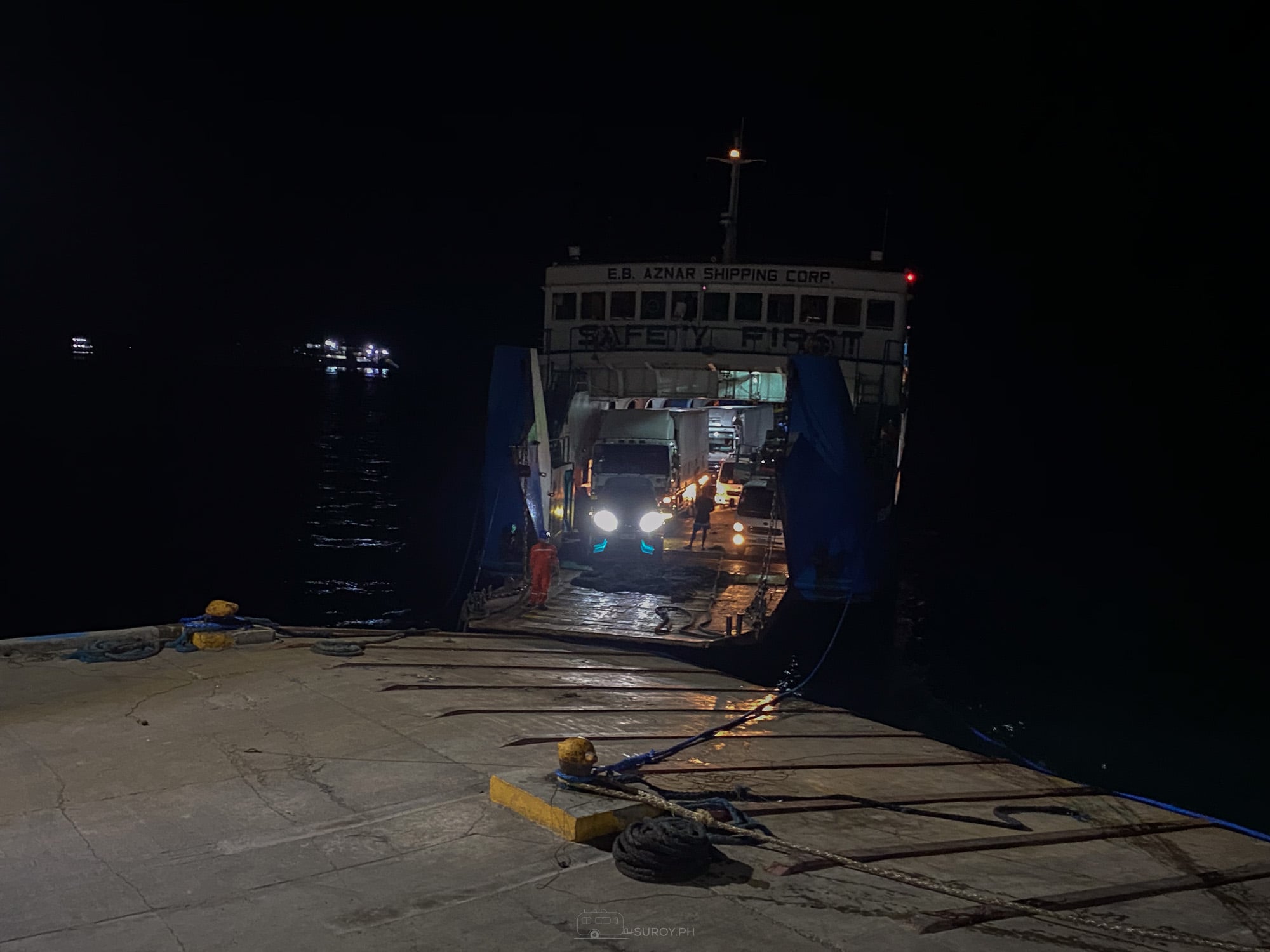
The pattern is worth naming. The fast craft, which is what most visitors ride between Cebu and Bohol or Dumaguete, run the tightest allowance in the country. The overnight ships run the loosest. If your bag is the problem, the slower boat is usually the answer.
Where the rule is actually enforced
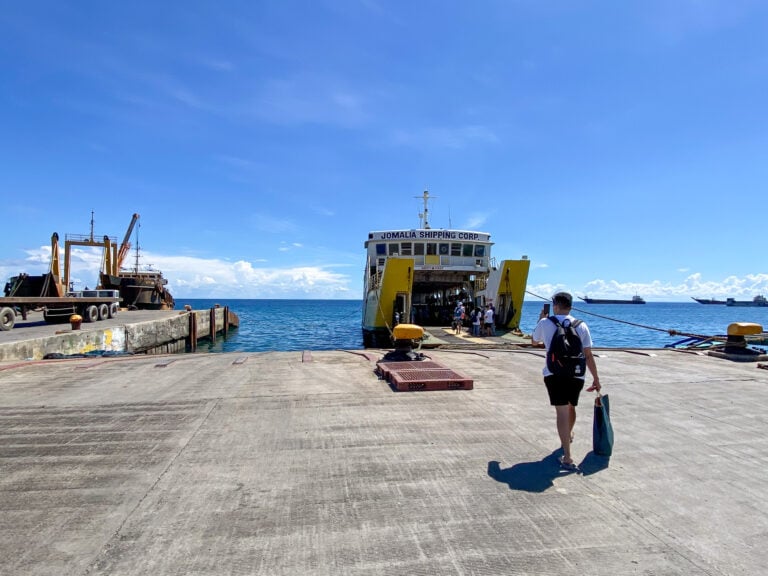
Enforcement on OceanJet is dimensional before it is ever about weight. A soft duffel that a porter can move is treated differently from a hard roller, and the published rule says so plainly: wheeled suitcases and foldable bags go in the hold whatever they weigh. Nobody is putting your bag on a scale on a busy Pier 1 morning. They are looking at whether it fits through a door and up a stair.
Practical consequence: on a fast craft, a 12 kg backpack usually walks on and a 9 kg hard-shell carry-on usually does not.
Excess baggage pricing
2GO publishes ₱30 per kilo for goods in commercial quantity between Manila and the Visayas or Mindanao, effective October 2024.
OceanJet’s excess table is published only as an image that does not render as text on its own site, and the figures circulating elsewhere are quoted per bag rather than per kilo, which means they cannot both be right. Ask at the counter and expect a per-piece charge. Do not budget from a number you found online.
Lite Ferries, Cokaliong and SuperCat publish nothing.
One number that is published and worth knowing: OceanJet’s liability for baggage is ₱100 per passenger, for hand-carried and for checked, unless you declare a higher value and pay the supplementary tariff. Your camera body is worth more than the boat’s exposure to losing it. Insure it or carry it.
Folding bikes and dive gear
Neither is addressed by name in any operator’s published rules, which is the honest and unhelpful answer.
What exists is 2GO’s sports equipment line at ₱200 to ₱250 per piece, Manila to the Visayas at ₱200, sitting alongside the same company’s statement that the 50 kg allowance covers bikes and boards without extra cargo charges. Those two statements are not reconciled on 2GO’s own site. Turn up expecting to argue politely, and turn up early.
For a folding bike, the bag is what decides it. Bagged and inside the dimensional limit, it is baggage. Unbagged with handlebars sticking out, it is cargo, and cargo is a different counter with different hours.
For dive gear, the tanks are the issue rather than the regulators. Compressed air is a Class 2 dangerous good under the Philippine dangerous cargo rules, and no operator publishes a policy on carrying one. Every dive centre in Moalboal, Panglao and Mactan rents tanks. Ship your gear, rent your gas.
Pets
This is the part with an actual government process behind it, and it is the part most people discover too late.
You need a Shipping Permit from the Bureau of Animal Industry to move a dog or cat between islands. It is applied for online through the BAI National Veterinary Quarantine Services Division, takes up to three working days, and requires a Veterinary Health Certificate carrying your vet’s PRC licence number. The process runs Monday to Friday, 08:00 to 17:00, and does not run on weekends or holidays. The governing rule is a 2019 Department of Agriculture administrative order.
The health certificate is short-lived. Reported validity is five days, one certificate per animal, rabies vaccination within the past year, and a fourteen day wait after a first rabies shot before a certificate can be issued. Plan the vet visit around the sailing, not the other way round.
A correction worth making. Both Cokaliong and Lite Ferries tell customers to get a permit “from the Bureau of Quarantine.” The Bureau of Quarantine is a Department of Health agency that deals with human health. The animal shipping permit comes from the Bureau of Animal Industry, under Agriculture. Turning up at the wrong office costs a day.
Operator positions: 2GO accepts pets and charges ₱900 to ₱4,500 depending on cage size and number. Cokaliong and Lite Ferries accept pets in a cage with a permit. OceanJet reserves the right to refuse live animals, which means a fast craft is never a plan you can rely on with a dog.
Before you go to the pier
- Weigh nothing, measure everything. Dimensions decide fast craft boarding.
- Print the ticket. 2GO requires a printed itinerary receipt and a photo ID, and says boarding may be refused without them.
- Check-in windows differ wildly. OceanJet says 30 minutes. Cokaliong says two hours. 2GO opens counters four hours out and shuts boarding gates one hour before departure.
- Declare anything valuable or accept ₱100 of cover.
- Pet paperwork starts three days out, minimum, and only on working days.
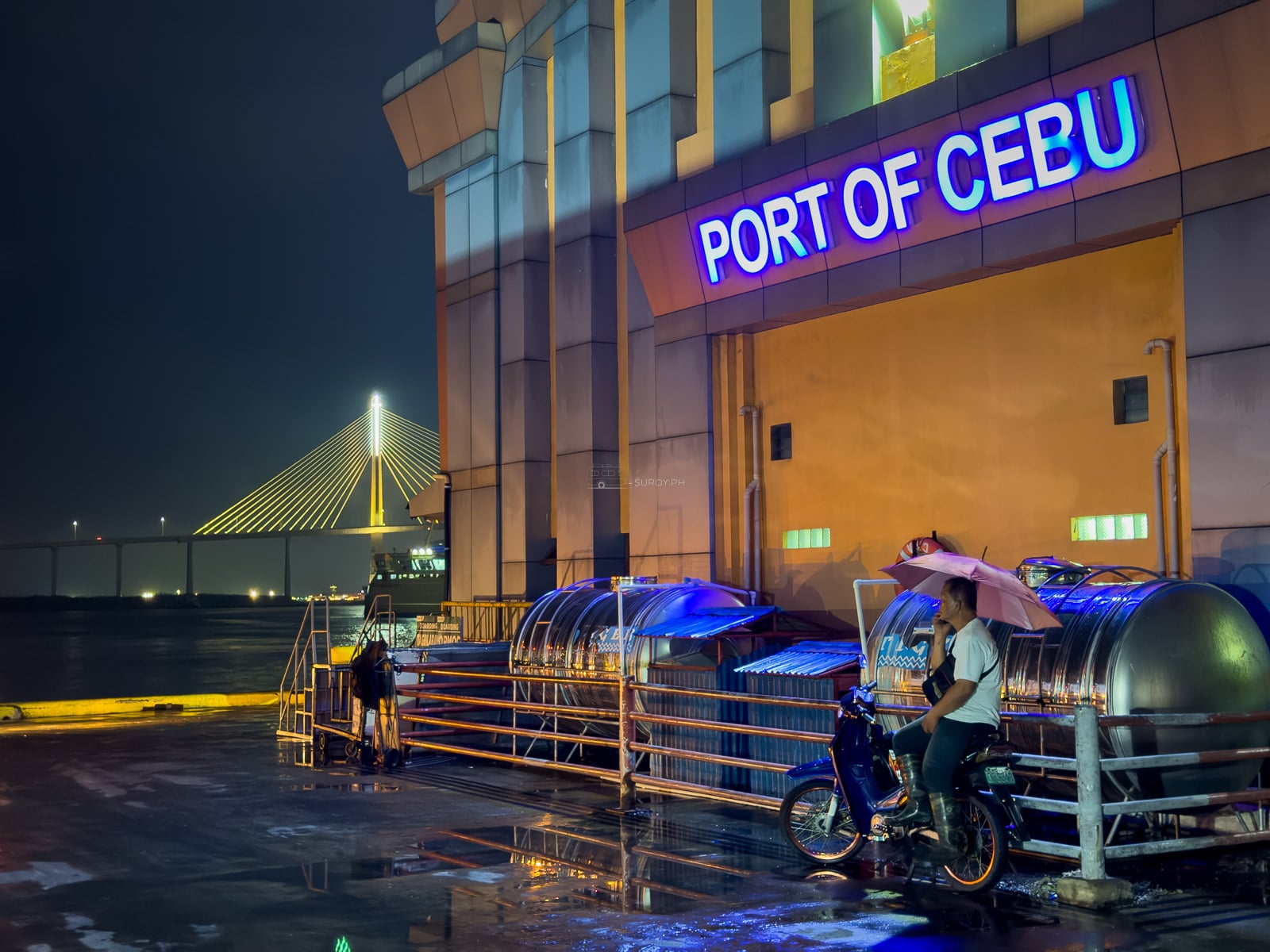
The Cebu port guide covers which pier your ticket actually means, and the booking guide covers buying the ticket in the first place.
Is there a 15 kg baggage limit on Philippine ferries?
No operator publishes a 15 kg limit. OceanJet allows 10 kg in Tourist and Open-Air and 20 kg in Business Class. 2GO allows 50 kg. Lite Ferries, Cokaliong and SuperCat publish no free allowance at all.
Can you bring a bicycle on a Philippine ferry?
2GO explicitly covers bikes within its 50 kg allowance, though its tariff also lists sports equipment at ₱200 to ₱250 per piece and the two statements are not reconciled. No other operator publishes a bicycle policy. Bag the bike and keep it within dimensional limits, or it will be handled as cargo.
What permit do you need to bring a pet on a ferry in the Philippines?
A Shipping Permit from the Bureau of Animal Industry, applied for online through its veterinary quarantine division, plus a Veterinary Health Certificate from a PRC-licensed vet. Processing takes up to three working days. Operators sometimes call this a Bureau of Quarantine permit, which is the wrong agency.
How much is excess baggage on OceanJet?
OceanJet publishes its excess baggage table only as an image that does not render as readable text, so no reliable per-kilo figure exists. Charges are assessed at the counter. 2GO, by contrast, publishes ₱30 per kilo for commercial quantities.
Suroy Wear

Packed light for all 7,641.
A country you reach by boat asks you to carry less. The 7641 Islands Tee is the one shirt that works on every one of them. ₱999.