Newsletter Subscribe
Enter your email address below and subscribe to our newsletter


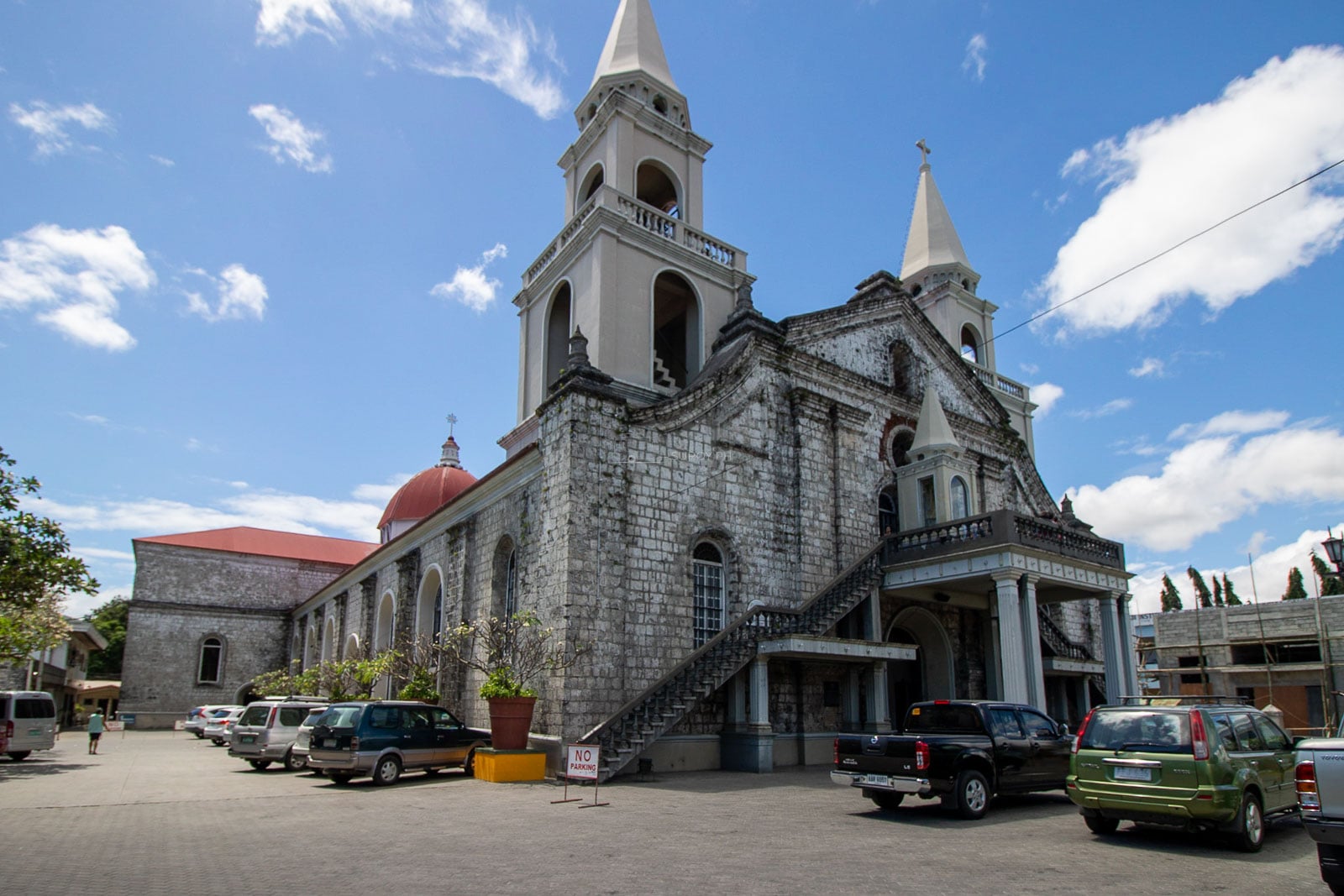
Jaro Cathedral is both the metropolitan cathedral of Saint Elizabeth of Hungary and the National Shrine of Our Lady of Candles. This guide explains its 1874 history, detached belfry, February feast and the practical details to check before visiting.
Jaro Cathedral belongs on an Iloilo City itinerary for two reasons. It is the seat of the Archdiocese of Jaro and the National Shrine of Our Lady of Candles, and its historic bell tower stands across the plaza instead of beside the church. Give the complex about an hour on an ordinary day. Start outside, cross carefully to the belfry, then enter between services if you are sightseeing.
JARO, ILOILO CITY · 10.7235° N, 122.5562° E · PRACTICAL GUIDE
This is a working Catholic cathedral before it is a heritage stop. Masses, weddings, funerals and private prayer take priority over sightseeing. Check the cathedral’s current notices before you leave, dress for a place of worship, and keep the camera down when a liturgy is underway.
| Formal roles | Metropolitan Cathedral of Saint Elizabeth of Hungary and National Shrine of Our Lady of Candles |
|---|---|
| Common name | Jaro Cathedral |
| Where | Jaro Plaza, Jaro district, Iloilo City |
| Why go | Marian devotion, 1874 cathedral history, the detached Jaro Belfry and an easy plaza heritage walk |
| Best visit length | About 45 to 75 minutes, longer if you attend Mass |
| Main feast | Feast of Our Lady of Candles on February 2 |
| Before you go | Verify the day’s liturgy, church access, belfry access and traffic notices through the cathedral or Archdiocese of Jaro |
Use Jaro Cathedral when asking a driver for directions. The longer names describe different parts of its identity. It is the metropolitan cathedral dedicated to Saint Elizabeth of Hungary, which means it serves as the archbishop’s church. It is also the National Shrine of Our Lady of Candles, or Nuestra Señora de la Candelaria, because of the Marian image and the devotion centered here.
These titles do not compete with each other. One describes the cathedral and its patron. The other recognizes a national place of pilgrimage. That is why you will see references to Saint Elizabeth, Our Lady of Candles and Jaro Cathedral on the same site.
The Catholic parish of Jaro was established under the Augustinians in 1587. Jaro became a diocese in 1865, and the first bishop, Mariano Cuartero, took possession of the new diocese in 1868. The present cathedral was built in 1874 under his direction.
A strong earthquake damaged the cathedral in January 1948. The building was repaired in 1956 under José Maria Cuenco, the first archbishop of Jaro. The dates come from the historical marker installed at the cathedral in 1976.
The marker also records that Ilonggo propagandist and orator Graciano López Jaena was baptized here on December 20, 1856. That baptism predates the present 1874 building, so read the marker as part of the longer parish story rather than proof that every visible wall stood at the time.
Republic Act No. 10555 later included Jaro Cathedral and the Jaro Plaza complex in Iloilo City’s Cultural Heritage Tourism Zone. On the ground, that relationship is easy to understand: church, shrine, tower and plaza still read as one place.
The detached Jaro Belfry, also called the Campanario de Jaro, makes the complex easy to recognize. The Augustinians built it in 1744 from brick and coral stone as both a bell tower and a watchtower. Earthquakes damaged it repeatedly in 1787, 1868 and 1948. Its upper levels collapsed during the 1948 quake.

The National Historical Commission of the Philippines records the belfry as a National Historical Landmark, declared in 1984. It was restored again in 2022 and its bells rang at the turnover ceremony. This designation belongs specifically to the belfry. The cathedral itself carries a separate 1976 historical marker.

View the tower from the plaza unless an authorized attendant clearly opens it for visitors. Restoration does not automatically mean the stairs or upper levels are open. Cross the surrounding roads at marked points and watch for jeepneys, cars and motorcycles moving around Jaro Plaza.


Look slowly, but do not turn the nave into a photo set. If people are praying, keep a respectful distance. Flash, tripods and posed shoots should wait for explicit permission.
The Feast of Our Lady of Candles falls on February 2, the Catholic Feast of the Presentation of the Lord. Candle blessing and procession traditions point to Christ as light, which gives the Candelaria devotion its central image and language.
Saint John Paul II visited Jaro Cathedral on February 20, 1981. During that visit he personally crowned the image of Our Lady of Candles. It is the only Marian image in the Philippines personally crowned by a pope through a canonical coronation. The image was named Patroness of Western Visayas in 1982. The Catholic Bishops’ Conference of the Philippines approved the national shrine status in 2011, and the formal declaration took place on February 2, 2012.
If you want a quiet architecture visit, choose another week. During the fiesta, expect pilgrims, additional Masses, processions, vendors, security controls and road closures around Jaro Plaza. In 2026, city authorities prepared for up to 18,000 devotees and imposed event-day traffic controls. For a future feast, check that year’s procession route and traffic advisory.

Mass and confession schedules can change for feast days, Holy Week, Christmas, weddings and diocesan events. Check the Jaro Cathedral’s current notices or contact the parish before setting out. Arrive between services if your main purpose is history or photography. If Mass has begun, remain quietly or wait outside.
Ordinary church entry is different from access to the Marian balcony, parish offices or belfry. Confirm any special access with the parish, and do not pay an unofficial guide who promises a tower climb.
The raised Marian shrine uses stairs, and belfry access should not be assumed. Travelers who need step-free entry, a close drop-off, seating or an accessible restroom should contact the parish in advance and ask which gate and church door will be open. Bring a companion for the road crossings around the plaza if traffic is a concern.
For a compact route, begin at the cathedral facade, cross to the belfry, walk through Jaro Plaza, then continue to the Old Jaro Municipal Hall. The restored Art Deco building is now a National Museum of the Philippines site. Confirm museum opening hours before making it the anchor of the day.
If you have another hour or two, add Casa Mariquit only after confirming that the privately managed heritage house is accepting visitors. For a wider city church route, take a car to Molo Church and Molo Plaza. Save Miagao Church for a separate southern Iloilo half-day because it sits well outside the city center.
Yes. Jaro Cathedral is the common name. The church is both the Metropolitan Cathedral of Saint Elizabeth of Hungary and the National Shrine of Our Lady of Candles.
The present cathedral was built in 1874 under Bishop Mariano Cuartero. It was damaged by the January 1948 earthquake and repaired in 1956.
The 1744 belfry was built as both a bell tower and a watchtower and stands across Jaro Plaza from the cathedral. It survived a long history of earthquake damage and rebuilding.
Do not assume so. The tower was restored in 2022, but regular public climbing access was not confirmed as of August 22, 2026. Enter only when the Archdiocese, parish or an authorized site manager explicitly permits it.
The feast is February 2. Expect a much larger religious program and significant traffic changes around Jaro Plaza. Verify the year’s official schedule rather than copying an older procession route.
The parish does not publish a standard tourist admission fee. Ordinary church entry and special access are different questions. Confirm any guided visit, Marian balcony or tower arrangement directly with the parish before paying.
The practical verdict: About an hour is enough to understand how faith, earthquake history and daily life meet around Jaro Plaza. See the cathedral and belfry as one complex, but treat every doorway as part of a working sacred place. That small shift makes the visit more respectful and more meaningful.