Newsletter Subscribe
Enter your email address below and subscribe to our newsletter


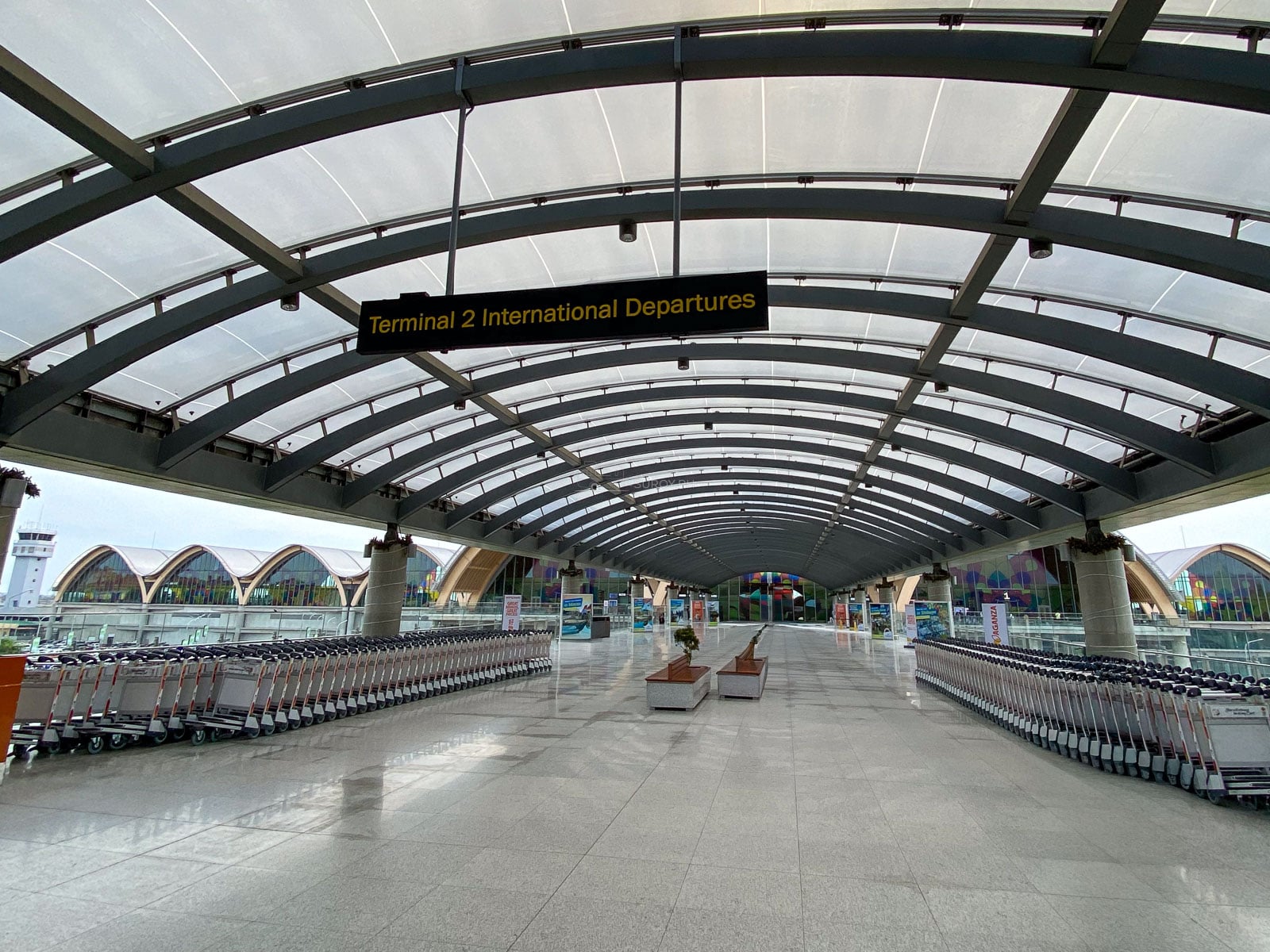
The ₱1,620 economy travel tax is still in force. Here is where the abolition proposals stand and what could change for outbound Filipino travelers.
PHILIPPINES · BILL STATUS CHECKED AUGUST 23, 2026
The Philippine travel tax abolition proposal has not become law. The full economy-class rate remains ₱1,620 for a liable outbound passenger, while the full first-class rate remains ₱2,700. Pay the applicable amount unless your ticket already includes it or you qualify for an exemption or reduced rate.
What changed in August is the Senate’s timetable, not the law. Senate President Sherwin Gatchalian said the chamber is targeting passage of a travel-tax abolition measure within 2026. The House passed its version in March, but the Senate had not approved a counterpart as of August 23.
For an international trip today, budget under the current rules. The final law, if enacted, will still need an effectivity date and transition rules for advance payments. A proposal is not a reason to arrive at the airport without proof that your tax obligation is settled.
| Question | Status checked August 23 |
|---|---|
| Is the travel tax abolished? | No. Current TIEZA rules still apply. |
| What is the full economy rate? | ₱1,620 per liable passenger |
| What did the House do? | Passed House Bill 8464 on March 16, 2026 |
| What has the Senate done? | Filed several proposals, but the leading bills remained pending in committee |
| What happens next? | Senate action, possible reconciliation with the House, presidential action, publication and legal effectivity |
| Does this tax apply to domestic flights? | No. It applies to covered travelers leaving the Philippines. |
Gatchalian said on August 21 that the Senate is targeting passage within the year. He placed travel-tax abolition inside a wider economic and revenue discussion, including how government could replace the collections.
That statement signals political priority. It does not mean the Senate has passed a bill. Gatchalian’s Senate Bill 1896, filed on February 23, remained pending in committee as of this status check. Several other senators have filed full or narrower versions, and their details are not identical.
For travelers, the only safe operating rule is simple: the tax remains due until an enacted law reaches its stated effectivity date.
The House of Representatives approved House Bill 8464 on third reading on March 16 by a vote of 257 in favor, one against and one abstention. The measure was transmitted to and received by the Senate on March 17.
The House vote completed one chamber’s work. It did not itself repeal the tax. The Senate must act, and any differences between the chambers must be resolved before a final bill can go to the President.
Suroy.ph’s maintained guide to Philippine travel tax and terminal fees covers the current rates, who pays, exemptions, reduced rates, refunds and the difference between the two charges.

For one full-rate economy passenger, Philippine travel tax abolition would remove ₱1,620 from the outbound trip cost once a law is effective. Two full-rate economy passengers would save ₱3,240. Four would save ₱6,480.
Those examples are not quotes for every family. Children, OFW dependents and other travelers may qualify for reduced rates or exemptions. The saving also would not remove other ticket taxes and fees.
Travel-tax proceeds currently have a fixed allocation: 50 percent to the Tourism Infrastructure and Enterprise Zone Authority, 40 percent to the Commission on Higher Education for tourism-related education, and 10 percent to the National Commission for Culture and the Arts. TIEZA’s current travel-tax page still lists that distribution.
The House bill would shift funding for those functions to the annual General Appropriations Act. Gatchalian’s Senate bill expressly addresses TIEZA operations and maintenance, while other Senate versions use different approaches. That mismatch matters because a final law must explain how tourism infrastructure, education and cultural programs continue without the dedicated collection.
The Tourism Act of 2009 already directs the national government to identify alternative funding if travel-tax collection is phased out following international agreements. The real policy choice is therefore not only whether to remove the charge. It is also how predictable the replacement budget will be.
Both the House bill and Gatchalian’s Senate bill contemplate refunds for advance payments covering flights scheduled on or after the future law’s effectivity. They differ on process. The House text describes an immediate refund, while the Senate text requires a request and divides responsibility between TIEZA and an airline depending on whether the money was remitted.
This is why travelers should not assume that buying a 2027 ticket today guarantees an automatic refund later. The scheduled flight date, the final legal effectivity date and the enacted transition rules would control. Keep proof of payment and wait for official instructions if the bill becomes law.
The travel tax is imposed on covered people leaving the Philippines. It is not charged on a domestic flight such as Cebu to Manila, Manila to Bohol or Davao to Cebu.
Abolition would directly lower the cost of covered outbound international trips. It would not directly discount domestic airfare. Claims that the change would automatically pull travelers away from Philippine destinations or automatically create enough tourism growth to replace the revenue are forecasts, not settled outcomes. The direct traveler saving is clear. The wider demand and budget effects will depend on implementation and behavior.
Yes, when liable and traveling in economy class. Check whether the airline already collected it with the ticket and whether you qualify for an exemption or reduced rate.
The House passed an abolition bill, but one chamber’s approval does not repeal the tax. Senate action and the rest of the lawmaking process are still required.
There is no legal start date because no abolition law has been enacted. A Senate target to pass a bill within 2026 is not an effectivity date.
Follow the current airline and TIEZA payment rules for your departure. If you pay in advance, keep the receipt and monitor official transition guidance if a law is enacted.
No. The travel tax and passenger service or terminal charges are separate.
Status note: This dispatch reflects legislative records and TIEZA guidance checked August 23, 2026. Recheck the Senate status, final bill text, effectivity date and official refund rules before publication.