
El Nido, Palawan: A Complete Travel Guide to the Four Tours and the New Way In
El Nido guide for 2026: the four island hopping tours, the ₱400 eco fee, the Clark flight change, real prices and the wet season nobody plans around.
Bacuit Bay runs four standard boat tours, the eco fee is ₱400 and lasts ten days, and the flight most people book to get here stopped existing in March. Prices checked August 2026. Photographs from our own four days in June 2016, including the tour board that shows the itineraries have since been reshuffled.
Most of what you will read about El Nido is either a decade old or was never true, so this El Nido travel guide dates every number and says what it was checked against.
Four days, two boat tours, and one of them booked with a spare day behind it. That is El Nido done properly, and almost every El Nido itinerary online is a day short of it.
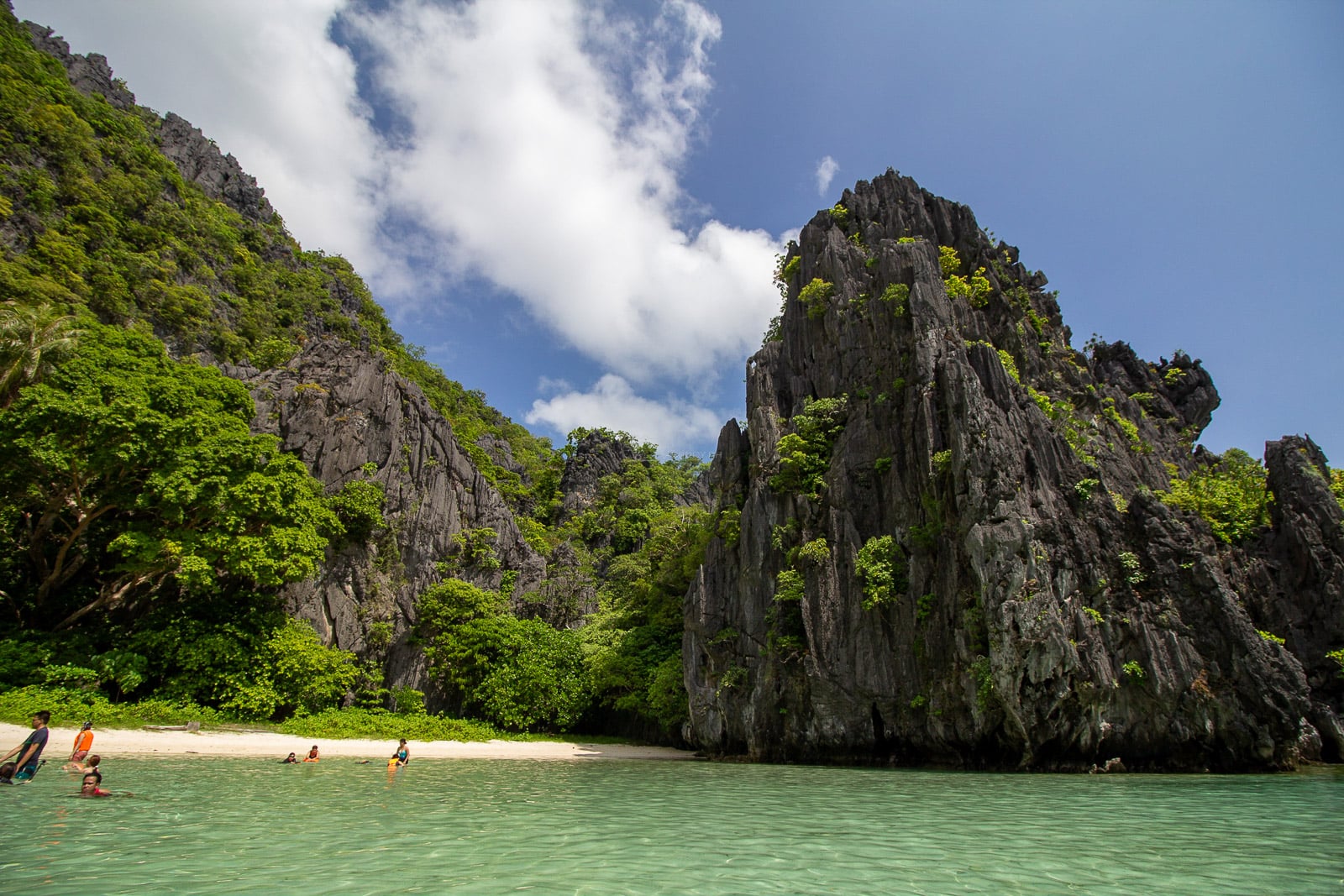
The reason is weather, and the reason nobody says so is that it makes the destination sound less reliable than the photographs promise. Bacuit Bay is a sheltered bay with an unsheltered edge. Three of the four tours stay inside the shelter. The fourth, Tour C, runs out past Tapiutan and Matinloc into open water, and it is the first thing the boatmen cancel when the swell picks up. Tour C is also the one with Hidden Beach, Secret Beach and the Matinloc Shrine on it, which is to say it is the one most people came for.
So the plan is simple. Book Tour A first, because it works in marginal conditions. Keep a spare day for Tour C. Everything else here is detail hanging off that one decision.

What El Nido actually is
El Nido is a municipality on the northern tip of mainland Palawan, 923 square kilometers of it, with a population of 51,367 as of the 2024 census. Most visitors experience about two kilometers of that: the town proper, a grid of narrow streets under a limestone cliff, with a beach in front of it and a bay full of islands beyond. The town sits at 11.1829° N, 119.3925° E.
The islands are the Bacuit Archipelago and the water is Bacuit Bay. Everything with a name you recognize sits out there: Miniloc, Matinloc, Tapiutan, Cadlao, Dilumacad, Pinagbuyutan, Shimizu, Entalula. The town is the base camp. The bay is the destination.

The whole bay sits inside the El Nido to Taytay Managed Resource Protected Area, roughly 90,321 hectares under a DENR protected area management board, and it carries a place on UNESCO tentative list. That status is not decoration. It is why motorised boats can no longer enter the lagoons, why three sites now run daily visitor caps, and why the fee at the tourism office costs what it costs.
Getting that straight fixes the most common planning mistake in El Nido, which is booking three nights and expecting to see all of it.
How to get to El Nido in 2026
This is the section where guidance written before this year is now actively wrong, and it is wrong in a way that costs money at the airport.
There are no direct flights from Manila any more
Turboprop operations for El Nido, Coron, Masbate, Naga, San Jose and Siargao transferred from Manila NAIA to Clark International Airport on 29 March 2026, under the Manila slot coordination committee. A guide that tells you to fly Manila to El Nido is sending you to the wrong airport in the wrong province.
AirSWIFT no longer operates under its own code. Since 1 July 2026 every AirSWIFT flight is operated by Cebgo, and the flight code changed from T6 to DG. A T65209 booking became DG5209. Schedules, aircraft and baggage allowance did not change, and tickets bought under the old code stay valid. The whole story of that change is in our AirSWIFT to Cebgo guide.
Routes into Lio Airport as of August 2026: Clark, Cebu, Caticlan for Boracay, Bohol and Coron. The Cebu route opened on 26 October 2025 and is the one that matters for anybody based in the Visayas, because it removes Manila from the trip entirely.
Frequency from Clark is several daily, in the region of four to six depending on the day, and the flight is about an hour and thirty five minutes. Fares run ₱3,500 to ₱8,000 one way, with promo fares well under that and peak season well over. March is the dearest month on this route and July is the cheapest.
Baggage is the trap. These are ATR turboprops. Fifteen kilos checked and seven kilos cabin, and it is weighed rather than waved through. Anyone arriving off an international connection with a 30 kilo allowance needs to know that before they pack. Our guide to what you can bring on a plane in the Philippines covers the rest.
Lio Airport sits about four kilometers north of town. It is one open-sided building, bags come off the aircraft by hand, and you are outside in a few minutes. A tricycle into town runs ₱150 to ₱400 for the vehicle and takes fifteen to twenty minutes, though most accommodation will send a transfer for free or for about ₱200.
By road from Puerto Princesa
175 kilometers of it, and the standard alternative when the Lio fares are ugly. It is also the way we came in and went out.

| Option | Fare | Time |
|---|---|---|
| Cherry Bus, economy non-aircon | ₱610 | 5.5 to 7.5 hrs |
| Cherry Bus, aircon | ₱860 | 5.5 to 7.5 hrs |
| Cherry Bus, VIP | ₱930 to ₱1,080 | 5.5 to 7.5 hrs |
| Shared minivan | ₱720 to ₱790 | 5 to 5.5 hrs |
| Private van, 10 seats | ₱7,300 to ₱8,800 | 5 to 6 hrs |
Buses leave from Irawan Bus Terminal, about ten kilometers out of Puerto Princesa city center, which is a tricycle ride nobody mentions. Vans run roughly 3:00 AM to mid afternoon and several operators collect from the airport or a city hotel: Lexxus Shuttle, Palajuanders, Island View, Fortwally, Eulen Joy.
Everything lands at the El Nido Transport Terminal in Corong Corong, not in town. The vans are too wide for the town grid. Budget another ₱100 for a tricycle over the hill.
By sea from Coron
The classic pairing, and the direction to do it in is El Nido first, Coron second.
| Operator | Departure | Fare | Time |
|---|---|---|---|
| Phimal, Mon Wed Fri | 08:20 | ₱2,750 | 3.5 hrs |
| Montenegro Shipping Lines | 06:00 | ₱2,850 | 3.5 hrs |
| Atienza Interisland | 07:00 | ₱2,850 | 3.5 hrs |
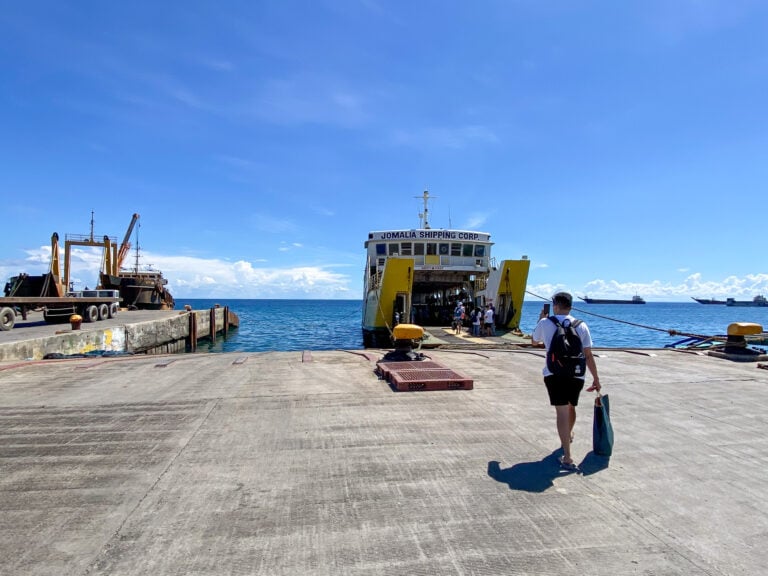
| Jomalia, open air | 07:30 | ₱3,200 | 3.5 hrs |
| Jomalia, high speed | 07:30 | ₱3,250 | 3.5 hrs |
| MV Star San Carlos, passenger cargo, Tue | 21:00 | ₱2,400 to ₱2,600 | about 8 hrs |
The fast ferry takes three and a half to four hours, not seven to ten. The seven to ten figure still printed on several current pages belongs to the overnight passenger cargo boat, which is a different service on a different schedule. Sailings are weather dependent and cancellations in the southwest monsoon are ordinary rather than exceptional.
There is also a 40 minute flight from Busuanga to Lio, around ₱3,850 before transfers, which is the answer when the sea is closed and the trip is not. Coron itself is covered end to end in our Coron travel guide.
Every fee in El Nido, in one place
The Eco Tourism Development Fee
₱400 per person, valid ten days. Introduced at that level on 1 June 2024, doubled from the previous ₱200. Paid at the municipal tourism office in town, or collected by an accredited operator or resort before your first boat. Keep the receipt, because losing it means paying again.
There is a higher tier for stays beyond ten days. The figure circulating for it predates the 2024 increase and does not add up, so the honest answer is that the current long-stay rate is not published and the tourism office will tell you at the counter. Concessionary rates for residents, students and seniors exist and are also not reliably published.
Anyone reading ₱200 on another page is reading something written before June 2024, whatever date sits at the top of it.
The fees inside the tours
Joiner tour prices do not include these. Carry cash for them.
| Charge | Amount | Where |
|---|---|---|
| Big Lagoon environmental user fee | ₱200 | Tour A |
| Small Lagoon environmental user fee | ₱200 | Tour D |
| Kayak, two seater | ₱300 to ₱400 per kayak | Big and Small Lagoon |
| Matinloc Shrine entrance | ₱200, optional | Tour C |
| Boat crew tip, customary | ₱100 to ₱200 | Any tour |
Two notes worth the money they save. The kayak price is per kayak, not per person, and a two seater takes two adults, so ask whether the boat already carries a couple before renting. Many do. And at least one operator itemises the lagoon fee at ₱400 rather than ₱200 on its own booking page, so ₱200 is the standard figure rather than a guarantee.
The fees on land
- Nacpan Beach: no entrance fee. Drivers will sometimes say otherwise. There is no gate and no ticket.
- Las Cabanas, also sold as Marimegmeg and as Vanilla Beach: free. Three names, one beach. Vanilla Beach is the retail strip behind the sand, not a separate place.
- Las Cabanas zipline: one way seated ₱500, one way superman ₱700, return seated ₱900, return superman ₱1,100, combination ₱1,000. Open 9:00 AM to 5:30 PM.
- El Nido Via Ferrata, the canopy walk: ₱400 to ₱450 alone, about ₱700 combined with the Dream Walk. Guide, helmet and harness included. Daily 8:00 AM to 5:00 PM, about an hour and a half.
The four tours, stop by stop
The El Nido tours are sold by letter, and the letters mean the same thing everywhere. Tour A from one operator visits the same places as Tour A from any other. The prices are not standardised, whatever you read. The same lettered tour sells between ₱1,200 and ₱1,800 depending on who is selling it, with ₱1,500 the most common 2026 quote for A and D, and Tour C usually the dearest because it burns the most fuel.
| Tour | Typical joiner rate | Stops |
|---|---|---|
| A | ₱1,200 to ₱1,500 | Big Lagoon, Secret Lagoon, Shimizu Island, Seven Commandos Beach |
| B | ₱1,300 to ₱1,600 | Snake Island sandbar, Cudugnon Cave, Cathedral Cave, Entalula Beach, Pinagbuyutan Island |
| C | ₱1,400 to ₱1,800 | Helicopter Island, Hidden Beach, Secret Beach, Matinloc Shrine, Talisay or Star Beach |
| D | ₱1,200 to ₱1,500 | Small Lagoon, Cadlao Lagoon, Pasandigan Cove, Paradise Beach, Natnat or Ipil Beach, Bukal Beach |

Included: boat, boatman and guide, lunch cooked on board or on a beach, drinking water, mask and snorkel, life jacket, and pickup from town proper or Corong Corong. Out around 9:00 AM, back between 4:00 and 5:00 PM. A joiner boat typically carries around 24 people.
Not included: the eco fee, the lagoon user fees, kayak rental, Matinloc entrance, tips.

Private charters. An outrigger runs about ₱13,000 to ₱14,000 for two people with roughly ₱1,200 to ₱1,400 per extra head, and a speedboat is close to double that. Smaller local charters start around ₱6,000. The spread is wide because the market is not regulated, and the difference between the bottom and the top of it is boat condition, crew, and whether lunch is a bento box or a grill.


Combination tours are a private product. A boat doing A and C in one day is a charter, not a joiner seat. Some sources describe combinations as restricted outright, and joiner operators do not sell them, so plan on one letter per day unless you are paying for the whole boat.


If you only do one: Tour A. It has the Big Lagoon and it is the most weather resistant. If you can afford one upgrade: the private boat, and use it to be first into Big Lagoon.
Why so many guides put Small Lagoon on Tour A
Because it used to be, and this is worth ten seconds because it is the most repeated mistake about the place.

That board is photographed above, in the CAERA Travel and Tours booking office on Serena Street, on the evening of 15 June 2016. It reads:
| 2016 board | Price | Stops as printed |
|---|---|---|
| Tour A | ₱1,200 | Small Lagoon, Big Lagoon, Secret Lagoon, Simizu Island, Intalula Island, 7 Commando Beach |
| Tour B | ₱1,300 | Pangulasian Island, Snake Island, Inabuyutan Island, Cudugnon Cave, Cathedral Cave, Ipil Beach |
| Tour C | ₱1,400 | Hidden Beach, Secret Beach, Cadlao Lagoon, Matinloc Island, Helicopter Island, Tapiutan Island |
Three things fall out of it.
The itineraries were reorganised. In 2016 a single Tour A did both lagoons and six stops. Today Big Lagoon is Tour A with four stops, Small Lagoon is Tour D, and Cadlao Lagoon moved off Tour C to Tour D as well. Anybody working from older material, or from an operator who never updated their page, reproduces the old lettering in good faith.
The tours got smaller. Six stops became four or five.
The price barely moved. Tour A was ₱1,200 in 2016 and is ₱1,200 to ₱1,500 now. Tour C was ₱1,400 and is ₱1,400 to ₱1,800. Ten years of peso inflation and the headline rate is close to flat, which tells you most of what you need to know about how competitive the joiner market is.
The practical takeaway is unchanged. In 2026, doing both lagoons means two tour days or a private charter. Anyone promising both on one joiner boat is selling a 2016 itinerary.
Big Lagoon and Small Lagoon: what changed and what did not
Motorboats cannot go in, and you can
The management board barred motorised boats from entering the lagoons. Bangkas now anchor at the mouth and everyone continues under their own power. Big Lagoon sits at 11.1533° N, 119.3230° E.

Our own frames from 16 June 2016 show what that rule replaced: outriggers moored inside the lagoon at ten past ten in the morning, kayaks tied along their bamboo arms, and a floating hut renting more. That was normal then. It is prohibited now, and the lagoon is quieter for it. It is the single biggest improvement to the El Nido experience in a decade.


What follows from the rule is often reported wrongly. Swimming into Big Lagoon is permitted through the shallow entrance channel with a life vest on, and the channel is shallow enough to stand in for most of the year. Kayaking is the better way to see the far end and it is not compulsory. Anyone telling you the lagoon is kayak only is describing one operator practice, not a rule.

Small Lagoon is the opposite shape: a narrow opening about two meters high in a limestone wall, entered by swimming or by kayak, opening into a pool you cannot see from outside. Boats cannot follow you in there either. Secret Lagoon, on Tour A, is a third thing again, reached through a crack you go through rather than around.

El Nido works on two levels and you only get one of them from the deck of a boat. That is the idea behind the Palawan Above and Below Tee, from the Island Series.
The caps are real and the numbers are not published
Big Lagoon, Small Lagoon and Secret Beach all run daily visitor limits set by the protected area management board, and agencies are required to book slots in advance. That is the reason a boat sometimes waits at the mouth.
We could not find the cap figures published anywhere, and we are not going to print a number we cannot stand behind. What does exist publicly is an Asian Development Bank carrying capacity study from June 2022, which modelled Big Lagoon real environmental carrying capacity at 727 snorkellers a day and Secret Lagoon at 186. Those are assessment figures from a study, not the enforced caps, and the difference matters.
The practical version: the first boat out sees a different lagoon than the fourth. Leave early.
Beyond the boats
Nacpan Beach
Seventeen kilometers north of town, about 45 minutes, at roughly 11.2833° N, 119.4333° E. Four kilometers of open sand on the outer coast, joined at one end to Calitang by a twin beach spit. No entrance fee. The reason to make the trip is that it is the opposite of Bacuit Bay: no karst walls, no boat traffic, just surf and length.
A tricycle round trip with the driver waiting runs ₱700 to ₱1,500 for the vehicle, up to about four people, negotiated at the start rather than metered. Motorbike rental is ₱350 to ₱600 a day and turns the trip into 20 to 30 minutes each way. Shared shuttles run around ₱300 to ₱600. The road has improved and it is still not good, which matters on a scooter in the wet season.
Las Cabanas and the sunset
Twenty minutes south of town by tricycle at ₱100 to ₱250 for the vehicle. The beach is free, faces west, and is the reliable sunset in El Nido because it looks out past Depeldet Island rather than into the karst. The zipline runs off the headland out over the water.
The town beach does its own version, and it is the cheaper one.


Taraw: the canopy walk and the climb are not the same thing
The canopy walk is the sanctioned product. El Nido Via Ferrata built a fixed-cable route on the limestone with steel rungs, a suspension bridge of about 75 meters and zip wires, topping out around 150 meters. Helmet, harness and guide included, waiver signed, an hour and a half, ₱400 to ₱450. Anyone reasonably fit can do it.
The summit climb is a different proposition. Taraw Peak is around 270 meters and the route is a scramble across razor limestone that has killed people. The official route is restricted and discouraged after those accidents, and private guides still run it informally for about ₱500. Publishing that as a cheerful ₱500 add-on, which is what most pages do, is the most irresponsible thing on the first page of Google for this destination.

If the point is the view, the via ferrata gives you most of it with a rope on.
Flying a drone in El Nido
Short version: this is one of the hardest places in the Philippines to fly legally, and the reason is the airport, not the scenery.
CAAP Memorandum Circular 026-2025 restricts drone operation within a 10 kilometer radius of an airport. Lio Airport sits about four kilometers north of El Nido town. Draw that circle honestly and it covers the town, Corong Corong, Las Cabanas, Cadlao and a good part of inner Bacuit Bay. Nobody has measured every site against a chart, which is itself worth knowing: the buffer that decides whether a shot is legal is not marked on any tourist map.
The bay is also inside a DENR managed protected area. Local permission requirements for drones in El Nido are referred to in several places and published in none. No permit, process or fee exists in public from the municipality, the protected area board or the environment office. Ask the El Nido tourism office before flying and expect the answer to take a phone call rather than a click.
El Nido Resorts bans drones outright across Lagen, Miniloc, Pangulasian and Apulit, for guests and staff alike, and a drone that comes down on resort ground is confiscated and handed to the police.
The national rules, the registration threshold and the paperwork are all in our drone rules in the Philippines guide. One correction worth repeating: the Philippine ceiling is 120 meters, not the 400 feet imported from American guidance and printed on half the drone-law pages covering this country.
Every photograph in this guide was taken from the ground, the beach or the deck of a boat. There is no aerial work in this piece, and in El Nido that is a feature rather than an omission.
When to go, and what the wet season actually does
Best months: February and March. Least rain, calmest water, tours running every day. March holds February weather with thinner crowds once Chinese New Year has passed. January matches both on weather and costs more.
Hardest months: July through October. Southwest monsoon, then typhoon season on top of it.
The seasons do not fall on tidy dates. The southwest monsoon runs roughly June to September or October and the northeast monsoon roughly November or December through April or May, and the shoulder months move year to year. Anyone printing hard boundaries is printing a guess.
- Tours cancel somewhere between one day in five and one day in three across the wet months.
- Tour C cancels first and cancels most, because it leaves the shelter of the bay.
- Tours A, B and D stay workable in conditions that stop Tour C, because they stay inside Bacuit Bay.
- Rain itself is rarely the problem. Warm rain on a boat is fine. The problem is a gale warning, which grounds every tour boat in the bay regardless of who paid what.

June, at the front edge of the monsoon, is what the photographs in this guide were shot in. Two tour days out of four ran, both under moving cloud, and the light in the middle of the day was flat and gray more often than it was blue. The bay still worked. That is roughly what the shoulder buys you: lower prices, thinner crowds, and a real chance that one of your days is spent in town.
August is peak wet season. Heavy afternoon rain, rough water, the lowest prices and the fewest people of the year. It is the least reliable month to book a single boat day and the best month to have four days and no fixed plan. Month by month across the whole country, our best time to visit the Philippines guide has the rainfall side of it.
Where to stay in El Nido
- El Nido town proper. Walk to the tourism office, the operators, the restaurants and the pickup point. Loud at night, tight streets, and the waterfront here is the part of El Nido with a sewage history. Best for a first trip and for anybody without transport.
- Corong Corong. Ten minutes south, where the vans arrive. Quieter, better sunsets, cheaper rooms, and a tricycle away from dinner.
- Lio. The planned estate near the airport. Manicured, expensive, calm, and detached from the town in both directions.
- Nacpan. An hour out. The move if the trip is a beach holiday rather than a boat holiday, and the wrong move if you are doing two tours.

What El Nido costs: four days
Those are our numbers for one specific trip. Change the nights, the room or the number of people and the Palawan trip cost calculator runs the same model for El Nido, Coron and Puerto Princesa, and shows the itemised total.
Per person, sharing a room, excluding airfare.

| Item | Budget | Mid |
|---|---|---|
| Accommodation, 3 nights | ₱2,100 | ₱6,000 |
| Airport or terminal transfers | ₱300 | ₱600 |
| Eco Tourism Development Fee | ₱400 | ₱400 |
| Tour A, joiner | ₱1,300 | ₱1,500 |
| Tour C, joiner | ₱1,500 | ₱1,800 |
| Lagoon fees and kayak | ₱400 | ₱600 |
| Nacpan trip | ₱250 shared | ₱750 trike |
| Food, 4 days | ₱2,000 | ₱4,500 |
| Tricycles around town | ₱300 | ₱400 |
| Total | ₱8,550 | ₱16,550 |
Add ₱3,500 to ₱8,000 each way for the Clark or Cebu flight, or ₱720 to ₱1,080 for the van or bus from Puerto Princesa. Bring cash. Card acceptance is patchy outside the bigger operators and the ATMs in town run dry at weekends.
The part El Nido does not put on the poster
The town has a sewage problem and the islands do not, and knowing which is which changes where you swim.
A treatment plant opened in December 2022 with capacity for 2,400 cubic meters a day and runs at about half of that. As of January 2025, 551 of 670 commercial establishments were connected, which is 82 percent. Households were at 30 out of roughly 900 in the town center, which is 3.3 percent, with about 95 percent of the rest still on bottomless septic tanks. A ₱40 million allocation in November 2024 covered new toilets and tanks for the first hundred households.
The water quality record follows from that. Fecal coliform in the coastal water at the town center exceeded the safe recreational limit of 100 MPN per 100 millilitres consistently from 2019 to 2023. It dropped in 2020 when tourism stopped and rose again when it restarted.
The islands and the offshore sites kept meeting the standard throughout. The lagoons and beaches on the tours are fine. The stretch of water directly in front of the town is the part with the history, and swimming there is not what anyone came to do anyway.
TIEZA committed an initial ₱500 million for El Nido infrastructure including water and sanitation in April 2026, under an interagency committee with the DENR. That is the current state of it: a real problem, publicly acknowledged, partly funded, not solved. For context on the pressure, arrivals went from 76,815 in 2008 to 903,166 in 2019 against a resident population of about 51,000.
Practical notes
- Single use plastic is banned. The ordinance took effect on 1 September 2018 and prohibited items are surrendered before you board an island hopping boat. Bring a refillable bottle from home.
- Reef safe sunscreen is expected at the marine protected sites and required by the resorts. Buy it before you fly, because buying it in town costs what a tour costs.
- Life vests are mandatory on the boats and to swim into Big Lagoon. They are included in the tour price.
- Aqua shoes. The limestone is sharp everywhere, in the water and out of it.
- Dry bag. Bancas take spray on a good day and rain on a normal one.
- Book tours the day before from your hotel or an operator on the main street. There is no advantage to prepaying online.
- Power. The Palawan grid is isolated and fragile. A corroded 69 kV line failed on 22 May 2026 and took out a 240 kilometer stretch from Bataraza to Taytay for close to thirteen hours. El Nido sits north of the reported limit of that outage and the town has a long brownout history of its own. Pick a room accordingly.
- Signal is decent in town and absent on the water. Nobody will reach you between 9:00 and 5:00.

Prices, fees, routes and rules in this guide were checked on 22 August 2026. The photographs are our own, taken in El Nido between 15 and 18 June 2016.

Suroy Wear · Island Series
Wear the story.
Above the water, limestone and jungle. Below it, everything you swam through to see. The Palawan Above & Below Tee is about that split.
Shop the Island SeriesEl Nido FAQ
How much is the El Nido environmental fee?
₱400 per person, valid for ten days, paid at the municipal tourism office or collected by your operator before your first tour. It went up from ₱200 on 1 June 2024. Keep the receipt.
Which El Nido tour is the best?
Tour A if you do one, because it has Big Lagoon and it is the least likely to be cancelled. Tour C has the most dramatic stops and the highest chance of being called off, so give it a spare day behind it.
Is Small Lagoon on Tour A?
Not any more. Small Lagoon is on Tour D and Tour A has Secret Lagoon, which is a different place. Older guides put Small Lagoon on Tour A because that is where it was: a 2016 tour board photographed in El Nido lists Tour A as Small Lagoon, Big Lagoon, Secret Lagoon, Simizu, Intalula and 7 Commandos for ₱1,200. The lettering was reorganised after that.
Can you do Big Lagoon and Small Lagoon on the same day?
Not on a joiner boat, because they sit on different tours and carry separate daily quotas. Two tour days, or a private charter.
Can you swim in Big Lagoon?
Yes, at the entrance channel, with a life vest. Motorised boats cannot enter and anchor at the mouth. A kayak is the way to reach the far end, and it is optional, at ₱300 to ₱400 per two seater kayak.
Can you still fly Manila to El Nido?
Not directly, and Clark is not a connecting terminal inside NAIA. It is a separate airport about 90 kilometers north of Metro Manila, and you get yourself there by land. Those turboprop services moved from NAIA to Clark on 29 March 2026. Cebu, Caticlan, Bohol and Coron also connect to Lio, all now operated by Cebgo rather than AirSWIFT.
How do you get from Manila to Clark airport?
For free, if you plan it. Since 1 April 2026 Genesis has run an hourly shuttle from NAIA Terminal 3, Bay 13, at no charge for anyone holding a confirmed Clark departure inside the next 24 hours. Show the boarding pass or itinerary and a government ID at the dispatcher and you get a voucher. One use per person, first come first served, so it is not something to gamble a flight on. Paying instead: the Genesis bus from Cubao or PITX is ₱200 to ₱280, a Grab runs ₱1,500 to ₱3,500, and the drive is ninety minutes to three hours depending on how NLEX is behaving. Build the buffer in, because missing a Clark departure is not a rebooking, it is a new ticket.
How long does the Coron to El Nido ferry take?
Three and a half to four hours on the fast ferry, ₱1,800 to ₱3,250 depending on operator and class. The overnight passenger cargo boat takes about eight and is a different service.
How many days do you need in El Nido?
Four. Three works only if the weather holds, and in wet season it often does not. Five if Nacpan and a rest day matter to you.
Is August a bad time to go to El Nido?
It is the least reliable month for boats and the cheapest month to be there. Tour cancellations run at roughly one day in five to one in three, Tour C goes first, and rooms and flights are at their lowest. Go with four days and no fixed order.
Can you fly a drone in El Nido?
Carefully, and probably not where you want to. Lio Airport is four kilometers from town and CAAP restricts drone operation within 10 kilometers of an airport, which covers most of the postcard locations. The bay is also inside a DENR managed protected area with local permission requirements that are not published. Ask the tourism office first.
Is the water in El Nido clean?
On the islands and the tour sites, yes, and they met water quality standards throughout the period the town did not. The coastal water at the town center exceeded safe fecal coliform limits from 2019 to 2023 and the sewerage connections that fix it are still being built.