

Gigantes Island, Iloilo: The Islands, the Boats and the Scallops
Islas de Gigantes is worth the long trip for two things: the limestone islands, and scallops at about a peso each. It is off Carles, at the far northeastern tip of Iloilo, three to five hours by road from Iloilo City and another hour to an hour and a half by boat from Bancal Port. Go between December and May, bring cash, and plan the island hopping around the tide.
There are no ATMs on the islands, power is generally on only from about 6 PM to 6 AM, and the signal is patchy. That is part of why it still feels far away.
Gigantes Norte, Carles, Iloilo · 11.6224° N, 123.3478° E · Checked October 26, 2026

How to get to Islas de Gigantes
- Iloilo City to Bancal Port, Carles. Buses and vans leave from Tagbak Terminal in Jaro. Vans take three to four hours and leave when full, the first around 4 AM; buses take four to five. Expect roughly ₱200 to ₱350.
- Roxas City to Bancal. An Estancia-bound bus from Lawaan Terminal to Balasan, then a tricycle to Bancal. About two hours, around ₱125 to ₱150.
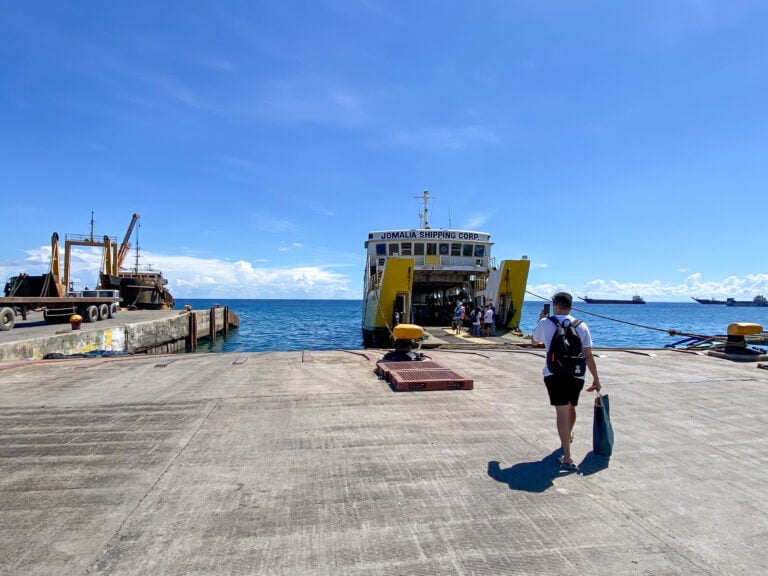
- Bancal Port to Gigantes Norte. Public boats, about ₱100 to ₱200, with the main trip leaving mid-morning and returning early afternoon. Times shift with the season and the sea; confirm at the port. The crossing takes one to one and a half hours, longer in chop.
- Missed the boat? A chartered boat for up to ten people runs about ₱3,500 to ₱4,000.
- Environmental fee. ₱75 per person at Bancal Port. Keep the receipt; rangers at Tangke may ask for it.
Fares and times come from 2025 and 2026 traveler reports; there is no official published rate card. Call the Carles Tourism Office before you go.
Island hopping: the stops and the tide
Most visitors join a day tour, about ₱1,000 to ₱1,300 per person, or hire a boat. The Carles tourism rates quoted in 2026 were ₱3,500 for up to 10 people, ₱5,000 for up to 15 and ₱6,000 for up to 30. Each stop charges its own small entrance: about ₱50 at Cabugao Gamay and Tangke, ₱40 at Antonia Beach and ₱20 at Bantigue.
Islas de Gigantes · Carles, Iloilo
Plan the boat around the tide
Two stops care about the tide; three do not. Flip the tide and see which order makes sense, then ask your boatman to run it that way.
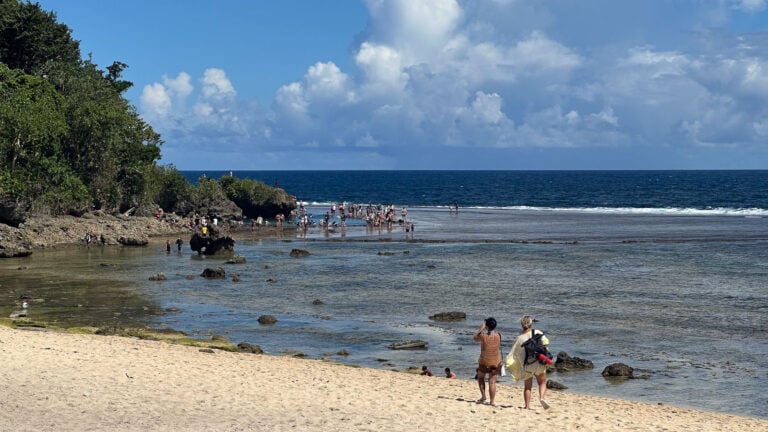
Tangke lagoonA cliff-walled saltwater lagoon on Gigantes Sur, entered through a gap in the rock. At low tide it drains to mud. Often closed in September to recover.
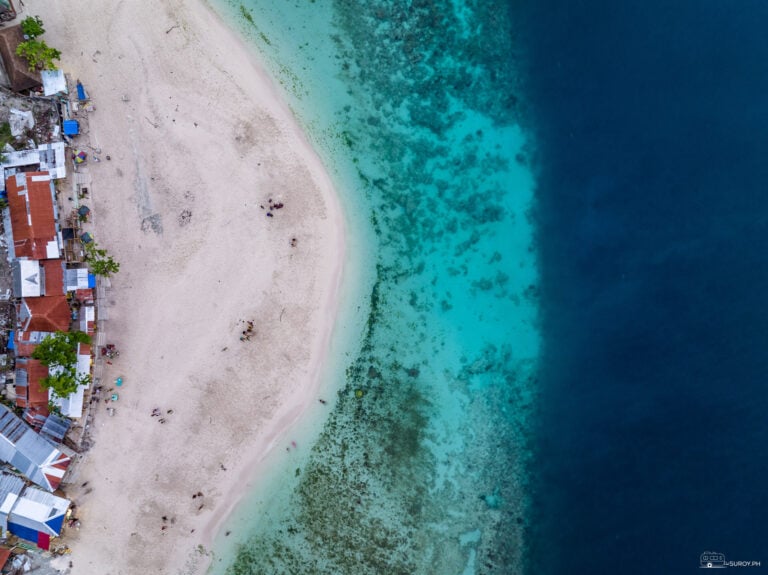
Bantigue sandbarAn S-shaped sandbar linking three islets. Best at low tide, when it is longest; it usually stays above water at high tide. No shade at all.
Cabugao GamayThe postcard: a curved strip of sand between two rocky hills, seen from a viewpoint about 10 minutes up a steep stair. Tide does not matter; the crowd does, 9 to 11 AM.
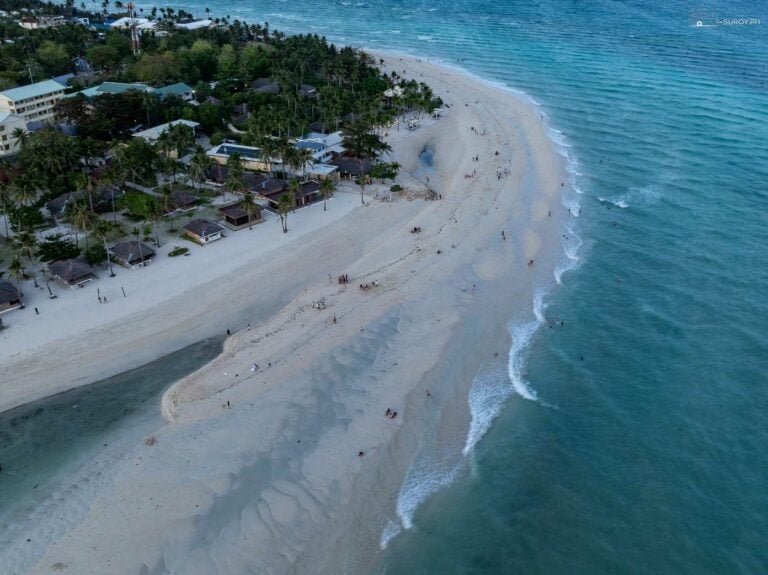
Antonia BeachWhite sand at the southeastern tip of Gigantes Sur. The usual snorkel and lunch stop, scallops at about a peso each.
LighthouseOn Gigantes Norte. A Spanish-era keeper’s house survives beside a solar tower that replaced the old light after Typhoon Frank in 2008. Reached by habal-habal.
Gold pins are best at the selected tide. Check a tide table for Carles the day before. Checked October 26, 2026.


Gigantes scallops
Scallops are why many people come. At Antonia Beach and in the villages they sell for about a peso each, and divers in Barangay Gabi on Gigantes Sur sell them by the bag. Other shellfish, crabs and grilled fish come by the platter.
The supply is under strain. In 2024, GMA reported that a diving group’s catch had fallen from more than 30 kilos to about five, and a University of the Philippines Visayas study had already warned that extraction should not increase. Red tide has also shut shellfish sales in Carles before. Check the latest BFAR shellfish bulletin before you eat.


When to go, and where to stay
December to May is the season, with the calmest seas from March to May. From June to September the southwest monsoon brings swells and canceled boats, and Tangke is often closed in September. Holy Week and long weekends are the busiest.
Most stays are simple inns and beach houses on Gigantes Norte. Expect rationed power and cash only. Bring enough pesos from the mainland.

The drawbacks: a long day of travel each way, boat times that depend on the sea, no ATMs, limited power, and a scallop stock that may not last at this rate.
Near Gigantes
Sicogon Island, also off Carles, has Huni Sicogon if you want a resort. On the way back through the province, try Iloilo’s talaba and diwal, and the Iloilo City travel guide covers the city. Flying out, see the Iloilo airport guide.
Islands this far from the city are why Iloilo is more than its capital. The Iloilo City of Love tee is for the whole province.
Suroy Wear · Island Series

The City of Love.
For Iloilo, from the Jaro belfry to the islands at its northern edge. Made in Cebu. ₱999.
Wear the story
Frequently asked questions
How do I get to Islas de Gigantes?
Travel to Bancal Port in Carles, Iloilo: three to five hours from Iloilo City or about two from Roxas City. Then take a public boat, one to one and a half hours, to Gigantes Norte.
How much is island hopping in Gigantes?
Joiner tours run about ₱1,000 to ₱1,300 per person. A private boat is about ₱3,500 for up to 10 people. Each stop has a small entrance fee.
How much are scallops in Gigantes?
About a peso each, sold on the islands and by the bag from divers.
Is there an environmental fee?
Yes, ₱75 per person, paid at Bancal Port.
When is the best time to visit Gigantes?
December to May. From June to September the seas are rough and boats can be canceled.
Are there ATMs on Gigantes?
No. Bring cash from the mainland.