Newsletter Subscribe
Enter your email address below and subscribe to our newsletter



Learn how to choose fried food, open pusô, use the vinegar, count every piece and pay honestly at a Cebu pungko-pungko stall.
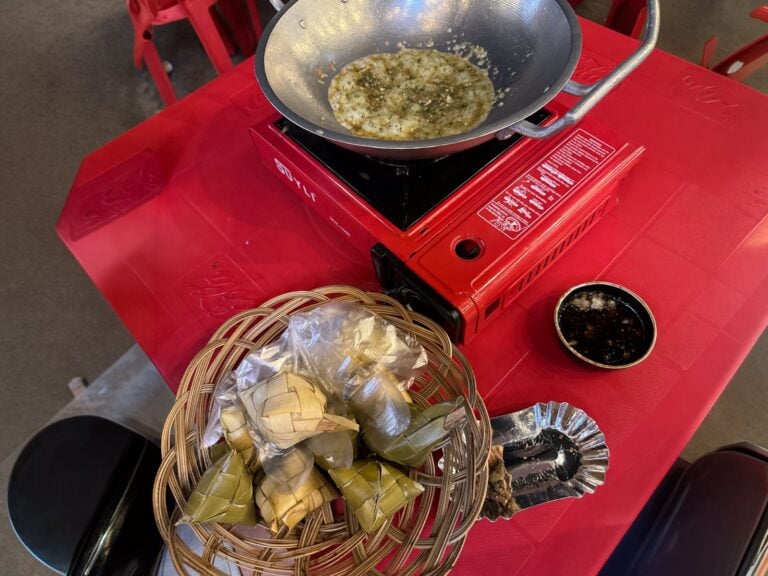
At a Cebu pungko-pungko stall, choose from the fried food on the table, eat with pusô and spiced vinegar, remember every piece you take, then tell the vendor your count when you pay. The system runs on shared space and honesty. That is the part a menu cannot teach you.
Pungko means to sit or squat. The name comes from the low seats and improvised roadside setup associated with the meal. Today, some stalls use regular tables, but the format remains: fried food within reach, rice in woven coconut leaves, vinegar on the side and a bill calculated after you eat.


Ask before eating if you avoid pork, offal, shellfish or a specific allergen. Several items can look similar after frying, and a shared fryer means cross-contact is likely.


The vendor may not write down every piece as you take it. You report what you ate at the end. Count honestly. The stall’s small margin depends on customers doing that simple part correctly.
If you lose track, say so. Point to what you remember and let the vendor help. Guessing low to save a few pesos is the one clear etiquette failure.
Spiced vinegar cuts through the fat and is part of the meal, not a decorative sauce. Use your own small saucer when available. At older communal setups, use a spoon or pour a little onto your plate. Do not double-dip a bitten piece into a shared cup.

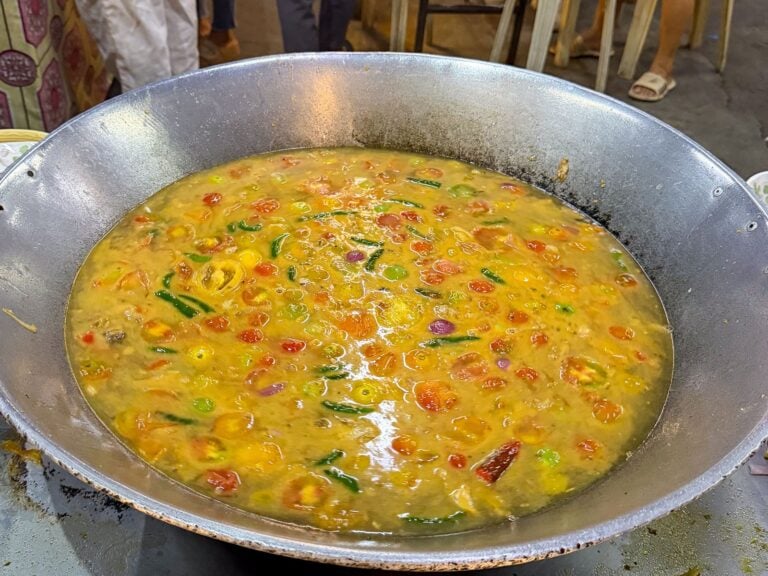
This differs from tuslob buwa, where pusô is dipped into a hot bubbling mixture. Tuslob buwa has its own history and dining mechanics. Pungko-pungko is the wider fried-food stall format.
Pick a busy stall where food turns over quickly. Look for freshly fried items, covered ingredients, a clean serving area and separate handling of money and food. Eat hot food hot. If a piece smells off, feels lukewarm after sitting for hours or attracts flies, leave it.

Travelers with sensitive stomachs can begin with freshly cooked ngohiong, lumpia and pusô before trying offal. Bring hand sanitizer, but use it after touching money and before eating, not as a substitute for choosing a clean stall.
| Phrase | Meaning |
|---|---|
| Pila ni? | How much is this? |
| Usa ka pusô, palihog. | One pusô, please. |
| Unsa ni? | What is this? |
| Halang ni? | Is this spicy? |
| Mao ra to. | That is all. |
Many stalls total the bill after you eat based on your reported count. Ask first if the setup looks different.
No. Peel or pull back the woven coconut leaf and eat only the rice.
No. Pungko-pungko is a fried-food stall format. Tuslob buwa is a bubbling dip eaten with pusô, though the two can appear in the same street-food conversation.