ByPat
Sulfur Vents of Valencia: Free, Roadside, and What the Smell Means
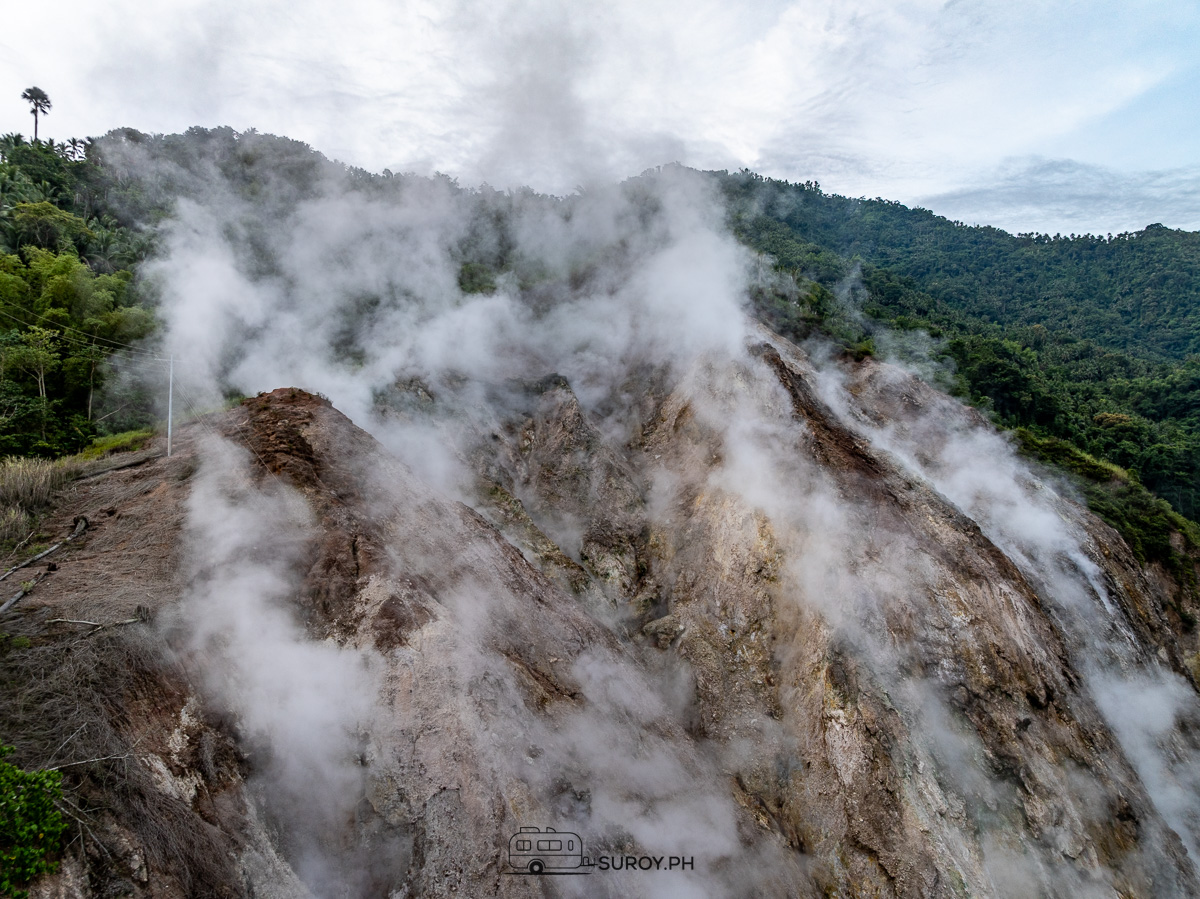
Steam pours from the mountainside right beside the Valencia road, thirty minutes out of Dumaguete. No hike, just the earth exhaling.
Thirty minutes up the mountain road from Dumaguete, white steam pours straight out of the slope beside the asphalt. There is no gate, no fee and no hike. You pull over, and the earth is breathing in front of you.
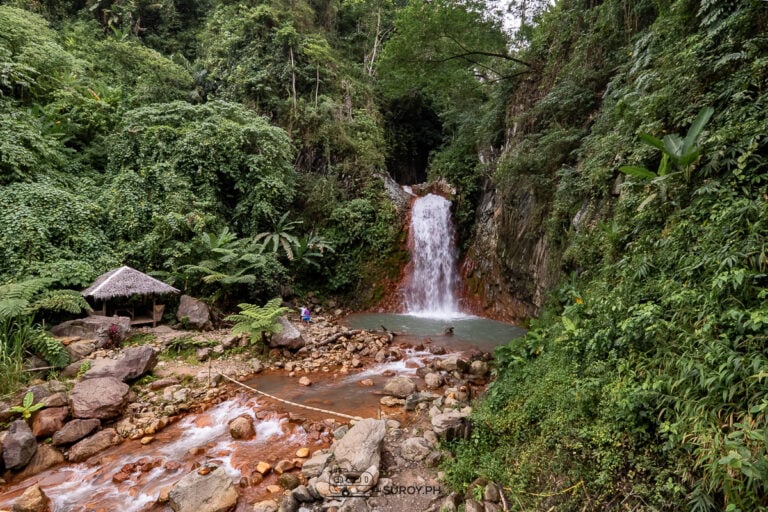
Go late in the afternoon. The light drops, the steam thickens, and the mountainside starts to look prehistoric. If you are already heading to Pulangbato Falls or Red Rock Hot Spring, the vents are on the same road and skipping them would be the mistake of the trip.
One thing to know before you stand there, because no other guide says it. If the rotten-egg smell starts fading, that is not the air clearing. That is your nose switching off. More on that below.

What they cost, and what they are called
Nothing. There is no entrance fee. The vents sit on a public road that serves at least five barangays, and no one collects anything. That is confirmed across four independent sources between 2023 and September 2025, and it holds as of this update in August 2026.
The naming is where people get lost. The roadside vents are marked on maps as Mag-aso steam vents, in Barangay Malabo, Valencia. Mag-aso is Bisaya for smoking or steaming. You will also see them called the Sulfur Vents, Sulfur Mountain, or Mag-aso volcanic steam spring. All the same place.
They are not the Kaipohan sulfur vents. Kaipohan is a different site entirely, roughly six kilometers away, up on the Mount Talinis trail toward Apolong. It is an area of dead trees and bleached rock that you reach on foot over hours, not from a car window. Guides merge the two constantly. If someone tells you the sulfur vents need a hike, they are describing Kaipohan.
What is actually coming out of the ground
Geologists call these fumaroles: openings where steam and volcanic gas escape from below.
The gas doing the smelling is hydrogen sulfide, not sulfur dioxide. It matters, because the two behave differently and the safety advice is different. Hydrogen sulfide is the rotten-egg one. Sulfur dioxide is the sharp struck-match one, and it is not what dominates here.
The heat underneath is the same heat the country runs on. The Palinpinon geothermal field sits on these slopes, generating 192.5 megawatts, the fourth largest installed geothermal capacity in the Philippines, operated by the Energy Development Corporation. The steam you are watching escape for free is the same resource being tapped a few ridges over.
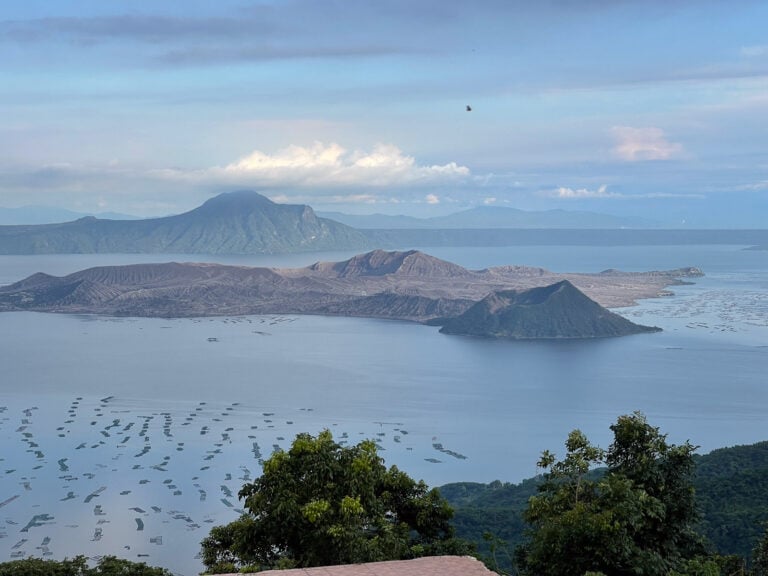
Above it all is Cuernos de Negros, also called Mount Talinis, a complex stratovolcano of about 1,862 meters. Its last known eruption was in the Pleistocene, with the youngest radiocarbon evidence around 14,000 years before present. PHIVOLCS classifies it as potentially active, part of the Negros Volcanic Belt.
Worth being precise, because it gets stated wrongly. Cuernos de Negros is in the PHIVOLCS inventory but it is not one of the eight volcanoes monitored in real time. It carries no alert level and no daily bulletin. The active volcano on this island is Kanlaon, far to the north. Nobody is publishing a live reading for the ground you are standing on.

The safety part, with numbers
Every other page stops at the rotten eggs. Here is the part that matters.
Hydrogen sulfide is detectable by smell at concentrations as low as 0.008 parts per million. Eye irritation begins somewhere around 20 to 50 ppm. At roughly 20 ppm the sense of smell shuts down, which is the whole problem. Above that the gas keeps getting more dangerous while smelling like less. At 250 ppm it can cause pulmonary oedema. Occupational ceilings sit at 10 ppm over an eight hour day.
So a fading smell is a warning, not an all-clear. The US Geological Survey puts it plainly, that our sense of smell is not a reliable alarm for this gas.
No public measurement exists for the Valencia vents specifically. Nobody has published a reading, and this guide is not going to invent one. What follows is what the chemistry implies rather than a site-specific risk assessment.
- Stay on the road and upwind. Do not walk down into the vent field.
- Avoid hollows, gullies and the riverbed. The gas is denser than air and pools in low ground.
- Keep it short. Thirty minutes is plenty and it is roughly what most visitors do anyway.
- Skip it if you are asthmatic or otherwise short of breath. This is not a place to test that.
- Do not touch the steam. It is hot enough to burn.
- The smell follows you home. It gets into clothing.
Getting there
The vents are in Barangay Malabo, Valencia, on the road toward Pulangbato Falls. About 30 minutes by car from Dumaguete, roughly 12 kilometers.
Motorcycle or scooter, ₱300 to ₱500 for the day. The most flexible option, and the mountain road is a pleasure to ride.
Multicab or jeepney to Valencia town, ₱12 to ₱25 depending on who you ask and when they last checked, about 20 to 30 minutes. Then habal-habal up to the vents, around ₱200 round trip per person, or roughly ₱300 per motorbike carrying two.
Habal-habal for the whole day, ₱700 to ₱1,000. The sensible move if you are doing the full Valencia loop, because the return leg from Red Rock is a known problem and no public transport serves it.
Private car or hired van, easiest if you are stringing several stops together.
There is no designated parking at the vents. Vehicles stop on the shoulder.
One thing the road tells you if you know to look. In 2022 the Energy Development Corporation finished a ₱15 million typhoon-proofing job on this exact stretch: box culvert, debris interceptor, retaining wall and groins. That work exists because this slope moves in heavy rain. In a downpour, this is not a road to linger on.

When to go
The vents run year round. The mountain does not take holidays.
Within a day, early morning or late afternoon. Golden hour backlights the steam and the whole scene turns eerie as the sun drops. The steam reads thickest in cool, wet air, so a rainy morning before seven is dramatic, with the landslide caveat above.
The cooler months from November to February give the best contrast between white steam and a misty ridgeline.
The Valencia loop
The vents, Pulangbato Falls and Red Rock Hot Spring all sit on the same Barangay Malabo road, and Red Rock is only about 850 meters from the falls. That trio is a natural half day. Casaroro Falls is a separate spur with a long staircase and deserves its own morning.
| Stop | Fee | Notes |
|---|---|---|
| Sulfur vents | Free | No fee found in any source, 2023 to 2025 |
| Pulangbato Falls | ₱20, or about ₱100 for the developed Twin Falls resort | Two sites are quoted under one name. Ask which you are paying for |
| Red Rock Hot Spring | ₱30 to ₱100 depending on the year quoted | About 35°C, warm rather than hot. Sulfur stains light swimwear yellow |
| Forest Camp | ₱100 to ₱180 | Cold spring-fed pools, open 8:00 to 17:00 |
| Valencia town plaza | Free | Cata-al War Memorial Museum, donation box |
Every fee in that table is a range because the sources disagree and none of them date-stamp. Take cash and expect the number at the gate to be the current one, not the one online.
A sequence that works, starting from Dumaguete. Leave by 07:30, Casaroro first while the light is low, Pulangbato mid-morning, lunch in Valencia, Red Rock in the early afternoon, the vents around 15:00 for the light, and a viewpoint at Tierra Alta before heading down.


Suroy Wear · Island Series
The town at the bottom of this road
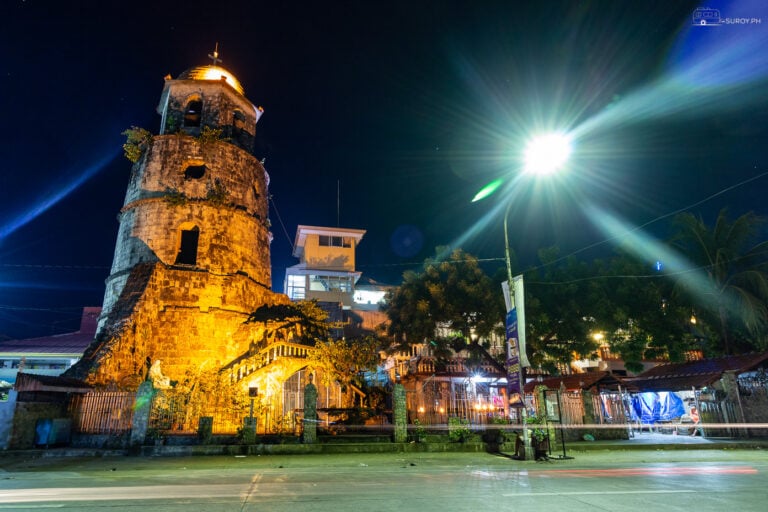
Dumaguete is thirty minutes down the mountain from here, and the tee is named for what the place is known for rather than what it looks like. City of Gentle People.
Dumaguete City of Gentle People Tee
Quick answers
Is there an entrance fee at the sulfur vents?
No. It is a free roadside stop on a public road. Checked August 2026.
How far are the sulfur vents from Dumaguete?
About 30 minutes by road, roughly 12 kilometers, in Barangay Malabo, Valencia.
Do I need to hike?
No. The vents are beside the road. If a guide tells you otherwise they are describing the Kaipohan vents on the Mount Talinis trail, a different place six kilometers away.
Is it safe to breathe?
For a short roadside stop, in open air, upwind, it is what thousands of visitors do. The rule that matters is that hydrogen sulfide kills your sense of smell at around 20 ppm, so a fading smell means leave rather than relax. Anyone with asthma or a respiratory condition should skip it.
Can I bring children?
Judgement call. It is a short stop with no barrier between the road and the slope, and small children should not be walking toward the vents.
What causes the steam?
Geothermal heat from the Cuernos de Negros volcanic complex. The same heat runs the 192.5 MW Palinpinon geothermal field on these slopes.
Is the volcano dangerous?
Cuernos de Negros is classed as potentially active with no eruption in recorded history, its last known activity in the Pleistocene. It is not among the eight Philippine volcanoes monitored in real time and carries no alert level.