

Campanario de Dumaguete: The Watchtower That Became a Belfry, Restored in 2026
Built in 1811 to watch the sea for raiders, converted later to ring people into mass. Coral stone, two levels, and a plaza that grew around it.
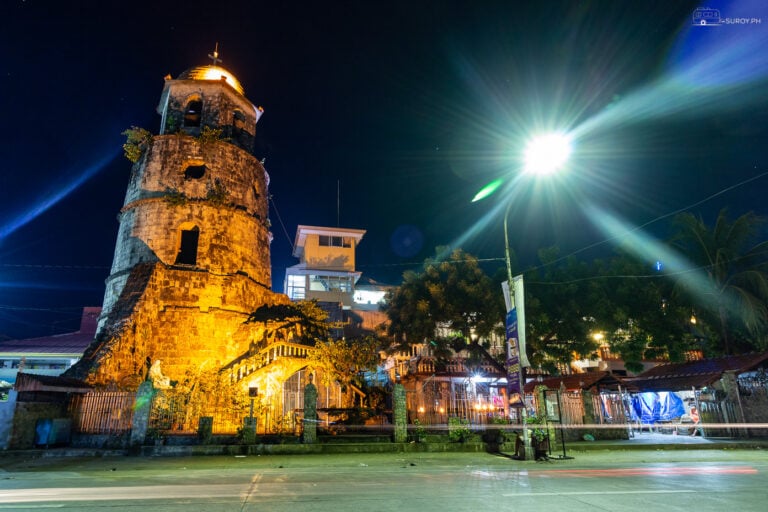
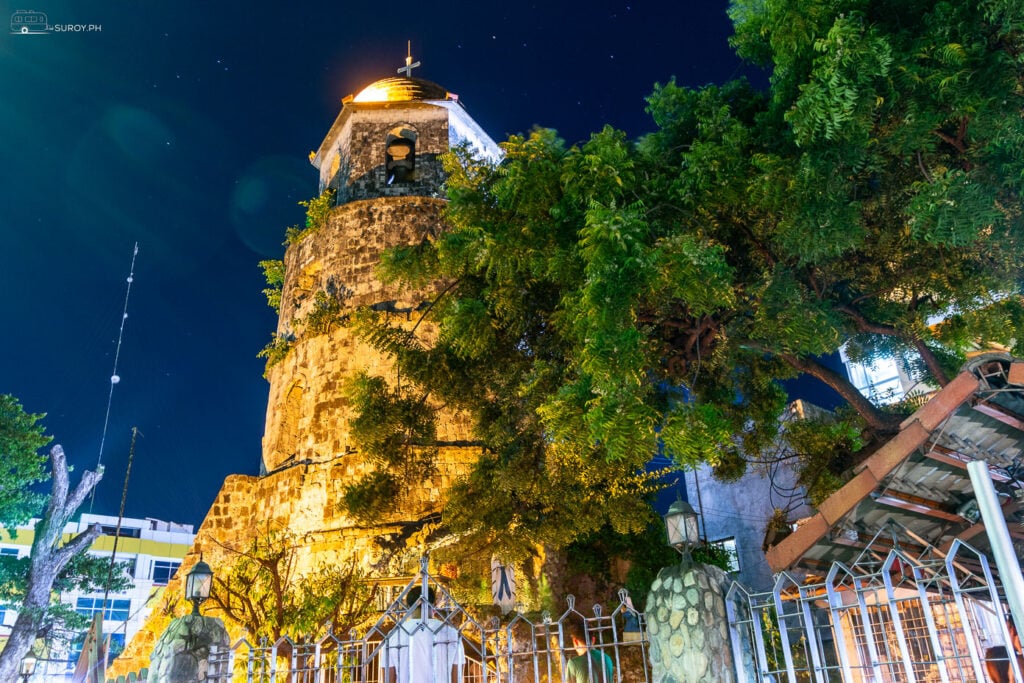
The Campanario de Dumaguete was built to watch the sea, not to ring bells. Its stone base was a lookout against raiders, and in 1867 two tiers were added on top to make it the belfry of St. Catherine of Alexandria Cathedral. In June 2026 it came back from a two year National Museum restoration as an Important Cultural Property. It stands beside the cathedral on Perdices Street, and it costs nothing to see.
Campanario de Dumaguete · Perdices St, Dumaguete City · Checked 28 October 2026

When was the Dumaguete bell tower built
Nobody agrees on the base. The older marker and the cathedral’s history tie the watchtowers to the stone church built between 1754 and 1776 under Fr. José Fernández de Septién. A 2024 report says the early 1800s. The June 2026 turnover report says 1811. What every source agrees on is 1867, when Fr. Juan Félix de la Encarnación added the top two tiers and the lookout became a belfry.
The National Museum says it is the only survivor of three Spanish era watchtowers in Dumaguete. It is called the oldest bell tower on Negros, and it is on the city seal.
Campanario · Dumaguete
One tower, built twice
Tap a stage of the tower.
Watchtower, date disputed
The base
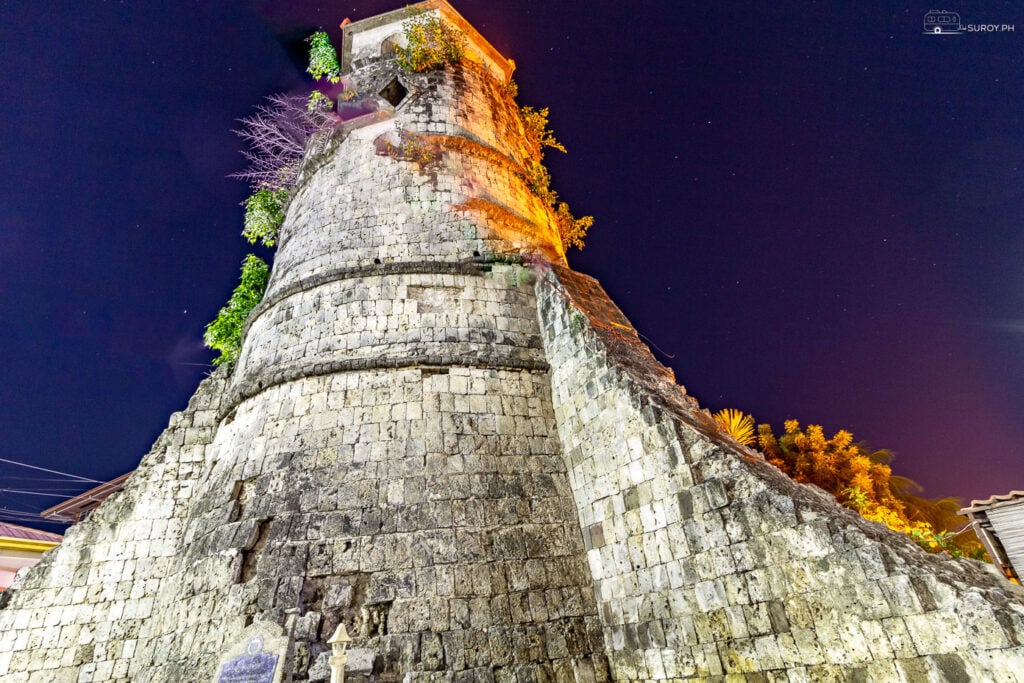
The lower stage went up as a lookout against raiders from the sea. When is argued: the older marker and the cathedral’s history put it in the 1754 to 1776 stone church work, a 2024 report says early 1800s, and the 2026 turnover report says 1811. The National Museum calls it the only survivor of three Spanish era watchtowers in the city.
The bell tiers
1867
In 1867 the parish under Fr. Juan Felix de la Encarnacion added the top two tiers and the tower became a belfry for the cathedral beside it. Every source agrees on this date.
The restoration
2024 to 2026
The National Museum of the Philippines started restoration in September 2024, first budgeted at ₱9 million and later reported above ₱15 million. The old grotto and toilets at the base were removed. In May 2026 the work was reported 97 percent done.
The marker
15 June 2026
The restored tower was turned over to the Diocese of Dumaguete on 15 June 2026, and Bishop Julito Cortes unveiled its marker as an Important Cultural Property. The diocese and the city are to sign an agreement on who manages it.
Checked October 28, 2026.
The 2024 to 2026 restoration
The National Museum of the Philippines started work in September 2024, first budgeted at ₱9 million and later reported at more than ₱15 million. The old grotto and the toilets built against the base were taken out. In May 2026 the work was 97 percent done, with a new grotto and candle area still to finish.
On 15 June 2026 the tower was turned over to the Diocese of Dumaguete, and Bishop Julito Cortes unveiled its marker as an Important Cultural Property with officials of the National Museum and the NCCA. The diocese and the city are to sign an agreement on managing it. The city has also promised a 10 meter setback between the tower and a planned building on its west side.
The photographs on this page were taken before the restoration.
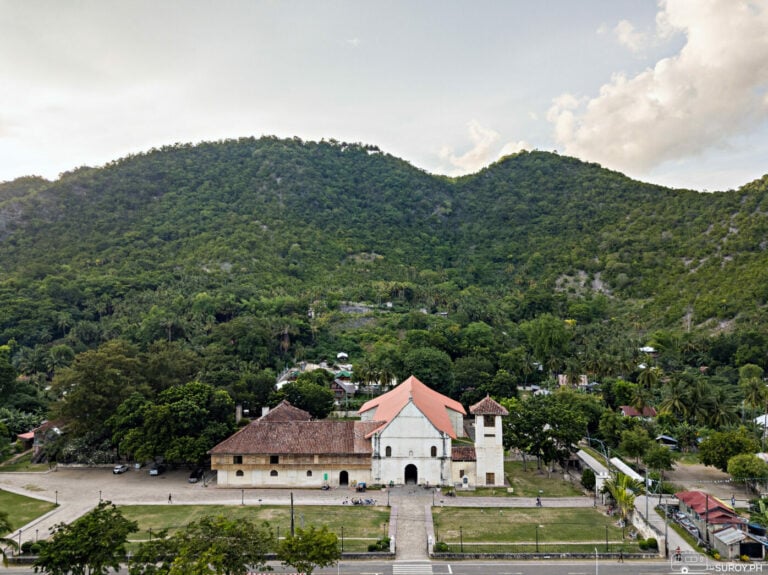
St. Catherine of Alexandria Cathedral
The parish was founded in 1620. The stone church went up between 1754 and 1776, the portico was added in 1885, and it became a cathedral in 1955. It is described as the oldest stone church on Negros Island.


Visiting the campanario
- Where. Beside the cathedral on Perdices Street, facing the city plaza, in the middle of downtown.
- Cost. Free. The tower stands in an open public space.
- Can you go up? No source says the public can enter or climb it after the turnover. Plan on seeing it from the ground.
- When. Early evening, when it is lit and the plaza fills. Respect masses at the cathedral.
- Getting there. A tricycle from anywhere in the city center, a few minutes. Rizal Boulevard is a short walk east.

Around Dumaguete
Silliman University and Rizal Boulevard are walking distance. Further out: Casaroro Falls and Pulang Bato Falls in Valencia, the Twin Lakes and Our Lady’s Garden in Sibulan, the Manjuyod sandbar up the coast, and Siquijor across the water. The Buglasan Festival runs in October, mostly at the provincial capitol grounds.

A university town by the sea that has never been in a hurry, and a tower that has watched it for longer than anyone can date. That is the Dumaguete City of Gentle People tee.
Suroy Wear · Island Series

The City of Gentle People.
A university town by the sea and a tower that watched it before anyone wrote the date down. Made in the Philippines. ₱999.
Wear the story
Frequently asked questions
When was the Campanario de Dumaguete built?
The base date is disputed: sources give the 1754 to 1776 church work, the early 1800s, or 1811. All agree the top two tiers were added in 1867, when it became a belfry.
Was the Dumaguete bell tower restored?
Yes. The National Museum restored it from September 2024 and turned it over to the Diocese of Dumaguete on 15 June 2026.
Is the Campanario de Dumaguete a heritage site?
Yes. It is an Important Cultural Property declared by the National Museum of the Philippines, with its marker unveiled in June 2026.
Can you climb the Dumaguete bell tower?
No source says the public can go inside or up. It is viewed from the plaza and street.
Is there an entrance fee?
No. It stands in an open public space beside the cathedral.
Checked 28 October 2026.