Newsletter Subscribe
Enter your email address below and subscribe to our newsletter



 ByPat
ByPatPusô Village brings Cebuano food, local vendors, and woven rice-inspired architecture to Cebu City's Carbon District. Plan your visit with current hours, food picks, and nearby stops.
Pusô Village brings Cebuano food, local enterprise, and contemporary design into one covered destination beside Carbon Market. It is the practical downtown stop for a group that wants lechon, tuslob buwa, seafood, barbecue, snacks, and drinks without having to agree on a single restaurant.
The short verdict: come hungry, visit from late afternoon into dinner, and combine it with the heritage landmarks around Cebu City Hall. The food choices are broad, the setting is unmistakably Cebuano, and the location makes it easy to add to a day in the old city.
| Location | M.L. Quezon Boulevard, Barangay Santo Niño, Carbon District, Cebu City |
|---|---|
| Landmark | In front of Senior Citizens Park and the Santo Niño Chapel, near Cebu City Hall |
| Current hours | Monday to Thursday, 10:00 AM to 9:00 PM. Friday to Sunday, 10:00 AM to 10:00 PM |
| Best time to go | Late afternoon to early evening, especially from 5:00 PM |
| Good for | Families, barkadas, first-time Cebu visitors, and groups with different food preferences |
| What to bring | Cash plus GCash as a backup, a reusable water bottle, and a healthy appetite |
Hours can change for events and holidays. Check the official Pusô Village Facebook page before making a special trip.
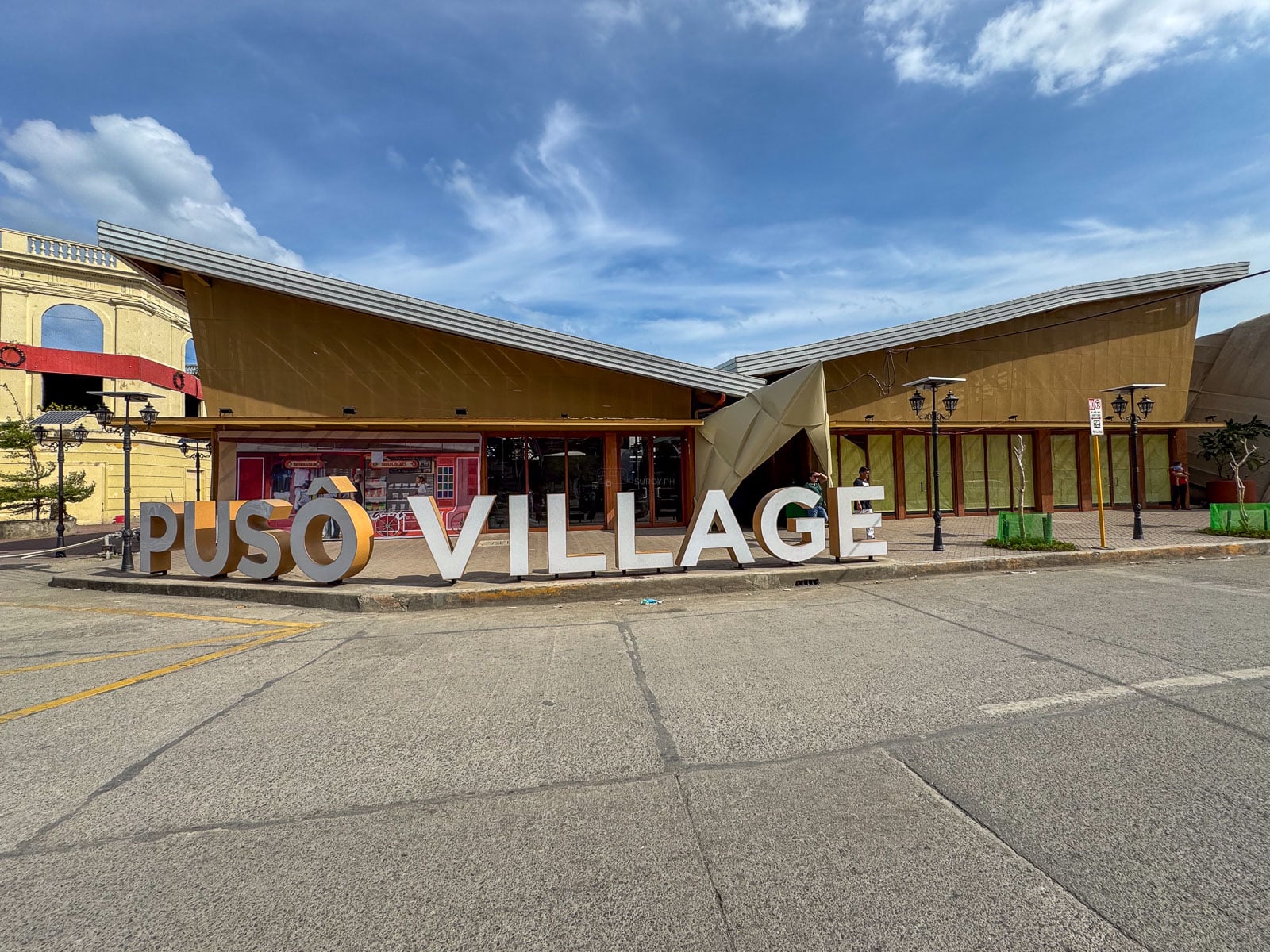
Pusô Village is an open-air food, retail, and culture hub within the wider Carbon Market redevelopment. It opened to the public in July 2025 after a long development period and now gives local food vendors a large, organized home close to Cebu’s historic center.
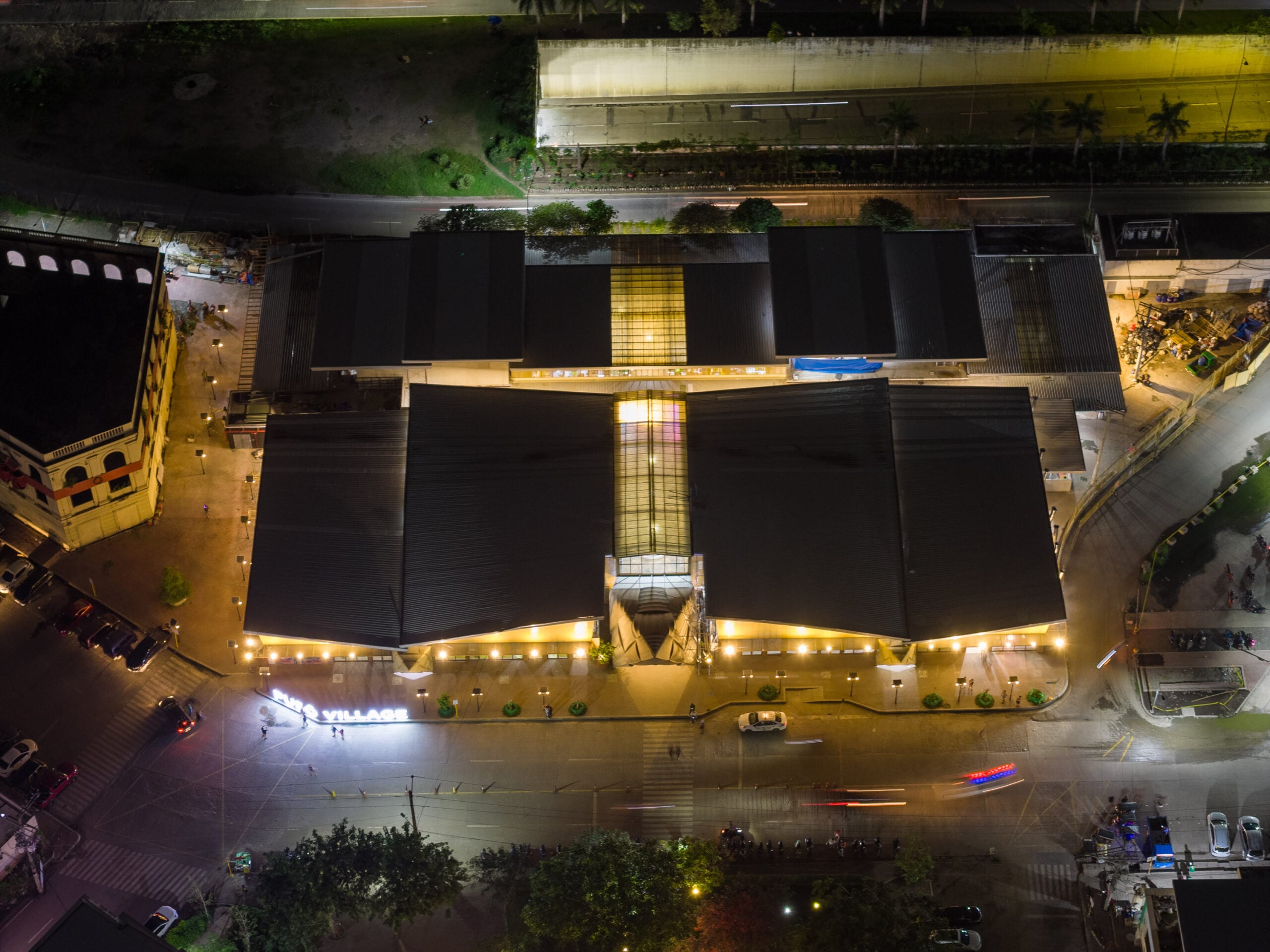
Its name comes from pusô, the rice cooked inside woven coconut leaves that Cebuanos pair with barbecue, lechon, and other street food. That woven form also shapes the building. Angular canopies fold around the entrances like oversized pieces of hanging rice, giving the complex a clear identity before the first plate reaches the table.
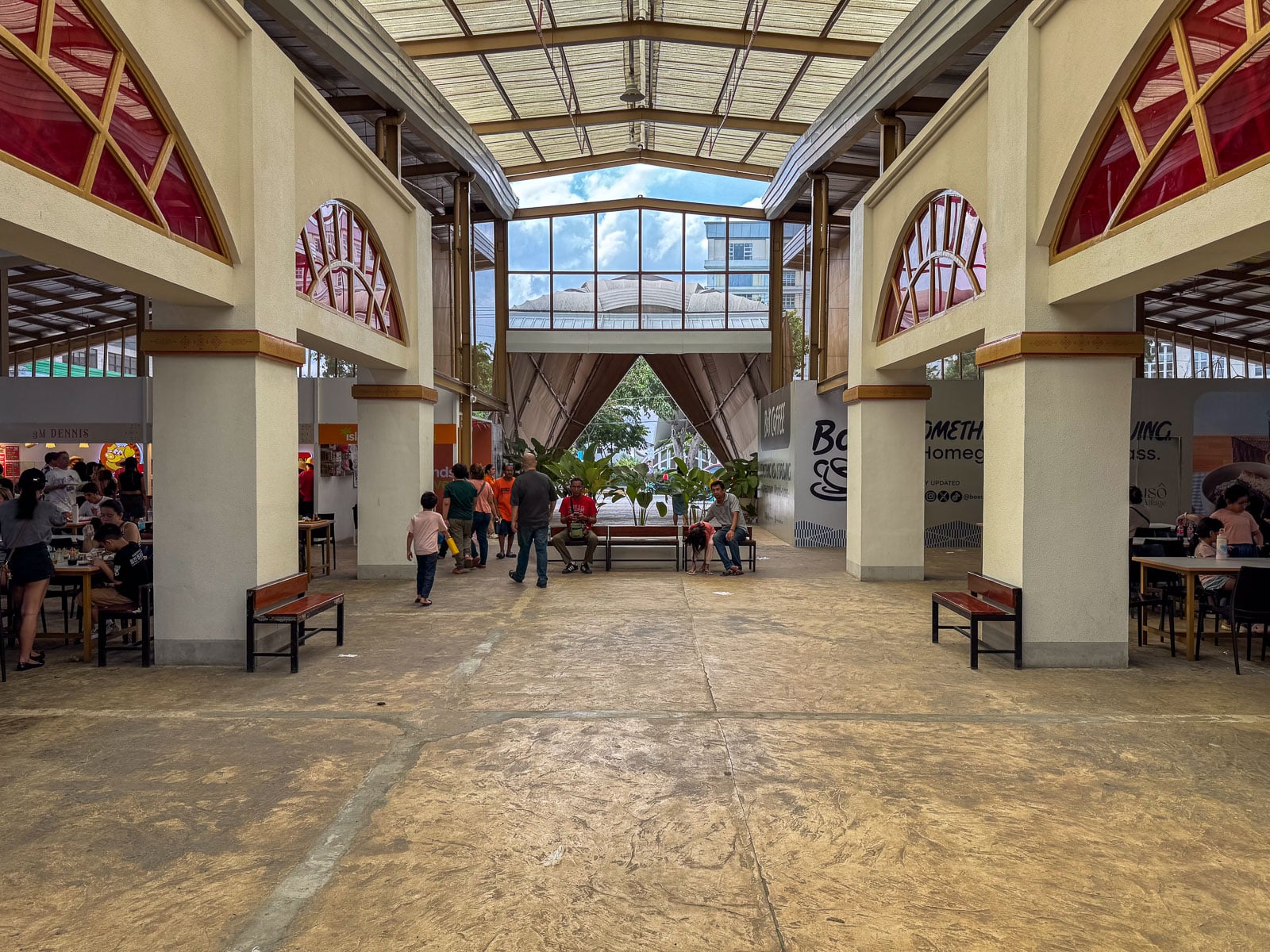
The setup works like a modern food hall. Walk the aisles, order from different stalls, then bring everything to a shared table. That flexibility is the main reason to come. One person can choose lechon, another can order seafood, and someone else can go straight for tuslob buwa or dessert.
Stall lineups and menus can change, so treat this as a way to build a meal rather than a fixed vendor ranking. Start with Cebuano staples, add one sharing dish, then leave room for a snack or cold drink.
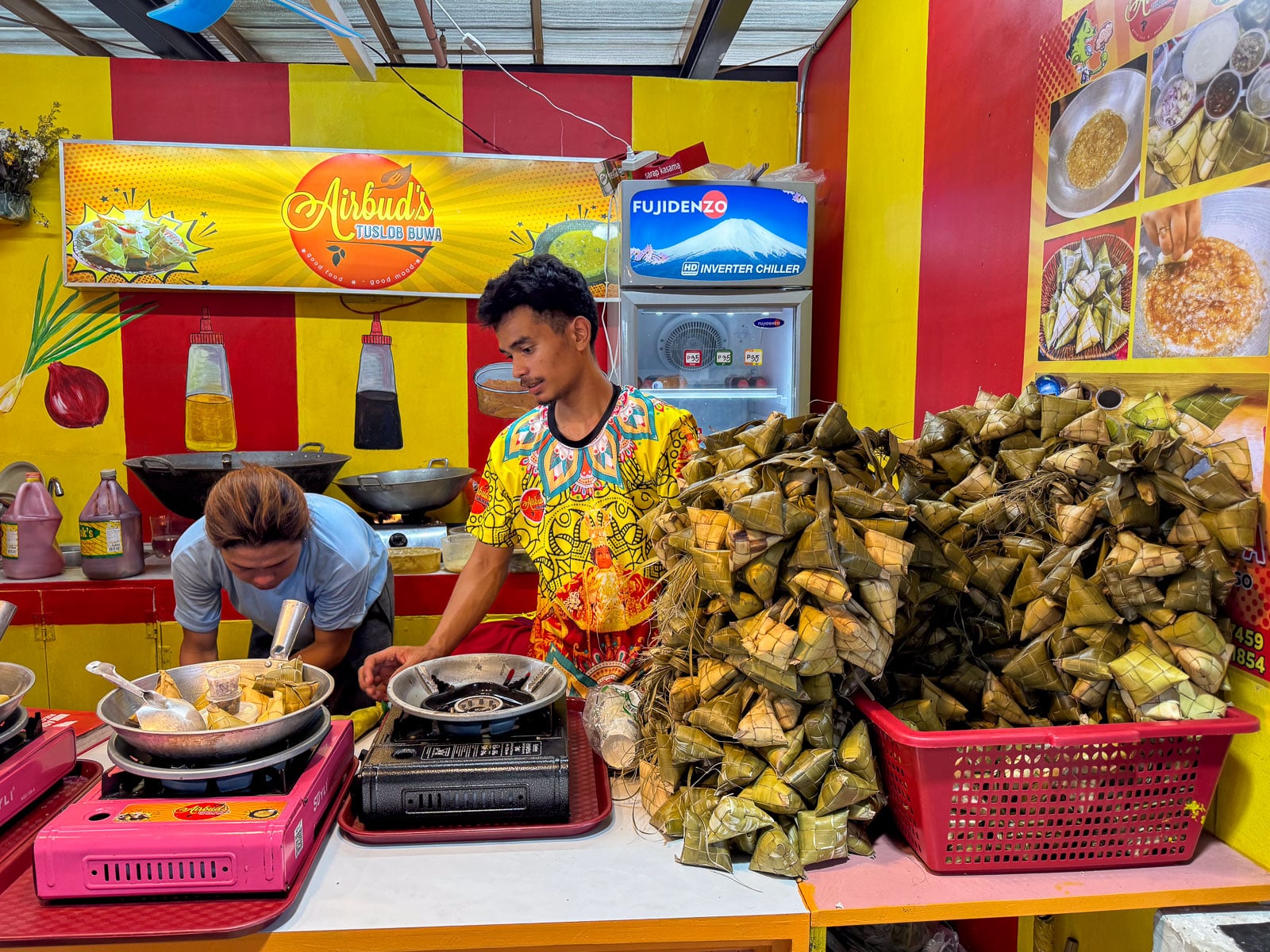
A pile of woven rice packets is the most literal introduction to the place. Pair pusô with tuslob buwa, Cebu’s rich communal dipping dish, or use it as the compact rice side for grilled meat and lechon. If this is your first time eating tuslob buwa, order a smaller set for the table and ask the stall how spicy the mixture is.
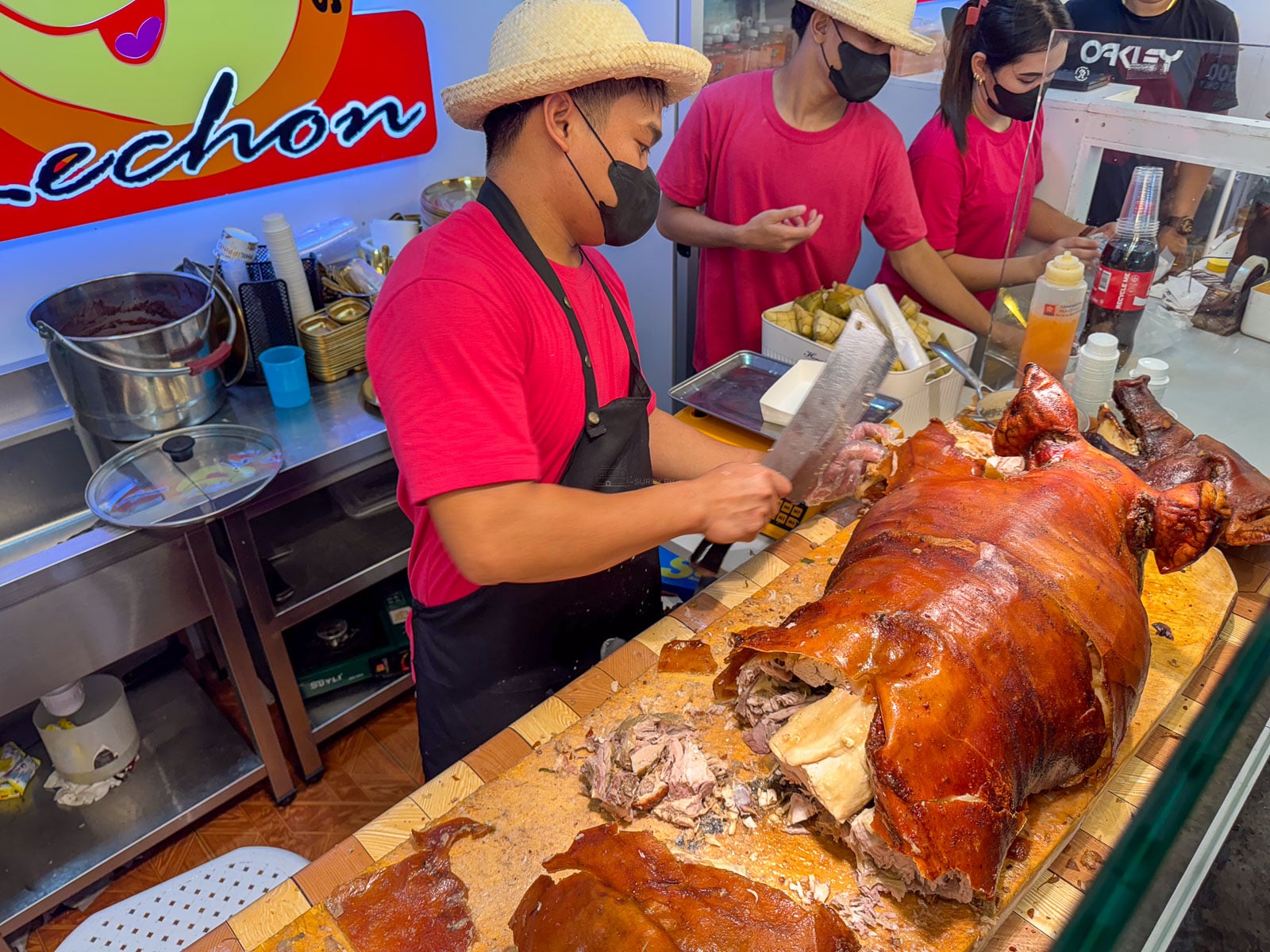
Lechon is the natural centerpiece for a Cebu food hall. Order a portion for sharing, add pusô and atchara, and let the crisp skin and seasoned meat carry the plate. For more context on styles, prices, and where else to try it, read the Suroy.ph guide to Cebu lechon.
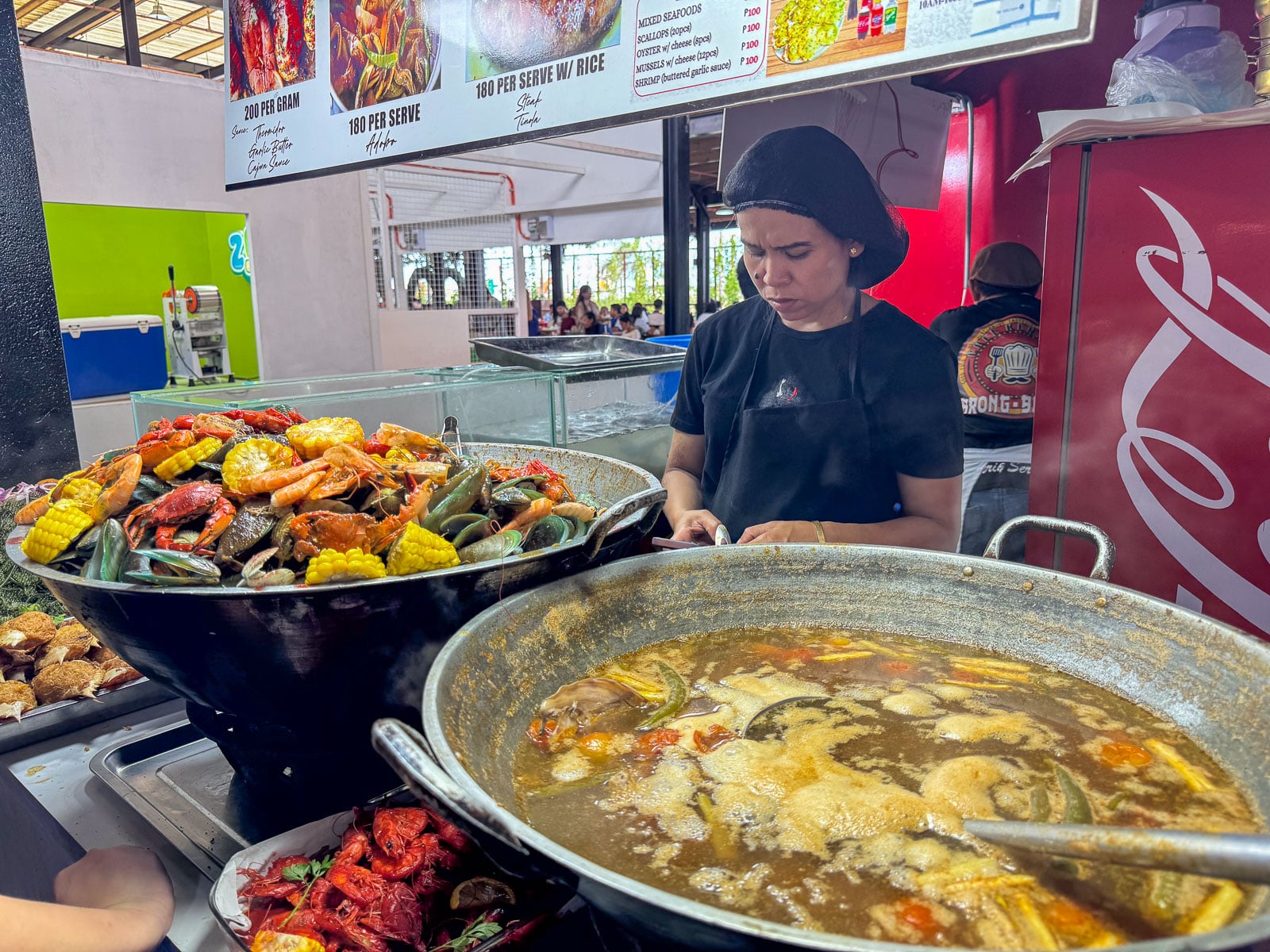
Seafood boils, grilled dishes, and sizzling plates make sense when several people are eating together. Compare serving sizes before ordering and build one shared spread instead of buying a full main from every stall. It keeps the meal varied and helps the table try more of the hall.
Pusô Village sits on M.L. Quezon Boulevard in Barangay Santo Niño, directly across from Senior Citizens Park and close to Cebu City Hall. It is beside the historic Carbon Market district and near the waterfront.
Pusô Village is strongest as the meal at the end of a compact old Cebu itinerary. Start at Magellan’s Cross and the Basilica area, continue toward Plaza Independencia, then visit Fort San Pedro before dinner. The landmarks are close enough to connect without crossing the city.
If the goal is a dedicated food crawl rather than a heritage day, compare the downtown experience with Sugbo Mercado in Cebu IT Park. Pusô Village leans into Cebuano identity and Carbon’s waterfront setting, while Sugbo Mercado offers the fuller late-night food market atmosphere.
Yes, especially for first-time visitors who want several Cebuano dishes in one stop or families who need flexible choices. The architecture gives the destination a sense of place, while the shared food hall format keeps the visit casual.
It is not a single-restaurant tasting menu, and quality can vary from stall to stall. That is part of the format. Walk the hall, choose vendors with active kitchens and steady queues, and order across the table. Done that way, Pusô Village becomes more than a convenient dinner. It becomes an accessible introduction to how Cebu eats.
It is on M.L. Quezon Boulevard in Barangay Santo Niño, Carbon District, Cebu City, in front of Senior Citizens Park and close to Cebu City Hall.
The official current schedule is 10:00 AM to 9:00 PM from Monday to Thursday, and 10:00 AM to 10:00 PM from Friday to Sunday. Check the venue’s official page before a holiday visit.
Start with lechon and pusô, add a tuslob buwa set, then choose seafood or a grilled dish for sharing. The vendor mix can change, so compare menus when you arrive.
Yes. Both are in downtown Cebu City and fit easily into the same half-day itinerary, along with the Basilica area, Plaza Independencia, and Fort San Pedro.