
Mactan-Cebu International Airport: Built Like a Bangka, and How to Use It
Mactan-Cebu International Airport is Cebu's main air gateway. This practical guide covers terminals, arrivals, transfers, airport transport, layovers and onward routes to Cebu City, Mactan resorts, North Cebu, South Cebu and nearby islands.
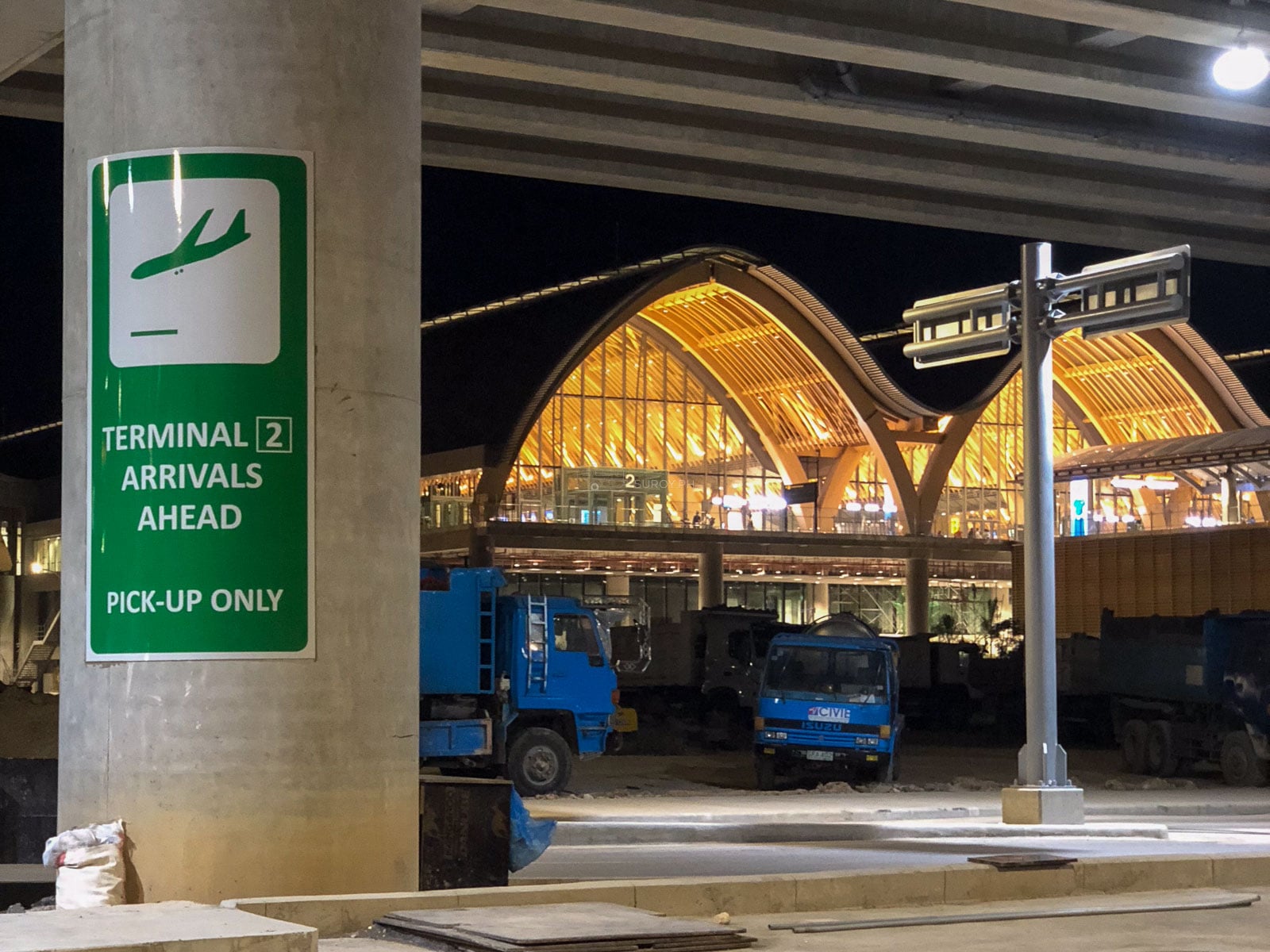
Mactan-Cebu International Airport is Cebu’s main air gateway, but it is not in Cebu City. The airport is in Lapu-Lapu City on Mactan Island. Terminal 1 handles domestic flights and Terminal 2 handles international flights. Your boarding pass names the terminal. Read it before you leave, because a domestic ticket and an international ticket send you to two different buildings.
Most of what a Cebu airport guide needs to tell you comes down to one thing. The airport is on Mactan, your destination probably is not, and the bridge in between decides your day.
Your best airport ride depends on your first real destination. A direct taxi, app-booked car, hotel transfer or pre-booked vehicle is usually simplest with luggage, children, a late arrival or a ferry connection. Public transport can cost less when its current route matches where you are going. Do not type only “Cebu” into a booking app. Name the hotel, district, bus terminal or pier.
The Cebu rule that saves the most time: decide your first stop before you land. Mactan resort, Cebu City hotel, North Bus Terminal, South Bus Terminal and Cebu Pier are five different trips.
Mactan-Cebu Airport quick facts
| Airport | Mactan-Cebu International Airport |
|---|---|
| Airport code | CEB |
| Location | Lapu-Lapu City, Mactan Island, Cebu. 10.3075° N, 123.9793° E |
| Terminal 1 | Domestic flights |
| Terminal 2 | International flights |
| Operating pattern | The airport operates 24 hours. Individual counters, shops and transport services may not. |
| Airport style | MCIA is a silent airport, so watch the flight screens and airline notifications. |
| Best first check | Airline app, boarding pass and current flight status |
Know your terminal before you leave
Terminal 1 is for domestic flights
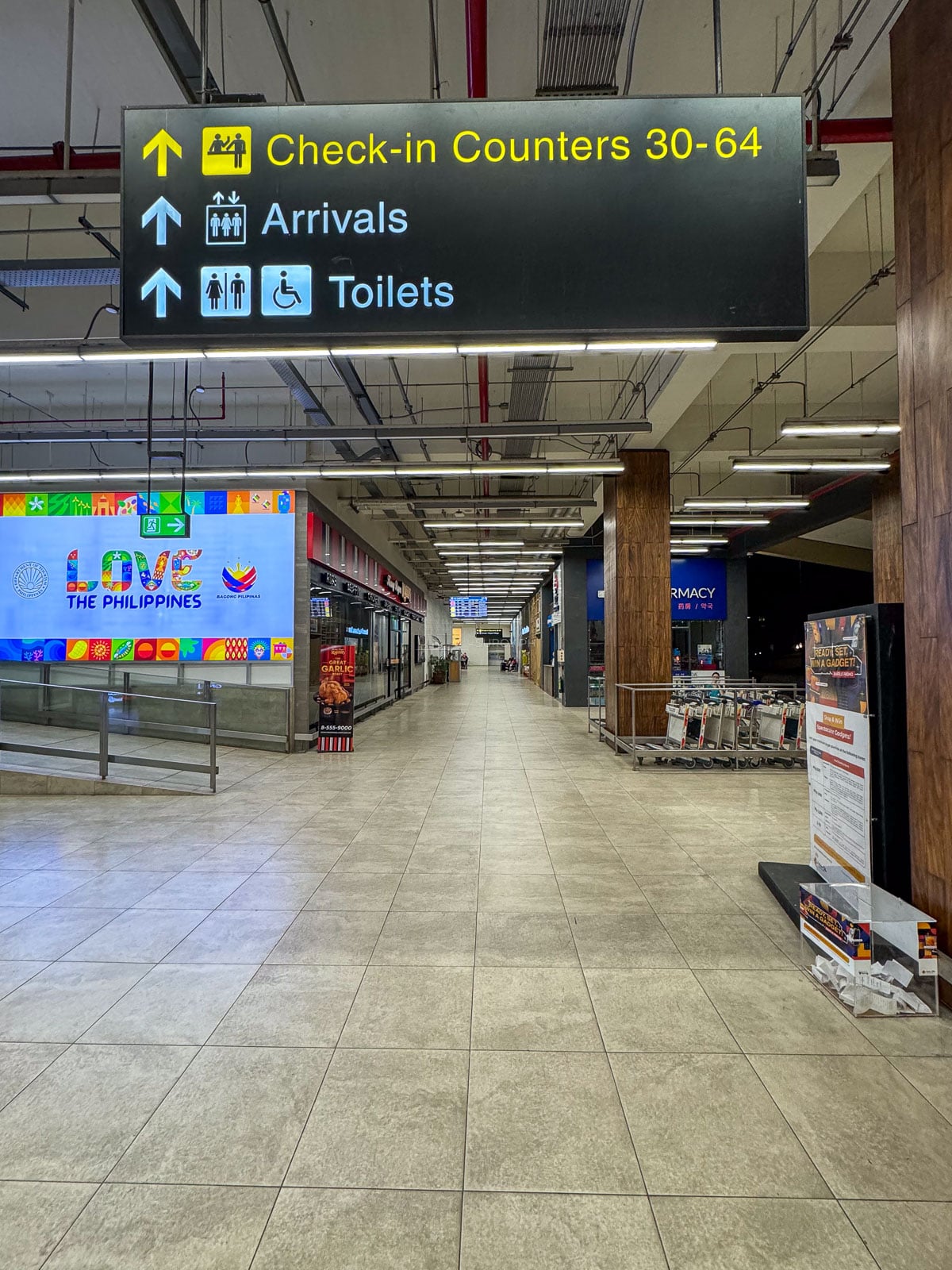
Use Terminal 1 when you are flying within the Philippines. The normal departure sequence is terminal entry, check-in or bag drop, security, gate and boarding. On arrival, follow the baggage claim and arrivals signs before choosing transport.

Terminal 2 is for international flights
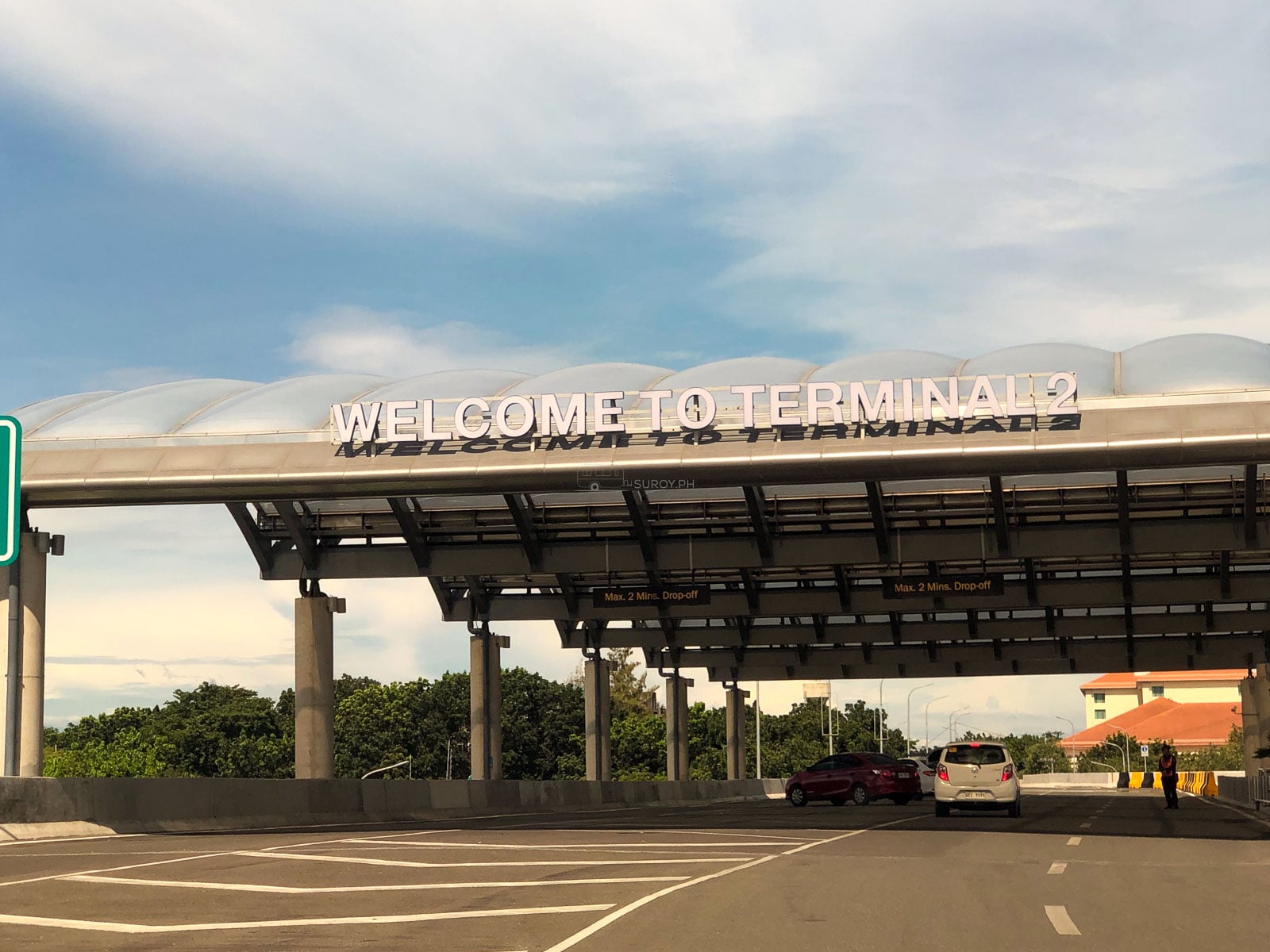
Use Terminal 2 for international departures and arrivals. Departing passengers pass through airline check-in, travel-document checks, immigration, security and the gate. Arriving passengers follow immigration, baggage claim and Customs before entering the public arrivals area.
What immigration asks for depends on your passport and your destination. The airline and the official eTravel portal are the two that decide it. Nothing on a blog outranks the instruction printed on your own booking.

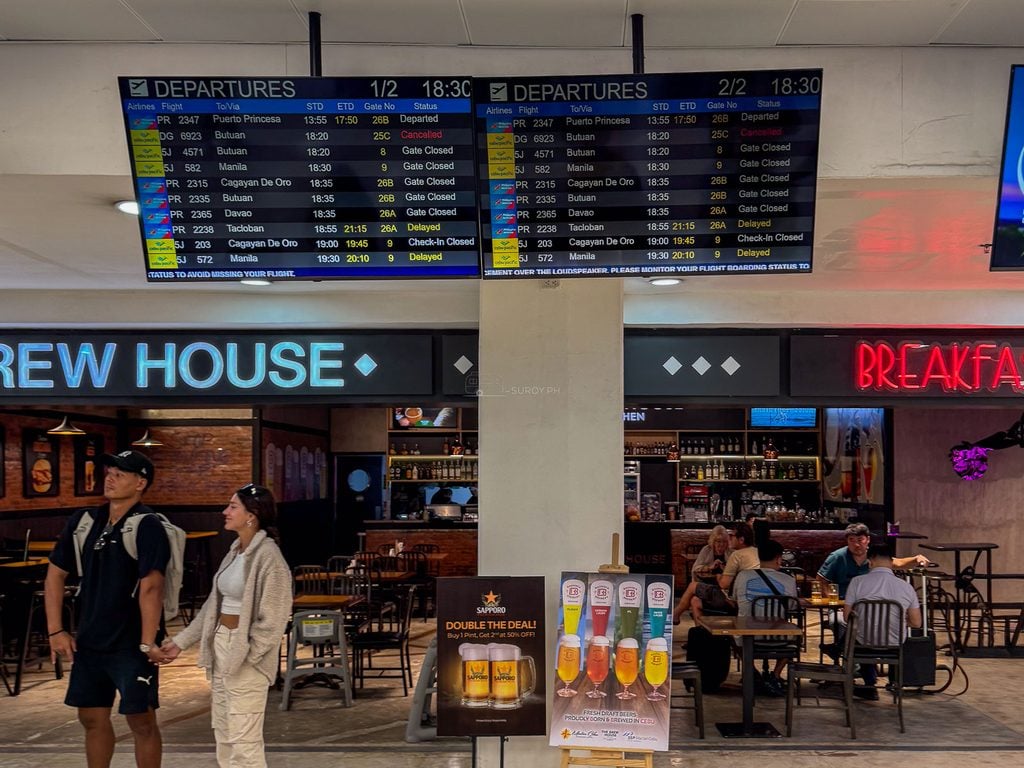
Watch the screens at this silent airport
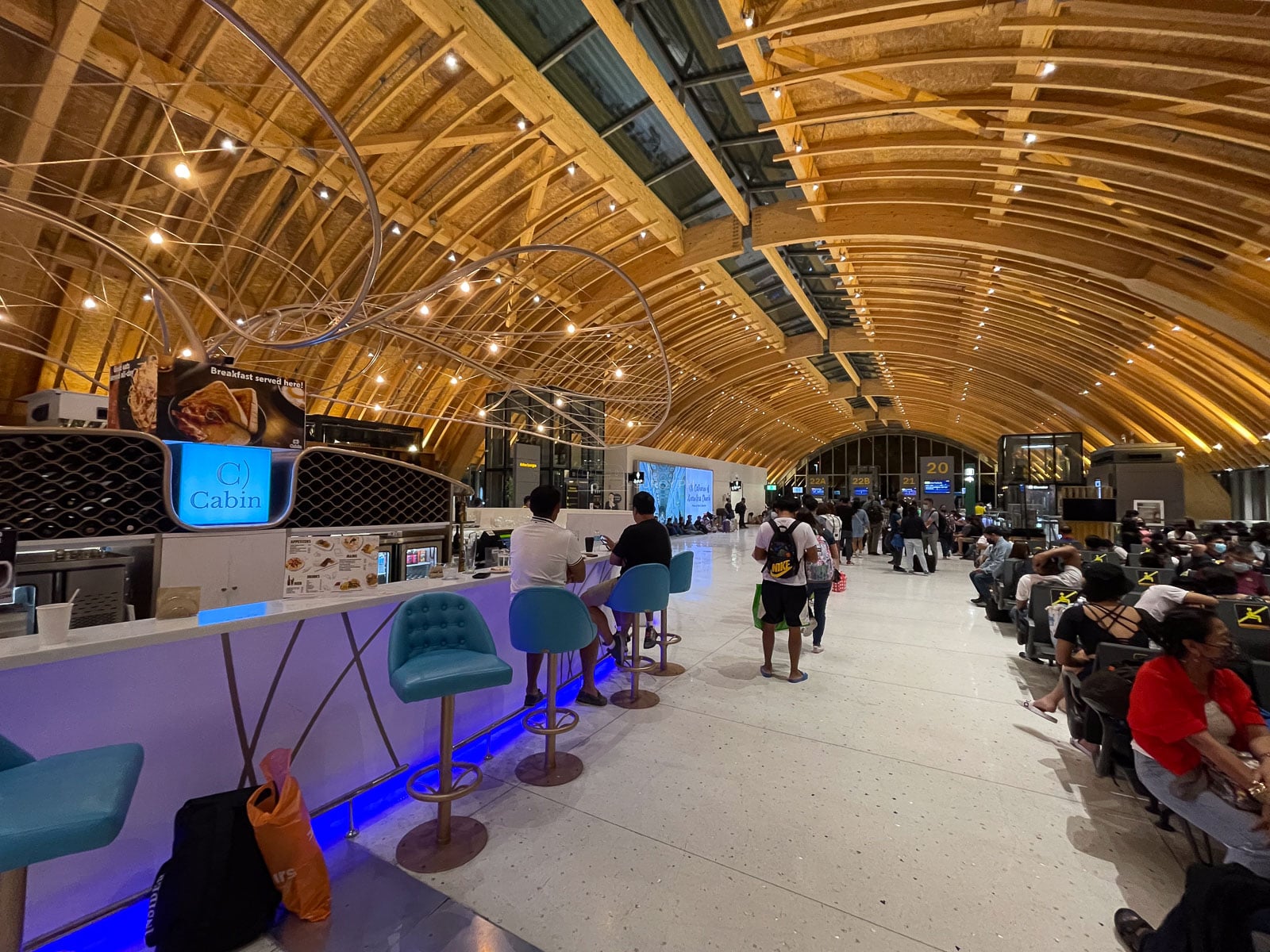
MCIA limits general boarding announcements. Check the flight information display, gate number and airline app more than once, particularly after eating or moving to another part of the terminal. Keep your phone charged and turn on flight notifications. A quiet concourse does not mean boarding has stopped.
Arriving at Mactan-Cebu Airport
Domestic arrival
- Follow the arrivals and baggage claim signs.
- Check the belt number before waiting for your bag.
- Report missing or damaged baggage to the airline before leaving the controlled area.
- Open your hotel address, driver details or destination pin before walking outside.
- Follow the current signs for taxis, app-booked cars, buses and hotel transfers.
International arrival and eTravel
The official Philippine eTravel system allows registration within 72 hours before arrival. It is free. Eligibility differs for arriving and departing passengers, so use the official etravel.gov.ph site and save a screenshot of the QR code. Suroy.ph’s Philippines eTravel guide explains the current traveler groups, QR steps and scam warning signs.
After immigration, collect checked baggage and follow Customs instructions. Keep your passport, baggage claim stub and onward booking accessible, but do not display personal documents or QR codes where strangers can photograph them.
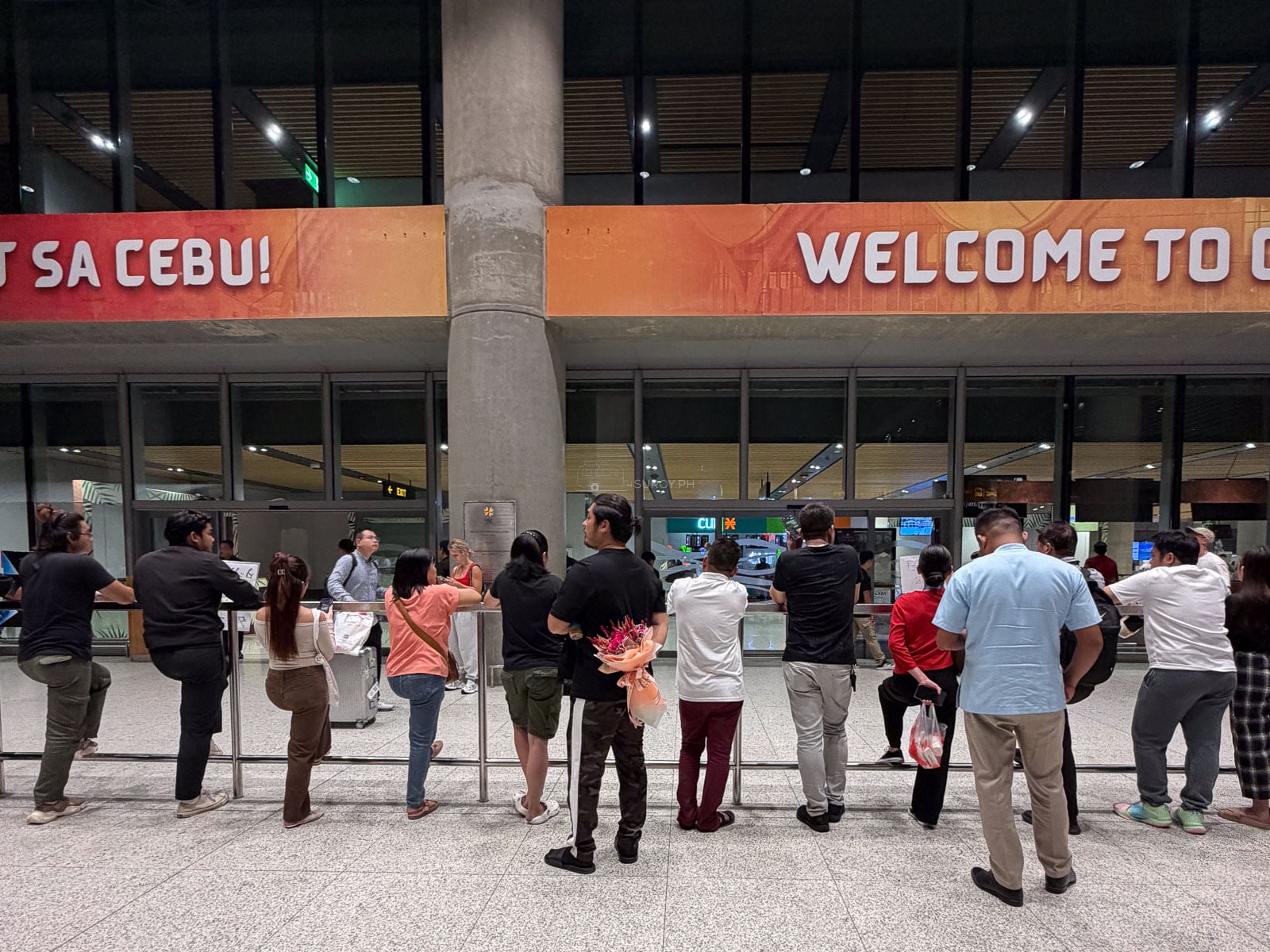
Meeting a driver or family member
Agree on a specific meeting point, not only “outside the airport.” Send the terminal number, flight number and a current landmark visible in the arrivals area. If the pickup lane is crowded, stay in the signed public meeting area until the driver confirms the bay or pillar. Match the vehicle plate before loading your bags.
Connecting through Cebu
A connection on one booking is different from a self-transfer on separate tickets. Ask the operating airline whether the bag is checked through, whether you must clear immigration or Customs in Cebu and where to collect the next boarding pass. Do not assume that a shared airline brand guarantees a through-checked bag.
| Connection | What may be required | Safer planning |
|---|---|---|
| Domestic to domestic on one booking | Gate change or airline transfer instructions | Use the airline’s official minimum, then protect extra time during peak periods |
| Domestic to international | Terminal change, international check-in, immigration and security | Allow a conservative buffer and confirm checked-bag handling |
| International to domestic | Immigration, bag collection, Customs, terminal change and domestic bag drop | Build in more time than a simple gate change |
| Separate tickets | Bag collection, a new check-in and no protection if the first flight is late | Use a much wider buffer or an overnight stay |
Moving between Terminal 1 and Terminal 2
The terminals are connected, and MCIAA’s Cebu Connect program supports transferring passengers. Follow the current transfer signs and ask airport staff where your itinerary should be processed. A covered connection is available between the terminal buildings, but bag handling and access to controlled areas depend on the airline and your journey.
The dedicated Cebu Connects page says its in-terminal process is for a connection under 12 hours on the same itinerary, with the onward boarding pass already issued and checked baggage tagged to the final destination. If any of those conditions is missing, do not assume you can use the same flow. Ask the airline before the trip and again at the transfer point.
Do not cut the connection to the published minimum when you have separate tickets, checked bags, mobility needs or a passport control step. Holiday queues, bad weather and a late inbound flight can remove a small buffer quickly.
Choose the right airport ride
| Option | Best for | Confirm before boarding |
|---|---|---|
| Metered taxi | Direct trip with luggage and no app setup | Official queue, meter and exact destination |
| App-booked car | Upfront app estimate and vehicle details | Current pickup area, plate and driver name |
| MyBus | Travelers whose route works with the current SM City Cebu service | Today’s stop, fare, hours and final transfer |
| Modern jeepney | Lapu-Lapu Public Market and light luggage | Current T1 or T2 stop and final local connection |
| Hotel shuttle | Mactan resorts, groups, children and late arrivals | Written pickup instructions and whether the ride is included |
| Pre-booked transfer | Ferry pier, bus terminal, distant hotel or large group | Operator, vehicle, inclusions and waiting policy |
| Rental car | Travelers comfortable with Cebu traffic and parking | Counter hours, insurance, tolls and return location |
The official airport transport information checked for this guide lists MyBus service between MCIA and SM City Cebu. That is useful if SM City Cebu or a nearby transfer is your next stop. It is not a door-to-door Cebu City service. The same page lists a modern jeepney route linking Lapu-Lapu Public Market, Terminal 2 and Terminal 1.
Transport check, August 21, 2026: MCIA lists MyBus at ₱30 to ₱50 depending on the stop, with SM City to MCIA service from 6:00 AM to 9:00 PM and MCIA to SM City service from 7:00 AM to 10:00 PM. The modern jeepney is listed at ₱15 to ₱20 and 24 hours. White taxis are listed with a ₱50 flag-down, plus distance and waiting charges. Fares are posted at the stop.
From the airport to your actual destination
Transfers are the line most people forget to budget. If you are still costing out the whole trip, the Cebu trip budget calculator prices the airport ride alongside the rooms, the food and whichever corridors you are heading to next.
Mactan resorts, Mactan Newtown and Cordova
Use a direct car or a confirmed hotel shuttle. These destinations are on Mactan Island or the Cordova side, so traveling into Cebu City first can add an unnecessary bridge crossing. Send the driver the full hotel or resort name because properties with similar names may have different entrances.
For Lapu-Lapu Public Market, the airport’s listed modern jeepney can be the lowest-cost direct option when luggage is manageable. It does not continue to the Punta Engaño resort strip, so a resort guest should compare the extra transfer with a direct car.
For a nearby first or last day, the Mactan Newtown Beach guide and Mactan Shrine guide help build a route that stays on the airport side of the bridges.
Cebu City
Cebu airport to Cebu City is the trip most people are really asking about. Give the exact district: IT Park, Ayala Center Cebu, Fuente Osmeña, Capitol, SM City Cebu or downtown. A direct car is simplest with bags. MyBus can work for SM City Cebu and a second transfer. Once inside the city, the Cebu City jeepney guide explains route codes and landmark-based travel.
Airport to Ayala Center Cebu is 35 to 45 minutes, and a Grab lands around ₱500. Plan against that. Rush hour, rain and Friday evening stretch it, and nothing shortens it. The Marcelo Fernan Bridge is a common airport route. CCLEX is the better call for southern destinations. It is not the faster way into central Cebu City.
Cebu North Bus Terminal
Use the North Bus Terminal for routes toward Hagnaya Port and Bantayan Island, or Maya and Malapascua. A direct taxi or app-booked car is the simplest airport transfer. MyBus to SM City Cebu may require a short onward transfer, depending on the current stop pattern. Read the Cebu North and South Bus Terminal guide before choosing the connection.
Hagnaya and Maya are not interchangeable. The Northern Cebu ferry guide explains which mainland port matches Bantayan or Malapascua and why the road plus boat transfer needs a proper buffer.
Cebu South Bus Terminal
Use the South Bus Terminal for many routes toward Moalboal, Badian, Oslob and other southern towns. With luggage, go directly to the terminal or your southbound operator. Do not route through the North Bus Terminal. If your flight lands late, a Cebu City overnight may be safer than forcing a same-day long road connection.
Cebu piers and Bohol ferries
Check the pier number printed on the ferry booking. “Cebu Port” is not a complete drop-off instruction because the port area has several piers and terminals. Keep a weather and traffic buffer between a flight and ferry booked separately. The Philippines ferry booking guide covers the official booking checks that reduce wrong-port and fake-page mistakes.

Suroy Arcade · Interactive · Cebu
How well do you really know Cebu?
Ten questions on the places, the food and the ferries. Which town owns Hagnaya Port. What is inside a pusô. Which city the airport is actually in.
Free · No sign up · Built for phones

Departing from Mactan-Cebu Airport
How early should you arrive?
Follow the operating airline’s requirement for your flight. International departures need more formalities than domestic departures. Add time for checked baggage, travel tax questions, children, mobility assistance and holiday queues. A seasonal airport advisory may recommend a wider buffer, but that does not replace your airline’s check-in cutoff.
Travel tax and terminal fees
Philippine travel tax and an airport passenger service charge are different. Your ticket may already include an applicable charge, while eligibility for travel tax, reduced rates and exemptions depends on the traveler. TIEZA lists travel tax counters in both MCIA terminals. Check your ticket first, then use Suroy.ph’s dated Philippine travel tax and terminal fees guide for the current rates, exemptions and official payment links.
Pack before you reach security
Move restricted liquids, sharp objects and oversized items to the correct bag before joining the line. Power-bank and battery rules can be more specific than a general airport sign, so check the airline too. The Philippines carry-on guide turns common liquids, food, medicines, batteries and gadgets into a pre-airport checklist.

Food, money and practical facilities
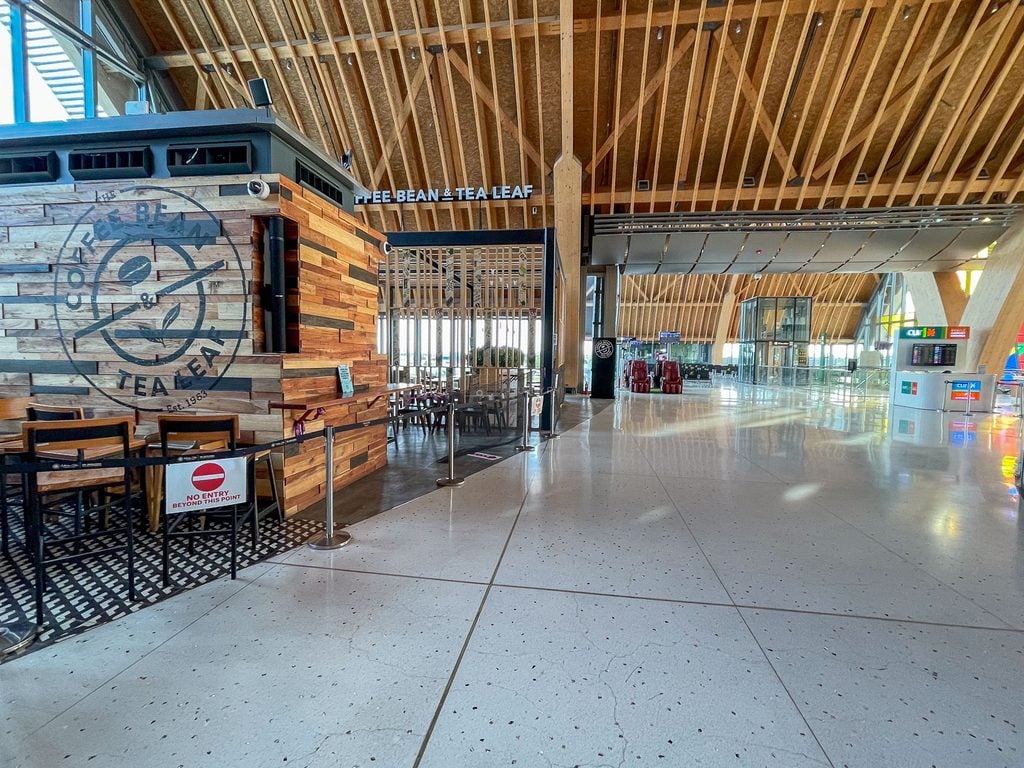
MCIAA lists food outlets, shops, money changers, ATMs, a chapel and passenger services across the airport complex. The airport runs 24 hours. The counters inside it do not. Sort cash, a SIM and food before a late-night flight, because at two in the morning most of the landside shops are shut.
| Need | Current airport listing checked August 21, 2026 | What to verify |
|---|---|---|
| Short rest or sleep | Sakura Capsule Hotel at Terminal 1 Arrivals and Aerotel in Terminal 2 | Rate, room availability and whether the location works for your flight |
| Baggage storage | Twenty-four-hour services listed in both terminals | Price, item restrictions and collection deadline |
| Lounge | Plaza Premium locations listed in domestic Terminal 1 and international Terminal 2 | Access rule, capacity and current hours |
| Cash and exchange | ATM and foreign-exchange services in the airport directory | Machine status, counter hours, exchange rate and fee |
| Family and medical support | Baby-care rooms, clinics and accessible restrooms are listed | Nearest open location and assistance route |
- Food and water: Check whether your choice is landside or airside before passing security.
- Cash and exchange: Compare the displayed rate and fees. Keep a small peso amount for road or bus transfers.
- Phone access: Save hotel details, QR codes and maps offline. Do not depend on airport connectivity for the first time you open them.
- Charging: Carry a compatible cable and airline-compliant power bank. Never leave a device unattended.
- Lounges and rest areas: Book ahead. Plaza Premium fills on the evening international wave.
Families, seniors and travelers with disabilities
Request wheelchair or mobility assistance from the airline when you book, then again at check-in. MCIAA lists lifts and mobility support, but the airline controls much of the passenger handoff. Allow extra time if a traveler needs assistance between the curb, counter, security and gate.
- Keep medicines, identification and essential baby items in the cabin bag.
- Ask the airline how a stroller, wheelchair or mobility device will be tagged and returned.
- Choose a direct ride when a bus transfer would be difficult with bags or mobility equipment.
- Use the nearest staffed information point if a lift, accessible toilet or assistance route is unclear.

Layovers and overnight waits
| Time between flights | Practical choice |
|---|---|
| Under 3 hours | Stay at the airport and protect the connection |
| 3 to 5 hours | Eat, recharge and remain close to the correct terminal |
| Long daytime layover | Leave only after accounting for formalities, bridge traffic and the return buffer |
| Overnight | Compare a nearby hotel with remaining at the airport, then confirm check-in time and transfer |
Mactan is the realistic area for a short landside break. Crossing to Cebu City can turn a long-looking layover into two uncertain bridge trips. Before you leave the building, know your next terminal, whether the onward boarding pass is issued, where your bag is, and the hour you have to be back.
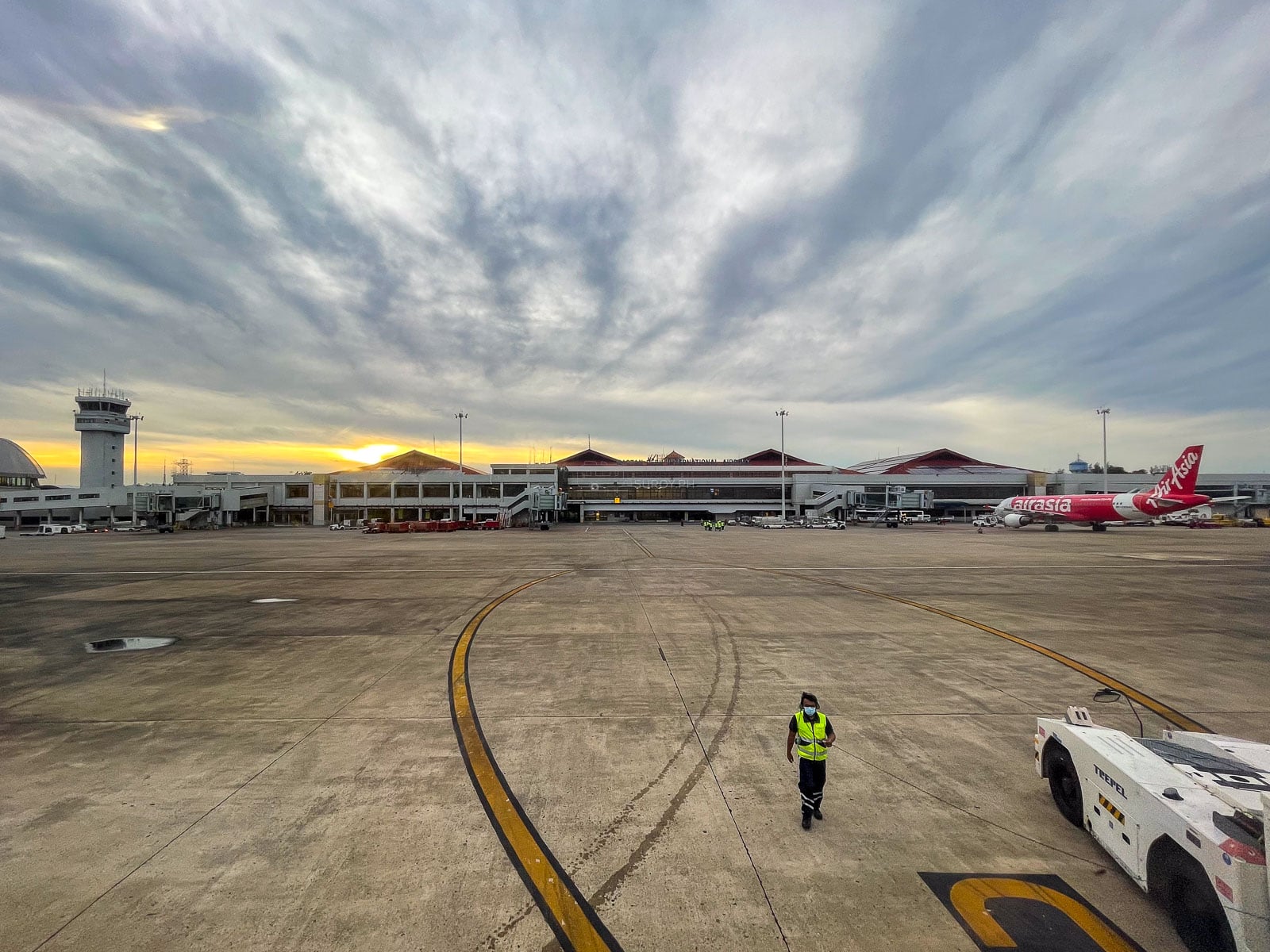
When the trip goes wrong
Delayed or cancelled flight
Save the airline notice, photograph the flight board, record the time and ask the operating carrier for the available options. Your remedy depends on the cause and circumstances. The Philippine flight delay and cancellation rights guide explains rebooking, refunds, care and Civil Aeronautics Board complaints.
Missing or damaged baggage
Report the problem to the airline’s baggage desk before leaving the claim area. Keep the bag tag and request a written reference number. Photograph damage before the bag is repaired or discarded.
Airport help and complaints
Use the airline for flight, ticket and baggage problems. Use a staffed airport information point for the terminal, facility or immediate airport concern. MCIAA publishes current operations, security and contact channels on its official contact page. In an emergency, follow airport staff and local emergency instructions rather than waiting for an online reply.
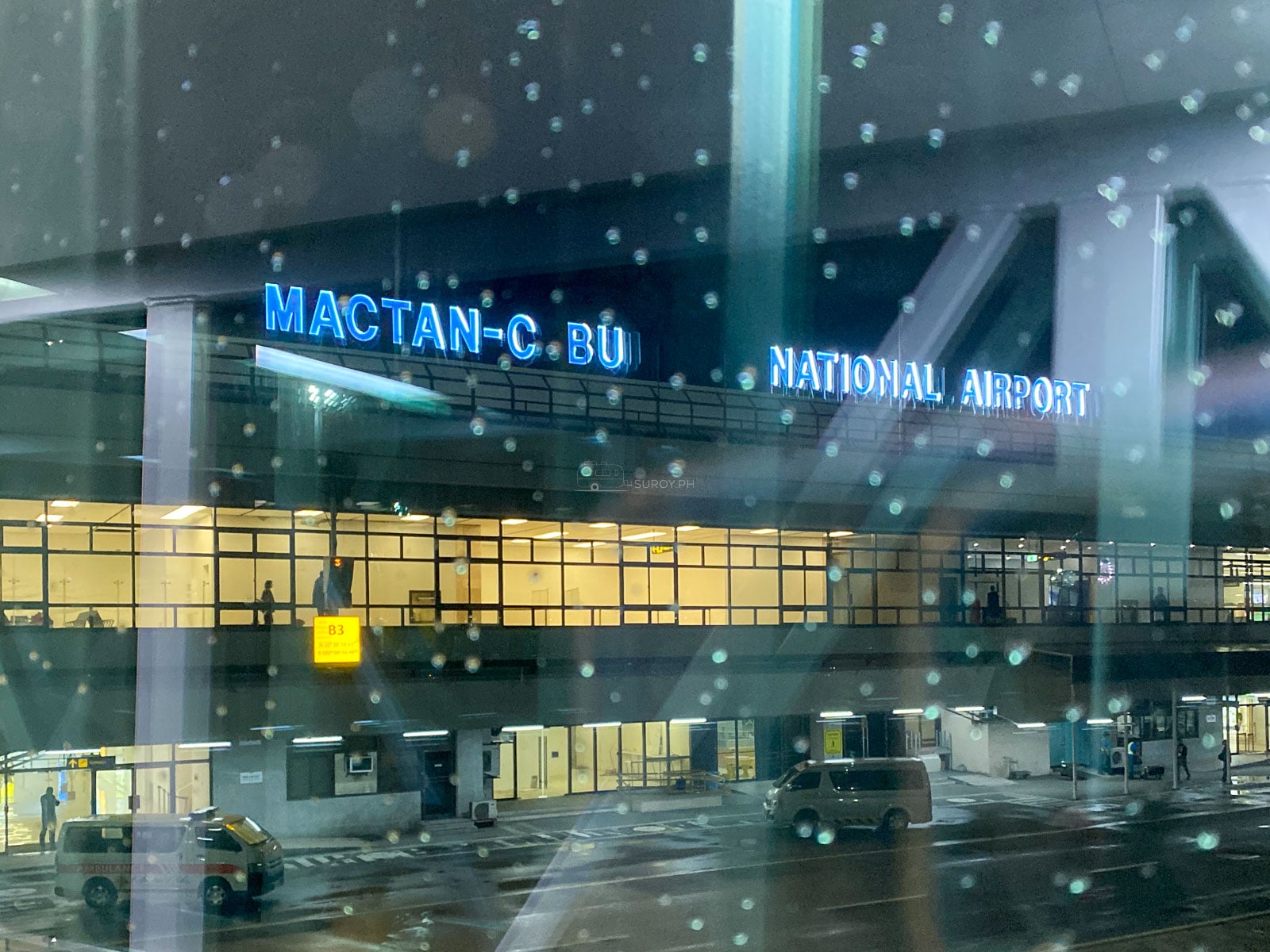

The airport that welcomes Cebu
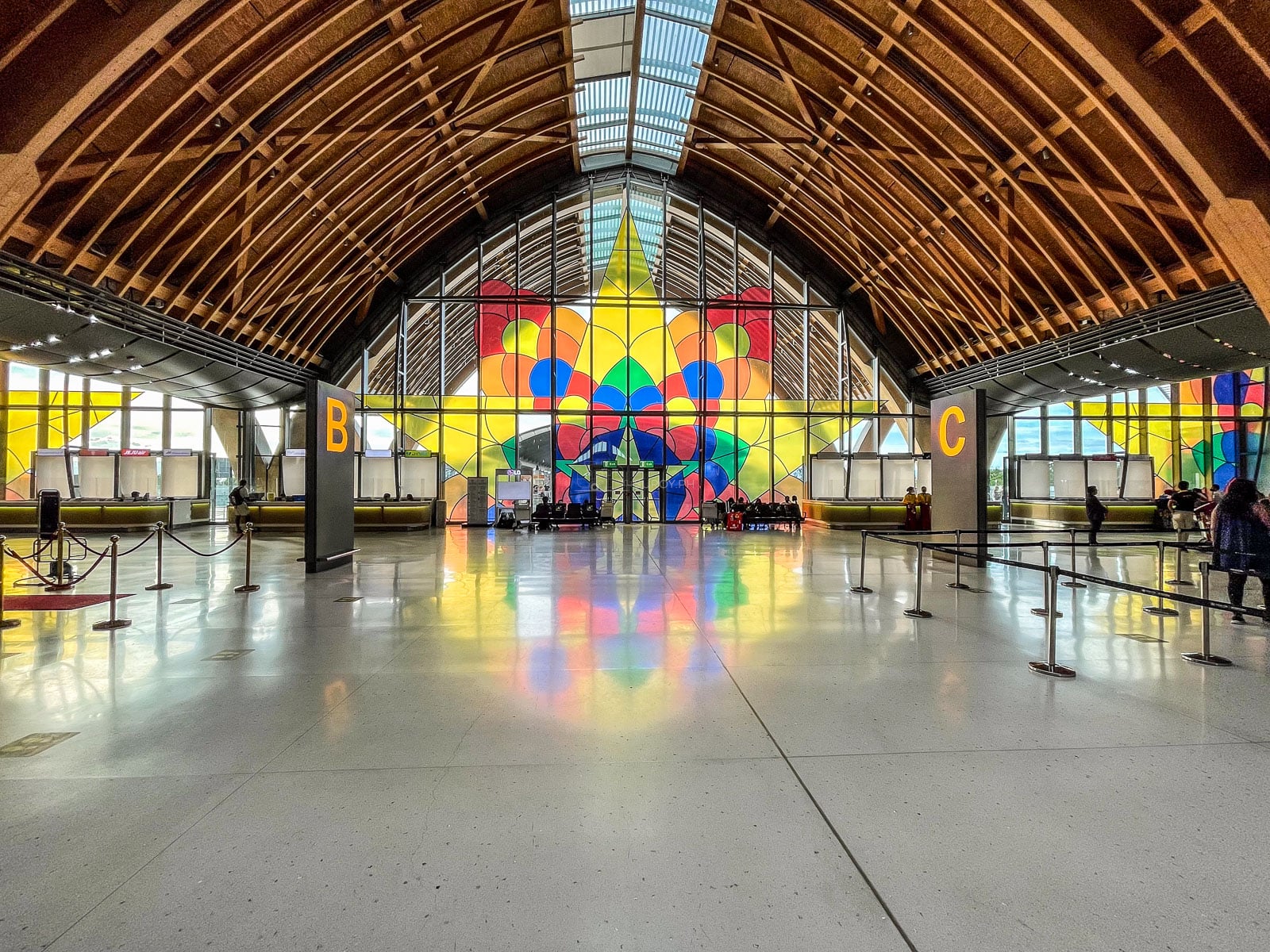
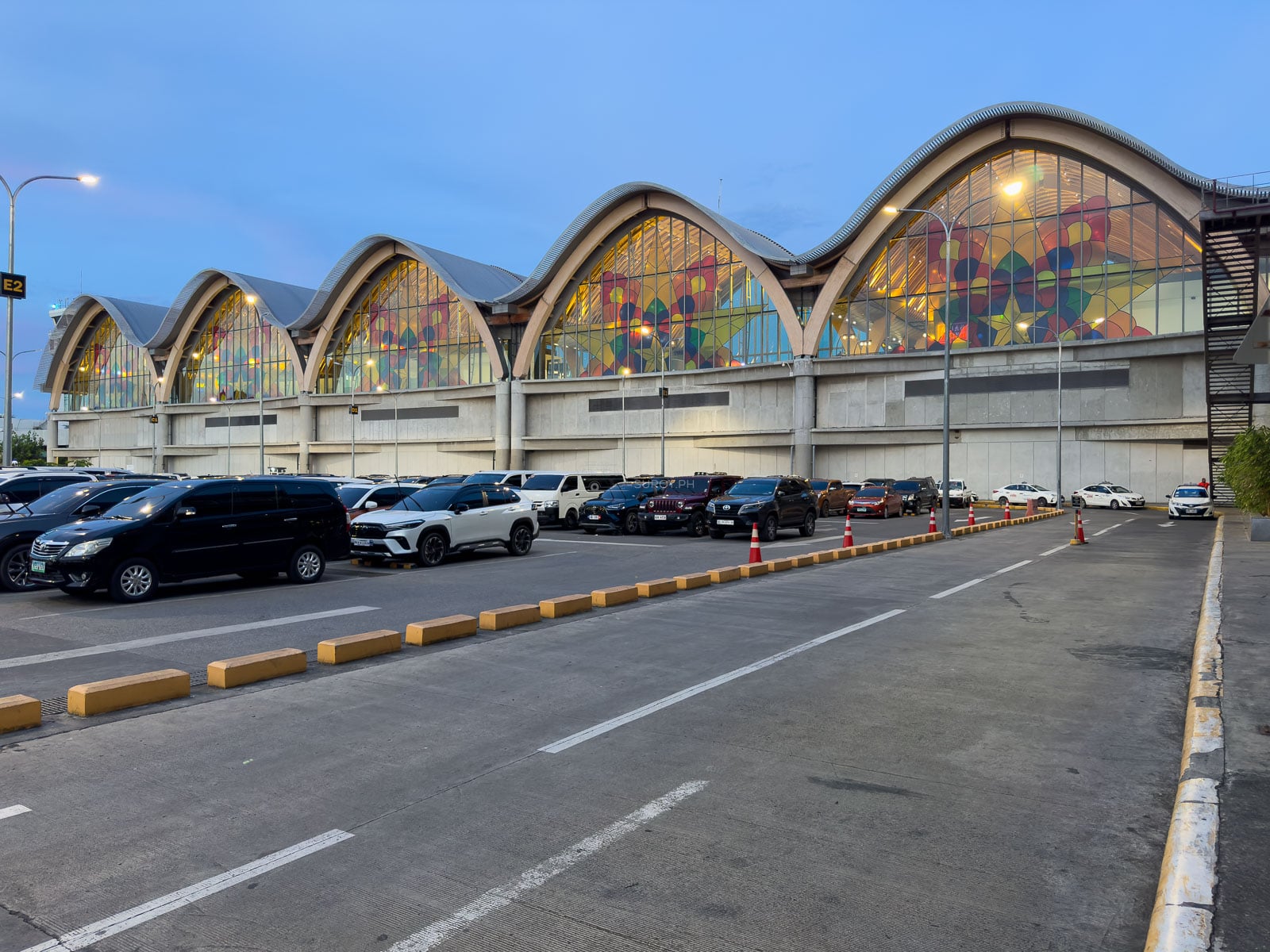
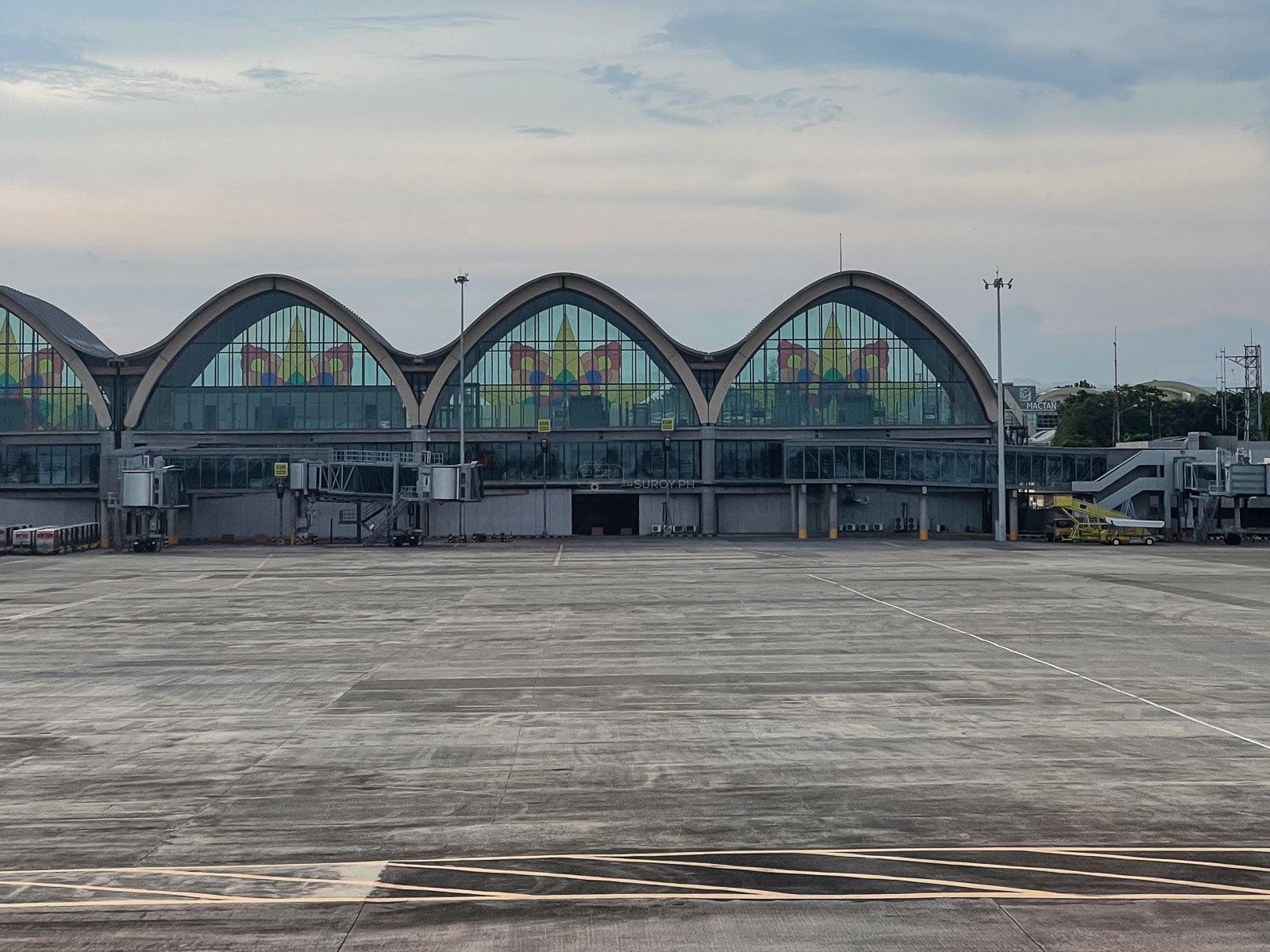
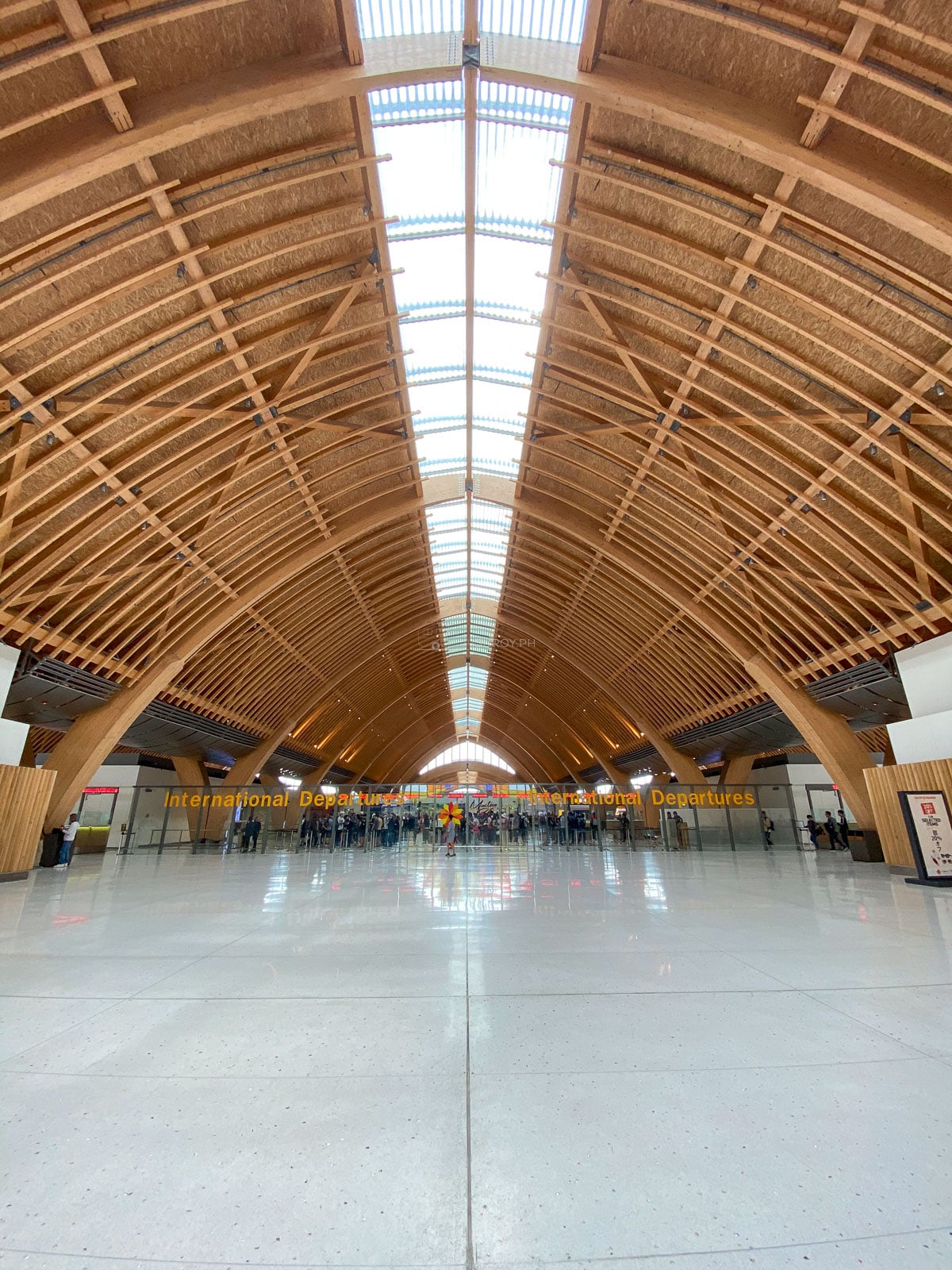
Commercial flights left Cebu City on 27 April 1966, when Lahug Airport ran out of room and everything moved across the water to Mactan. The old runway never went anywhere. It is Cebu IT Park now, and the geometry is still legible in the street plan sixty years on. Terminal 2 opened for commercial operations in 2018. The roof is the part people remember. Glue-laminated timber arches set every 30 meters, shaped after the bangka, the outrigger that has moved people around these islands for centuries. It covers 65,000 square meters and is one of the largest structures anywhere held up entirely by glulam timber. Nothing at that scale had been built in Asia before it. Terminal 2 took the International Architecture Award for airports and transport centers in 2019, and it is why the building does not feel like a generic glass hall.
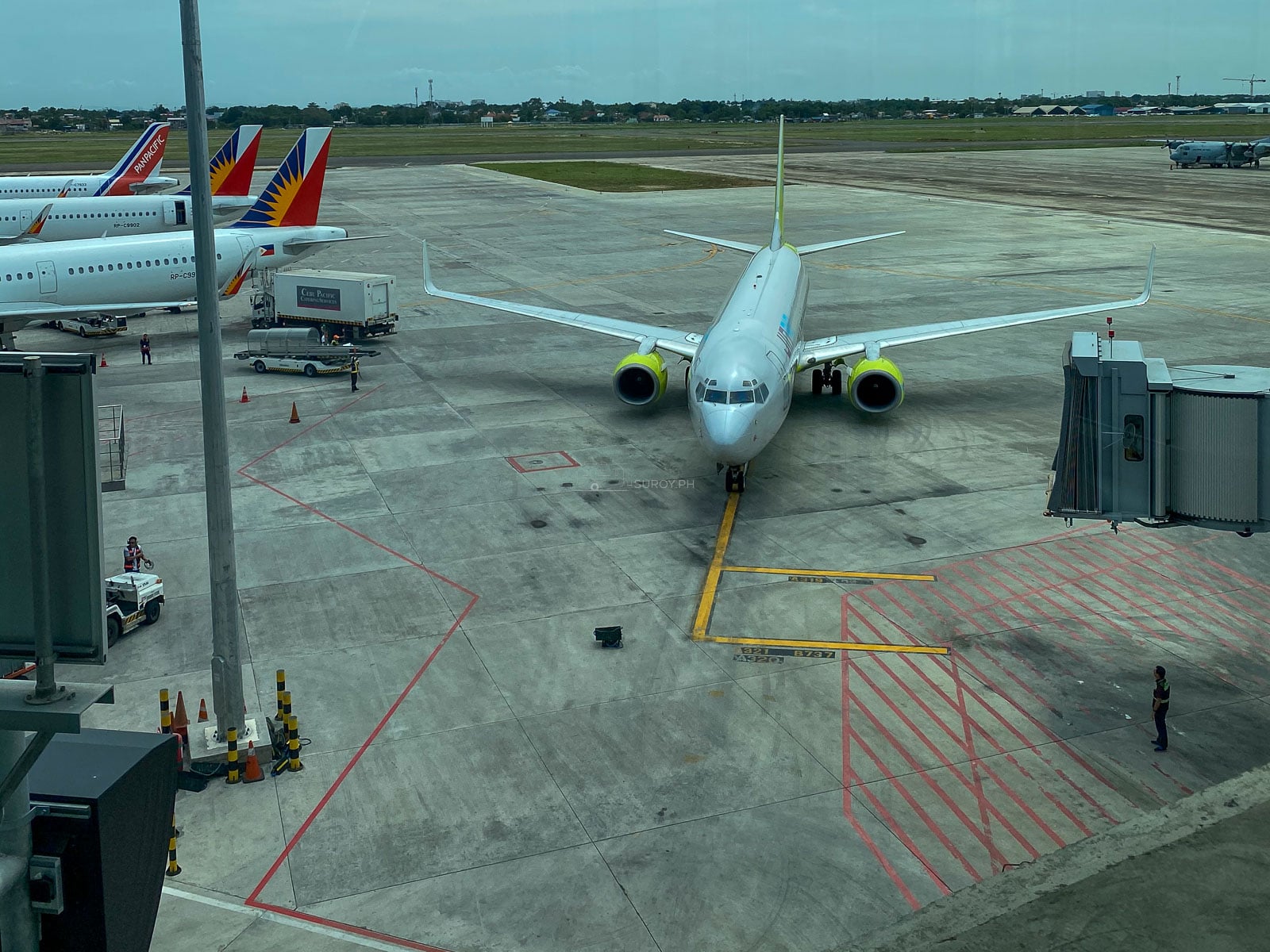
MCIAA opened a second parallel runway on 18 July 2025. It is designated 04L/22R, runs 2,560 meters, and carries traffic when the main runway closes for maintenance or an emergency. That infrastructure matters, but the airport’s value to travelers is simpler: it is the point where a Cebu trip divides into city, island, north and south routes. The airport is the gateway. The destination still needs a plan.
The three letters that mean home
CEB is three letters on a baggage tag. For anyone from this island it is also the last line on a boarding pass before the part of the trip where somebody is waiting at the rail.
Stand on the arrivals side on an evening in December and you will see what the terminal map leaves out. Tarpaulins with somebody’s name spelled out in glitter. Balloons losing height. A lola who has been on her feet for two hours because the flight was late and sitting down was never going to happen. Every airport has a departures hall. This one is defined by the other side of the building.
Which is the honest answer to why the code is worth more than the route it describes.
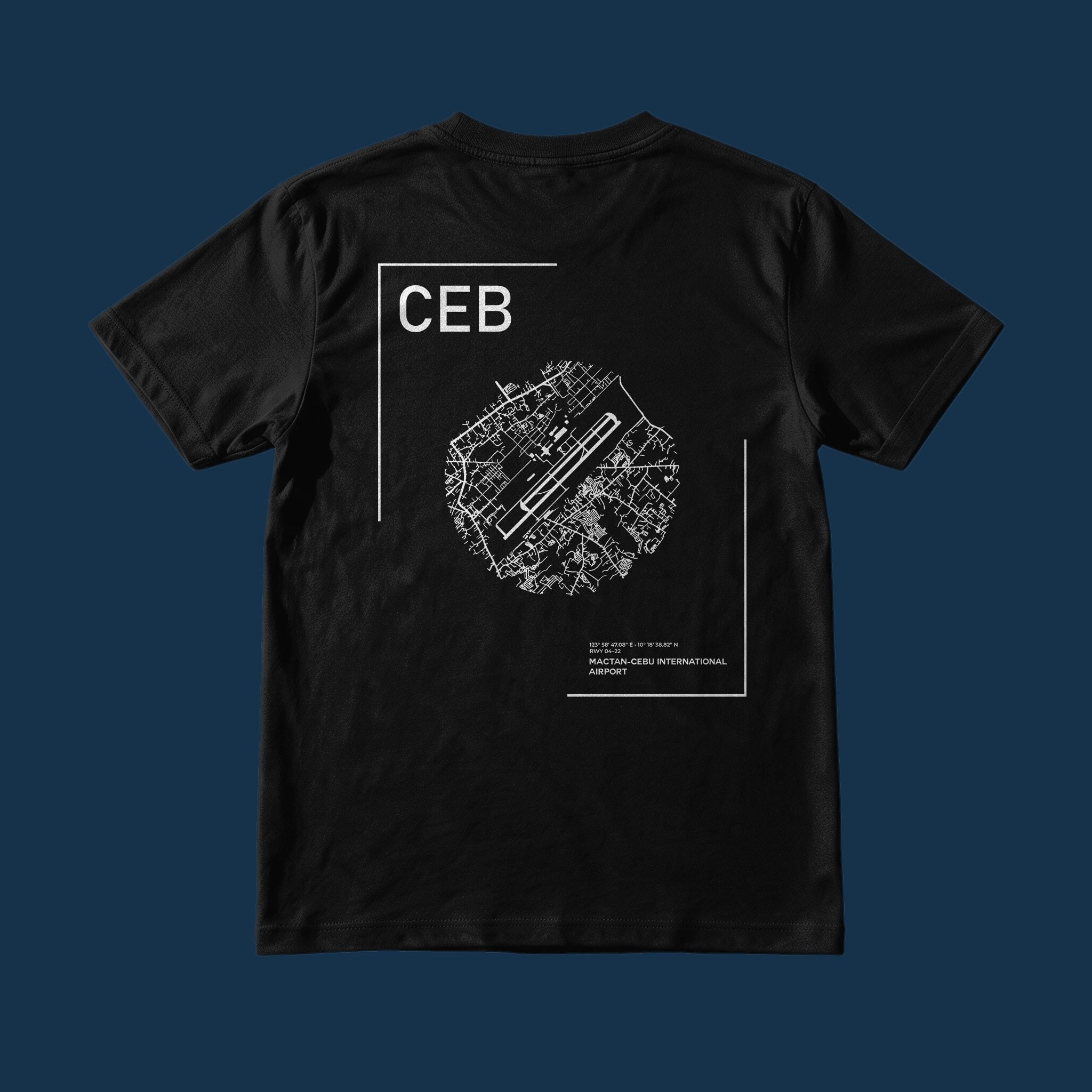
Wear the code.
The Airport Series CEB Tee carries the Mactan-Cebu map across the back with the runway under the code.
The Cebu Coordinates Tee carries the island itself, silhouette and numbers, for the part of the trip that starts after the terminal doors.
Global Collection · Island Series · Made in the Philippines
Frequently asked questions
Which terminal does my Cebu flight use?
Terminal 1 handles domestic flights and Terminal 2 handles international flights. Your boarding pass names it. A domestic ticket and an international ticket send you to two different buildings.
Is Mactan-Cebu International Airport in Cebu City?
No. It is in Lapu-Lapu City on Mactan Island. Cebu City is across the bridge on the mainland side. Your travel time depends on the bridge, traffic and exact city district.
Can I walk between Terminal 1 and Terminal 2?
The terminal buildings have a covered connection. Follow the current signs and ask Cebu Connect or airline staff which route applies to your journey, especially when checked bags, immigration or a new check-in is involved.
How much connection time do I need at CEB?
Use the airline’s minimum for a protected connection, then add time for terminal changes, checked bags, immigration, Customs and peak queues. Separate tickets need a much wider buffer because the second airline may not protect you from a late first flight.
Do I need to collect my bag during a Cebu connection?
It depends on the airline, ticket and international formalities. Ask at the first check-in counter where the bag is tagged and whether you must collect it in Cebu. Do not assume through-checking.
What is the easiest ride from the airport to Cebu City?
A taxi or app-booked car, because it goes straight to the hotel or district. Airport to Ayala Center Cebu is 35 to 45 minutes and a Grab lands around ₱500. MyBus costs less if the SM City Cebu route fits your plan, but budget for a second transfer at the other end.
How much is a Cebu airport transfer to the city?
A Grab from Cebu airport to Cebu City lands around ₱500 and takes 35 to 45 minutes to Ayala Center Cebu. A white metered taxi starts at a ₱50 flag-down plus distance and waiting time. MyBus to SM City Cebu runs ₱30 to ₱50 and the modern jeepney runs ₱15 to ₱20, both of which usually need a second transfer at the other end. Fares checked 21 August 2026.
Is there a bus from MCIA to Cebu City?
The airport’s current transport information lists MyBus between MCIA and SM City Cebu. Fares and hours are posted at the signed stop.
Do international passengers need eTravel?
Many arriving passengers and departing Filipino passengers need eTravel, with official exceptions. Registration is free and opens within 72 hours of travel. Check your group only at etravel.gov.ph.
Do I pay travel tax at Mactan-Cebu Airport?
Check whether the applicable charge is already included in your ticket and whether you are liable, exempt or eligible for a reduced rate. TIEZA lists counters in both terminals. Travel tax and a terminal fee are not the same charge.
Can I sleep at the airport?
The airport operates 24 hours, but that does not promise a comfortable sleeping area or all-night services. For an overnight wait, a Mactan hotel ten minutes away usually beats a terminal bench, and it costs less than most people expect.
Is wheelchair assistance available?
Mobility support is available, and the airline is who you request it from, not the airport. Allow extra time for curb-to-gate and transfer support.
What should I do when my flight is delayed?
Save the airline notice, photograph the flight display, note the time and ask the operating carrier for written options. Keep receipts when the disruption creates necessary expenses, then use the passenger-rights guide if the response is unclear.
Fares, routes and counter hours in this guide were checked on 21 August 2026.